Mahmoud Darwish: The poetry of Palestine
by Bob Schwartz
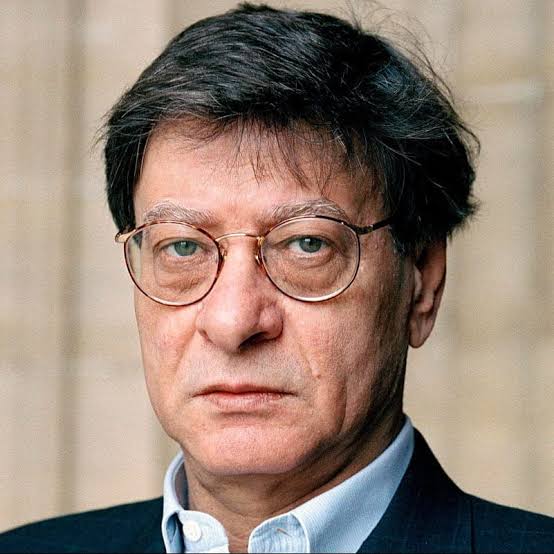
I want to find a language that transforms language itself into steel for the spirit – a language to use against these sparkling silver insects, these jets. I want to sing. I want a language . . . that asks me to bear witness and that I can ask to bear witness, to what power there is in us to overcome this cosmic isolation.
—Mahmoud Darwish
Mahmoud Darwish (1941–2008) was born in the village of al-Birwa, in the Galilee, Palestine. He became a refugee at age seven. He worked as a journalist and editor in Haifa and left to study in Moscow in 1970. His exilic journey took him to Cairo, Beirut, Tunis, Paris, Amman, and Ramallah, where he settled in 1995. He is one of the most celebrated and revered poets in the Arab world. He published more than thirty books, and his poetry has been translated into thirty-five languages.
Even if you are a lover of poetry, you may not have heard of Mahmoud Darwish, despite his work—poetry and prose—being celebrated and translated into thirty-five languages. Translation into English was late in coming. And there is so much culture to taste and consume that it may be incidental ignorance of Arab poetry in general and Palestinian poetry in particular that has kept it out of sight.
Sample praise:
“Darwish’s poetry is an epic effort to transform the lyrics of loss into the indefinitely postponed drama of return.”
—Edward Said
“The most celebrated writer of verse in the Arab world.”
—Adam Shatz, The New York Times
“Did as much as anyone to forge a Palestinian national consciousness.”
—Peter Clark, The Guardian
“No poet in our time has confronted the violent tides of history with greater humanity or greater artistic range than Mahmoud Darwish.
―Michael Palmer, author of Company of Moths
“A world-class poet . . . Darwish has not only remade a national consciousness; he has reworked language and poetic tradition to do so.”
―Fiona Sampson, The Guardian
“Darwish, beloved as the beacon-voice of Palestinians scattered around the globe, had an uncanny ability to create unforgettable, richly descriptive poems, songs of homesick longing which resonate with displaced people everywhere.”
― Naomi Shihab Nye
“No list on Palestinian literature is complete without the acclaimed poet Mahmoud Darwish.”
—Esquire
“Mahmoud Darwish is perhaps the foremost Palestinian poet of last century.”
—Tablet
There are too many books to feature just one. Please consider giving Mahmoud Darwish a try.
 Bob Schwartz