Election equanimity: “When the world is filled with evil, transform all mishaps into the path of bodhi [wakefulness].”
by Bob Schwartz
These are the last few days before the election. Whatever happens, we can benefit from equanimity.
Lojong is a mind training practice in Tibetan Buddhism. It includes 59 slogans. Among them:
11
When the world is filled with evil,
Transform all mishaps into the path of bodhi [wakefulness].
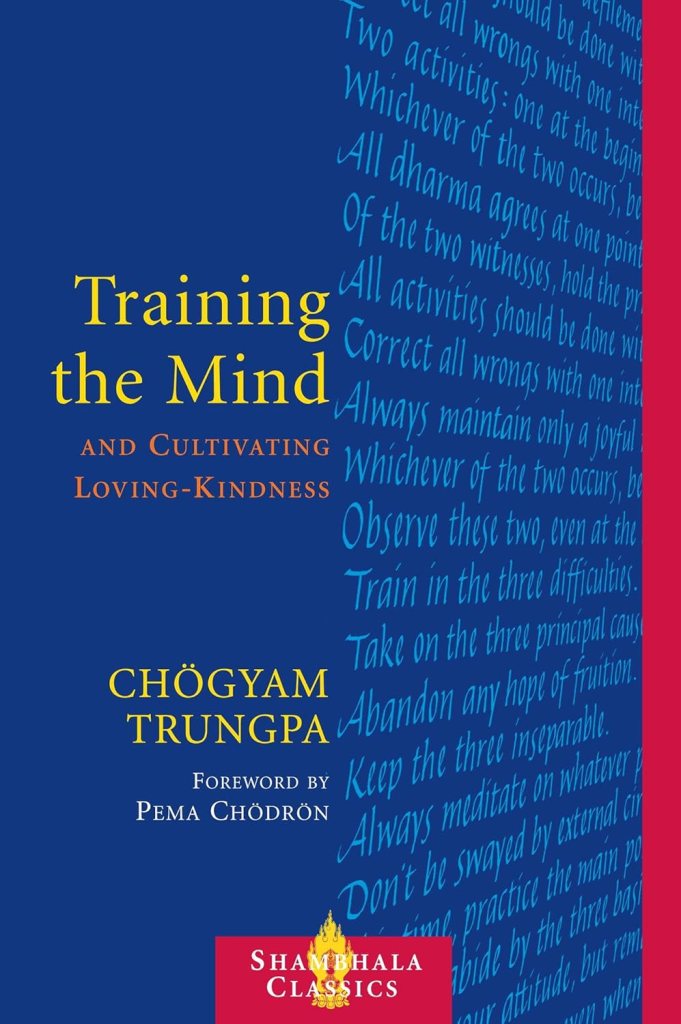
Commentary on this by Chogyam Trungpa in his book Training the Mind and Cultivating Loving-Kindness:
11
When the world is filled with evil,
Transform all mishaps into the path of bodhi.
That is to say, whatever occurs in your life—environmental problems, political problems, or psychological problems—should be transformed into a part of your wakefulness, or bodhi….
In other words, you do not blame the environment or the world political situation…. According to this slogan, when the world is filled with evil, or even when the world is not filled with evil, any mishaps that might occur should all be transformed into the path of bodhi, or wakefulness. That understanding comes from your sitting practice and your general awareness.
This slogan says practically everything about how we can practice generosity as well. In our ordinary life, our immediate surroundings or our once-removed surroundings are not necessarily hospitable. There are always problems and difficulties. There are difficulties even for those who proclaim that their lives are very successful, those who have become the president of their country, or the richest millionaires, or the most famous poets or movie stars or surfers or bullfighters. Even if our lives go right, according to our expectations, there are still difficulties. Obstacles always arise. That is something everybody experiences. And when obstacles happen, any mishaps connected with those obstacles—poverty mentality, fixating on loss and gain, or any kind of competitiveness—should be transformed into the path of bodhi.
That is a very powerful and direct message. It is connected with not feeling poverty stricken all the time. You might feel inadequate because you have a sick father and a crazy mother and you have to take care of them, or because you have a distorted life and money problems. For that matter, even if you have a successful life and everything is going all right, you might feel inadequate because you have to work constantly to maintain your business. A lot of those situations could be regarded as expressions of your own timidity and cowardice. They could all be regarded as expressions of your poverty mentality….
It is the sense of resourcefulness, that you can deal with whatever is available around you and not feel poverty stricken. Even if you are abandoned in the middle of a desert and you want a pillow, you can find a piece of rock with moss on it that is quite comfortable to put your head on. Then you can lie down and have a good sleep. Having such a sense of resourcefulness and richness seems to be the main point….
We have found that a lot of people complain that they are involved in intense domestic situations: they relate with everything in their lives purely on the level of pennies, tiny stitches, drops of water, grains of rice. But we do not have to do that—we can expand our vision by means of generosity. We can give something to others. We don’t always have to receive something first in order to give something away. Having connected with the notion of generosity, we begin to realize a sense of wealth automatically. The nature of generosity is to be free from desire, free from attachment, able to let go of anything.
Books about lojong:
Training the Mind and Cultivating Loving-Kindness by Chogyam Trungpa
The Practice of Lojong: Cultivating Compassion through Training the Mind by Traleg Kyabgon
The Compassion Book: Teachings for Awakening the Heart by Pema Chödrön
Training in Compassion: Zen Teachings on the Practice of Lojong by Norman Fischer
 Bob Schwartz