Bob Schwartz

Month: March, 2017

DSM-5: Antagonism and Narcissistic Personality Disorder


DSM-5

Mental health is a serious matter and mental health practitioners are serious professionals. These are not to be treated lightly and off-handedly.

The Diagnostic and Statistical Manual of Mental Disorders, Fifth Edition (DSM-5) is the “bible” of the mental health profession: “a classification of mental disorders with associated criteria designed to facilitate more reliable diagnoses of these disorders.” It is not a reference to be thrown around and used casually by non-professionals.

The DSM can nonetheless be fascinating, especially when certain strong behavioral traits observed in others seem to closely match the traits and possible related disorders referenced in the DSM.

With the above caution and caveat, here are selections from DSM-5 about the Personality Trait Domain of Antagonism. More from the DSM about the way this may or may not relate to Narcissistic Personality Disorder will follow in a subsequent post.

Personality trait: A tendency to behave, feel, perceive, and think in relatively consistent ways across time and across situations in which the trait may be manifest.

Personality trait facets: Specific personality components that make up the five broad personality trait domains in the dimensional taxonomy of Section III “Alternative DSM-5 Model for Personality Disorders.” For example, the broad domain Antagonism has the following component facets: Manipulativeness, Deceitfulness, Grandiosity, Attention Seeking, Callousness, and Hostility.

Antagonism: Behaviors that put an individual at odds with other people, such as an exaggerated sense of self-importance with a concomitant expectation of special treatment, as well as a callous antipathy toward others, encompassing both unawareness of others’ needs and feelings, and a readiness to use others in the service of self-enhancement. Antagonism is one of the five broad personality trait domains defined in Section III “Alternative DSM-5 Model for Personality Disorders.”

Manipulativeness: Use of subterfuge to influence or control others; use of seduction, charm, glibness, or ingratiation to achieve one’s ends. Manipulativeness is a facet of the broad personality trait domain Antagonism.

Grandiosity: Believing that one is superior to others and deserves special treatment; self-centeredness; feelings of entitlement; condescension toward others. Grandiosity is a facet of the broad personality trait domain Antagonism.

Deceitfulness: Dishonesty and fraudulence; misrepresentation of self; embellishment or fabrication when relating events. Deceitfulness is a facet of the broad personality trait domain Antagonism.

Attention seeking: Engaging in behavior designed to attract notice and to make oneself the focus of others’ attention and admiration. Attention seeking is a facet of the broad personality trait domain Antagonism.

Callousness: Lack of concern for the feelings or problems of others; lack of guilt or remorse about the negative or harmful effects of one’s actions on others. Callousness is a facet of the broad personality trait domain Antagonism.

Hostility: Persistent or frequent angry feelings; anger or irritability in response to minor slights and insults; mean, nasty, or vengeful behavior. Hostility is a facet of the broad personality trait domain Antagonism.

Clearing the Table

Table Top

Clearing the Table

Big plate small plate bowl
Fork knife spoon
Glass cup
Napkin folded.
Napkin crumpled
Dishes in disarray
Clear the table
To begin again.
If not for
Cooking serving cleaning
How would we eat?
If not for clearing
Every time
How would we see
The table top
So plain?

Philip K. Dick, Now More Than Ever

Philip K. Dick color

Pretty much every day now, my head spins, just a little. My head does not usually and chronically spin, but it does these days. I find myself not so much trying to make sense of some things, but trying to determine whether there is or will appear some appropriate and constructive response. So far, nothing.

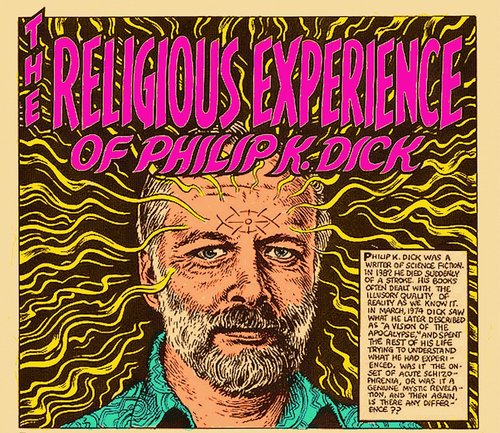
Today, however, I did think about Philip K. Dick. I wrote a little about Dick a while ago. To say he was just a science fiction writer is not nearly enough. Some of his many books and stories have been turned into a number of successful movies (Blade Runner, Total Recall, etc.) and now into an excellent TV series (Man in the High Castle).

The reason for his books being so adaptable, and for his loyal and committed readers, is that Dick was a visionary, some might say a prophet. He was also psychologically and cognitively different. The two parts often go together.

The reason I’m thinking about Dick is the possibility that those of us who are confused about what is going on are being far too rational and far too narrow about all of it. Maybe what we need is a much bigger and stranger vision. Maybe to understand madness, we all have to try to be a little mad ourselves, or pretend to be. Just a thought.

Anyway, Dick suffered through some mental illness and/or religious experience late in his life. Some would say Dick was a bit of a madman. Or a visionary or a prophet. In any case, if we want to know what the future might look like—or for that matter what the present looks like—we can do no better than look at it through Dick’s eyes.

Writer Jonathan Lethem has written some fine appreciations of Dick. This is from Lethem’s Introduction to Selected Stories of Philip K. Dick:

Dick’s great accomplishment, on view in the twenty-one stories collected here, was to turn the materials of American pulp-style science fiction into a vocabulary for a remarkably personal vision of paranoia and dislocation. It’s a vision as yearning and anxious as Kafka’s, if considerably more homely. It’s also as funny. Dick is a kitchen-sink surrealist, gaining energy and invention from a mad piling of pulp SF tropes—and clichés—into his fiction: time travel, extrasensory powers, tentacled aliens, ray guns, androids, and robots. He loves fakes and simulacra as much as he fears them: illusory worlds, bogus religions, placebo drugs, impersonated police, cyborgs. Tyrannical world governments and ruined dystopian cities are default settings here. Not only have Orwell and Huxley been taken as givens in Dick’s worlds, so have Old Masters of genre SF like Clifford Simak, Robert Heinlein, and A. E. Van Vogt. American SF by the mid-1950s was a kind of jazz, stories built by riffing on stories. The conversation they formed might be forbiddingly hermetic, if it hadn’t quickly been incorporated by Rod Serling and Marvel Comics and Steven Spielberg (among many others) to become one of the prime vocabularies of our age….

If Dick, as a bearded, drug-taking Cal-i-fornian, might have seemed a candidate for Beatdom (and in fact did hang out with the San Francisco poets), his persistent engagement with the main materials of his culture kept him from floating off into reveries of escape. It links him instead to writers like Richard Yates, John Cheever, and Arthur Miller (the British satirist John Sladek’s bull’s-eye Dick parody was titled “Solar Shoe Salesman”). Dick’s treatment of his “realist” material can seem oddly cursory, as though the pressing agenda of his paranoiac fantasizing, which would require him to rip the facade off, drop the atomic bomb onto, or otherwise renovate ordinary reality, made that reality’s actual depiction unimportant. But no matter how many times Dick unmasks or destroys the Black Iron Prison of American suburban life, he always returns to it. Unlike the characters in William S. Burroughs, Richard Brautigan, or Thomas Pynchon, Dick’s characters, in novels and stories written well into the 1970s, go on working for grumbling bosses, carrying briefcases, sending interoffice memos, tinkering with cars in driveways, sweating alimony payments, and dreaming of getting away from it all—even when they’ve already emigrated to Mars….

Whether or not he was ready for the world, or the world ready for him, he longed for a respectable recognition, and sought it variously and unsuccessfully throughout his life. In fact, he wrote eight novels in a somber realist mode during the 1950s and early 1960s, a shadow career known mainly to the agents who failed to place the books with various New York publishers. It’s stirring to wonder what Dick might have done with a wider professional opportunity, but there’s little doubt that his SF grew more interesting for being fed by the frustrated energies of his “mainstream” ambition. Possibly, too, a restless streak in Dick’s personality better suited him for the outsider-artist status he tasted during his lifetime….Here, from an introduction written for Golden Man, a collection of stories assembled in 1980, Dick reminisces:

But I think you should know this—specifically, in case you are, say, in your twenties and rather poor and perhaps becoming filled with despair, whether you are an SF writer or not, whatever you want to make of your life. There can be a lot of fear, and often it is a justified fear. People do starve in America. I have seen uneducated street girls survive horrors that beggar description. I have seen the faces of men whose brains have been burned-out by drugs, men who could still think enough to be able to realize what had happened to them; I watched their clumsy attempt to weather that which cannot be weathered. . . . Kabir, the sixteenth-century Sufi poet, wrote, “If you have not lived through something, it is not true.” So live through it; I mean, go all the way to the end. Only then can it be understood, not along the way.