Bob Schwartz

Unleashing the Dogs of Hate

Birmingham

You will be forgiven for mistakenly thinking that this post about Trump was written today. IT WAS WRITTEN AND PUBLISHED IN MARCH 2016, TWO-AND-A-HALF YEARS AGO. At the time, many public people—including responsible politicians of both parties and the media—treated Trump’s pathology as a joke or a temporary symptom that would quickly pass. They should have been shouting in protest and we should have been scared. Are we scared yet?

“Cry ‘Havoc!’, and let slip the dogs of war”
William Shakespeare, Julius Caesar, Act 3, Scene 1

This time it is the dogs of hate. Enabled and emboldened by Donald Trump. He is so arrogant and ignorant of history that he probably believes he can control them. That with one word from him they will attack. That with another word from him they will stop.

Of course, that isn’t how it works.

There has long been an undercurrent of hate and intolerance in this country, no different than anywhere else at any other time. It has its outcroppings in repressive laws and unembarrassed public behavior. We have taken measures as a majority to dull its practical effect and, hopefully, to change hearts and minds.

Donald Trump is the latest—but not the last—to try to harness that dark energy for his own ambition.

But that is always playing with fire or dynamite. Haters gonna hate. And when allowed or encouraged, haters gonna take that hate out on others. Others, for example, at political rallies. Others who they blame for whatever is wrong in the country or in their lives.

No one knows where this all goes. When the dogs of hate, under the banner of legitimate politics, have been set loose.
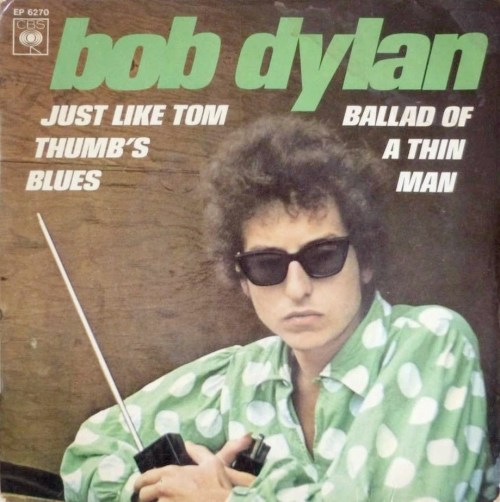

Something is happening here but you don’t know what it is, do you, Mister Jones?

Ballad of a Thin Man

When I look at the current political scene, or listen to analysis and prognostication by dozens of clueless paid or partisan political “experts”, I keep hearing a song from Bob Dylan.

Poetic word salad? Sure. Fitting message? Absolutely.

Ballad Of A Thin Man

You walk into the room
With your pencil in your hand
You see somebody naked
And you say, “Who is that man?”
You try so hard
But you don’t understand
Just what you’ll say
When you get home

Because something is happening here
But you don’t know what it is
Do you, Mister Jones?

You raise up your head
And you ask, “Is this where it is?”
And somebody points to you and says
“It’s his”
And you say, “What’s mine?”
And somebody else says, “Where what is?”
And you say, “Oh my God
Am I here all alone?”

Because something is happening here
But you don’t know what it is
Do you, Mister Jones?

You hand in your ticket
And you go watch the geek
Who immediately walks up to you
When he hears you speak
And says, “How does it feel
To be such a freak?”
And you say, “Impossible”
As he hands you a bone

Because something is happening here
But you don’t know what it is
Do you, Mister Jones?

You have many contacts
Among the lumberjacks
To get you facts
When someone attacks your imagination
But nobody has any respect
Anyway they already expect you
To just give a check
To tax-deductible charity organizations

You’ve been with the professors
And they’ve all liked your looks
With great lawyers you have
Discussed lepers and crooks

You’ve been through all of
F. Scott Fitzgerald’s books
You’re very well read
It’s well known

Because something is happening here
But you don’t know what it is
Do you, Mister Jones?

Well, the sword swallower, he comes up to you
And then he kneels
He crosses himself
And then he clicks his high heels
And without further notice
He asks you how it feels
And he says, “Here is your throat back
Thanks for the loan”

Because something is happening here
But you don’t know what it is
Do you, Mister Jones?

Now you see this one-eyed midget
Shouting the word “NOW”
And you say, “For what reason?”
And he says, “How?”
And you say, “What does this mean?”
And he screams back, “You’re a cow
Give me some milk
Or else go home”

Because something is happening here
But you don’t know what it is
Do you, Mister Jones?

Well, you walk into the room
Like a camel and then you frown
You put your eyes in your pocket
And your nose on the ground
There ought to be a law
Against you comin’ around
You should be made
To wear earphones

Because something is happening here
But you don’t know what it is
Do you, Mister Jones?

Iraq and Afghanistan Veterans of America

Sometimes Heroes Need Help

If it didn’t reduce the impact and get old for readers, I’d post about Iraq and Afghanistan Veterans of America (IAVA) and veterans issues just about every day. As I’ve noted many times, eagerly asking men and women to patriotically sacrifice for our security and then not treating them as the most important people in our country is a moral test we continue to flunk.

IAVA has reported its Program Impact in 2015 and it is impressive and heartening. Please read it and be astonished by how much one committed organization can do to advocate for so many important Americans. The report begins:

IAVA had huge accomplishments in 2015. We reached a record 439,269 veterans nationwide through in-person and online programs — and we did it with fewer resources, while maintaining top ratings from leading nonprofit reporting agencies, GuideStar and Charity Watch.

So if you are frustrated by how slowly and imperfectly our politics match our commitments in this area, please donate to IAVA. It is easy to say thank you to our veterans, as just about every politician does. It is harder and more costly to back it up capably and unconditionally.

The Revival of Enlightened and Transformative Politics

Talking about the revival of enlightened and transformative politics is bound to be imprecise.

That concept has never actually been dead. Looking at Christianity, a recent post about Jim Wallis and Sojourners highlights just one instance. A bigger and much more famous current example is Pope Francis. And it is nothing new. The Social Gospel movement, which is still represented (though not always appreciated), aimed to see the realization of the highest Christian principles in everyday practical society.

Keeping with the Christian theme, this is not about what Jesus would say about abortion or gay marriage or prayer in schools or any of these specific arguments—though all have a certain significance. It is about politics as a tool of overall transformation, beyond sectarian concerns.

This is not limited to Christianity. Every one of the traditions has a core of enlightenment and large scale transformation. But each of those traditions has found a way to occasionally devolve that mission into movements and policies and tactics that diverge and even contradict the higher principles and aspirations. It isn’t necessary to point out the wrong turns that, for example, Judaism and Islam have taken along the way to supposedly establish heaven on earth.

In the era of what was affectionately, or for some derisively, known as the New Age movement, this concept of politics as a transformative tool was central. There was the idea that if we kept our eyes on the prize—not just a country but a world elevated above our baser selves—we could together create something better. Politics was one of the tools that would serve that end, instead of enabling smaller personal ambitions and selfish, possibly pernicious, goals.

So here we are. Enlightened and transformative politics is not dead. But it may be missing in action. Each political choice we make—each donation, each tweet, each vote and, yes, each post—might help us find it. Or kill it. It’s up to us.

You Can Stop Worrying About Trump Being the Republican Nominee. But You Can’t Stop Worrying.

New York Daily News - Trump for Prez

If you were worrying about Donald Trump being the official nominee of the Republican Party, you can stop worrying about that, no matter what the results of Super Tuesday voting.

I have predicted for months that the GOP would never allow him to be its standard bearer, no matter what the delegate numbers. Whether that means changing the nominating rules, or splitting the party, or whatever, that part isn’t as clear. But the party of Lincoln and Reagan was never going to be Trump’s to represent.

The party will find a way to deny him its blessing. And then Trump will execute what has always been his contingency plan: amass as much support and publicity as possible, and then run as an independent candidate. Or maybe run as the candidate of a portion of the split Republican Party. And then win the presidency with a plurality of votes.

That’s where your worrying shouldn’t stop. Forget all the talk about people flocking to Trump because of their frustration and anger about political gridlock and ineffectiveness. You don’t have to take a deep dive into the research to see that tens of million Americans want to roll back progress not to the Reagan years, but to the years before civil rights and other modern principles of tolerance and equality. (My sad favorite remains the Trump supporter wearing a baseball cap saying “Make Racism Great Again!”).

These people may not be your friends, but they are your neighbors and fellow voters. Whether there are enough of them to elect a President of the United States is an open question. It certainly would be easier if they had the passive imprimatur of the Republican Party. But it finally appears they will not. Which is a good thing.

Unless we do have a multi-candidate election. And one of them is Donald Trump. Because one of them will win.

How to Change Your Mind

Floral Chair

The phrase “how to change your mind” is, as are many English expressions, simple and complex:

“How to” as in which method.
“How to” as in which direction.
“Change your mind” as in making a different decision.
“Change your mind” as in transforming it.

Sorting through all that begins with an example.

There is a big colorful overstuffed chair. The fancy fabric is maybe striped or covered with big flowers or designs.

You look at it and think it is beautiful or ugly. You sit in it and think it is comfortable or uncomfortable.

Someone else looks at it and thinks it is beautiful or ugly. Sits in it and thinks it comfortable or uncomfortable.

You two discuss the chair, your thoughts and feelings about it. One may try and explain to the other why one view or experience is better or worse, right or wrong. You might talk about the construction and style relative to the current market for chairs or the historic evolution of chairs.

Yet there it just is. An object with four legs, to keep you sitting up from the floor. There it just is.

You might change your mind about the chair by engaging in the discussion about it, or by sitting in it a few more times.

Or you might realize that it is just that chair. About which your mind is fundamentally changed. Whether the chair is plain wood or elaborately upholstered. Whether you think about it or look at it or sit in it or not.

That is one way to change your mind.

MIND is the forerunner of all actions.
All deeds are led by mind, created by mind.
If one speaks or acts with a corrupt mind, suffering follows,
As the wheel follows the hoof of an ox pulling a cart.

Mind is the forerunner of all actions.
All deeds are led by mind, created by mind.
If one speaks or acts with a serene mind,
Happiness follows,
As surely as one’s shadow.

“He abused me, mistreated me, defeated me, robbed me.”
Harboring such thoughts keeps hatred alive.
“He abused me, mistreated me, defeated me, robbed me.”
Releasing such thoughts banishes hatred for all time.

From the Dhammapada, translated by Ananda Maitreya.

The Year America Gets Politically Sober

There are endless stories about people whose wild and self-destructive behaviors, addictions and obsessions careen out of control. Some of those stories are in books and movies. A lot more of them, millions of them, are in real life.

The stories sometimes end very badly. But sometimes, after a lost weekend, or a lost year, or a lost decade, something happens. Nearing bottom, or hitting bottom, people wake up. They realize that the path they are on—or the lack of a path—can only lead to bad times getting worse. And so they ask for help. Or they find the help within themselves. They recover. They get sober.

All the talking heads have explanations of how “we” got into this political chaos, with many people not particularly pleased with the choices they have, many people appalled at the choices other people are making, and a government—which is after all the point of politics—basically frozen and irrational.

“We” are not the victims. “We” created this mess ourselves. The forms of behaviors, addictions and obsessions are too many to list here. Let’s just say that if we choose not to be broadly informed, choose not to vote, choose to leave it up to other people, choose to be more interested in style than in substance, choose to be selfish, choose to divide by identity, choose to overlook serious problems, and make many other questionable choices, what do you expect?

All hope is not lost.

Just as with addicts and others who find themselves out of control, maybe this is our lost election, and maybe we are going to have to suffer its consequences, but maybe as we near bottom, or hit bottom, we will change our ways.

That’s a happy thought.

Jim Wallis: Evangelical Voters Have Some Explaining To Do

Embarrasing to Be an Evangelical

Jim Wallis says that some Evangelical voters should be embarrassed.

Wallis is President and Founder of the Christian social justice organization Sojourners. It is impossible in short form to explain what treasures Jim Wallis and Sojourners are. So please visit the links to read the descriptions.

Wallis is a stubborn reminder of what he believes Jesus would expect from American Christians, in the face of some of their shortcomings, hypocrisy and grandstanding. No matter what your own faith preference, he is admirable as a brave and insistent conscience for America.

Please read today’s piece, “It’s Embarrassing to Be an Evangelical This Election:
The So-Called ‘Evangelical Vote’ Has Some Explaining to Do.

“Books Smell Like Old People”

Denby - Decline of Teen Reading

David Denby in the New Yorker asks: Do Teens Read Seriously Anymore?

If reading means books or other extended forms of writing, evidence and anecdote say the answer is no.

Denby doesn’t have anything particularly new to say about the big picture and long term consequences of generations who are less interested in books than ever. This is an ongoing conversation that just gets more and more attention as digital demographics continue to roll over us all.

Still, it’s worth reading his piece as a reminder and, for some, a wakeup call.

Denby mentions the related ascendance of STEM education:

The Times reported on Monday that at least fifteen state governments were offering some type of bonus or premium for high-demand STEM degrees. “All the people in the world who want to study French literature can do so,” Matt Bevin, the governor of Kentucky, said. “They’re just not going to be subsidized by the taxpayers like engineers will be, for example.” (Governor Bevin, as it turns out, graduated from Washington and Lee with a bachelor’s degree in Japanese and East Asian studies. So much for the crippling effects of the humanities.)

Denby also mentions a recent book by media scholar Sherry Turkle, Reclaiming Conversation: The Power of Talk in a Digital Age:

Much of their social life, for boys as well as girls, is now conducted on smartphones, where teen-agers don’t have to confront one another. The terror of eye contact! Sherry Turkle, in her recent book “Reclaiming Conversation,” has written about the loss of self that this avoidance creates and also of the peculiar boredom paradoxically produced by the act of constantly fleeing boredom.

Denby doesn’t come off like a snobbishly literate dinosaur. He doesn’t over-idealize “the way things were” as being infinitely and generally better, which they weren’t. He is just an astute observer making the point that extended discourse, written and read, is an essential part of moving society and civilization along. How we reclaim that, if it is in fact getting lost, is a difficult but worthwhile mission.

What Is So Wonderful About Climbing Mount Everest?

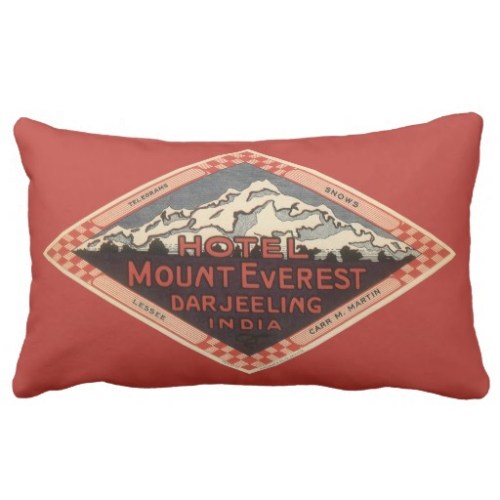
Hotel Mount Everest

Climbing Mount Everest is special. Unless you’re from Tibet:

Human beings are capable of so much endeavor, even in small matters. People spend their lives trying to measure the height of mountains or the depth of the sea. These provide useful information, but they may not prove significant in the long run. For example, we Tibetans could never understand why people climbed mountains for no reason. The mountaineers would say, “I am doing an expedition on Mount Everest,” as if it were the most important thing in the world. They would spend so much time and money; they would even risk, and sometimes lose, their lives. We would wonder if they were mad, and ask, “What do you get when you reach the top?” They replied, “Oh, it is just wonderful!” We would say, “What is so wonderful in that cold wind?” The answer was, “Oh, it is so exciting!” It might seem wonderful, but it will only last a short time, and it is only wonderful if you consider it wonderful. Someone else might think that the most wonderful thing is being curled up, warm and snug, in a cozy bed. To me, for instance, that is much more wonderful.

Ringu Tulku Rinpoche in Radical Compassion: Shambhala Publications Authors on the Path of Boundless Love. Available free.