One Pen Two Caps

I inadvertently put caps on both ends of one pen.
I think this may mean something. But I don’t know what.
I inadvertently put caps on both ends of one pen.
I think this may mean something. But I don’t know what.
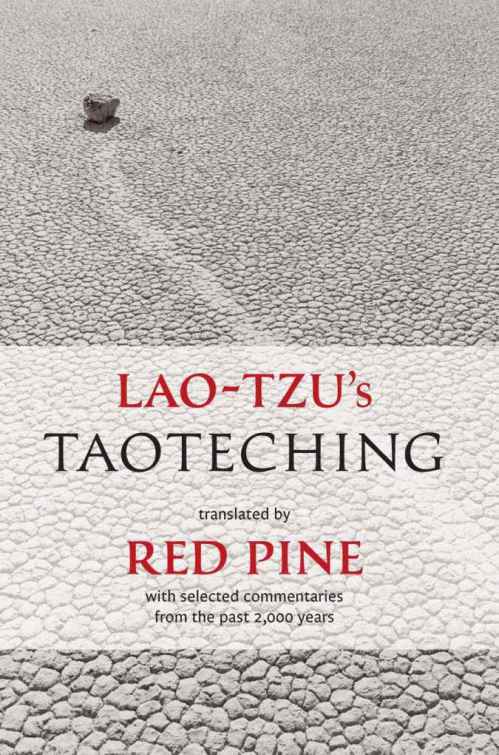
“The world is a spiritual thing.”
Taoteching, Chapter 29
Trying to govern the world with force
I see this not succeeding
the world is a spiritual thing
it can’t be forced
to force it is to harm it
to control it is to lose it
sometimes things lead
sometimes they follow
sometimes they blow hot
sometimes they blow cold
sometimes they expand
sometimes they collapse
sages therefore avoid extremes
avoid extravagance
avoid excess
Reading and studying the little (81 tiny chapters) and infinite pool of Lao-tzu’s Tao Te Ching is as valuable as knowing any text from any tradition. Of the dozens of translations into English, all different and many worthy, the one by Red Pine—the translator and scholar Bill Porter—is the place to visit and rest awake. Along with his translation, he includes excerpts from 2,000 years of commentaries.
Seasons Meeting
Seasons meet
In August.
This morning
Green trees
Hiding houses.
Heat and sun break
For gray clouds and
Cool breeze.
Not now, soon
Trees will explode
Color to bare,
Houses revealed.
Breeze to harsh wind.
These flimsy clothes
Will grow thick.
But not today.
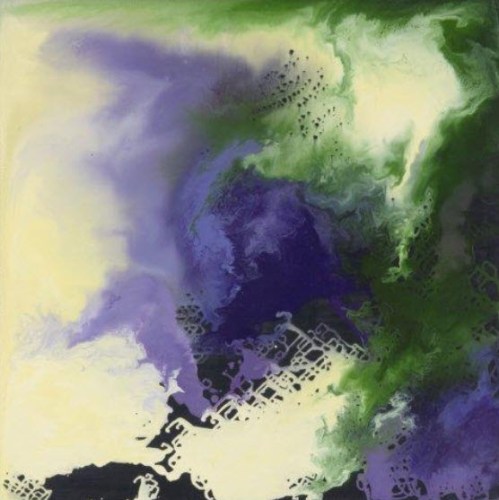
The paintings of Eva Roberts are now being shown on the Saatchi Art website. Some are there already, and more are reportedly on the way.
Others have written insightfully about this extraordinary art (Peter Frank: “Roberts’ practice harks back before abstract expressionism to the abstract painting of a century ago, a painting driven by and infused with spiritual and metaphorical content….The soul of Eva Roberts’ paintings, then, is a twinned unity, proffering the yin of pure form and the yang of the recognizable.”).
The best way to begin experiencing these paintings is not to read about them but to visit and look. Look and look again.

The Grateful Dead’s Workingman’s Dead album (1970) is a showcase for the brilliance of lyricist and poet Robert Hunter. (Hunter was inducted into the Rock Hall with the Dead in 1994, and is the only non-performer member of a band ever to be so honored.)
Listen to New Speedway Boogie, or read the lyrics below, and see if it doesn’t have something to say today.
Please don’t dominate the rap, Jack
If you’ve got nothing new to say
If you please, don’t back up the track
This train’s got to run today
I spent a little time on the mountain
I spent a little time on the hill
I heard some say better run away
Others say better stand still
I don’t know, but I been told
It’s hard to run with the weight of gold
Other hand I have heard it said
It’s just as hard with the weight of lead
Who can deny, who can deny
It’s not just a change in style
One step done and another begun
And I wonder how many miles
I spent a little time on the mountain
I spent a little time on the hill
Things went down we don’t understand
But I think in time we will
Now, I don’t know, but I was told
In the heat of the sun a man died of cold
Keep on coming or stand and wait,
With the sun so dark and the hour so late.
You can overlook the lack, Jack
Of any other highway to ride
It’s got no signs or dividing lines
And very few rules to guide
I spent a little time on the mountain
I spent a little time on the hill
I saw things getting out of hand
I guess they always will
I don’t know, but I been told
If the horse don’t pull you got to carry the load
I don’t know whose back’s that strong
Maybe find out before too long
One way or another, one way or another
One way or another, this darkness got to give
One way or another, one way or another
One way or another, this darkness got to give
One way or another, one way or another
One way or another, this darkness got to give
Written by Jerome J. Garcia, Robert C. Hunter
This was written in October 2015, when Joe Biden announced he would not run for the Democratic nomination. The election story isn’t over yet, but we know what happened since. Bernie Sanders galvanized progressives who yearned for a new path and who had distaste for and distrust of Hillary Clinton. Donald Trump galvanized a completely other constituency of the distasteful and the distrustful. And so it goes.
Joe Biden is neutralized, so it is now safe for all Democrats to say how much he is loved, not just by Democrats, but by Republicans and the whole nation. And how capable, experienced and qualified he is. And how nobody is better at working across the political aisle.
The way he is being praised to the heavens by all, including Hillary Clinton supporters, you would think this was a new discovery. In fact, he was just as beloved, capable, experienced and qualified a couple of days ago. In fact, it was Republican Lindsey Graham who said three months ago, “He’s the nicest person I’ve ever met in politics. He’s as good a man as God has ever created.”
The difference, of course, is that Joe Biden now poses no threat to Hillary Clinton. And therein lies some insight, not about Joe or Hillary, but about what people do not like about politics, certainly not the way it is played by some of our leading figures.
Politics may be a game, but when playing it involves hiding the truth about people, or delaying telling the truth about people because it is not politically expedient, something is wrong. It may be “right” electorally, but wrong by most other human measures. Good people and behavior should be lauded in a timely way, not so good people or behavior should be noted in a timely way.
When people are as constant and talented as Joe Biden, members of the Democratic Party, even if they supported someone else, shouldn’t have waited to celebrate that constancy—even it meant giving him his due. But they did wait until today. When it was safe.
Which is not only sad, but bodes ill for those who claim to be truth tellers and uniters of a clearly divided body politic. Because if you are afraid of someone beloved, capable, experienced and qualified, what exactly does that say about you?
Plainday Plainsong
An old friend says
That when you fully notice anything
You are there.
The morning wind blows chill
Driving away thoughts
Of hot summer.
The birds are long awake
Forever.
A white steeple
Shoots out of a green sea.
Later they will gather under it
To sing.
My old friend is gone
Four hundred years
And still speaking.
“It’s not for me to say.”
One of the keynotes of Buddhism and Zen is nondiscrimination, that is, not getting trapped by thinking this is better and that’s worse, this is right and that’s wrong. This doesn’t mean that things aren’t by their nature or manufacture different or preferable, or that you can’t or shouldn’t recognize that. It’s just that clinging to that difference is unhelpful and can be the source of unnecessary conflict.
In the wake of some typically silly arguments, I have an idea for a way to remind myself of this, since it can be so easily forgotten in the heat of the moment.
Confronted by the endless opportunities to offer an opinion, to counter another’s opinion, or just to show off how smart and discerning one thinks one is, consider just reciting this, silently or out loud:
“It’s not for me to say.”
This isn’t a magical mantra, but it is meaningful. Of course, if someone asks for the quickest directions, or how to best cook something, or where to live, you will be welcome to offer your practical knowledge and expertise, if you have those. But often, when the difference of opinion is of no consequence, or of less consequence than the conflict is worth, having no opinion can be the best way.
It may be for someone else to say. But not me.
I picked up a year-old magazine and read the obituary of a writer I did not know had died.
It celebrated his talent and achievements, which I had occasionally enjoyed. I wasn’t a regular reader of his work, but I admired it.
There would be no newly-created work of his to read. To those who regularly read his work and who worked with him, it was a deep loss. For those who were still to discover his work, or like me had only dabbled in it, there was plenty of already published work to read, though we might or might not get around to it.
It would not have mattered had I read the obituary the week it was published instead of now. Maybe it would have come up in conversation at the time, but probably not. Maybe I would have noted it in something I wrote at the time, but also probably not.
He died about a year ago. Maybe I will go back and enjoy something he wrote, something I’d read before, or something I’d missed. We’ll see.
Practices
Our practices grow ragged
From disuse
Or irregularity.
Don’t fret.
There they are
Patient for our return.
Once a day
Once a year
Once in a lifetime.
Always ready and waiting.
 Bob Schwartz