Bob Schwartz

Just One More

Zabuton

If you have an abiding interest or passion, it is natural to want just one more. One more thinker or writer or artist or teacher, one more book or work or class, one more experience to deepen and broaden your understanding and appreciation. And maybe your life. It is often beneficial in just that way.

The antithesis of, and sometimes antidote for, just one more is no more and enough. This isn’t always obvious or appealing, because the one more genuinely seems to do some good, even help you break through to some new level or place.

But once you have done some preparation, there is something to be said for continuing to work the same small pieces of ground, with the same old small group of teachers and guides, over and over. Maybe even just one piece of ground with one teacher or guide. It’s true that the wandering and exploration might just turn up something more and better. But it’s also true that the better or best may be there in the first piece of ground, the first book you read or teacher you listened to.

Anyway, the nature of things is not just one more. It is all this and no more.

The Paramount Pictures Vault: Free and Legal Movies on YouTube

Paramount Vault

Let’s be honest. Movie lovers do look for and watch full-length movies on YouTube—almost all of which are not there legally. For a lot of people, it’s not that they wouldn’t prefer watching these old, classic or limited-interest movies on a streaming service. It’s that a lot of those movies aren’t on streaming services, and even passionate movie lovers are not willing to pay for a DVD of a movie they will watch only a couple of times, if not just once.

Which is why the Paramount Pictures Vault on YouTube is such a refreshing development. There you can find a small selection of such movies from the studio, offered as a gift and, of course, as a promotion for Paramount’s other works, which they do hope you will pay for:

The Paramount Vault showcases a collection of Paramount full-length films and clips including selections that range from black-and-white to color, comedy to horror, and everything in between. Viewers are invited to explore the vast landscape of cinema’s history, share their favorite films, and discover new ones through this official channel created by Paramount Pictures.

So for those who, once in a while, feel a twinge watching movies on YouTube that they know are not completely legit, here’s a way to have some movie fun and to feel clean and legal. Enjoy!

The Cloth of Relationship

Relationships are cloths, woven over time.

Few are solid, woven from one color thread. Beautiful, if that color and weave is right. For you.

Almost as few are planned patterns, perfect plaids and checks and stripes. Maybe plans once, but even a glance reveals misses, tiny or huge.

Most are crazy weaves, and then it all depends. How is it to your eye, to your touch? Something to wear every day, to delight, to keep on the loom and add to? Something else?

What happens when threads go missing, pulled out or worn out? Most cloth will hold together, and the new design may be even better. For you.

Weave weavers.

Afghanistan Without End. Amen.

It is time to stop expecting American leadership in either party, at any level, to reasonably articulate an achievable goal in Afghanistan. Either the conclusion they’ve reached is that there is none or it is too hard to tell us the inconvenient truth they have concluded.

So we are just going to have to take on the role of citizen policy analysts and do it ourselves.

We are unlikely to ever help establish an Afghan military capable or willing to hold back whatever insurgent force mortally threatens stability and national integrity.

We are unlikely to see the establishment of a stable semi-permanent semi-democracy in Afghanistan.

We are never going to “defeat” the Taliban or other similar threats in Afghanistan, in the sense of forever eliminating and precluding such evil developments.

That leaves one possibility. We are keeping troops in Afghanistan to help keep things from getting worse.

It’s a problem to admit that. First, because a military mission of stopping things from getting worse seems unending, which it well might be. Entropy tells us that things fall apart naturally unless acted upon otherwise. In Afghanistan that otherwise is us. It’s also hard to tell those who serve that the point of their sacrifice is to keep things from getting worse, rather than seeing a genuinely better future and having a defined endpoint.

But at least it would be honest. And on top of the war without end, that is an equally big problem. From the Vietnam War to today, there has been a lot of official and political obfuscation. Well, let’s call it lying. It isn’t that the policy makers don’t have noble principles in mind, such as freedom, self-determination, and the like. It’s just that the plans they put in place—very expensive plans—have practically no chance of fulfilling any of those principles.

Treasure Again

Dhammapada

How could I know
When I first read this treasure
How I would wander away
This way and that.
Make no mistake that others
Had value
Like other food that feeds well
Medicine that soothes ills.
But all along there it stood
Waiting for me to look again
And see its simplicity.
No time wasted
Here it is.

It is easier than we might think to lose track of things that once inspired us, the way a match is lost once we use it to light a fire.

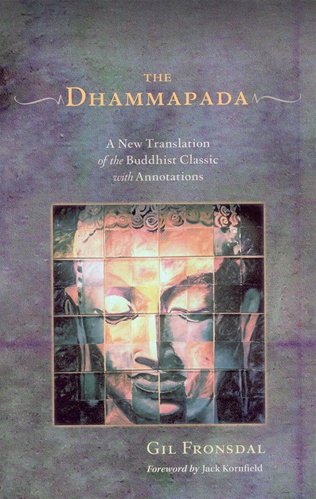
This verse refers to my turning back to the Dhammapada. It is the brief, most basic, and most widely-read collection of wisdom from the Buddha, whose recollected discourses fill volumes. Depending on which Buddhist trails you follow, just as with Jewish, Christian, Muslim, etc. trails, you will have read and heard plenty of excellent teaching from plenty of excellent teachers along the way. But there is something extraordinary about revisiting the first thing seen, the first coin from the treasure, which for many on the Buddhist way is The Dhammapada.

If you are curious to explore the Dhammapada, try this translation by Thomas Byrom or this one by Gil Fronsdal, both from Shambhala Publications.

Hillary’s Hubris: Whose Party Is It Anyway?

Who is the leader, the face, the identity of the Democratic Party? Simple: President Barack Obama. Who else?

If you ask Hillary Clinton’s supporters, or at least listen carefully to what they say, she is the party. And therein lies her biggest problem, at least among some number of Democrats.

No major party has, at least in modern times, had anyone other than a sitting President be the undisputed presumptive leader and face of the party, such that when the time came to pick a new nominee, it was a foregone conclusion. At least not one with a relatively modest record of public service. But that is exactly what is happening. Not once but now twice.

Politico reports on a dinner of high level Hillary donors at which they spoke their minds, particularly about Joe Biden:

The prospect of the grieving vice president’s potential entry into the race was a subject that obsessed the group over dinner, where many worried he will fracture the party….

“I’m concerned that the first bumpy road she hits – and there’s a man ready to knock her out, I’ve seen this before,” said Kounalakis, a close Clinton ally who is hosting a fundraiser in San Francisco for Clinton in November, and is viewed as potentially a major donor in 2016. “I’m worried we’re not accustomed to having a woman candidate at this level, and we don’t have the language to fight sexist attacks.”

Buell, who over the past 10 years has given $25 million to progressive groups and candidates, shook her head at the prospect of a Biden candidacy.

“Why would he want to go out on such a negative?” she asked her friends.

You have to read that carefully to dig out the premises or promises. Which are:

1. Hillary Clinton is the party, and whoever and whatever seriously stands in her way or questions her will “fracture the party.” That is, will disrupt her otherwise unstoppable opportunity.

2. Standing in her way is a negative act. Or, as noted in an earlier post, “Why would he want to go out on such a negative?” is one of the thinly veiled promises that if Biden proceeds to “fracture the party” he will learn just what negative means, and he will have to take his political lumps for doing so. Maybe lots of powerful money-fueled lumps.

Hubris is the sort of extreme and undeserved pride and self-confidence that offends the gods, and is usually punished by them. The gods don’t really care what happens in the byzantine and self-serving ways of American politics. But in the case of Hillary Clinton, a lot of Democrats do. They don’t want to be told that their preference for some other candidate, or their antipathy towards Hillary, is the shameful path toward splitting a noble party, or is disloyalty tantamount to treason. And you know what we do with traitors.

So maybe it isn’t Bernie Sanders or Joe Biden that are actually threatening to fracture the Democratic Party. Maybe the hubris of a particular candidate will do that all by itself.

Red Debris

Red Debris

Red debris
In a green sea of fall.
Monochrome to color
One at a time.
Herald for the forces
That will come
As they always do
To transform
Forest and field.
Asking us to forget
The green past
And embrace
Yellow brown and gold
And cold.

Prisoners Beat Harvard in Debate

Bard Prison Initiative

A team from a prison just beat a team from Harvard. In a debate.

The Washington Post reports not just the victory of the team, part of the Bard Prison Initiative, but the constraints that the debaters prepared under—including having to research without the internet, from actual books and articles, but only those approved by the prison administration.

Too many lessons to count. Among them:

The two million or so people we consign to prison aren’t all there because they are not smart enough or motivated enough to function or excel in the real world.

The people who consign themselves to our most privileged houses of learning aren’t all as smart and motivated as some of those consigned to prison.

If you want to learn, really learn, learn enough to defeat the nation’s purportedly premier scholars, you can do it offline. Just like this prison debate team. Just like Abraham Lincoln.

The Sad Politics of Realism

Besides the politics of pessimism being peddled by Republicans, we have a new wrinkle courtesy of some of Hillary supporters. The sad politics of realism.

While most advise being gentle with Bernie Sanders in the upcoming debate to avoid alienating his supporters, others are pushing her to take him on as promoting unrealistic ideas that are “pie in the sky.” According to Politico:

“I think she needs to show that she isn’t taking the nomination for granted and that Bernie’s ideas are not realistic,” a Nevada Democrat said….

Added a New Hampshire Democrat, “His pie in the sky policy ideas, while wonderful, have received very little scrutiny by the press. It’s about time they did.

The sibling of realism is expedience. Not quite twins, but very close, sharing much of the same DNA.

Optimism and aspiration are never out of place in politics. Without them, all you’ve got left is the past and the present, and a future that looks like some version of that. Of course for some, the idea of redux, of say, another Clinton White House, is an outcome worthy of killing dreams, interesting ideas and hope, unrealistic fables appropriate only for children. Grownups know what it takes to win the real prizes, unpretty and sad as the path may be.

Suddenly the politics of pessimism doesn’t look so bad, or at least won’t be so lonely in the company of its companion, the politics of realism. Please put down that pie in the sky. You just might get ideas.

New Beginnings: The Torah and the I Ching

Bet

In Jewish congregations, the annual Torah reading cycle begins again this week with the first chapters of the Bible. In Hebrew it begins with the word b’reishit, and in its best-known translation, the first verse goes like this:

In the beginning, God created the heavens and the earth.

And with that comes a puzzle.

If B’reishit is the beginning of a very big and consequential story, and if the creators of the Torah were sensitive to the mystical meanings of the Hebrew alphabet and language, why does the Torah begin with the second letter bet (B) rather than the first letter alef (A)?

Looking at a bigger picture, this connects to a related puzzle and an unlikely source: the I Ching.

The I Ching is a classic of Chinese literature and philosophy, a text as ancient as the Torah and just as influential.

Richard J. Smith writes in The I Ching: A Biography:

The Changes first took shape about three thousand years ago as a divination manual, consisting of sixty-four six-line symbols known as hexagrams. Each hexagram was uniquely constructed, distinguished from all the others by its combination of solid (——) and/or broken (— —) lines. The first two hexagrams in the conventional order are Qian and Kun; the remaining sixty-two hexagrams represent permutations of these two paradigmatic symbols….

The operating assumption of the Changes, as it developed over time, was that these hexagrams represented the basic circumstances of change in the universe, and that by selecting a particular hexagram or hexagrams and correctly interpreting the various symbolic elements of each, a person could gain insight into the patterns of cosmic change and devise a strategy for dealing with problems or uncertainties concerning the present and the future.

The first intriguing note is that the I Ching (pronounced Yi Jing) begins with those hexagrams Qian and Kun—known generally in English as Heaven and Earth. The cosmos of change and the I Ching begin then with Heaven and Earth.

It is at the close of the 64 hexagrams that the conundrum appears. Hexagram 63, the penultimate one, is Ji Ji—After Completion. This should be the end of the story. But it isn’t. The final hexagram, Hexagram 64, is Wei Jei—Before Completion. In the end, it doesn’t stop. It begins again. The Book of Changes emphasizes that the changes never end.

This is an explanation of why the Torah does not begin with the beginning of the alphabet. If it starts with A, that presumes a Z, A to Z, or in Hebrew, alef to tav. Creation would thus be represented as a finite element of a finite cosmos. In the text it starts instead, as the Latin phrase goes, in media res—in the middle of things. Just as the Torah will end in the middle of things, after completion of a journey, but with Moses never allowed to experience what is yet to happen, before the next completion. On and on, always beginning, never done. Just like the I Ching. Just like the Torah itself.