Bob Schwartz

Tag: War

Christmas for Refugees

How could you say to me,
“Off to the hills like a bird!
For, look, the wicked bend back the bow,
they fix to the string their arrow
to shoot from the gloom at the upright.
The foundations destroyed,
what can a righteous man do?”
Psalms 11:1-2 (Robert Alter translation)

Now after they had left, an angel of the Lord appeared to Joseph in a dream and said, “Get up, take the child and his mother, and flee to Egypt, and remain there until I tell you; for Herod is about to search for the child, to destroy him.” Then Joseph got up, took the child and his mother by night, and went to Egypt,
Matthew 1:13-14 (NRSV)

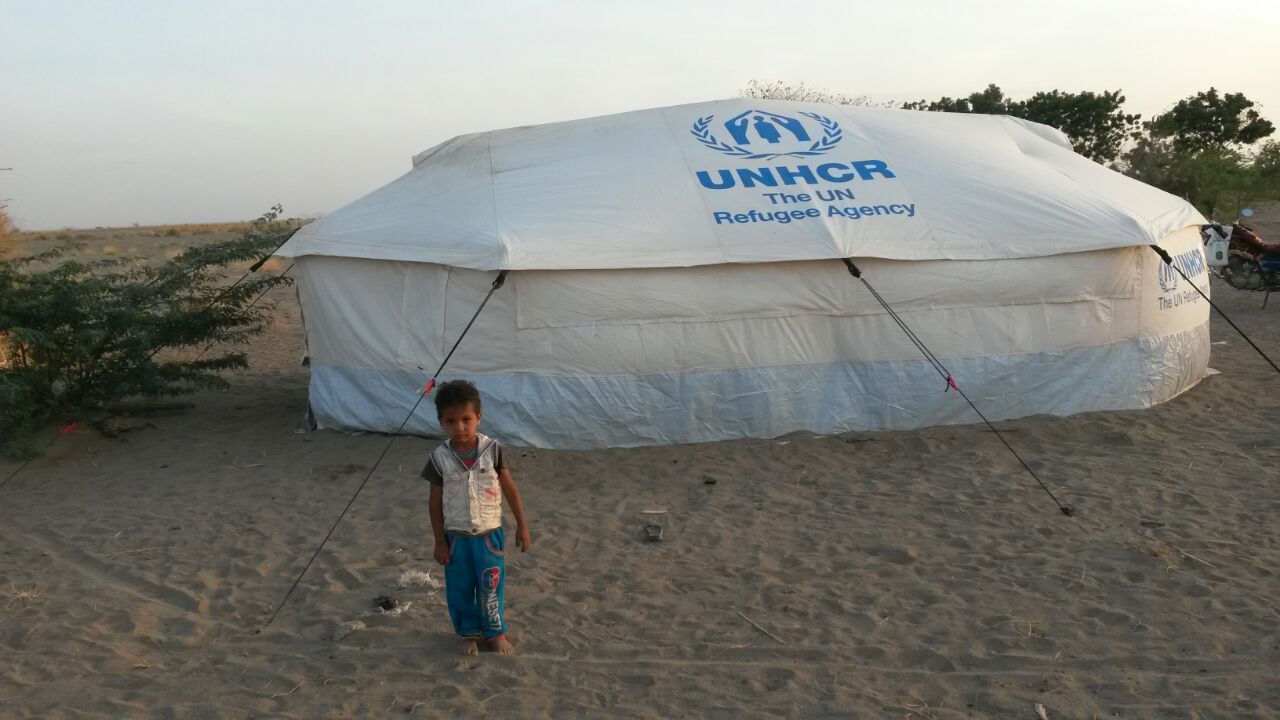
The wicked bend back the bow. The innocent flee. Give this Christmas to the UNHCR.

A Very Short Primer on Veterans

1. When we as people of a nation order or ask others to fight for any cause, we must treat them, their service, and their families with the highest practical lifelong honor and healing, that is, with more than just symbols or rhetoric.

2. As we order or ask for that service, from the first we must study the causes that we are fighting for, in light of all our truest values, not just the values that are convenient, expedient, self-serving or inadequately considered.

3. While we will likely never be a world without warriors, we owe it to the warriors—past, present and future—to be peacemakers.

​The UN Declares Nuclear Weapons Illegal 

Some think the United Nations is naive and childish at best, and at worst a way for small nations and idealistic dreamers to get in the way of superpowers doing the dirty and necessary grown up business of the world. 

That is the context of the vote (122 of 193 nations) to declare nuclear weapons illegal, a vote that was boycotted, derided and ignored by those superpowers. 

The UN is not naive and the vote is not ridiculous. From the start, the UN was meant to stand in the way of tragedy, or help fix it when it couldn’t be avoided. The UN is in part the collective conscience of the world, and like conscience, is set aside for the sake of pragmatism and convenience. 

The first and only time atomic bombs were used in war was 72 years ago. Since then, the power and quantity of those weapons has grown exponentially, as has the number of nations owning them. What is naive and childish is to think that the power and numbers won’t continue to grow. Thinking that keeping nations such as Iran and North Korea out of the club is a solution, while existing members continue to stockpile, is delusional. There will always be another nation, always more and more powerful weapons. 

Also delusional is the thought that having avoided the use of nuclear weapons for 72 years demonstrates a likelihood that it will never happen again. Looking back at millenia of brutal geopolitics, we would laugh if that thought isn’t so painfully ignorant. 

It’s true that the UN declaration, even with a majority of nations behind it, has no practical effect. But it should leave every citizen and every nation thinking about this all the time, from practical and philosophical perspectives. It seems that the concept of normal is eluding us more and more, but if every house in your town was filled with lots of highly dangerous explosives, how normal is that? How would you sleep? Do you trust your neighbors, all of them, any of them, that much? 

Be Peace

6 Long has my whole being dwelt
among those who hate peace.
7 I am for peace, but when I speak,
they are for war.
Psalm 120, translated by
Robert Alter

Terror in Manchester is one more shattering note in a cacophony of mindless aggression. News of the nation and the world attests to it, from nasty tweets by so-called leaders to torturers and mass murderers. We dwell among those who hate peace.

In Psalm 120, Robert Alter translates the Hebrew ani shalom in verse 7 as “I am for peace”:

The Hebrew appears to say “I am peace,” but, without emending the text, the most plausible way to understand these two words, ani shalom, is that they function as though there were an elided “for” (in the Hebrew not a word but the particle l’).

I dare not take issue with Alter, the great modern translator of the Hebrew Bible, but merely want to extend a thought. If the Hebrew appears to say “I am peace”, maybe that is precisely what it means to say.

Being for peace is a start and an essential part. Being peace is one step beyond this, where there is no space between us and the peace we seek. One step toward that elusive peaceful world, in spite of those who hate peace.

China’s Big Long View: “Swords Drawn and Bows Bent”

In a story about current tensions between the United States and North Korea, this was reported:

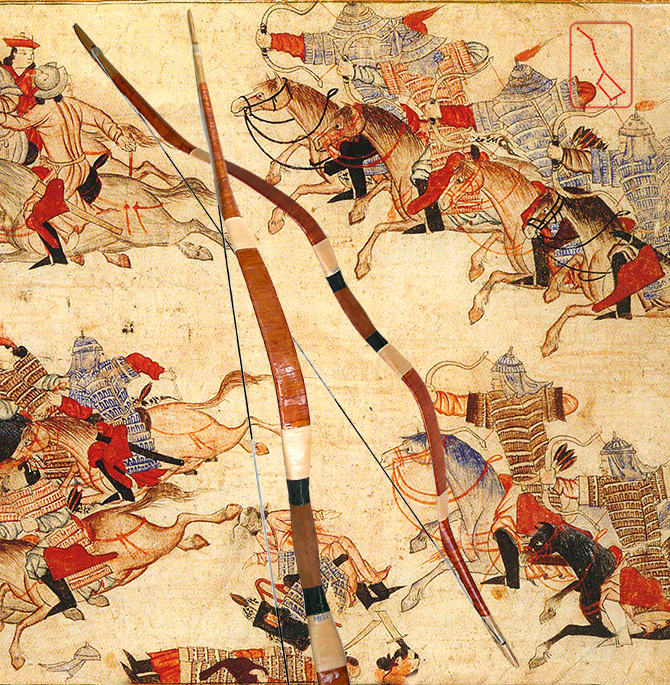
“The United States and South Korea and North Korea are engaging in tit for tat, with swords drawn and bows bent, and there have been storm clouds gathering,” China’s foreign minister, Wang Yi, said in Beijing, according to Xinhua, the state news agency.” (emphasis added)

It is hard to imagine the American President or Secretary of State using such poetic language to describe such a serious situation. But allusions to swords and bows is not just poetic. It reflects the thousands of years that China has had to deal with situations just like this.

In the world, few nations, and none so powerful, are as young as the United States. We tend to equate power with enlightened perspective, but that is silly. Even the European nations can’t compare their histories to the long and hard lessons that many Asian nations have learned.

It is no accident that in the years since the end of a series of modern Asian wars involving the West—World War II, Korean War, Vietnam War—Asian nations have to some degree risen and dominated in various ways. China in particular. These nations have had to ride the wave of history, going back to times when swords and bows were the tools of strategy and subjugation, of victory and defeat.

Many Americans think that the most significant global affairs began a couple of centuries or so ago, when this nation emerged in North America as the perfection of what our European ancestors tried but failed to accomplish. Like all precocious children, we think that it is all about us, especially because of our might and our ability to damage and destroy. Those who have seen it all before are careful not to provoke us, but know that no matter how big our weapons, they are only swords and bows, about which they have much more experience.

Syria: Things Fall Apart

I just checked to see how many posts I’ve published about or mentioning Syria. Twenty in the last four years.

Just when you think it couldn’t get worse, it does. When you think that nobody has “the answer” you are proven right. Again.

The oldest of the posts is Can Israel Stop the Syrian Genocide? (“Can Israel stop the Syrian genocide? On its face, the question seems practically preposterous and crazy….But in a world and region that continues to exhibit madness, maybe moments of crazy wisdom are what we need to break through. Because whatever we are doing isn’t working.”)

Of course, Israel wasn’t about to stop the Syrian madness, and hasn’t. Neither have we or any other nation, and neither are we or any other nation sure what to do—not only to stop the madness but to relieve the ongoing dismal and heartbreaking aftermath.

So we watch. It’s not the first time in our lifetimes, or in history, that good people have stood by uncertainly at the sight of spiraling tragedy and could not act or figure out what to do.

William Butler Yeats wrote The Second Coming in 1919, as the madness of World War I was just ended and the madness of the Irish War of Independence was just beginning. “Things fall apart; the centre cannot hold.” As Yeats saw it, one cycle was ending in utter darkness, but there was the possibility of light appearing again in history, as it had before.

This is a season of light for many people, but in Syria it is getting darker every day. We will do what we can, but if we and our leaders can do nothing, we can at least keep Syria in our hearts, right next to a burning light.

The Second Coming

Turning and turning in the widening gyre
The falcon cannot hear the falconer;
Things fall apart; the centre cannot hold;
Mere anarchy is loosed upon the world,
The blood-dimmed tide is loosed, and everywhere
The ceremony of innocence is drowned;
The best lack all conviction, while the worst
Are full of passionate intensity.

Surely some revelation is at hand;
Surely the Second Coming is at hand.
The Second Coming! Hardly are those words out
When a vast image out of Spiritus Mundi
Troubles my sight: somewhere in sands of the desert
A shape with lion body and the head of a man,
A gaze blank and pitiless as the sun,
Is moving its slow thighs, while all about it
Reel shadows of the indignant desert birds.
The darkness drops again; but now I know
That twenty centuries of stony sleep
Were vexed to nightmare by a rocking cradle,
And what rough beast, its hour come round at last,
Slouches towards Bethlehem to be born?

Veterans Day and Operation Unite America

veterans-day

Friday, November 11 is Veterans Day, which this year arrives during the same week as Election Day (you remember that day, don’t you?)

The great Iraq and Afghanistan Veterans of America (IAVA) has organized Operation Unite America:

Veterans Day 2016 is just 3 days after Election Day. Join IAVA’s campaign to do the impossible: bring together all Americans.

After a long, brutal and disgusting election season, everyone’s had it. It hasn’t been a good look for America. Everyone is exhausted–many are outright embarrassed. But Republican, Democrat, Independent, Other…we’re ALL sick of the bickering, the commercials, the debates, the politics, the fighting.

Here is your mission (if you choose to accept it!), JOIN US:

Tag your Veterans Day activities on social media with #veteransday

Donate $11 to IAVA to help us support veterans

Attend a #veteransday #VetTogether


tammy-duckworth

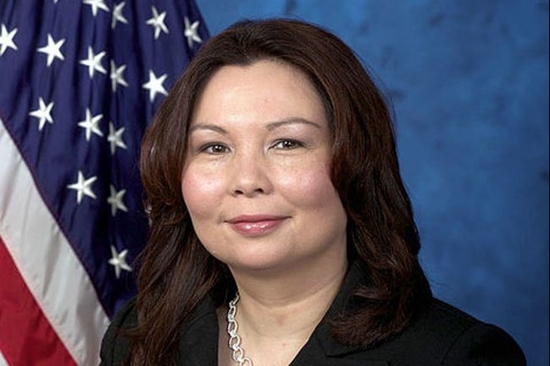
In the wake of Election Day, it is happy news to report that Rep. Tammy Duckworth of Illinois won a seat in the U.S. Senate. She is an Iraq War veteran, awarded the Purple Heart after losing both her legs. She joins a number of women warriors in Congress, which needs more women and more experienced warriors who know how to choose our wars carefully. And who will take good care of other warriors when they come home.

Another Cool Way to Show Support for Our Veterans

IAVA Lifeline Flex

I’ve written a number of times before about veterans issues and about the Iraq & Afghanistan Veterans of America (IAVA), which last month sponsored a televised Commander-in-Chief Forum featuring the presidential candidates.

It is an old song, but worth repeating. Our treatment of those we have asked to fight is a national shame. If we don’t want to fight and defend, and don’t ask others to do the job for us, fine. Peace is wonderful. But once we ask, we have to provide virtually infinite support for those who answer. This should be at the top of any policy priority list, because it is a moral test, not a partisan talking point. For a grade, I’d consider giving us an E for Effort, but really, it’s more like an F.

If you want to show your support, IAVA has a very cool and inexpensive wearable. It’s the IAVA Lifeline Flex:

IAVA Lifeline Flex
$14.99

Iraq & Afghanistan Veterans of America (IAVA) Lifeline Flex in Night Vision Yellow and Black with engraved logo on a metal toggle clasp. Hand-wound from the same 550 lb tested parachute chord used in WWII to attach men to their chutes, these cuffs give you up to 15ft of usable paracord when unwound. Not just an all purpose survival tool, the 550 cord also looks killer on your wrist. Don’t leave home without one of these killer bracelets.

ITEM DETAILS:
Hand-wound from military grade 550 cord
One size fits all “Flex” interior with IAVA closure clasp

British Victories in the American Revolution

British Occupation of Philadelphia

For those who are supporting an American political revolution, and may be discouraged by the results of some of the battles, take heart.

The original American Revolution, an attempt to bring truly representative democracy to the North American continent, was a long and seemingly impossible series of battles, many of which the colonists lost. And lost. And lost.

Today, of course, Americans of all beliefs celebrate the perseverance of those who, at the time, many considered political pests and unrealistic dreamers, naïve and fooling themselves into thinking that things could radically change.

Reason and evidence suggested that these revolutionaries were possibly delusional. Except. Except they didn’t think so, and thought that the naysayers were shortsighted or even traitors to the cause of freedom.

And so, for you political revolutionaries, a partial list of the British victories in the American Revolution. In case you forgot, the winner of these battles ultimately lost. Big time.

Battle of Kemp’s Landing – November 14, 1775
Battle of the Rice Boats – March 2-3, 1776
Battle of Block Island – April 6, 1776
Battle of The Cedars – May 18-27, 1776
Battle of White Plains – October 28, 1776
Battle of Fort Cumberland – November 10-29, 1776
Battle of Iron Works Hill – December 22-23, 1776
Battle of Bound Brook – April 13, 1777
Battle of Ridgefield – April 27, 1777
Battle of Thomas Creek – May 17, 1777
Battle of Short Hills – June 26, 1777
Siege of Fort Ticonderoga – July 5-6, 1777
Battle of Hubbardton – July 7, 1777
Battle of Fort Ann – July 8, 1777
Battle of Oriskany – August 6, 1777
Second Battle of Machias – August 13-14, 1777
Battle of Staten Island – August 22, 1777
Battle of Setauket – August 22, 1777
Battle of Cooch’s Bridge – September 3, 1777
Battle of Brandywine – September 11, 1777
Battle of Paoli – September 21, 1777
Siege of Fort Mifflin – September 26 –November 15, 1777
Battle of Germantown – October 4, 1777
Battle of Forts Clinton and Montgomery – October 6, 1777
Battle of Matson’s Ford – December 11, 1777
Battle off Barbados – March 7, 1778
Battle of Quinton’s Bridge – March 18, 1778
Battle of Crooked Billet – May 1, 1778
Mount Hope Bay raids – May 25-30, 1778
Battle of Alligator Bridge – June 30, 1778
First Battle of Ushant – July 27, 1778
Siege of Pondicherry – August 21–October 19 1778
Battle of Newport – August 29, 1778
Grey’s raid – September 5-17, 1778
Baylor Massacre – September 27, 1778
Battle of Chestnut Neck – October 6, 1778
Little Egg Harbor massacre – October 16, 1778
Carleton’s Raid – October 24-November 14 1778
Battle of St. Lucia – December 15, 1778
Capture of St. Lucia – December 18-28, 1778
Capture of Savannah – December 29, 1778
Battle of Brier Creek – March 3, 1779
Chesapeake raid – May 10-24, 1779
Battle of Stono Ferry – June 20, 1779
Great Siege of Gibraltar – June 24, 1779-February 7, 1783
Tryon’s raid – July 5-14, 1779
Penobscot Expedition – July 24-August 29, 1779
Action of 14 September 1779 – September 14, 1779
Siege of Savannah – September 16-October 18, 1779
Battle of San Fernando de Omoa – October 16-November 29, 1779
Action of 11 November 1779 – November 11, 1779
First Battle of Martinique – December 18, 1779
Action of 8 January 1780 – January 8, 1780
Battle of Cape St. Vincent – January 16, 1780
Battle of Young’s House – February 3, 1780
Battle of Monck’s Corner – April 14, 1780
Battle of Lenud’s Ferry – May 6, 1780
Bird’s invasion of Kentucky – May 25-August 4, 1780
Battle of Waxhaws – May 29, 1780
Battle of Connecticut Farms – June 7, 1780
Battle of Camden – August 16, 1780
Battle of Fishing Creek – August 18, 1780
Battle of Charlotte – September 26, 1780
Royalton Raid – October 16, 1780
Battle of Jersey – January 6, 1781
Battle of Cowan’s Ford – February 1, 1781
Capture of Sint Eustatius – February 3, 1781
Battle of Wetzell’s Mill – March 6, 1781
Battle of Guilford Court House – March 15, 1781
Battle of Cape Henry – March 16, 1781
Battle of Blandford – April 25, 1781
Battle of Hobkirk’s Hill – April 25, 1781
Action of 1 May 1781 – May 1, 1781
Siege of Ninety-Six – May 22-June 6, 1781
Action of 30 May 1781 – May 30, 1781
Battle of Spencer’s Ordinary – June 26, 1781
Battle of Green Spring – July 6, 1781
Battle of Dogger Bank – August 5, 1781
Battle of Groton Heights – September 6, 1781
Battle of Eutaw Springs – September 8, 1781
Siege of Negapatam – October 21-November 11, 1781
Second Battle of Ushant – December 12, 1781
Battle of Videau’s Bridge – January 2, 1782
Capture of Trincomalee – January 11, 1782
Battle of Saint Kitts – January 25-26, 1782
Battle of Wambaw – February 24, 1782
Action of 16 March 1782 – March 16, 1782
Battle of the Saintes – April 9-12, 1782
Battle of the Black River – April-August, 1782
Battle of the Mona Passage – April 19, 1782
Action of 20–21 April 1782 – April 20-21, 1782
Naval battle off Halifax – May 28-29, 1782
Battle of Negapatam – July 6, 1782
Battle of the Combahee River – August 26, 1782
Grand Assault on Gibraltar – September 13, 1782
Action of 18 October 1782 – October 18, 1782
Action of 6 December 1782 – December 6, 1782
Action of 12 December 1782 – December 12, 1782
Action of 22 January 1783 – January 22, 1783
Capture of the Bahamas – April 14-18, 1783

Iraq and Afghanistan Veterans of America

Sometimes Heroes Need Help

If it didn’t reduce the impact and get old for readers, I’d post about Iraq and Afghanistan Veterans of America (IAVA) and veterans issues just about every day. As I’ve noted many times, eagerly asking men and women to patriotically sacrifice for our security and then not treating them as the most important people in our country is a moral test we continue to flunk.

IAVA has reported its Program Impact in 2015 and it is impressive and heartening. Please read it and be astonished by how much one committed organization can do to advocate for so many important Americans. The report begins:

IAVA had huge accomplishments in 2015. We reached a record 439,269 veterans nationwide through in-person and online programs — and we did it with fewer resources, while maintaining top ratings from leading nonprofit reporting agencies, GuideStar and Charity Watch.

So if you are frustrated by how slowly and imperfectly our politics match our commitments in this area, please donate to IAVA. It is easy to say thank you to our veterans, as just about every politician does. It is harder and more costly to back it up capably and unconditionally.