Bob Schwartz

Tag: War

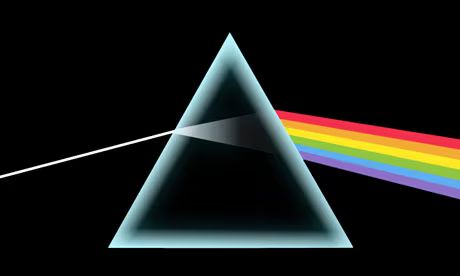
More post-election music: Us and Them by Pink Floyd

Black and blue
And who knows which is which, and who is who?
Up and down
And in the end, it’s only round and round, and round

Pink Floyd, and especially Roger Waters, are at or near the top of iconoclastic (“icon smashing”) pop music. (Waters continues to swim outside the mainstream, getting him into trouble with certain constituencies, but from my perspective, his artistic contribution grants him a license.)

Take the issue of education. We know the schools are not working, if the mission is to cultivate citizens with solid basic skills and knowledge. Instead of, for example, schools that deliver many students to college who are deficient in elementary math and who can’t conscientiously research and coherently write without the assistance of AI. What some parents clamor for is education that inculcates their children with the “right” ideology.

More than forty years ago, this is what Waters wrote in Another Brick in the Wall:

We don’t need no education
We don’t need no thought control
No dark sarcasm in the classroom
Teacher, leave them kids alone

All in all, it’s just another brick in the wall
All in all, you’re just another brick in the wall

Back to post-election music. Two years after John Lennon—another iconoclast—released his anti-war track, Happy Xmas (War Is Over) (1971), Pink Floyd featured Waters’ view about war on Dark Side of the Moon (1973). Us and Them is about war, but more broadly about the pointless and thoughtless identities that lead inevitably to pointless and thoughtless conflict.

Us and them
And after all, we’re only ordinary men
Me and you
God only knows it’s not what we would choose to do

“Forward!” he cried from the rear
And the front rank died
The general sat, and the lines on the map
Moved from side to side

Black and blue
And who knows which is which, and who is who?
Up and down
And in the end, it’s only round and round, and round

“Haven’t you heard it’s a battle of words?”
The poster bearer cried
“Listen, son,” said the man with the gun
“There’s room for you inside”

Down and out
It can’t be helped, but there’s a lot of it about
With, without
And who’ll deny it’s what the fighting’s all about?

Out of the way, it’s a busy day
I’ve got things on my mind
For want of the price of tea and a slice
The old man died

An authoritative, objective and non-partisan summary of the Israel/Gaza war—from Congress!?

The Congressional Research Service (CRS), a department of the Library of Congress, has since 1914 been one of the least-known and most significant government initiatives:


Mission

To serve Congress with the highest quality of research, analysis, information and confidential consultation to support the exercise of its legislative, representational and oversight duties in its role as a coequal branch of government.

Authoritative

All services and products are authoritative. Analysts demonstrate rigorous research methodologies, free of built-in bias. They present, explain and justify any critical assumptions; investigate and recheck data anomalies; use primary resources whenever available; double-check all statements of fact; and document and vet all sources. This assures Members, as they engage in debate, that the analysis they rely on is as accurate as it is current.

Objective and Nonpartisan

We maintain an outstanding reputation for objective and nonpartisan analysis. Our experts are vigilant in evaluating issues without bias. A multi-layered review process also helps ensure that CRS products present issues and analysis in a manner that is fair, considered and reliable.


Since the Israel/Gaza war began on October 7, CRS has been compiling and issuing an updated report, Israel and Hamas October 2023 Conflict:
Frequently Asked Questions (FAQs)
.

For those who have been devouring information from many and often divergent sources, this is as close as we may come to the informational middle of the road. This doesn’t mean that we will set aside our values and our opinions in this charged environment. We can’t and we won’t. It is just a reminder that in the so-called fog of war, there remains the possibility of the authoritative, objective and non-partisan.

Note: I was going to include some excerpts that seemed to support some of the points I believe in. But I realize that that defeats the purpose of simply asking people on all sides of the questions to consider one more source. Please do read.

© 2023 by Bob Schwartz

Revisiting last Yom Kippur and reopening the Book of Life

The Hamas massacre in Israel and the subsequent war in Gaza took place just two weeks after last Yom Kippur. I have already put away the High Holy Days liturgy until next year, but I am now revisiting it.

I may detail what I find in coming messages. Maybe not. Here is a general thought.

I listed my sins in the past year and asked for forgiveness—not just of God, but first of those down-to-earth people wronged. We did the same as a community and as a people. The Book of Life had been open for ten days and then closed, supposedly sealing our fate for the coming year. Whether or not there is such a book, whether God or angels are writing in it, we don’t know. We do know that our thoughts and actions lead to consequences. Those consequences are our book.

Now, here, weeks after Yom Kippur, you can still hear the blasts of the shofar. May you write for good in your own book.

© 2023 by Bob Schwartz

Ani Shalom – I am peace – אֲֽנִי־שָׁ֭לוֹם

Too long have I dwelt with those who hate peace.
I am all peace;
but when I speak,
they are for war.

Psalm 120:6-7

I am not a pacifist.

There are many definitions of pacifist, including:

A person who opposes war or violence as a means of settling disputes.
A person who believes that war and violence are unjustifiable.

Up until now, I hadn’t thought about whether I would classify myself as or be considered a pacifist. The short answer is ‘no”. During the wars I’ve lived through or for those I know from recent or ancient history, I can say that some of the wars and violence pursued were justified. Others were not, or were pursued in ways that were not justified, or for objectives that were not justified, or were pursued without trying other means, or were just stupid or evil.

But I am for peace. Peace should never be a secondary or tertiary objective once the other objectives have been achieved or not, once all the destructive and deadly means have been tried. Peace should have co-equal status at the top of the list.

During the ongoing war in Gaza, I’ve discovered that all the divergent thinking and rhetoric, from me and so many others, from just plain folks up to world leaders, is having little effect on the course of hostilities. Wars are about action, well-chosen or ill-chosen, and stubborn actors convinced of their rightness can be deaf.

Then I realized that if I am going to be using my words to little practical effect, I might as well use them to promote the possibility of peace.

Which is how I came to find a verse in Psalm 120. The standout Hebrew phrase is “Ani shalom”, literally the words are “I” and “peace”. Lacking a verb, it is variously translated as “I am peace”, “I am all peace”, “I am for peace”.

I am peace and I hope you are too.


רַ֭בַּת שָֽׁכְנָה־לָּ֣הּ נַפְשִׁ֑י עִ֝֗ם שׂוֹנֵ֥א שָׁלֽוֹם׃
אֲֽנִי־שָׁ֭לוֹם וְכִ֣י אֲדַבֵּ֑ר הֵ֝֗מָּה לַמִּלְחָמָֽה׃

Rabat shachna la nafshi
Ani shalom v’chi adaber hama lamilchama

Too long have I dwelt with those who hate peace.
I am all peace;
but when I speak,
they are for war.

Psalm 120:6-7

Senator Lindsey Graham: “US should place ‘no limit’ on civilian casualties Israel inflicts.” Unlike others, at least he is honest.

I have little good to say about Senator Lindsey Graham. He is a model of what a civic leader should not be. For example, after being one of Trump’s harshest critics and opponents, as soon as Trump took power, he became his most ardent and over the top defender.

But his interview with CNN does deserve credit. Almost everyone else publicly avoids the obvious question: As the number of civilian deaths in Gaza rises, with no end in sight, is there a limit when it reaches what I call the “dayenu” moment—Hebrew for “enough”. Twenty thousand civilian deaths, thirty thousand, more?—all plausible numbers, all tending to young people, given Gaza demographics.

Graham says:

“No. If somebody asked us after world war two, ‘Is there a limit what would you do to make sure that Japan and Germany don’t conquer the world? Is there any limit what Israel should do to the people who are trying to slaughter the Jews?’ “The answer is no. There is no limit.”

This is a question widely avoided because it is difficult, because any answer—including Graham’s—is controversial and provocative. In general, leaders prefer to deeply discuss questions about casualties, military or civilian, after the fact. War is not won by the equivocating or the timid, and focus on unfortunate consequences only gets in the way.

Except. War has a price, or actually prices: the price spent on pursuing and the price exacted from those affected. It is the price of achieving the war’s objectives. The price for the security of a people, a nation, the world. The price for a principle such as freedom or democracy.

Israel has described its objectives as eradication of Hamas and return of hostages, along with, as Netanyahu has sometimes said, retaliation. The primary unanswered question is not entitlement to those objectives or their achievability. The question is the price to be spent and exacted.

Maybe the answer for Israel and its supporters, including the U.S., is that there is no price too high, no limit. If the U.S. or Israel did expressly say that, we can assume that the repercussions would be felt across America, Israel, the region and the world. Which is why the question hasn’t been answered at high levels before. And why we have to thank Senator Lindsey Graham for his honesty.

© 2023 by Bob Schwartz

Mad Gods by the sea

Palestine Sunbird in Gaza

Mad Gods by the sea

God of Moses
God of Jesus
God of Mohammed
God of infinite names
Sitting by the desert sea
Pained and grieved.
This is madness.
These people
Every inclination
Is only evil
All the time.*
They take our names
In vile vain.**
There is the water
Let us drive them in
And start again
Just like days of old
Do better next time.
But how would they learn?
Hard hearts may soften
Dissolved in blood and tears.
We won’t abandon
We don’t approve.

*Genesis 6.5-7
**Exodus 20.6

© 2023 by Bob Schwartz

United States Institute of Peace: “A national, nonpartisan, independent institute, founded by Congress and dedicated to the proposition that a world without violent conflict is possible, practical and essential for U.S. and global security.”

Whether you are living through war directly, living with its aftermath, or just thinking about it at a distance, peace is or should never be far from mind.

Here at a distance, thinking and talking about the Israel/Gaza war has been non-stop and contentious. Peace, however elusive and immediately unlikely, is not far from mind. In fact, having little influence on the course of the conflict, studying peace seems a good occupation. Just in case.

Until last week, I had never heard of the United States Institute of Peace (USIP) https://www.usip.org/ , let alone that it was established and funded by Congress.


The United States Institute of Peace is a national, nonpartisan, independent institute, founded by Congress and dedicated to the proposition that a world without violent conflict is possible, practical and essential for U.S. and global security. In conflict zones abroad, the Institute works with local partners to prevent, mitigate, and resolve violent conflict. To reduce future crises and the need for costly interventions, USIP works with governments and civil societies to build local capacities to manage conflict peacefully. The Institute pursues its mission by linking research, policy, training, analysis and direct action to support those who are working to build a more peaceful, inclusive world….

Congress established the U.S. Institute of Peace in 1984 following years of proposals for the creation of a national “peace academy,” notably from a nationwide grassroots movement and from World War II combat veterans elected to legislative office.


Among its many initiatives, the USIP has developed the Gandhi-King Global Academy, which includes a Global Campus with hours of tuition-free online course about peace and the process of peacemaking.

I hope to take some of these courses, and I hope to encourage others to do the same. I have never served in war, as have others of my family and friends, but even from a distance I’ve learned much about war. Too much. So have so many others.

That’s why Isaiah 2.4:


And they shall grind their swords into plowshares
and their spears into pruning hooks.
Nation shall not raise sword against nation
nor shall they learn war anymore.


That’s why Down By the Riverside:


I’m gonna lay down my sword and shield
down by the riverside
ain’t gonna study war no more.


We don’t have the luxury of not studying the war right now. But we do have the opportunity, right now, of studying peace.

Israel/Gaza War: Philosophers Wanted

“This is why people hate moral philosophy professors.”
The Good Place TV series

The Good Place TV series, created by Michael Schur, is probably the only show to even mention moral philosophy professors, let alone feature one as a main character. Or to be expressly about education in moral philosophy.

The show suggests that maybe the antipathy toward moral philosophy professors is because they don’t offer decisive answers—on the one hand, on the other hand, on the third hand.

I suggest a different perspective. People don’t actually hate moral philosophy professors because they don’t actually know any. Also, the moral questions philosophers raise can be troublesome, inconvenient and uncomfortable. Difficult situations are hard enough as practical matters without adding the burden of philosophical investigation.

I have long thought that philosophers should aggressively take a forward position in our popular public conversations. News channels should regularly feature them on their constant panels of experts. Why? Because so many news issues contain an essential moral element—an element that is glossed over or completely ignored.

The latest issue that begs—screams—for that treatment is the current Israel/Gaza war. From the combatants to the those suffering to those cheering or booing from the sidelines, every choice is saturated with undiscussed moral questions. Raising those questions doesn’t mean actions or minds will be changed. It means that those choices will be beneficially couched in a bigger context.

So, philosophers, please answer the call. Push your way into the public conversation, not just in the classroom, not just in your writing, not just in social media posts, but on the biggest platforms you can find. You may not have a network TV show like Michael Schur, but you can find your stage.

Veterans Month and Mental Health

It is appropriate to talk about this Veterans Day 2018—Sunday, November 11—when talking about veterans and mental health.

Veterans Day was originally celebrated as Armistice Day, the day that World War I ended. This Veterans Day marks the one hundredth anniversary of the end of “the war to end all wars.”

Modern awareness of the widespread psychological effects of warfare began early in World War I, with the phenomenon of “shell shock.” In looking back at the war, there is still a question of how many cases were, in terms then used, “commotional” (due to explosions at close range) and how many cases were “emotional” (due to the psychological experience of war). In either case, numbers of warriors came home different and troubled—troubles which might last for the rest of their lives, and even serve to shorten those lives.

In the wars since, different theories and treatments have been developed, different labels have been attached. Today, those of us on the outside of this experience know it as PTSD. Those on the inside know it as the hell of war and its aftermath.

This will be another month—since a day is absolutely not enough—of honoring veterans. Judging by the still inadequate attention and support, they are more honored in the breach than in the observance. Among the failures too long to list is insufficiently acknowledging and taking responsibility for the mental health of those who we send to serve.

If you don’t want war—blessed are the peacemakers—then work for that. If you want war, or reluctantly think that war is necessary, treat those you send to fight for you as your own family, your own siblings, your own children. Because they are somebody’s.

“Afghanistan’s Charlie Chaplin says he aims to make people smile, forget grief”

“His live performances provide respite in a city that routinely gets attacked by Taliban insurgents and suicide bombers, mainly claiming allegiance to Islamic State.”

For those who think that they have troubles in their lives and in their nation, or that laughing doesn’t help, or that one person can’t make a difference, even if just a small and temporary one, for your consideration:

Reuters:

Afghanistan’s Charlie Chaplin says he aims to make people smile, forget grief

KABUL (Reuters) – Afghanistan’s Charlie Chaplin says he has witnessed suicide attacks, explosions and threats from hardline Islamic militant groups, but is determined to waddle and bumble to fulfill the primary goal of his life.

“It is very simple, I want to give Afghans a reason to smile,” said Karim Asir, a stand-up comedian who performs across the capital Kabul in Chaplin’s trademark oversized shoes, baggy pants, cane and black bowler hat.

Asir, 25, said Chaplin impersonators are found all over the world helping people ignore grief and making them laugh, and he does the same.

Asir’s early years were in Iran, where his family fled after the hardline Taliban took control of Afghanistan in 1996. There he saw performances of Chaplin on Iranian TV.

After the family returned home, Asir started wearing make-up and recreating Chaplin’s characters in his performances, despite his parent’s apprehensions.

His live performances provide respite in a city that routinely gets attacked by Taliban insurgents and suicide bombers, mainly claiming allegiance to Islamic State.

Asir says he has been threatened by militants who say his performances are un-Islamic. But despite the threats, he performs in public parks, orphanages, private parties and at charity events organized by international aid agencies.

“I want to give my people a chance to forget their problems such as war, conflicts and insecurity in Afghanistan,” he said.

In Kabul, when Asir’s fans surround him to take selfies, he smiles but is constantly worried about attacks.

“I am afraid of getting attacked by a suicide bomber or an explosion but these issues cannot stop me from being Charlie Chaplin,” he said.