Bob Schwartz

Tag: Wallace Stevens

How is the Year of Poetry going so far?

I forgot that 2023 is the Year of Poetry. I should remember, because it was me who declared it back in December. You probably didn’t notice.

Poetry seems very distant from the events and concerns of the past weeks, and from the weeks and months to come. But it shouldn’t, not for me, not for anyone.

Here are a couple of celebrated writers talking about the role of poets. Now if you’ll excuse me, I’m going to read some poems instead of news reports.


What is [the poet’s] function? Certainly it is not to lead people out of the confusion in which they find themselves. Nor is it, I think, to comfort them while they follow their readers to and fro. I think that his function is to make his imagination theirs and that he fulfills himself only as he sees his imagination become the light in the minds of others. His role, in short, is to help people to live their lives.
Wallace Stevens, The Noble Rider and the Sound of Words (1941)


The pessimism of the creative person is not decadence but a mighty passion for the redemption of man. While the poet entertains he continues to search for eternal truths, for the essence of being. In his own fashion he tries to solve the riddle of time and change, to find an answer to suffering, to reveal love in the very abyss of cruelty and injustice. Strange as these words may sound I often play with the idea that when all the social theories collapse and wars and revolutions leave humanity in utter gloom, the poet—whom Plato banned from his Republic—may rise up to save us all.
Isaac Bashevis Singer, Nobel Prize Lecture (1978)
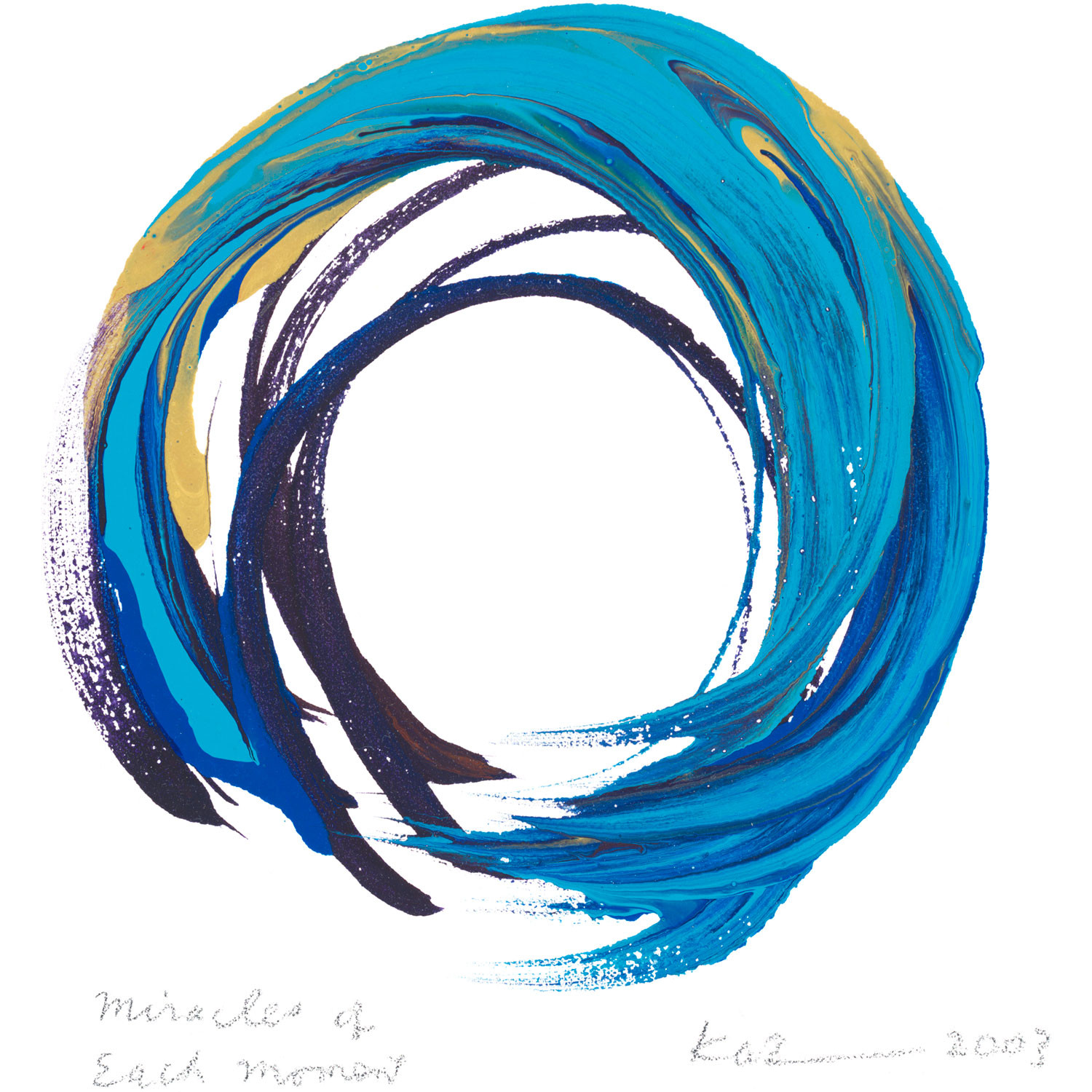

The New Possibility

Kazuaki Tanahashi, Miracles of Each Moment

It is possible, possible, possible. It must
Be possible.
Wallace Stevens

The meaning of Christmas depends on who you are. From devout Christians to casual ones, from non-Christians to non-believers in anything but overall goodness, it is still an imposing and inescapable enough day to merit thought and maybe spiritual solace and strength, if that is something you seek.

The lines above are from the great American poet Wallace Stevens. I have for years quoted them out of their context, which is the multi-part epic called Notes Toward a Supreme Fiction.

Entire theses have been written about that masterwork, and I claim no depth to fully comprehend the poem, the poet, or the learned experts about its meaning. One thing I get is that among the Supreme Fictions he notes are the arts of creation and religion.

Those lines are taken from a section entitled It Must Give Pleasure:

It Must Give Pleasure

VII

He imposes orders as he thinks of them,
As the fox and snake do. It is a brave affair.

But to impose is not
To discover. To discover an order as of
A season, to discover summer and know it,

To discover winter and know it well, to find
Not to impose, not to have reasoned at all,
Out of nothing to have come on major weather,

It is possible, possible, possible. It must
Be possible. It must be that in time
The real will from its crude compoundings come,

Seeming at first, a beast disgorged, unlike,
Warmed by a desperate milk. To find the real,
To be stripped of every fiction except one,

The fiction of an absolute — Angel,
Be silent in your luminous cloud and hear
The luminous melody of proper sound.

So on Christmas morning, all that I believe, all that I have studied, all that I have embraced and discarded, tried and tried again, comes down to this. To the new possibility embodied in each birth, of the seeming lowliest to the seeming loftiest, which are themselves labels of convenience and fictional distinction:

It is possible, possible, possible. It must
Be possible.