Bob Schwartz

Tag: Traleg Kyabgon

“Whatever you want, others all want as much; so act accordingly!”

Patrul Rinpoche

“Whatever you want, others all want as much; so act accordingly!”
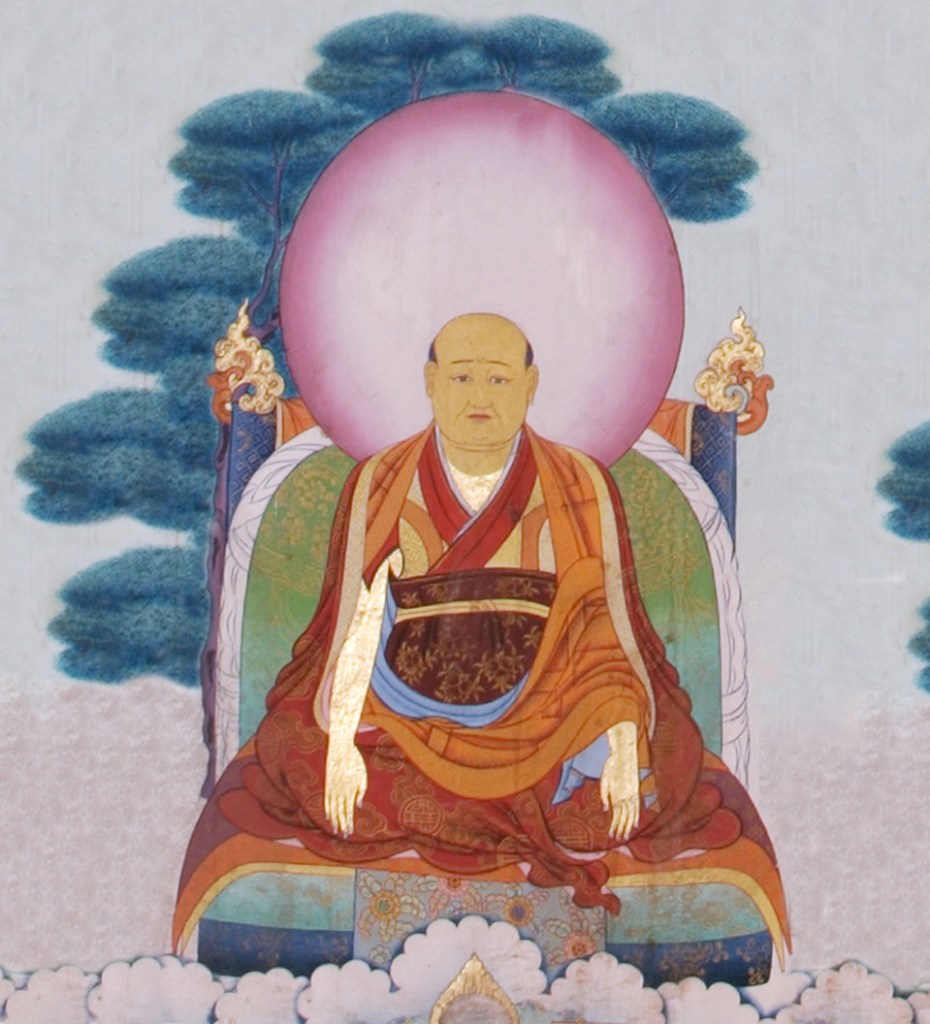
Patrul Rinpoche (1808–1887)


The Kadampa teachings say that if we use our activities to open ourselves to the world with loving-kindness, patience, and understanding, we’ll bring the lojong spirit into everything we do. While our practices may be diverse, if our bodhichitta* attitude is natural and self-correcting, we’ll be doing everything with one intention. Patrul Rinpoche relates the following story to illustrate this:

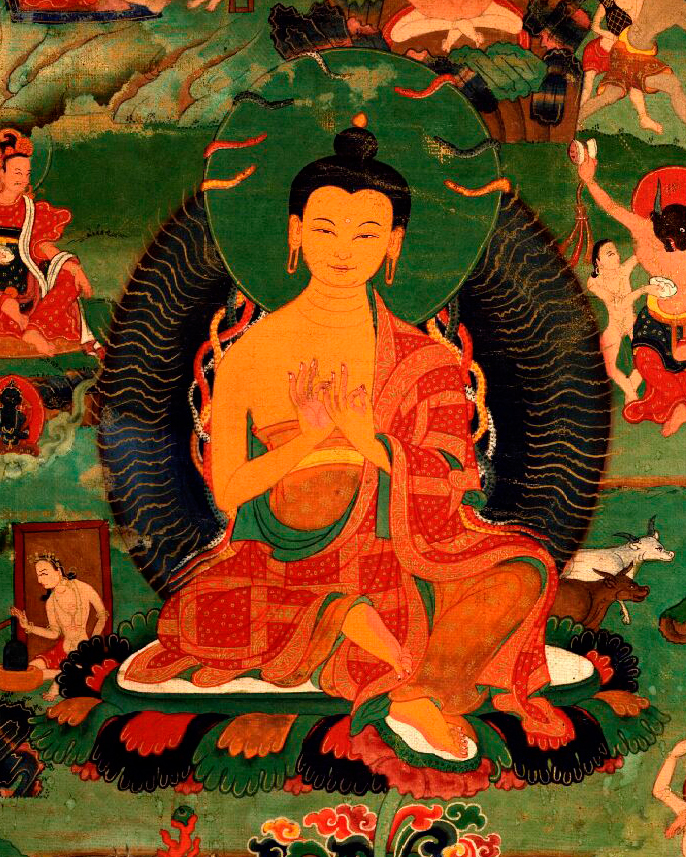
When Trungpa Sinachen asked him for a complete instruction in a single sentence, Phadampa Sangye replied, “Whatever you want, others all want as much; so act accordingly!”
(Patrul Rinpoche, Words of My Perfect Teacher)

Traleg Kyagbon, The Practice of Lojong

*Bodhichitta. There are two aspects to enlightened heart: an ultimate and a relative one. Ultimate enlightened heart refers to the nature of the mind and relative enlightened heart refers to the cultivation and generation of compassion.


This sounds familiar, like a version of the Golden Rule, which instructs us not to do to others what we would not have done to us. A difference is that this goes beyond what we and they do. It is about what is in our and their mind, what you and they want. Which, surprisingly or not, is elementally the same. What we do or don’t do follows from what we think. So this might be considered the precursor or foundation of the Golden Rule.

Whether happiness or suffering occurs, be patient


As the following traditional verse makes clear, an intelligent form of patience is required if we’re to avoid being hurt and destabilized by the vicissitudes of life:

Even if you are prosperous like the gods,
Pray do not be conceited.
Even if you become as destitute as a hungry ghost,
Pray do not be disheartened.
Nāgārjuna, Precious Garland

Life’s trials often reduce us to damaged, bruised, and battered emotional wrecks. If we can bring a modicum of intelligence to our patience, we won’t become so exhilarated by our highs or self-defeated by our lows, as if we were suffering from bipolar disorder. Whichever of the two occurs, we’ll be able to maintain a sense of stability and groundedness. Patience is not a form of passivity, where we have no power over what life might throw at us. Even when life’s trials are unpleasant or upsetting, patience allows us to face them in a creative and beneficial way, with courage and dignity.

If things always went our way, we wouldn’t be able to develop high ideals and live a meaningful life. Instead of responding to difficulty the way we normally do, with frustration or impotent rage, we learn to approach life’s contingencies with patience and intelligence. The skillful exercise of patience will make us less flaky and predictable, and we’ll be able to utilize situations to our advantage.

Traleg Kyabgon, The Practice of Lojong


Transforming Adversity into the Path of Awakening

“We can’t tailor the world to suit ourselves, or force it to fit into our vision of things. This doesn’t mean we shouldn’t aspire to make things better.”
Traleg Kyabgon

The 59 slogans of lojong mind training are divided into Seven Points.


Point Three: Transforming Adversity into the Path of Awakening

We now come to the instructions on how to train our minds amid the unfavorable and unwanted circumstances of our lives. We have been born into an imperfect world, characterized by unpredictability and adversity, as finite human beings that have foibles, make mistakes, get confused, and think irrationally. There is much to contend with, and our ability to prevent or circumvent difficulty is quite limited. We aren’t omnipotent beings, and while we try to protect ourselves and maintain order in our lives, we simply don’t have the ability to safeguard ourselves from its disasters.

It is self-evident that the natural world doesn’t behave in a predictable way or do our bidding. We can see this in the recent examples of the Indian Ocean tsunami and the hurricane that decimated New Orleans. Natural disasters have occurred repeatedly in the past and are likely to continue to do so in the future. Millions of people have lost their lives, are losing their lives, and will lose their lives to disease: the typhoid, cholera, dysentery, and bubonic plagues of the past; the HIV epidemic of the present; and so on. Even at a personal level, many things go awry, and our efforts to complete projects are constantly thwarted and disrupted by sickness, mental distress, and all kinds of deception and mistreatment by others.

Adverse circumstances and situations are an integral part of conditioned existence. They tend to arise as sudden interruptions, so we shouldn’t be surprised that natural calamities and upheavals occur in both our private and our public lives. Buddhists do not believe in divine authorship or omnipotent governance of any kind; things just happen when the proper conditions and circumstances come together….

We can’t tailor the world to suit ourselves, or force it to fit into our vision of things. This doesn’t mean we shouldn’t aspire to make things better. The bodhisattva ideal specifically recommends trying to improve our world to the best of our ability, but that ideal is based on a realistic recognition that the world is imperfect and likely to remain that way. Things may sometimes work a little better, sometimes a little worse, but so long as there is ignorance, hatred, jealousy, pride, and selfishness, we will all be living in a world that is socially and politically imperfect….

If things are interdependent, as Buddhists say, we can never expect to protect ourselves against unexpected occurrences, because there is no real order to existence apart from the regularity of certain natural processes. The fact that anything and everything can and does happen would then come as no real surprise to us. The question then becomes not so much why these things happen, but what we can do about them once they do. We cannot control the environment in any strict sense, so we must try to change our attitude and see things in a different light. Only then will we be able to take full advantage of our situation, even if it happens to be a bad one. While it often seems there is nothing we can do in the face of insurmountable obstacles, the lojong teachings tell us this is not true. The imperfect world can be an opportunity for awakening rather than an obstacle to our goals.

Sometimes things just happen, and there may be nothing we can do to change that, but we can control our responses to events. We don’t have to despair in the face of disaster. We can either continue to respond in the way we’ve always done and get progressively worse, or we can turn things around and use our misfortune to aid our spiritual growth. For example, if we suffer from illness, we should not allow despondency to get the better of us if our recovery is slow. Despite seeing the best doctors and receiving the best medication, we should accept our situation with courage and fortitude and use it to train our minds to be more accommodating and understanding. No matter what situation we encounter, we can strengthen our minds by incorporating it into our spiritual journey….

We grow more quickly if we are open to working with difficulties rather than constantly running away from them. The lojong teachings say that when we harden ourselves to suffering, we only become more susceptible to it. The more harsh or cruel we are toward others, the more vulnerable we become to irritation or anger that is directed at us. Contrary to our instincts, it is by learning to become more open to others and our world that we grow stronger and more resilient. It is our own choice how we respond to others. We can capitulate to the entrenched habits and inner compulsions deeply ingrained in our basic consciousness, or we can recognize the limitations of our situation and apply a considered approach. Our conditioned samsaric minds will always compel us to focus on what we can’t control rather than questioning whether we should respond at all. However, once we recognize the mechanical way in which our ego always reacts, it becomes possible to reverse that process.

The great strength of the lojong teachings is the idea that we can train our minds to turn these unfavorable circumstances around and make them work to our advantage. The main criterion is that we never give up in the face of adversity, no matter what kind of world we are confronted with at the personal or political level. When we think there is nothing we can do, we realize there is something we can do, and we see that this “something” is actually quite tremendous.

Traleg Kyabgon , The Practice of Lojong: Cultivating Compassion through Training the Mind