Bob Schwartz

Tag: Thomas Merton

Some December dates to remember

December is full of important holidays and dates. Following are some I will be featuring in the month ahead. In the meantime, feel free to learn more about them—even the ones you are familiar with.


December 8
Bodhi Day is the Buddhist holiday that commemorates the day that Gautama Buddha is said to have attained enlightenment.

December 8
Anniversary of the death of John Lennon (1940-1980)

December 10
Anniversary of the death of Thomas Merton (1915-1968)

December 15-December 22, 2025
Hanukkah

December 25
Christmas


We cannot escape anything by consenting tacitly to be defeated.

“We cannot escape anything by consenting tacitly to be defeated. Despair is an abyss without bottom. Do not think to close it by consenting to it and trying to forget you have consented.”


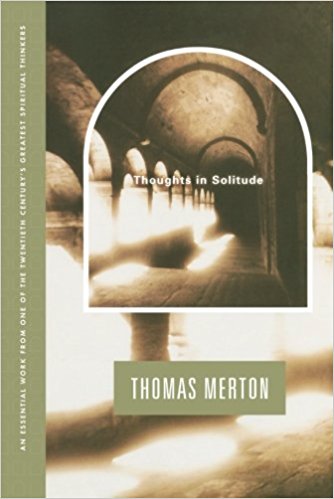
From Thomas Merton, Thoughts in Solitude:

The Desert Fathers believed that the wilderness had been created as supremely valuable in the eyes of God precisely because it had no value to men. The wasteland was the land that could never be wasted by men because it offered them nothing. There was nothing to attract them. There was nothing to exploit. The desert was the region in which the Chosen People had wandered for forty years, cared for by God alone. They could have reached the Promised Land in a few months if they had travelled directly to it. God’s plan was that they should learn to love Him in the wilderness and that they should always look back upon the time in the desert as the idyllic time of their life with Him alone.

The desert was created simply to be itself, not to be transformed by men into something else. So too the mountain and the sea. The desert is therefore the logical dwelling place for the man who seeks to be nothing but himself—that is to say, a creature solitary and poor and dependent upon no one but God, with no great project standing between himself and his Creator.

This is, at least, the theory. But there is another factor that enters in. First, the desert is the country of madness. Second, it is the refuge of the devil, thrown out into the “wilderness of upper Egypt” to “wander in dry places.” Thirst drives man mad, and the devil himself is mad with a kind of thirst for his own lost excellence—lost because he has immured himself in it and closed out everything else.

So the man who wanders into the desert to be himself must take care that he does not go mad and become the servant of the one who dwells there in a sterile paradise of emptiness and rage….

The desert is the home of despair. And despair, now, is everywhere. Let us not think that our interior solitude consists in the acceptance of defeat. We cannot escape anything by consenting tacitly to be defeated. Despair is an abyss without bottom. Do not think to close it by consenting to it and trying to forget you have consented.


We are all hermits now: Song of the Grass Roof Hut

Thomas Merton hermitage in Kentucky

Though the hut is small, it includes the entire world.

Hermit—one who lives in solitude—is from Greek erēmia desert, which is from erēmos desolate. In the fourth century, Christians dissatisfied with the artificial complexities of the Church fled to the Egyptian desert to be alone and closer to God. Thus began Christian monasticism. On the other side of the world, Buddhists in China went to the mountains, also to be alone.

Both the Christian desert fathers and mothers and the Buddhist hermits left behind a treasury of wisdom. Centuries later, in another part of the world Thomas Merton fled the chaos of civilization to build a hermitage of his own in Kentucky, and similarly provided an inspiring record of his experiences.

The following Song of the Grass Roof Hut is the work of Shitou Xiqian [Japanese: Sekitō Kisen] (700–790, China).

Song of the Grass Roof Hut

I’ve built a grass hut where there’s nothing of value.
After eating, I relax and enjoy a nap.
When it was completed, fresh weeds appeared.
Now it’s been lived in – covered by weeds.

The person in the hut lives here calmly,
Not stuck to inside, outside, or in between.
Places worldly people live, he doesn’t live.
Realms worldly people love, he doesn’t love.

Though the hut is small, it includes the entire world.
In ten square feet, an old man illumines forms and their nature.
A Great Vehicle bodhisattva trusts without doubt.
The middling or lowly can’t help wondering;
Will this hut perish or not?

Perishable or not, the original master is present,
not dwelling south or north, east or west.
Firmly based on steadiness, it can’t be surpassed.
A shining window below the green pines –
Jade palaces or vermilion towers can’t compare with it.

Just sitting with head covered, all things are at rest.
Thus, this mountain monk doesn’t understand at all.
Living here he no longer works to get free.
Who would proudly arrange seats, trying to entice guests?

Turn around the light to shine within, then just return.
The vast inconceivable source can’t be faced or turned away from.
Meet the ancestral teachers, be familiar with their instruction,
Bind grasses to build a hut, and don’t give up.

Let go of hundreds of years and relax completely.
Open your hands and walk, innocent.
Thousands of words, myriad interpretations,
Are only to free you from obstructions.
If you want to know the undying person in the hut,
Don’t separate from this skin bag here and now.

Shitou Xiqian

(translation by Taigen Daniel Leighton)

Merton’s Last Year: Wisdom is No Vaccine

I’ve been reading the journals of Thomas Merton, and here is a thought. There is never a level of wisdom and awareness that removes doubt, no matter who you are. Never a level of wisdom and awareness that answers all the questions. Only better doubts and questions, unresolved and unanswered.

If you pay attention, you’ve noticed that people you admire, people you study and may try to emulate, are “only human.” They suffer from physical, psychological or soul problems, just like anybody else. This applies to people who may have served, or are still serving, as spiritual guides.

I’ve been with Thomas Merton a long time, reading him, reading about him, visiting his abbey and his Center. I am well aware of some of the questions and doubts that dogged him, especially about the choices of life he had made. Of course, Merton had pushed the envelope and managed a few tricks that benefited us and him. Entering a cloistered and mostly silent order, he produced thousands of words that reached around the world.

One of the things I have not read enough of are his journals, which he kept for decades, and which occupy seven published volumes. I had read his Asian Journal, which he kept on what was to be his final trip, when he was accidentally killed on December 8, 1968 in Bangkok. Aside from that, I had not read much of the journal of his last year, a time when Merton was more expressly reviewing his life and choices.

Knowing what we know about events, some think that Merton “sensed” he was heading towards an unexpected end. But Merton always knew there was an end, and Merton never stopped investigating, whether he had a few more days or, as we would like, many more years.

I am working my way through the last volume of his journal, covering October 1967 through December 1968 (The Other Side of the Mountain: The End of the Journey, The Journals of Thomas Merton Book 7). Along with his valuable observations about America and the world in that tumultuous time, we get close to a great man wondering whether the things he had done, for himself and others (like us), was the best use of a life. An unmarried Catholic monk in rural Kentucky, but also a very worldly man, he wonders about other religious traditions, about getting married, about living in California.

Wisdom does not provide immunity, wisdom is no vaccine. If anything, that is wisdom itself.

Nine Prayers: For Those We Like, Love or Suffer When We Think Of

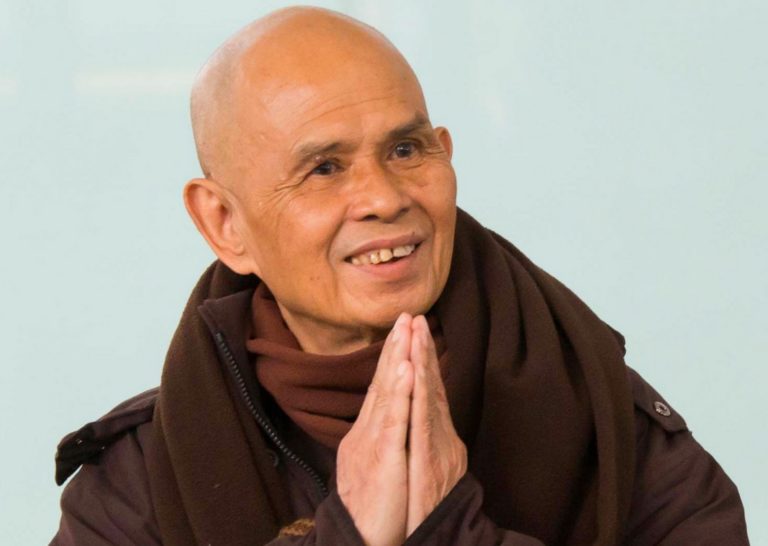
Thomas Merton’s final book, Contemplative Prayer, was published in 1969, a year after his accidental death. In 1995, Vietnamese Zen master Thich Nhat Hanh added an introduction. He wrote about his admiration for Merton and about distinctions between Christian and Buddhist prayer:

I first met Thomas Merton in 1966. It is hard to describe his face in words, to write down exactly what he was like. He was filled with human warmth. Conversation with him was so easy. When we talked, I told him a few things, and he immediately understood the things I didn’t tell him as well. He was open to everything, constantly asking questions and listening deeply. I told him about my life as a Buddhist novice in Vietnam, and he wanted to know more and more.

Our approach to prayer in Buddhism is a little different from that of Christianity. We practice silent meditation, and we try to practice mindfulness in everything we do, to awaken to what is going on inside us and all around us in each moment. The Buddha taught: “If you are standing on one shore and want to cross over to the other shore, you have to use a boat or swim across. You cannot just pray, ‘Oh, other shore, please come over here for me to step across!’” To a Buddhist, praying without also practicing is not real prayer.

At the end of the Introduction, he offers a comprehensive set of nine prayers—prayers beyond any sectarian tradition, and prayers that include “the one we suffer when we think of.”


Nine Prayers
Thich Nhat Hanh
From Introduction to Contemplative Prayer by Thomas Merton

1.
May I be peaceful, happy, and light in body and spirit.
May he/she be peaceful, happy, and light in body and spirit.
May they be peaceful, happy, and light in body and spirit.
2.
May I be free from injury. May I live in safety.
May he/she be free from injury. May he/she live in safety.
May they be free from injury. May they live in safety.
3.
May I be free from disturbance, fear, anxiety, and worry.
May he/she be free from disturbance, fear, anxiety, and worry.
May they be free from disturbance, fear, anxiety, and worry.
4.
May I learn to look at myself with the eyes of understanding and love.
May he/she learn to look at him/herself with the eyes of understanding and love.
May they learn to look at themselves with the eyes of understanding and love.
5.
May I be able to recognize and touch the seeds of joy and happiness in myself.
May he/she be able to recognize and touch the seeds of joy and happiness in him/herself.
May they be able to recognize and touch the seeds of joy and happiness in themselves.
6.
May I learn to identify and see the sources of anger, craving, and delusion in myself.
May he/she learn to identify and see the sources of anger, craving, and delusion in him/herself.
May they learn to identify and see the sources of anger, craving, and delusion in themselves.
7.
May I know how to nourish the seeds of joy in myself every day.
May he/she know how to nourish the seeds of joy in him/herself every day.
May they know how to nourish the seeds of joy in themselves every day.
8.
May I be able to live fresh, solid, and free.
May he/she be able to live fresh, solid, and free.
May they be able to live fresh, solid, and free.
9.
May I be free from attachment and aversion, but not be indifferent.
May he/she be free from attachment and aversion, but not be indifferent.
May they be free from attachment and aversion, but not be indifferent.

He/she: First the person we like, then the person we love, then the person who is neutral to us, and finally the person we suffer when we think of.

They: The group, the people, the nation, or the species we like, then the one we love, then the one that is neutral to us, and finally the one we suffer when we think of.
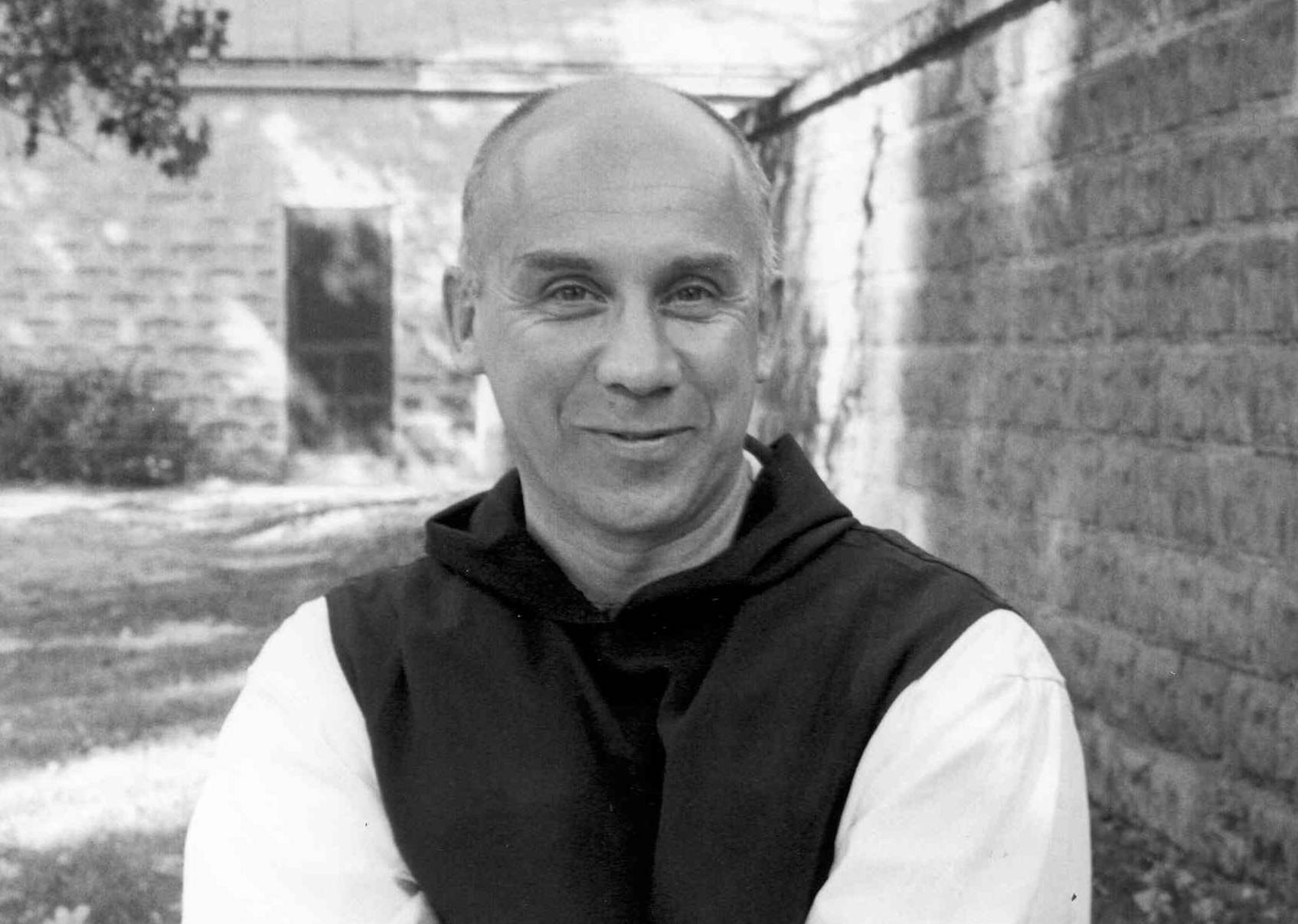

Thomas Merton on Technology

I am ambivalent about the benefits and effects of unstoppable technological progress. It is nearly a force of nature. Rain helps our plants to thrive, our food to grow, our rivers to flow, our thirst to be quenched. But it can also overwhelm and destroy, so that we seek shelter from it in a flood or hurricane. Still, I wouldn’t trade technology in, not all of it, not easily. I am just wary and watchful.

This is from Thomas Merton’s journals. He lived as a monk in a handmade hermitage on the grounds of the Abbey of our Lady of Gethsemani in Kentucky. It is a tiny building that up until 1965 did not have electricity:

“At last the electric line is coming to my hermitage!”

Yesterday in the morning, when I went out for a breath of air before my novice conference, I saw men working on the hillside beyond the sheep barn. At last the electric line is coming to my hermitage! All day they were working on the holes, digging and blasting the rock with small charges, young men in yellow helmets, good, eager, hardworking guys with machines. I was glad of them and of American technology, pitching in to bring me light, as they would for any farmer in the district. It was good to feel part of this, which is not to be despised, but is admirable. (Which does not mean that I hold any brief for the excess of useless developments in technology.)

Thomas Merton Journals, February 16, 1965, V.206–7

More posts about Merton:

Merton: Events and Pseudo-Events

Merton on the Desert

For Me to Be a Saint Means to Be Myself


Merton: Events and Pseudo-Events

“Nine-tenths of the news, as printed in the papers, is pseudo-news, manufactured events. Some days ten-tenths. The ritual morning trance, in which one scans columns of newsprint, creates a peculiar form of generalized pseudo-attention to a pseudo-reality. This experience is taken seriously. It is one’s daily immersion in ‘reality.’ One’s orientation to the rest of the world. One’s way of reassuring himself that he has not fallen behind. That he is still there. That he still counts!

My own experience has been that renunciation of this self-hypnosis, of this participation in the unquiet universal trance, is no sacrifice to reality at all. To ‘fall behind’ in this sense is to get out of the big cloud of dust that everybody is kicking up, to breathe and to see a little more clearly.”

Thomas Merton, Faith and Violence

Houses of Worship as Reminders on the Street

We often see houses of worship on our streets, from modest buildings to grand cathedrals. Some people have mixed feelings when they do.

A growing number think that organized religion is a negative or even destructive force. Some people are happy to see their own brand of churches, synagogues and mosques on display, but are not so sure about other kinds. Some are irked by the costly beauty and splendor, no matter how pleasant the view, when other needs are so great.

These are all legitimate concerns. Yet walking past houses of worship is also a reminder, no matter how sectarian those buildings, of something greater and deeper—a reminder that may be missing from everyday lives. You don’t have to believe or participate in a particular tradition, or in any tradition, to know that things are out of balance. You may think that some expressions of faith actually contribute to that imbalance, and some assuredly do. But seeing the best of spirit embodied in our streetscape can also be a good reminder of who we can be.

From Thomas Merton, The Street Is for Celebration in Love and Living:

A city is something you do with space.

A street is a space. A building is an enclosed space. A room is a small enclosed space.

A city is made up of rooms, buildings, streets. It is a crowd of occupied spaces. Occupied or inhabited? Filled or lived in?

The quality of a city depends on whether these spaces are “inhabited” or just “occupied.” The character of the city is set by the way the rooms are lived in. The way the buildings are lived in. And what goes on in the streets.

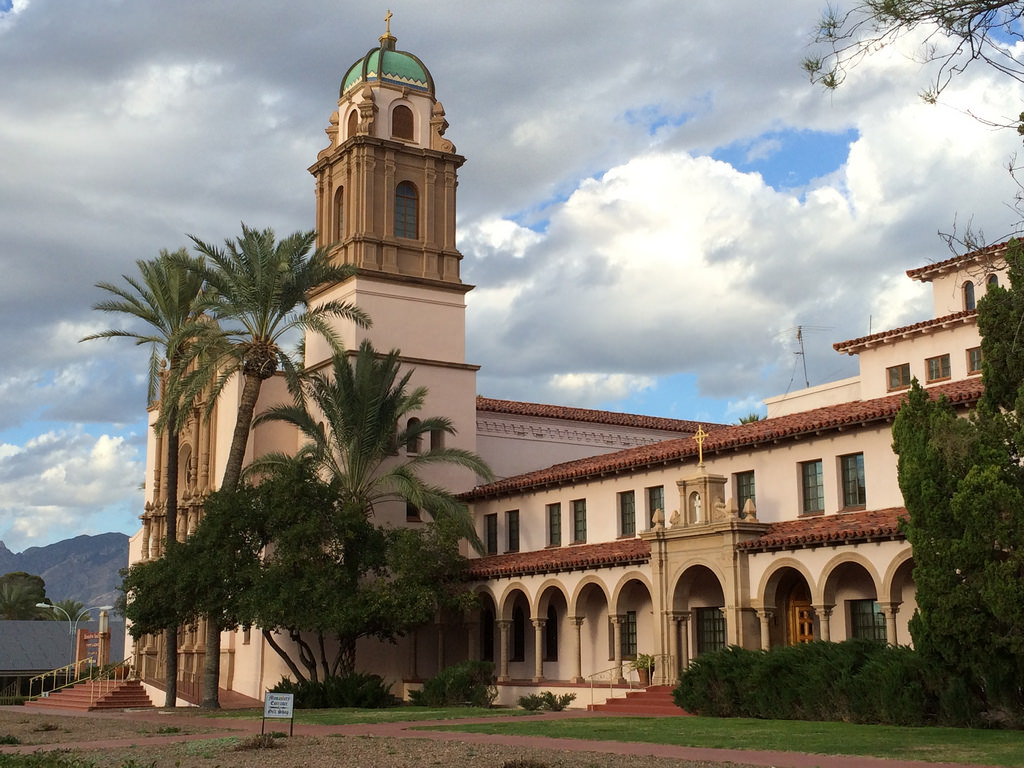
Pictured above: Benedictine Monastery, Tucson, Arizona.

Merton on the desert: We cannot escape anything by consenting tacitly to be defeated.

From Thomas Merton, Thoughts in Solitude:

The Desert Fathers believed that the wilderness had been created as supremely valuable in the eyes of God precisely because it had no value to men. The wasteland was the land that could never be wasted by men because it offered them nothing. There was nothing to attract them. There was nothing to exploit. The desert was the region in which the Chosen People had wandered for forty years, cared for by God alone. They could have reached the Promised Land in a few months if they had travelled directly to it. God’s plan was that they should learn to love Him in the wilderness and that they should always look back upon the time in the desert as the idyllic time of their life with Him alone.

The desert was created simply to be itself, not to be transformed by men into something else. So too the mountain and the sea. The desert is therefore the logical dwelling place for the man who seeks to be nothing but himself—that is to say, a creature solitary and poor and dependent upon no one but God, with no great project standing between himself and his Creator.

This is, at least, the theory. But there is another factor that enters in. First, the desert is the country of madness. Second, it is the refuge of the devil, thrown out into the “wilderness of upper Egypt” to “wander in dry places.” Thirst drives man mad, and the devil himself is mad with a kind of thirst for his own lost excellence—lost because he has immured himself in it and closed out everything else.

So the man who wanders into the desert to be himself must take care that he does not go mad and become the servant of the one who dwells there in a sterile paradise of emptiness and rage….

The desert is the home of despair. And despair, now, is everywhere. Let us not think that our interior solitude consists in the acceptance of defeat. We cannot escape anything by consenting tacitly to be defeated. Despair is an abyss without bottom. Do not think to close it by consenting to it and trying to forget you have consented.


Hermitage

Thomas Merton hermitage

Four Walls

Four walls
Three doors
One window
One ceiling
One floor.
How simple
How deep.
Walls layered
And filled.
Behind two doors
Filled too.
One door
Is different.
Goes out
Comes in.
Out there
The same.
In here
The same.
But not.

Hermitage has been in and on my mind. While not exactly a hermitage, the poem above describes the room in which I write.

When I first started reading Thomas Merton, I learned about his building a hermitage on the grounds of the Kentucky abbey where he lived. Merton was a sublime conundrum, who committed himself to relative silence and disciplined orthodoxy as a monk, yet whose spirit (the Spirit) would not allow him to be quiet and stop exploring. So he wrote and discovered. Thank goodness for us.

Sandokai is a famous poem by the Chinese Ch’an (Zen) Master Shitou Xiqian (700-790), who is known in Japanese as Sekito Kisen. I have long been reading and studying this, as have many Zen students. Of all the essential texts available, there are few more concisely powerful than Sandokai.

There is another poem by Sekito that is a little less known, but equally compelling. It is a description of his hermitage, a grass hut. There, he tells us, is nothing and everything.

Song of the Grass Roof Hermitage
by Shitou Xiqian

I’ve built a grass hut where there’s nothing of value.
After eating, I relax and enjoy a nap.
When it was completed, fresh weeds appeared.
Now it’s been lived in – covered by weeds.

The person in the hut lives here calmly,
Not stuck to inside, outside, or in between.
Places worldly people live, he doesn’t live.
Realms worldly people love, he doesn’t love.

Though the hut is small, it includes the entire world.
In ten square feet, an old man illumines forms and their nature.
A Great Vehicle bodhisattva trusts without doubt.
The middling or lowly can’t help wondering;
Will this hut perish or not?

Perishable or not, the original master is present,
not dwelling south or north, east or west.
Firmly based on steadiness, it can’t be surpassed.
A shining window below the green pines –
Jade palaces or vermilion towers can’t compare with it.

Just sitting with head covered, all things are at rest.
Thus, this mountain monk doesn’t understand at all.
Living here he no longer works to get free.
Who would proudly arrange seats, trying to entice guests?

Turn around the light to shine within, then just return.
The vast inconceivable source can’t be faced or turned away from.
Meet the ancestral teachers, be familiar with their instruction,
Bind grasses to build a hut, and don’t give up.

Let go of hundreds of years and relax completely.
Open your hands and walk, innocent.
Thousands of words, myriad interpretations,
Are only to free you from obstructions.
If you want to know the undying person in the hut,
Don’t separate from this skin bag here and now.

(from Taigen Daniel Leighton, Cultivating the Empty Field)