Bob Schwartz

Tag: Ten Commandments

The First Command: Let there be light.

The First Commandment in the Bible is not the First Command in the Bible. That is found in the first few lines at Genesis 1:3:

יְהִ֣י א֑וֹר
Y’hi or
Let there be light

In a sense, that is more essential than any of the later commandments, whether 10 or 613 or any number in between.

If our actions, words or thoughts are maintaining or increasing the light, we are doing well.

If our actions, words or thoughts are decreasing or putting out the light, we are not doing as well.

Even though the First Command is not literally aimed at us, as the commandments are, it is obvious that we can be charged with the responsibility.

This is a Season of Lights. Y’hi or.

Two books about lying

Some don’t think they need to read a book about lying because it is succinctly and definitively covered in “The Good Book”, that is, the Bible:

  1. You shall not bear false witness against your neighbor
    Exodus 20:16

(Or as universally interpreted, in any circumstance to anyone. In other words, don’t lie.)

If you do want to read a good book about lying, its subtleties and its damaging effects, following are a couple.

Lying: Moral Choice in Public and Private Life (1978) by Sissela Bok

This is the modern masterpiece on the subject. You might think, “well, it was written almost fifty years ago, and a lot has changed since then.” Of course, nothing has changed, either in lying or in the astute analysis of lying. If anything, you might observe that lying has come to play an even more important role, at least in American life—commandment or no commandment.

Chapters in Lying by Sissela Bok:

I IS THE “WHOLE TRUTH” ATTAINABLE?
II TRUTHFULNESS, DECEIT, AND TRUST
III NEVER TO LIE?
IV WEIGHING THE CONSEQUENCES
V WHITE LIES
VI EXCUSES
VII JUSTIFICATION
VIII LIES IN A CRISIS
IX LYING TO LIARS
X LYING TO ENEMIES
XI LIES PROTECTING PEERS AND CLIENTS
XII LIES FOR THE PUBLIC GOOD
XIII DECEPTIVE SOCIAL SCIENCE RESEARCH
XIV PATERNALISTIC LIES
XV LIES TO THE SICK AND DYING

As you can see, just reading the chapter titles is enough to get you thinking.

Lying (2013) by Sam Harris

This book is much shorter (83 pages, really a long essay) and more smoothly written than Bok’s book, given Harris’ bestselling skill as a writer. Obviously not as incisive and insightful.

A suggestion is to read them both, especially because Harris’ book is such a quick read. A much bigger suggestion is to pay attention to lying and to think about what you say and what you hear from any source. If it is someone, private or public, who claims allegiance to the mentioned Good Book and its commandments, it is worth thinking about whether the lies fit into any of the exceptional circumstances, or whether the principle is just being ignored entirely.

God’s Political Will


In the history of Christian theology, philosophy has sometimes been seen as a natural complement to theological reflection, whereas at other times practitioners of the two disciplines have regarded each other as mortal enemies….

Philosophy takes as its data the deliverances of our natural mental faculties: what we see, hear, taste, touch, and smell. These data can be accepted on the basis of the reliability of our natural faculties with respect to the natural world. Theology, on the other hand takes as its starting point the divine revelations contained in the Bible. These data can be accepted on the basis of divine authority, in a way analogous to the way in which we accept, for example, the claims made by a physics professor about the basic facts of physics.

 On this way of seeing the two disciplines, if at least one of the premises of an argument is derived from revelation, the argument falls in the domain of theology; otherwise it falls into philosophy’s domain.

Stanford Encyclopedia of Philosophy

Current American politics includes little study and application of philosophy. Some of our founders were steeped in philosophy, being educated sons of the Enlightenment. But even then, the struggling rebel nation was marked by pragmatism: there may be no atheists in foxholes, but there aren’t many philosophers either. Today, even when ideologues throw around the names of Mill or Burke, that is a rarity. Most of our politicians don’t know, can’t practice and don’t care about philosophy.

Theology is another story. Our government and the campaign trail seem to be overflowing with those who consider themselves theologians, whether they call themselves that or not. But even though the ground of theology is distinct from philosophy, the rigor and discipline required is exactly the same. The simplistic adoption of an isolated theological premise is no more sturdy than an isolated philosophical one. A solid theological conclusion must be supported from start to finish. If you can’t answer all (or at least most) of the consequent questions, you can’t be trusted to answer any.

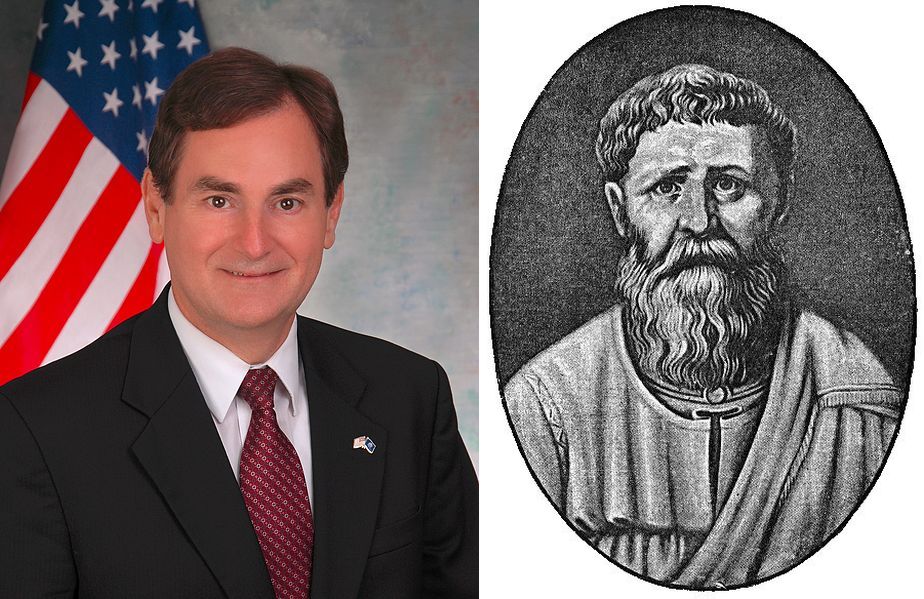
And so when Indiana Senate candidate Richard Mourdock announced that when a woman becomes pregnant through rape, the pregnancy is “God’s will,” the question isn’t whether that is true. The question is: assuming it is true, what else is God’s will?

Mr. Mourdock, and every other politician who claims to know God’s will, owes us a comprehensive list of those things that are and are not God’s will. In the case of Mr. Mourdock, if he is schooled in the fine points of Christian theology, that should be a straightforward matter.

For example: Are the outcomes of elections God’s will? If Mr. Mourdock’s opponent wins, will that be God’s will? If President Obama beats Mitt Romney, will that be God’s will?

There are a raft of sub-questions for the theologian. If God wills an election winner, how does it happen? Are some potential voters kept away from the polls by stormy weather or traffic jams? And how exactly does God decide who the winner should be? Is there a scorecard based on the Ten Commandments or the Seven Deadly Sins? Does a high score on “bearing false witness” or “greed,” for example, make it difficult to get an endorsement?

In the event Mr. Mourdock does not win, it may be God’s will after all. Just a few miles from his home in Darmstadt, Indiana is an excellent school, Trinity College of the Bible and Theological Seminary. Trinity offers a number of degree programs and dozens of courses on theology. If his keen interest in theology continues, that could be just the way to spend his time.