UN Security Council Meeting on Ukraine today: While Russia crudely and cruelly lies, Ukraine cites two Samuel Beckett plays

Russia is a place of great and lasting culture. Russia has also been a place of great cruelty. This is going on right now, in their years-long war on Ukraine, and on the lies told today in the UN Security Council.
Right after the Russian representative spoke, it was the turn of Ukraine. It was one more of the courageous and articulate presentations of the desperate circumstances that Russia continues to inflict on Ukraine. It is a situation not helped by Trump’s Putin-inspired/Putin-demanded ambivalence that increasingly suggests he is willing to give up on Ukraine and Europe and let Russia have its way.
One of the many standout moments of the Ukraine presentation was framing it by reference to Samuel Beckett and two of his plays. If diplomats are regularly so spot-on erudite, I am not well aware of it.
A primer on Beckett and the plays:
Samuel Beckett (1906-1989) was an Irish playwright, novelist, and poet who became one of the most influential writers of the 20th century.
He initially wrote in English but later adopted French as his primary literary language, often translating his own works between the two.
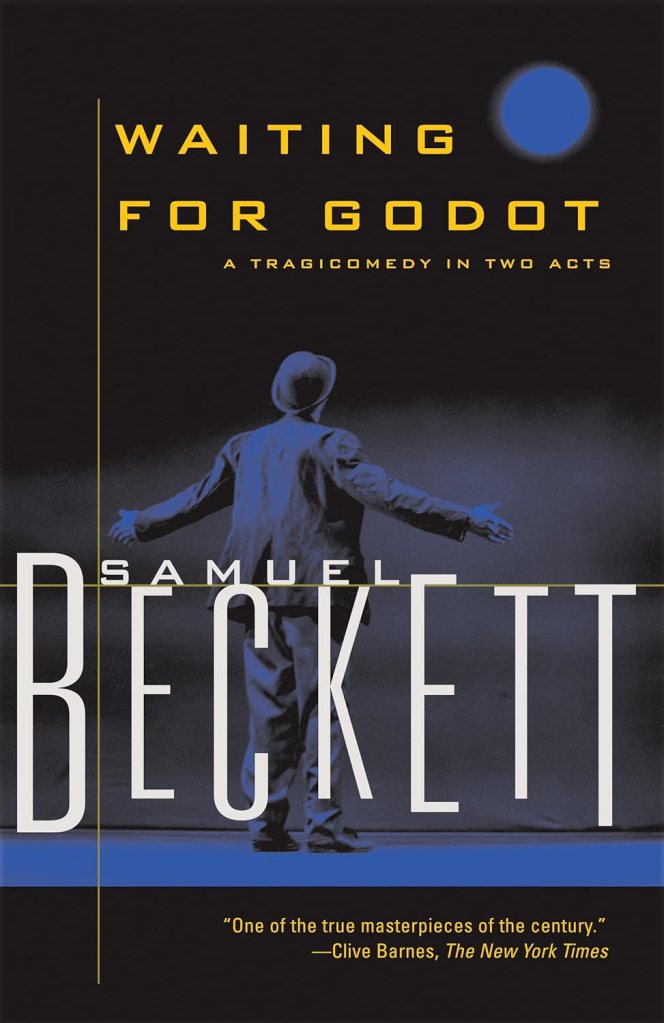
Waiting for Godot (1953) made him internationally famous and established him as a leader of the Theatre of the Absurd movement. His work is characterized by dark humor, minimalism, repetition, and explorations of human suffering, meaninglessness, and the struggle to communicate.
He won the Nobel Prize in Literature in 1969. Despite his bleak themes, he was known personally as witty and kind. He spent most of his adult life in Paris, where he died at age 83.
Waiting for Godot (1953)
Two men, Vladimir and Estragon, wait by a tree for Godot, who never comes. They fill time with philosophical talk, vaudeville routines, and encounters with Pozzo (a master) and Lucky (his slave). A boy arrives each day saying Godot will come tomorrow. The play ends as it began—still waiting. It explores meaninglessness, the human need for purpose, and existence’s absurdity through circular, minimalist structure.
Endgame (1957)
Set in a post-apocalyptic bunker, blind and paralyzed Hamm dominates his servant Clov, who cannot sit. Hamm’s parents live in garbage bins. All four are trapped in bitter interdependence, performing ritualistic power games. Even bleaker than Godot, it examines dependency, cruelty, and the impossibility of escape. Despite threats to leave, no one does—the miserable cycle continues indefinitely.
The connection the Ukraine representative made is clear. What the UN has done so far about Ukraine, hampered by Russia and other Russophiles, including the U.S., is to keep waiting with little possibility of resolution (Waiting for Godot). What gestures the UN has made or not made amount to ritualistic power games that mean nothing, and won’t end the cycle (Endgame).
 Bob Schwartz