Bob Schwartz

Tag: Republican Party

Saturday Night Political Comedy and Science Fiction

Manchurian Candidate

There were two moments of comedy from Saturday night politics, one spontaneous, one planned. And a weird science fiction scene in between.

Comedy. The chaotic opening of the Republican debate was described by Politico as a “train wreck.” But a really funny train wreck:

As Gov. Chris Christie walked out on stage, moderators David Muir and Martha Raddatz called out Dr. Ben Carson. A camera backstage showed Carson starting to walk out, but he stopped himself once he heard the moderators announce the next candidate, Ted Cruz.

Cruz walked out, and Carson stayed put as a stage manager tried to wave Carson on stage. He didn’t move. Donald Trump then walked up next to Carson as his name was called, but also stopped next to Carson.

Marco Rubio was called up next, walking past both Trump and Carson onto the stage, as did Jeb Bush. John Kasich initially didn’t make it out onto the stage at all.

The moderators thought they were done. “Ladies and gentlemen, the Republican candidates.”

But they weren’t. “Dr. Ben Carson, please come out on the stage. He’s standing there, as well. Dr. Carson.

“And Donald Trump,” they added.

Then Carson chimed in. “I can introduce Kasich?”

“Yes, yes, we’re going to introduce Ohio governor John Kasich,” the moderators said.

All that was missing from the botched introductions was the candidates colliding with each other and falling all over the stage. Keystone Cops style (that’s for you, Mitt Romney). This hilarious mess didn’t quite make the endless hours of blah blah that followed tolerable.

Then there was this bit of absolute weirdness at the debate:

Science fiction. Chris Christie attacked Marco Rubio for giving the same canned speech every time, no matter what the question. Rubio responded by giving the exact same speech he had just given. Later in the debate, Rubio did it again, word for word. And then again.

It was like a sci-fi movie where a robot is running for President and the mission is to push him to the point of meltdown. The only way we did know that Rubio was not a robot is that later on he began to sweat. Aha!

Or maybe it was like The Manchurian Candidate, where Christie would show Rubio the Queen of Diamonds from a deck of cards, and Rubio would walk off stage in a hypnotic trance.

Comedy. Bernie Sanders went on Saturday Night Live with his doppelganger Larry David. SNL concocted a bit in which Larry David was the captain of a Titanic-type ship that was sinking. The captain was trying to jump ahead of the women and children getting into the lifeboats. Bernie appeared on deck as a radical immigrant who had had “Enough! Enough!” of the privileged one-percent pushing ordinary people around. The happy ending is that the ship has hit not an iceberg but the Statue of Liberty. Bernie did a charming and self-effacing job of delivering his lines with comic gusto.

John Kasich Will Reunite Pink Floyd

Ohio governor and Republican candidate John Kasich has said that if elected President, he will try to reunite Pink Floyd.

“And if I’m President, I am going to once and for all try to reunite Pink Floyd to come together and play a couple of songs. And since we have so much trouble in America with our finances, I’m going to (ask the band to) start with a little song they created called Money.”

This is obviously meant to announce that Kasich is down with whatever the kids are/were listening to (he said his favorite concert of all time was seeing them on “The Wall” tour). And it is probably better than Marco Rubio’s professing his love for Wu Tang Clan.

The ability to reunite Pink Floyd may not be a qualification to be President. But if he can also resurrect the late great Syd Barrett for the concert, I think we’ve got our new Commander (Concert Promoter) in Chief.

Bernie Sanders Is Barry Goldwater

Bernie Sanders for the Democrats is what Barry Goldwater was for the Republicans.

In the short run that might make the current generation of Democrats unhappy. In the long run, they should ask the Republicans how that turned out.

This is how it turned out. An unlikely, marginalized, and idealistic candidate tried to remind a party of its deepest philosophical roots. He won the party’s nomination for President, against all odds and against the wishes of many in the party, who believed he would lead them to total and inglorious defeat. Which he did.

Barry Goldwater also won. It is understandable that the Republican Party lionizes Ronald Reagan as its hero, model and godfather, since Reagan went on to serve two inspiring terms as President. But it was Goldwater, that embarrassment to some in 1964, who inspired Reagan himself and that first young generation of modern Republican conservatives (including Hillary Clinton, who began her political involvement as a Goldwater Girl).

We don’t know how the Bernie Sanders adventure turns out, either in the upcoming caucuses and primaries or at the convention. He is just as unlikely, marginalized and idealistic as Goldwater, and maybe less likely to win the nomination.

But in the long run, progressives who have been sidelined by the siren song of unwavering pragmatism—politics as the art of the possible—may be the winners. A new generation of genuine and fearless progressives may be born, even as the unlikely messenger is pushed aside.

In the words of Barry Goldwater, and as Bernie Sanders might also say:

“And let me remind you also that moderation in the pursuit of justice is no virtue!”

It May Not Be Politically Correct to Talk About It, But Is Donald Trump Mentally Healthy?

Donald Trump says he saw something that nobody else did: people in Jersey City cheering as the Twin Towers fell on 9/11.

From the Washington Post:

Republican presidential candidate Donald Trump says he saw people cheering the Sept. 11 attacks across the river in New Jersey — a claim officials strongly deny.

Trump first told the story Saturday at a rally in Birmingham, Alabama, as he pressed the need for greater surveillance, including monitoring certain mosques, in the wake of the Paris attacks.

“I watched when the World Trade Center came tumbling down. And I watched in Jersey City, New Jersey, where thousands and thousands of people were cheering as that building was coming down. Thousands of people were cheering,” Trump said Saturday at a rally in Birmingham, Alabama.

Trump repeated the assertion Sunday in an interview with George Stephanopoulos on ABC’s “This Week,” as Stephanopoulos explained to Trump that police had refuted any such rumors at the time.

“It did happen. I saw it,” said Trump. “It was on television. I saw it.”

“There were people that were cheering on the other side of New Jersey, where you have large Arab populations. They were cheering as the World Trade Center came down,” he said.

“I know it might be not politically correct for you to talk about it,” he added, “but there were people cheering as that building came down, as those buildings came down. And that tells you something.”

It comes down to two possibilities.

One is that Trump is just saying stuff and making up stuff for political benefit. Pretty outrageous stuff, but it’s been working for him so far. There have long been internet rumors to this effect, but every possible objective source—police, news media, even Republican politicians—deny it ever happened. But it is a rumor that is a definite winner among certain constituencies.

Or. There is something creepily genuine about Trump’s profession of belief in this. He saw it on television, he says, even though it was never on television. Which means that maybe, just maybe, Donald Trump has a problem. A psychological one. People do and say all kinds of things that cross all kinds of lines—ethical, moral, criminal—without having mental illness. On the other hand, it would not be that surprising for someone who has skated for so long on the edge of saying whatever is needed—very successfully and profitably—to cross a boundary to the place where things that never happened do appear to have happened. All evidence to the contrary.

Veterans Day: The Annual Shame of a Nation

Veterans Boots

Failure to take full and proper care of veterans is not a Democratic or Republican shame. The only reason to focus on Republicans here is that last night, in their debate, on the eve of Veterans Day, only four passing mentions of veterans were made during two hours.

The debate was formally about the economy, but since every one behind the podiums is practiced at changing the subject, there’s no reason some or all of them couldn’t have just said: The economy is an important topic, but just tonight, this particular night, I’d like to focus my time exclusively on veterans matters.

Here’s what one of them might have said:

There is enough responsibility to go around for getting this nation involved in military conflicts. It doesn’t matter what party started it or finished it or didn’t finish it. It doesn’t matter whether it was a great idea or a terrible idea or whether it is too soon to tell. As a nation, we do what we do, and we have to pay the price and keep our promises. In the case of military service, that promise is to spare no expense or effort to not only make combatants whole, or whole as humanly possible, but to elevate their service to priority status in our national consciousness and commitments.

That’s why I’m going to spend whatever minutes I have on this national debate platform tonight to talk specifically about immediate solutions to veterans issues, rather than casting blame or blowing hot air. I also call upon the millionaires and billionaires supporting us and trying to influence the election to divert just a little of that money to nonpartisan efforts such as Iraq and Afghanistan Veterans of America to start solving the problem. Of course, making this a government first priority would be nice too. Because if it comes down to a choice between any of us actually getting the nomination, which is admittedly a long shot for most of us anyway, and the comfort and well-being of those men and women we’ve flag-wavingly asked to fight on our behalf, I’d rather ask that those veterans be made whole than that I be President.

I know. Dream on.

No Refugees in the Democratic Debate

Adding insult to their injury, Syrian refugees were missing from last week’s Democratic debate.

There were some other important issues mentioned, often presented in sound bites, but many more conspicuous by their absence. But you would think the party that considers itself the more progressive, caring, humane and globally sensitive would take the opportunity to at least mention to the 15 million viewers that we are experiencing one of the biggest humanitarian crises since the end of World War II. The same goes, maybe goes double, for the individual candidates who had the floor and could have just once brought it up.

(Note: Jim Webb did raise refugees while talking about his wife, who is a refugee from Vietnam. But that was not in the context of the current crisis.)

The explanation of this is simple and typical, though not particularly happy. Raising questions you can’t answer, or can’t answer with some vague, equivocal, pointless comment is to be avoided. Either voters will realize that you have no answer, or if you do answer from your conscience and heart, you just might lose votes. Either way, as a candidate, you’re screwed.

This isn’t a Democratic purview. When Republicans get together in their overstuffed debate scrum, there isn’t much to be said about the refugee crisis, except that it is an obvious ruse to allow Islamic terrorists to enter our country. It does seem like an elaborate scheme—displacing millions of men, women, and children just to get a chance to disrupt American stability—but you know how tricky those people can be.

And so, the next time a Democratic candidate wants to tell one of those rise from adversity stories that is a sure fire way to seem human and humane, maybe he or she can mention the shared and horrific adversity that won’t just go away—even if he or she has some magic plan to “fix” Syria (which he or she doesn’t). Maybe the next time, at the podium or on a debate stage. Those refugees will certainly still be there, in an increasing hell on earth.

What Are Donald Trump’s Moral Obligations?

Donald Trump has indirectly raised an interesting question: What exactly are his moral obligations?

Trump’s failure to correct a supporter’s mistaken and vituperative views about President Obama have been at the center of a controversy.

After a few attempts to answer criticism, Trump tried again today:

Washington (CNN) Donald Trump on Saturday said it is not his job to correct supporters’ claims about the President, defending his decision not to take issue with a man who disparaged Muslims and said President Barack Obama is not an American.

Trump did not dispute the man’s allegations made at a town hall event this week, and added that if someone criticized him to Obama, there would be “no chance” the President would come to his defense.

“Am I morally obligated to defend the president every time somebody says something bad or controversial about him? I don’t think so!” he tweeted Saturday morning.

Am I morally obligated to defend the president every time somebody says something bad or controversial about him? I don’t think so!
— Donald J. Trump (@realDonaldTrump) September 19, 2015

Now that we know one of the things that is not Trump’s moral obligation, it begs the question: What does he consider his moral obligations to be?

I wish and hope that somebody—maybe a member of the press—would ask him.

Politics of Pessimism

Book of Job

It is one thing to say that things could be better in America. Another to say that things are terrible, horrible, very bad.

At the moment, that seems to be a Republican approach to “lifting up” the nation and winning the presidency. Make sure we realize just how dire things really are and then promise to swoop in as our rescuer. First we kill all hope.

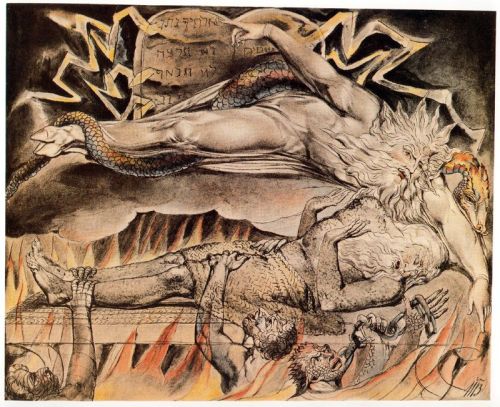
Hope isn’t dead. Crushing our current spirit for the sake of future dominance is a terrible, horrible, very bad idea. The more Bible-minded will recognize this as one of the tricks played by some legendary figures. See, for example, the Book of Job.

For a post-debate review of this, see The ‘Everything is Bad’ Party.

Cuba: No Democracy, No Embassy, So Recall the Ambassador to China

U.S. Embassy in Beijing

If you listen to those opposing normal diplomatic relations with Cuba, you learn that we should not do so until Cuba moves toward democracy.

With that rationale, we should be ending diplomatic relations with many countries, because no matter what our ideals and aspirations, the world still includes some fairly undemocratic nations.

Such as China. We have had full diplomatic relations with the People’s Republic of China since 1979, a period that includes both Republican and Democratic Presidents and Congresses. There is no way to characterize China as a democratic, democratic-leaning, democratic-seeking nation. So we should immediately recall our latest ambassador, former Sen. Max Baucus, and immediately close our embassy in Beijing.

Of course, that doesn’t make sense. As nothing has made sense in our relations with Cuba, even before Fidel Castro overthrew the Batista regime in 1959. The U.S. supported Batista and opposed Communism in the hemisphere. Commercial interests, legal and illegal, made money. Once Castro was in power, and refugees of substantial and modest means resettled in the U.S., it was thought that isolating Cuba would make it come around to right thinking and lucrative democracy. That didn’t work, and neither did the one attempt at forcing the issue, the debacle of the Bay of Pigs invasion.

If we had given Cuba the benefit of the doubt that we have given other non-democracies, not to mention the money we have invested in those nations, some good might have come of it, with little downside. But as with many issues, politics in the form of financial support, or the threat of withholding it, distorts what may be for the best.

Which is why, with Obama moving to normalize Cuban relations, you won’t hear anybody calling for the closing of the Beijing embassy, but lots of grandstanding and bluster about how a Cuban ambassador will mean the end of the world.

All Politicians Are Progressives

Horse Carriage - Lincoln
Either you embrace innovation or you don’t. And so all politicians who use an iPhone or love the NFL are progressives.

Innovation has two faces. One is the innovation that solves problems. The other is innovation that just does stuff—even if you didn’t ask for it, even if you never knew you wanted it or needed it. Moving from horse transport to self-contained mechanical carriages solved a basic problem, but over time added features some of which are useful and practical for the central function, others of which are just enjoyment that becomes essential. Because times change, as do human expectations and aspirations. Innovation feeds that.

So unless you are a politician who doesn’t have a smartphone, or who doesn’t use a phone or computer at all, or doesn’t drive a tricked-out luxury car (it counts even if you have a driver), you are the beneficiary and tacit endorser of innovation. Which is why when some politicians hearken back to the comprehensive goodness of 18th century America—or 19th or 20th, depending on the issue—it is dangerously silly. This economic Drecession requires an embrace of 360 degree innovation, not just untaxing and unburdening ourselves to prosperity. Not just churning out a generation of STEMers to magically bring us back to former glory. And not just putting digital devices in the hands of every school child either.

This is not the exclusive purview of any political party. There is a tendency, even among the most well-meaning, to take pages from a beloved playbook that are no longer viable. When the legendary coach Sid Gillman changed pro football forever in the 1950s by making the forward pass the centerpiece of the game, it was scoffed at—until he started winning championships and opponents had to permanently rethink the defensive game.

If politicians want to ride around in fancy horse-drawn carriages and send their messages by horse-carried post (if they haven’t made the Post Office disappear), that’s okay. But chances are they’ve embraced innovation in practically every minute of their lives (they love their Twitter!) because, well, it is 2013. It is 2013, everywhere, in every facet, and pretending otherwise is just horse-and-buggy policy. Or maybe just a convenient way to get elected.