Bob Schwartz

Tag: Religion

Random Torah: Devarim/Deuteronomy 34

the_death_of_moses

Studying a random Torah chapter each Shabbat contravenes the traditional, conventional and sacred process of following the Torah through a fixed annual cycle of portions. I only recently learned from reading the revered and brilliant rabbi and scholar Aryeh Kaplan that meditation on random Torah passages is actually a historical Jewish phenomenon. Who knew?

While working on an extended explanation of my taking this iconoclastic Torah study path, today I offer a poem about breaking cycles:

Discontinuous

We see better in discontinuity
The way we see better in the dark.
We strain for every glimmer of light
However small
To make out shapes.
Cycles and patterns are comfortable
The more they repeat
The easier it seems.
But nothing is easy.
We are lulled into false confidence
That we know what is there
And what is going on.
The broken line
Is as powerful as the solid.

Deuteronomy 34 is the last chapter of the Torah. It is the death of Moses.

The Torah begins on a cosmic scale with the creation of everything. It ends with a single man, a very old and special man, sitting on a mountaintop, surveying the future. He will never see or experience that future, partly because he is old and dying, partly because he has been forbidden to enter the land he has led his people to.

Scholars will tell you that as a literary matter, this final chapter may not technically be the end of the text, that the five books (Pentateuch) are actually six (Hexateuch), and this compendium work originally continued with the story of Joshua, which now appears in the non-Torah book of Joshua.

That is an important scholarly debate in some ways, and a silly one in another. The Big Story always begins with an ineffable cosmic moment. It always ends with an old person surveying the past, present and future, with promises fulfilled and unfulfilled, barred by the nature of creation from going any further. This final chapter gets it right.

The Meek and the Mean

And very soon the wicked will be no more.
You will look at his place—he’ll be gone.
And the poor shall inherit the earth
and take pleasure from great well-being.
(Psalm 37:11-12, Robert Alter translation)

But until then, the mean and the stupid may still prevail.

Paradise

berliner-rabbinical-seminary-1988

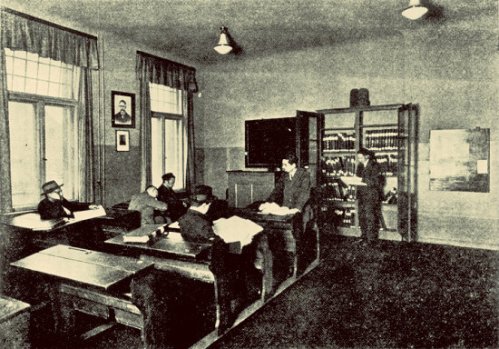
A story is told about a rabbi who once entered heaven in a dream. He was permitted to approach the temple in Paradise where the great sages of the Talmud, the tannaim, were spending their eternal lives. He saw that they were just sitting around tables studying the Talmud. The disappointed rabbi wondered, “Is this all there is to Paradise?” But suddenly he heard a voice, “You are mistaken. The tannaim are not in Paradise. Paradise is in the tannaim.”

Abraham Joshua Heschel, Moral Grandeur and Spiritual Audacity: Essays


The Cathedral and the Grass Hut

cathedral-lafayette-la

“I’ve built a grass hut where there’s nothing of value.
After eating, I relax and enjoy a nap.”

Grand
Grander than grand.
Splendid glory
Magic carpet
Of gold and glass
Whisks us away
To God’s neighborhood.
The grass hut reminds us
That houses and vehicles
Are just that.
Means not
Journey or destination.

“A shining window below the green pines—
jade palaces or vermilion towers can’t compare with it.”

Quotes from Song of the Grass Hut by Shitou Xiqian (700–790), translated by Taigen Dan Leighton and Kazuaki Tanahashi.

Light the Icicle

icicles

Happy Hanukkah. Happy Christmas.


The Icicle

A zaddik told:

“On a winter’s day, I went to the bath with the master. It was so cold that icicles hung from the roofs. We entered and as soon as he did the Unification, the bath grew warm. He stood in the water for a very long time, until the candle began to drip and gutter. ‘Rabbi,’ I said, ‘the candle is guttering and going out.’

‘Fool,’ he answered, ‘take an icicle from the roof and light it! He who spoke to the oil and it leaped into flame, will speak to this too, and it will kindle.’ The icicle burned brightly for a good while, until I went home, and when I got home there was a little water in my hand.”

Martin Buber,  Tales of the Hasidim


“People ask, ‘What is the Buddha?’ An icicle forming in fire.”

Dogen Zenji

Constellator (Starry Nights)

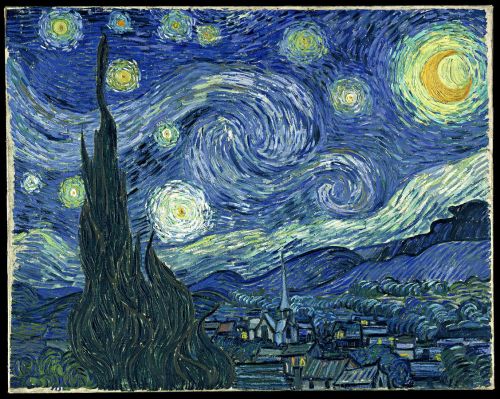
Starry Night

Constellator (Starry Nights)

To the uninitiate
The stars are arrayed
Points of white
That delight
But mean nothing.
The constellator sees old pictures.
The artist connects them anew.
The astronomer investigates
Each by each.
On cold nights
Of black sky
I see connect investigate
Unsure which I am
While the stars
Patiently wait.

More New York Hate Attacks—On a Muslim Cop and a Subway Worker

aml-elsokary

Just as you probably didn’t see any national coverage of the assault on a Muslim college student riding the New York subway, you also probably didn’t see stories about more attacks in the last few days—including one on a New York City cop.

Sunday

‘I will cut your throat!’: Man attacks Muslim cop and her son

A suspect was arrested Sunday in the Brooklyn attack on an off-duty Muslim cop wearing a hijab.

“Go back to your country,” the man yelled at NYPD Officer Aml Elsokary during the incident Saturday.

He also targeted the cop’s 16-year-old son — shoving him and shouting a slur that referenced ISIS — before telling them both, “I will cut your throat! Go back to your country!” sources said.

The incident is being probed as a hate crime.

The suspect, whose name was not released, lives near the scene of the attack, on Ridge Boulevard and 67th Street in Bay Ridge.

Elsokary made headlines in 2014 when she helped rescue an old man and a baby from a burning building.

Monday

Muslim MTA worker in hijab pushed down stairs, called ‘terrorist’

A Muslim New York City Transit employee who was wearing a hijab with her uniform was injured when she was pushed down the stairs at Grand Central Terminal Monday morning by a man who called her a “terrorist,” officials said.

The 45-year-old woman was on her way to work at 6:20 a.m. when the man confronted her on the 7 Train.

“You’re a terrorist and you shouldn’t be working for the city,” the hate-monger spewed at her while the two were on the train, as he jabbed at her MTA patch.

He followed her off the train and pushed her down the stairs. Her ankle and knee were injured and she was taken to NYU Langone Hospital.

We have to start facing a few realities, though strategies to deal with them are still to be determined. One is not just the presence of hate and intolerance—an age-old problem—but the growing aggressive expression of that hate, possibly in light of the current political climate. Another is a certain willingness to stand by while that happens—also long-standing—because we will always have such people and that’s just the way things are. A final reality is much of the news media, which, with all due respect, spent the presidential campaign focused on all kinds of nonsense and missing all kinds of truth, sometimes in the name of being “objective” and not judging or having opinions.

These latest examples of necessary truths are not matters of opinion. What’s wrong is wrong, and if the media is uncomfortable reporting or analyzing it, maybe they have outlived their usefulness and relevance.

Right Trees (Bodhi Day)

buddha-comic-enlightenment

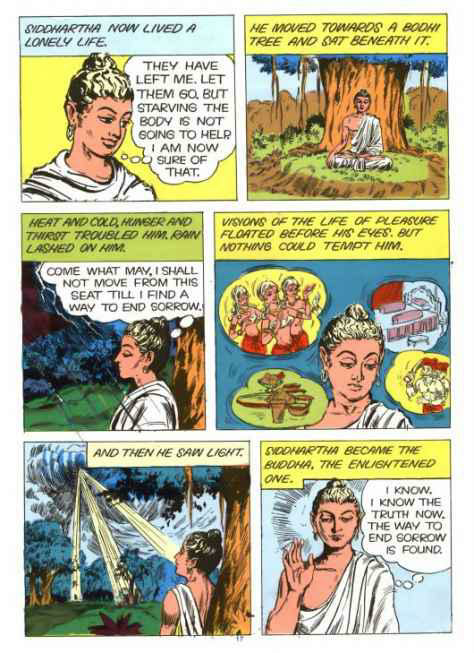
December 8 is Bodhi Day, known in Japan as Rohatsu, the day of the Buddha’s enlightenment.  

Right Trees (Bodhi Day)

Which tree
To sit under?
Study each one
Counting branches
Inspecting leaves.
Is the ground
Too soft or wet
The shade
Too dark?
Who can deny
The forest
Yet it shrinks
To dust
On a distant shore.
The moon and
The morning star
Are just enough light
To brighten the night
Waking to find
This tree
All trees
Are right.

I wondered how the Buddha knew which tree to sit under for that consequential meditation. An easy answer is that it didn’t matter, that any tree or all trees would do. Another answer is that it didn’t have to be a tree at all. Another of the infinite answers is that there was no tree, no moon or morning star, no sitting. Just waking up.

“Drunk men screaming Trump’s name try to rip off Muslim student’s hijab as straphangers stand idly by on East Side subway, cops say”

Yasmin Seweid

This is from today’s New York Daily News.

I have mixed feelings about repeating such a negative story. But I am repeating it because Google News shows that at this point it has been covered by only 26 news outlets in America and the world.

Only twenty-six news outlets. Practically any story gets more coverage than that—let alone a story with major social implications, involving the next President of the United States, or at least his name as a rallying cry.

One more thing: Take the hateful actions of these attackers, and imagine their shouting the name of some other President. Imagine these men shouting “You look like a f—ing terrorist! Get the hell out of the country! You don’t belong here!” followed by “George Bush! George Bush!” or “Ronald Reagan! Ronald Reagan!”

Are we ready for this New World?


STRAPHANGERS STOOD BY AND WATCHED as three drunk white men repeatedly screamed “Donald Trump!” and hurled anti-Islam slurs Thursday at a Muslim Baruch College student before trying to rip her hijab off of her head on an East Side subway, the woman told the Daily News.

Yasmin Seweid said she was stunned by the assault — and the fact that no one in the subway car came to her aid.

“It made me really sad after when I thought about it,” she said. “People were looking at me and looking at what was happening and no one said a thing. They just looked away.”

The terrified 18-year-old recounted her harrowing encounter with the hate-spewing trio.

“I heard them say something very loudly, something about Donald Trump … I also heard them say the word terrorist and I sort of got a little scared,” Seweid told The News.

Seweid had left an event at Baruch and was on her way home on an uptown No. 6 platform at the 23rd St. and Park Ave. stop at about 10 p.m. Thursday when the men started taunting her, she said.

They hollered at the business major as she boarded a train.

They kept screaming Trump’s name at her, and then said, “Oh look, a (expletive) terrorist,” she said.

“Get the hell out of the country!” they yelled during the train ride. “You don’t belong here!”

Seweid, who was born in Williamsburg, Brooklyn, to Egyptian parents, was shocked.

“I born and raised in this country,” she told The News. “I’m an American, you know?”

When Seweid ignored them, they pulled on her bag to get her attention and the strap broke.

“That’s when I turned around and said ‘can you please leave me alone,’ and they started laughing,” she said.

She walked to the other end of the train, and they followed her and tried to pull off her hijab, a head covering worn by Muslim women.

“Take that thing off!” they hollered.

“I put my hand on top of my head to hold it,” Seweid said. “Then I turned around and screamed ‘what the (expletive).’ ”

Seweid got off the train at Grand Central Terminal on E. 42nd St. and reported the terrifying incident to police.

Her father, Sayeed Seweid, 55, of New Hyde Park, L.I., said he was also angry that no one else stepped in to defend his daughter.

“Nobody even offered to help an 18-year-old girl,” he said. “That means something. Her phone was dying. You offer help — it doesn’t matter the race, religion, or the country.”

After filing a police report, shaking and crying, Seweid made her way to Penn Station where she called her father after finding an electrical outlet to charge her phone, her father said. She was not injured.

He came and picked her up and they chatted with police into the early morning hours before driving home.

On Friday, Seweid sat with police officers and tried to help spot the men on surveillance video, her father said. No one has been arrested.

The incident is another in a growing list of bias crimes across the city since Trump’s election. Cops said that from Nov. 8 through Nov. 27, there were 34 reported incidents compared to 13 in the same period in 2015.

“American Muslims, and particularly men and women who wear religious attire, are being increasingly targeted by hate nationwide in the wake of the Nov. 8 election,” said Afaf Nasher, executive director of the New York chapter of the Council on American-Islamic Relations.

“I was very shaken up … I’m definitely traumatized,” Seweid said. “I’m really scared.”

Of the 34 incidents between Election Day and Nov. 27, 18 have been anti-Semitic in nature, compared to five in the same period last year. Five of the incidents have been anti-gay, and five others, anti-white. Two targeted Muslims and one was anti-black.