Bob Schwartz

Tag: rebirth

Believing and acting “as if”
Our religious traditions often ask us to act on faith, believing that which can’t be absolutely demonstrated or proven to our satisfaction. For theistic religions, God is at the top of that list, with many other beliefs following.

In Buddhism there is a belief in rebirth:


rebirth. The belief that one is reborn after death. Belief in rebirth is a corollary of the doctrine of karma, which holds that a person experiences the good or bad fruits of moral action at a later date. Rebirth is one of the ‘givens’ of Buddhist thought and since its truth is universally assumed it is rarely asserted or defended as a dogma. Some contemporary Buddhists have suggested that belief in rebirth is not an essential part of Buddhist teachings, but the notion is deeply ingrained in the tradition and the ancient texts.


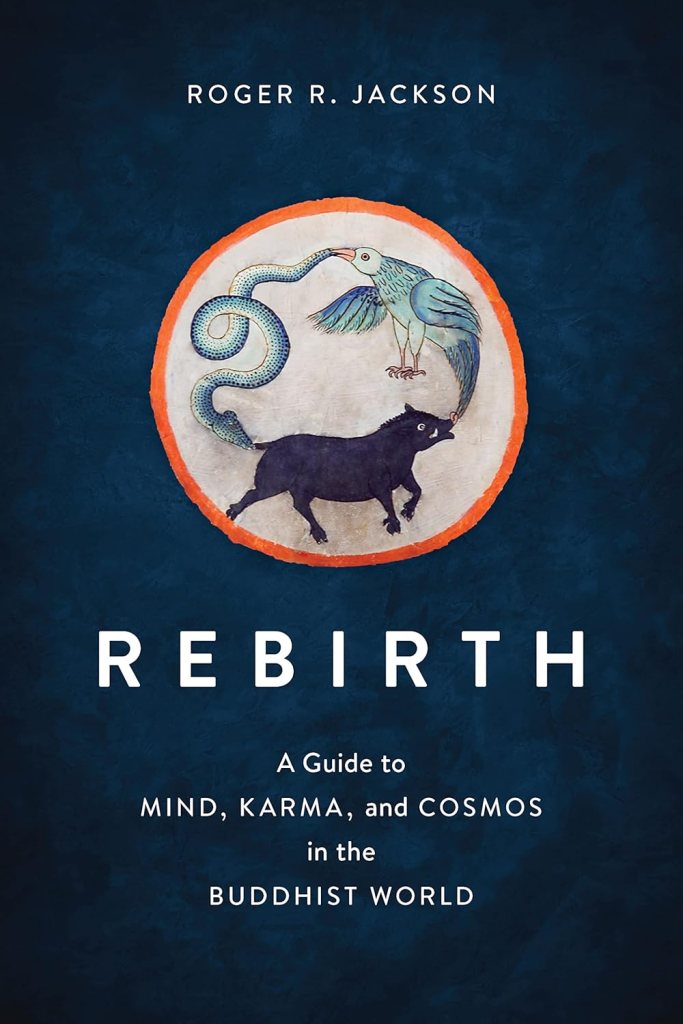
Roger Jackson in his masterful study Rebirth: A Guide to Mind, Karma, and Cosmos in the Buddhist World (2022) points to modern Buddhist masters and followers who suggest that rebirth is theory, not fact. Nevertheless, it remains a core belief.

In closing, Jackson points to a familiar Western resolution. The argument of 17th-century mathematician Blaise Pascal—sometimes called Pascal’s wager—is that by believing in God you risk nothing significant but could gain everything.

This leads Jackson to this:


I myself would argue without ambivalence for what I call “As-If Agnosticism.” My stance is agnostic because, like Hayes and Batchelor (and many others), I do not find traditional descriptions of karma and rebirth literally credible, nor am I fully persuaded by arguments in their favor, whether rational, empirical, or faith-based; on the other hand, I cannot rule out the possibility that such descriptions (or something akin to them) may in fact be true. The universe, after all, is surpassingly strange. In the spirit of Wallace Stevens’s famous statement that “we believe without belief, beyond belief,” I propose that we live as if such descriptions were true. I am not suggesting we simply take up wishful thinking: if only there were past and future lives, if only karma works the ways tradition says it does, if only glorious and perfect buddhahood awaited us all at the end of the rainbow. Maybe they do, maybe they don’t. But as Buddhists have argued for millennia, Western humanists have claimed for centuries, and scientists have recently begun to recognize, the world is actually built far more on our ideas, aspirations, and speculations—the As-If—than we suppose, and the solid foundations we presume to lie beneath us—the “As-Is”—are much more difficult to find than we assume. It’s not, therefore, that by living as if certain doctrines were true we really are in flight from some bedrock, objective reality, because that reality—though it certainly imposes limitations on us, most notably at the time of death—turns out to be far more a matter of convention and far less “just the way things are” than we had thought. Freed from the illusion of perfect objectivity, therefore, why not think and live as if Buddhism were true? In doing so, we empower ourselves to enter, as fully as is possible in a skeptical age, into the ongoing, ever-changing life of the Dharma, adopting Buddhist ideals, telling Buddhist stories, articulating Buddhist doctrines, performing Buddhist rituals, and embodying Buddhist ethics in ways that make meaning for ourselves, provide a measure of comfort to others, and perhaps contribute in some small way to the betterment of the imperfect and imperiled world in which we all live.

Let the final word belong not to me, however, but to the Buddha, who in the Rohitassa Sutta (Discourse about Rohitassa) recounts a previous life as a seer named Rohatissa, “possessing magical potency, able to travel through the sky…[with] speed like that of a light arrow easily shot by a firm-bowed archer.” Conceiving the wish to find the ends of the earth, he traveled for a hundred years as fast as the wind, yet “died along the way without having reached the end of the world.” There is no “end” to the geographic world, explains the Buddha, but that is not, in any case, the end-of-the-world we should be seeking. Rather, we must seek the place “where one is not born, does not grow old and die, does not pass away and get reborn.” And where is the end of the world in this deeper sense—nirvāṇa—to be found? “It is,” he says, “in this fathom-long body endowed with perception and mind that I proclaim (1) the world, (2) the origin of the world, (3) the cessation of the world, and (4) the way leading to the cessation of the world.” As a result, “…the wise one, the world-knower, who has reached the world’s end and lived the spiritual life, having known the world’s end, at peace, does not desire this world or another.”


“As if” is powerful. There is also a powerful caveat. If you believe “as if” something is true, though you may still doubt it, it is essential that the belief do good for others—not just for yoursel. While Pascal says believing in the unprovable you “could gain everything”, it is others who should ultimately gain everything from your belief, not just you. If the belief brings other harm, better to not believe and act “as if.”

Two Thoughts on the Passion: The Buddha and Bob Dylan


Bringing It All Back Home

“He not busy being born is busy dying.”

For anyone, Christian or not, the story of Easter is remarkable. Story, that is, not necessarily treated either as a story told or as a history chronicled.

Two of a thousand thoughts.

1.

The Buddhist conception of rebirth is complicated, beyond my simple and simplest understanding. So consider this just a summary and a thought about something of nearly infinite scope.

The realization that we are bound to grow old and die breaks the spell of infatuation cast over us by sensual pleasures, wealth, and power. It dispels the mist of confusion and motivates us to take fresh stock of our purposes in life. We may not be ready to give up family and possessions for a life of homeless wandering and solitary meditation, but this is not an option the Buddha generally expects of his householder disciples. Rather, as we saw above, the first lesson he draws from the fact that our lives end in old age and death is an ethical one interwoven with the twin principles of kamma and rebirth. The law of kamma stipulates that our unwholesome and wholesome actions have consequences extending far beyond this present life: unwholesome actions lead to rebirth in states of misery and bring future pain and suffering; wholesome actions lead to a pleasant rebirth and bring future well-being and happiness. Since we have to grow old and die, we should be constantly aware that any present prosperity we might enjoy is merely temporary. We can enjoy it only as long as we are young and healthy; and when we die, our newly acquired kamma will gain the opportunity to ripen and bring forth its own results. We must then reap the due fruits of our deeds. With an eye to our long-term future welfare, we should scrupulously avoid evil deeds that result in suffering and diligently engage in wholesome deeds that generate happiness here and in future lives.

In the Buddha’s Words: An Anthology of Discourses from the Pali Canon

My own take is that these rebirths are not a succession of lives, in the sense of multiple spans, but within this one life, this span of decades. We are constantly offered the opportunity to be new, based on who we have been but also on who we will be—who we will ourselves through thoughts and actions to be. If this sounds somewhat like the premise of Christian rebirth—of being born again—it might be.

(Note: To add yet another layer, Zen Master Bankei   talked about the unborn, that is, the unborn Buddha mind. When we realize that there is a reality that is there even before birth, we are marvelously illuminated. Not being born, we are not even subject to rebirth. But that’s another story.)

2.

Thinking about the story of the death and resurrection of Jesus, a soundtrack came to mind: Bob Dylan’s song It’s Alright, Ma (I’m Only Bleeding), from the album Bringing It All Back Home (1965).

I looked to see whether Dylan had ever talked about a connection between the song and the Bible story. At first glance, it looks like not.

Maybe I’m just reaching, the way exegetes sometimes do, but it seems clear to me. If you’re not familiar with the song, please read the lyrics (below) and listen to the track. As a poem, it is up there with the classics of modern beat poetry, such as Allen Ginsberg’s Howl. It is that good.

The song begins with a son singing to his mother about a darkness at noon. He obviously is, or considers himself, some kind of prophet, railing against the status quo and the powers that be. He acknowledges that this is dangerous. He finishes by imagining his execution: “And if my thought-dreams could be seen/They’d probably put my head in a guillotine.”

All along, he assures the mother that everything is alright:

It’s alright, Ma, I’m only bleeding…
It’s alright, Ma, I’m only sighing…
And it’s alright, Ma, I can make it…
I got nothing, Ma, to live up to…
But it’s alright, Ma, if I can’t please him…
But it’s alright, Ma, it’s life, and life only


It’s Alright, Ma (I’m Only Bleeding)
Written by Bob Dylan

Darkness at the break of noon
Shadows even the silver spoon
The handmade blade, the child’s balloon
Eclipses both the sun and moon
To understand you know too soon
There is no sense in trying

Pointed threats, they bluff with scorn
Suicide remarks are torn
From the fool’s gold mouthpiece the hollow horn
Plays wasted words, proves to warn
That he not busy being born is busy dying

Temptation’s page flies out the door
You follow, find yourself at war
Watch waterfalls of pity roar
You feel to moan but unlike before
You discover that you’d just be one more
Person crying

So don’t fear if you hear
A foreign sound to your ear
It’s alright, Ma, I’m only sighing

As some warn victory, some downfall
Private reasons great or small
Can be seen in the eyes of those that call
To make all that should be killed to crawl
While others say don’t hate nothing at all
Except hatred

Disillusioned words like bullets bark
As human gods aim for their mark
Make everything from toy guns that spark
To flesh-colored Christs that glow in the dark
It’s easy to see without looking too far
That not much is really sacred

While preachers preach of evil fates
Teachers teach that knowledge waits
Can lead to hundred-dollar plates
Goodness hides behind its gates
But even the president of the United States
Sometimes must have to stand naked

An’ though the rules of the road have been lodged
It’s only people’s games that you got to dodge
And it’s alright, Ma, I can make it

Advertising signs they con
You into thinking you’re the one
That can do what’s never been done
That can win what’s never been won
Meantime life outside goes on
All around you

You lose yourself, you reappear
You suddenly find you got nothing to fear
Alone you stand with nobody near
When a trembling distant voice, unclear
Startles your sleeping ears to hear
That somebody thinks they really found you

A question in your nerves is lit
Yet you know there is no answer fit
To satisfy, insure you not to quit
To keep it in your mind and not forget
That it is not he or she or them or it
That you belong to

Although the masters make the rules
For the wise men and the fools
I got nothing, Ma, to live up to

For them that must obey authority
That they do not respect in any degree
Who despise their jobs, their destinies
Speak jealously of them that are free
Cultivate their flowers to be
Nothing more than something they invest in

While some on principles baptized
To strict party platform ties
Social clubs in drag disguise
Outsiders they can freely criticize
Tell nothing except who to idolize
And then say God bless him

While one who sings with his tongue on fire
Gargles in the rat race choir
Bent out of shape from society’s pliers
Cares not to come up any higher
But rather get you down in the hole
That he’s in

But I mean no harm nor put fault
On anyone that lives in a vault
But it’s alright, Ma, if I can’t please him

Old lady judges watch people in pairs
Limited in sex, they dare
To push fake morals, insult and stare
While money doesn’t talk, it swears
Obscenity, who really cares
Propaganda, all is phony

While them that defend what they cannot see
With a killer’s pride, security
It blows the minds most bitterly
For them that think death’s honesty
Won’t fall upon them naturally
Life sometimes must get lonely

My eyes collide head-on with stuffed
Graveyards, false gods, I scuff
At pettiness which plays so rough
Walk upside-down inside handcuffs
Kick my legs to crash it off
Say okay, I have had enough, what else can you show me?

And if my thought-dreams could be seen
They’d probably put my head in a guillotine
But it’s alright, Ma, it’s life, and life only