Bob Schwartz

Tag: PBS

Money, Power & Wall Street: The Don’t-Miss Can’t-Watch Documentary

When I look back at my past posts, which began in 2012, some are too time-bound and topical to be of much interest to anybody today. Others remain relevant.

The context of this older post, from May 12, 2012: The U.S. economy bottomed out in 2008. When PBS (which is still hanging on, despite ongoing attempts to kill it) produced this Frontline documentary, it was trying to explain what happened and warn us, all those years ago, that it wasn’t getting fixed, and might only get worse.

In describing the documentary that was “don’t miss, can’t watch” I wrote:

“In a world where financial forces become too big to understand or control, it is still our job as citizens and public servants to understand and control them. Because when it finally hits, ideologies and political badges are not really going to matter.”

How’s that going?


It is hard to recommend the four-part PBS Frontline documentary Money, Power & Wall Street and hard not to. Difficult as it is to watch the financial crisis unfolding, the film is superior even by Frontline’s high standard of excellence. As a history and prospectus, it is an insightful, even-handed and essential work of reporting. As a source of optimism, it is a complete failure, because the conclusion is that nothing has substantially changed, and that maybe nothing will.

It is as good as any disaster movie in pulling us in and moving us inexorably along. We see the scenes in detail, meet the cast of characters—lead and supporting actors—and have a growing sense of foreboding: this can’t end well.

It is different than most disaster movies in two ways. Most have some heroes, and with a few exceptions, there are no heroes here. And most disaster movies end with some movement toward rebuilding and reform, and with a sense of lessons learned: we will keep better watch for asteroids, we will build a system of asteroid warning and protection, we will come out this with a fundamentally better society. There is none of that here.

Yet Money Power & Wall Street has to be seen by every American. Those with political agendas will no doubt point to particular decisions or non-decisions, or particular actions or inactions, to prove a partisan point. But when they do, they will have missed the bigger point. In a world where financial forces become too big to understand or control, it is still our job as citizens and public servants to understand and control them. Because when it finally hits, ideologies and political badges are not really going to matter.

League of Denial: The NFL’s Concussion Crisis

league-of-denial-raster-br10-8
You may not think that you want to watch the new PBS Frontline documentary League of Denial: The NFL’s Concussion Crisis.

You may not want to spend almost two hours on a documentary, even a superb one. You may not like football, may not know anybody who plays football at any level, may not care about the business of sports. Then again, some or all of those may apply to you.

It doesn’t matter. You can watch League of Denial online. Please watch it.

One of the many lessons you will learn, if you didn’t already know, is that we pay a price for everything. Or at least somebody does. The price is sometimes advertised and obvious, but sometimes hard to find or even hidden. The point is not that something is good or bad, right or wrong, but that we can only make informed and enlightened decisions when everything is known. No more or less.

American Experience: Silicon Valley

Silicon Valley
Tech history is our history. As enlightening and fun as it is, it is also more complex than learning about cars and trains and planes, all of which we understand, or can learn to. But transistors, integrated circuits and, ultimately, microprocessors are harder to grasp.

But this is also human history, the intertia of brilliant people at rest and in motion. That’s why the background of these digital days is fascinating, and why the new PBS American Experience documentary Silicon Valley is so enthralling.

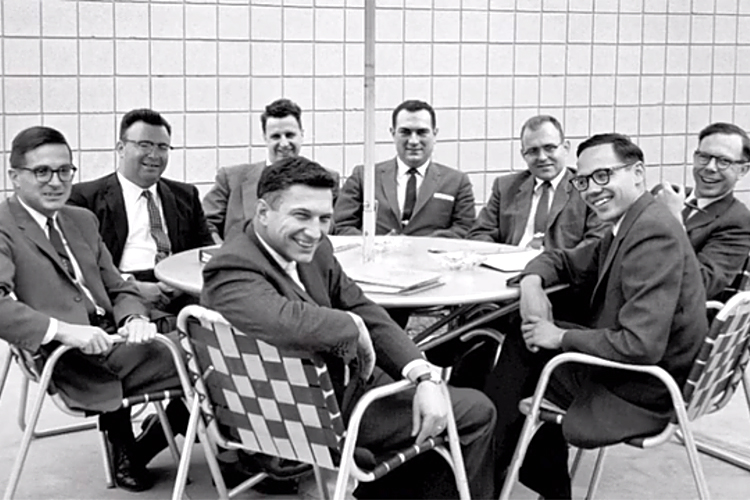
You know where Silicon Valley is, what it is, and may have been there. How that agricultural Santa Clara Valley became the center of the world is a story. But the real story is how Robert Noyce, Gordon Moore and Andrew Grove—the godfathers of Intel—and their colleagues, predecessors and competitors changed the way the world worked technically, commercially and socially.

Silicon Valley is that story. It is inspiring, in the way that all risky ventures into the unknown are inspiring. It is also one of the rare worthy arguments for some sort of true American exceptionalism, since there is an inherent sense watching this—as politically incorrect as some may find it—that this is a quintessentially American story. This is what we did, this is what we do.

Silicon Valley is not to be missed.

The Untouchables: No Justice On Wall Street

The Untouchables
This week, PBS Frontline aired a follow-up to its powerful documentary Money, Power & Wall Street, which covered the origins and aftermath of the 2008 financial meltdown. The Untouchables is an equally scathing and disturbing story about the failure of the Justice Department to prosecute any Wall Street executives for fraud, in the wake of their apparently knowing securitization and sale of worthless mortgages.

For those who wonder whether investigative journalism still matters, this happened yesterday:

Lanny Breuer, the head of the DOJ Criminal Division featured in the documentary, resigned. Questions about why criminal prosecutions have taken so long—and whether there will ever be any—linger like a bad odor.

Mary Jo White, a former federal prosecutor, was nominated to be the next chairwoman of the Securities and Exchange Commission. Richard Cordray, another former prosecutor, was renominated to be director of the Consumer Financial Protection Bureau. The president said these nominations would help prevent a financial crash like the one he inherited four years ago.

People say that the new movie Zero Dark Thirty serves as a thought-provoking wake-up call about the role of torture and, ultimately, the effectiveness and judgment of President Obama. It has been said that those who support the president might find the film unnerving.

The Untouchables is much more unnerving, not just in looking at the president, but in looking at Attorney General Holder, at overseers,  and at all the others who seem to be strangely—or not so strangely—beholden to Wall Street.

Watch The Untouchables, then go back and watch Money, Power & Wall Street. Like all great investigative journalism, it is darkly entertaining, and like all unvarnished views of how government works, it is profoundly discouraging. But necessary.