Bob Schwartz
Tag: New Year


December 31, 2025
New Year: I Ching Hexagram 64—Not Yet Fulfilled

64
Fire Over Water
Wei Ji • Not Yet Fulfilled
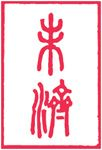
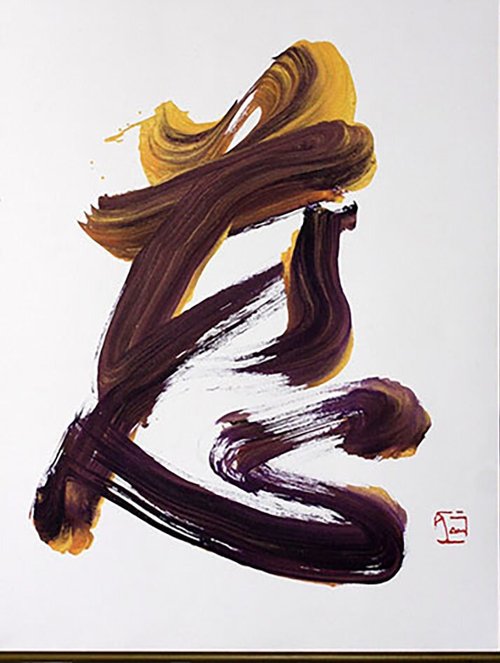
The ideograph of wei above is meticulous—it looks simple, yet its meaning is profound. The stem of the ideograph is a tree, mu. A second curved stroke was added through the tree and thus the ideograph of wei was created. Without the horizontal stroke we have a picture of a tree with its roots growing downward and its branches growing upward. The horizontal stroke represents the ground. The portion of the tree underneath the ground is still alive. It has already grown to its full height (fulfilled its growth), and now it starts a new cycle of growth. The structure of the ideograph supplies a vivid picture of having achieved one’s goal, but not yet having been fulfilled. There is a new cycle to come. The meaning of the ideograph of ji signifies crossing a river, from here to there, or from beginning to end.
SIGNIFICANCE
This gua ends the sixty-four gua and the three hundred and eighty-six yao of the I Ching. But the principle of change continues without end. Events in the universe move forward and alternate in cycles. The stage of Not Yet Fulfilled will gradually reach the stage of Already Fulfilled. The stage of Already Fulfilled is merely the fulfillment of certain events or of a certain stage in a cycle of events. If some occurrences have reached the stage of Already Fulfilled, there are always others that are Not Yet Fulfilled. The stage of Already Fulfilled is also the stage of Not Yet Fulfilled. The stage of Not Yet Fulfilled is the beginning, like the dark before the dawn. The I Ching starts with Qian, the Initiating, and ends with Wei Ji, Not Yet Fulfilled. When the development of events reaches the end of a cycle, Already Fulfilled, then another cycle, Not Yet Fulfilled, begins. In this way, the cycles of change and development repeat endlessly.
A transition from disorder to order is representative of the I Ching as a whole. In the beginning it swings from extreme to extreme, with no balance in between. By the time it reaches the final gua, Already Fulfilled and Not Yet Fulfilled, a perfect state of balance has been achieved.
During King Wen’s sitting in stillness he reflected on the past in light of the present. The destiny of the Shang dynasty had been fulfilled. The destiny of the Zhou was not yet fulfilled. Its situation was like that of the little fox who had almost crossed a river. There was success in store, and nothing was unfavorable.
The Complete I Ching, Taoist Master Alfred Huang
December 29, 2025
2026: Too Much of Nothing?
Too much of nothing
Can make a man feel ill at ease
One man’s temper rises
While another man’s temper might freeze
Now it’s a day of confession
And we cannot mock a soul
Oh, when there’s too much of nothing
No one has control
Bob Dylan, Too Much of Nothing
Count the items in your day. What you encounter and engage with. Inside and outside. Things and thoughts. Incidentally or by choice. It’s a lot.
As you count, you might consider the character and value of those items. What is each one adding? What is each one subtracting? More to the point, what is each one adding to or subtracting from what you value?
AI is literally trained on items, ready to process and offer those items. And it is an item itself. So if the volume of items already exploded with the digital access of internet and devices, that is now exponentially larger.
It is certain that 2026 will be another “year of AI”, as will every year in the foreseeable future. More items for us to encounter and engage in, incidentally and by choice, added to the proliferation of items we are already experiencing.
It is also certain that we, as lovely as we are, are not yet equipped to handles all these items in ways that are good for us as individuals and as societies. If we work at it maybe someday, but not yet, though hopefully before it overtakes us and we drown.
Which is why counting and valuing items may be helpful. It is, if you like to think of it this way, just awareness and consciousness of the items, their value, and your values. Once you are aware, you choose.
One person’s drowning is another person’s swimming in a vast ocean. If you understand the ocean and you know how to swim.
© 2025 Bob Schwartz
February 28, 2025
Losar/Tibetan New Year: Happy New Year 2025

Losar/Tibetan New Year 2025 begins today.
A New Year message from Ringu Tulku Rinpoche:
Ringu Tulku Rinpoche is a Tibetan Buddhist master who belongs to the Kagyu tradition of Tibetan Buddhism. He was born in Eastern Tibet (Kham) and received extensive training in all schools of Tibetan Buddhism. He studied under many great masters including the 16th Karmapa and Dilgo Khyentse Rinpoche. He has a PhD in Buddhist studies and is known for his scholarly work.
He founded Bodhicharya, an international organization that coordinates his educational and humanitarian activities. He travels extensively, teaching meditation and Buddhist philosophy at centers around the world, and is respected for his ability to present traditional Buddhist teachings in a way that’s relevant to contemporary life.
December 31, 2024
New Year 2025: A Year for Thanking Your Enemies
The year 2024 presented challenges. The new year will too.
Some of the challenges were and will be individual and personal, some shared and public.
In the past year, I thought more and more about compassion. For a while I bemoaned what I perceived to be a lack of compassion on the part of other people, lots of other people. But late in the year, I began to see that cultivating compassion could only begin with me. Fortunately, I discovered a thousand-year-old Buddhist practice known as lojong, aimed at doing just that.
One of the many points of the practice concerns how to deal with adversity, including enemies. Many are familiar with the suggestion of Jesus to “love your enemies.” This goes one stop further, with the suggestion “Be grateful to everyone.” Everyone, including those who do harm.
“Be grateful to everyone.”
This is a very profound statement. One of our primary tasks in this training is to get rid of anger and hatred. If we disperse these emotions, a great deal of suffering will vanish along with them. When we feel grateful, it breaks down anger and we cannot continue to feel hate. That is why this slogan is so effective. It is not difficult to be relaxed and forgiving when conditions are harmonious. However when things go wrong and we feel abused or under stress, we tend to be hostile. Dwelling on our hurt stirs up our aversion and the whole experience becomes totally negative. This can be avoided if we remember the positive potential in the situation.
The adversities that other people bring us are gifts, not betrayals. Disappointments try our patience and compassion. If our lives are completely sheltered and blessed, we have no friction to use as raw material in our practice. We will never conquer our ego if we are spared from every single upset and provocation. Atisha was known to travel with an attendant who was terribly bad-tempered. The man was irritable and very rude to everyone. People could not understand why a kind and wise teacher like Atisha permitted this nasty man to accompany him on his travels and they asked him how he put up with it. Atisha answered that the man was his “patience tester” and very precious to him.
Our efforts to generate compassion are always in connection with other people and our progress depends on these relationships. The people we live and work with and who share our lives are the sentient beings for whom we seek enlightenment. They are also the means of acquiring wisdom and patience on the way to enlightenment. Rather than feeling insulted or victimized by those who have been unkind to us, we bear the discomfort and feel thankful towards it.
Suffering so often comes from not being able to find the good in things and being critical. If we can be positive about whatever comes, we cling less to the world and are less wounded by bad experiences.
Mind Training (Lojong 13), Ringu Tulku Rinpoche
Aside from whatever personal situations arise, it is certain that in 2025 many people will be affected, frustrated, angry or outraged by developments in public life. It will be difficult to treat the people responsible for those policies with kindness or gratitude.
In the case of those who suffer because of those policies, we can do what we can to help relieve that suffering.
In the case of those who cause that suffering, being grateful to them is the last thing on our minds. But when we treat it as an opportunity to develop our wisdom and patience, that is something to be thankful for.
Happy New Year!
December 31, 2021
New Year 2022: Today flows into tomorrow, today flows into yesterday

Yoshitsune was a famous warrior who lived in medieval Japan. Because of the situation of the country at that time, he was sent to the northern provinces, where he was killed. Before he left he bade farewell to his wife [Lady Shizuka], and soon after she wrote in a poem, “Just as you unreel the thread from a spool, I want the past to become present.” When she said this, actually she made past time present. In her mind the past became alive and was the present. So as Dogen said, “Time goes from present to past.” This is not true in our logical mind, but it is in the actual experience of making past time present. There we have poetry, and there we have human life.
Shunryu Suzuki, Zen Mind, Beginner’s Mind
Do not think that time merely flies away. Do not see flying away as the only function of time. If time merely flies away, you would be separated from time. The reason you do not clearly understand the time being is that you think of time only as passing.
In essence, all things in the entire world are linked with one another as moments. Because all moments are the time being, they are your time being.
The time being has a characteristic of flowing. So-called today flows into tomorrow, today flows into yesterday, yesterday flows into today. And today flows into today, tomorrow flows into tomorrow.
Dogen, Shobo Genzo/Treasury of the True Dharma Eye, Uji/The Time Being
October 2, 2019
Rosh Hashanah 5780: Re-Creating the World

Solomon ben Joel Dubno (1738–1813)
Every year, on Rosh ha-Shanah, everything returns to its very beginning. Creation is renewed. All that was created in the beginning comes into being again. Thus each Rosh ha-Shanah the world is re-created.
—Sefer Netivot ha-Shalom, commentary by Solomon ben Joel Dubno (1793)
December 31, 2017
I Ching for 2018

“Following the wind” suggests proceeding, but the proceeding should be gentle, flowing easily into wherever the wind goes.
The year 2017 was a year of change. The year 2018 will be another year of change. What year isn’t?
The I Ching—known in English as the Book of Change, Book of Changes, Canon of Change, Classic of Change, etc.—has served as a guide to changing times for thousands of years.
Today as the New Year arrives, I have asked for guidance—for myself and for people everywhere—with the simple question “What will 2018 be like?” While not a typically specific question, this should cover just about everything and everyone.
I have selected one of the 64 hexagrams by using a random number generator. There are other more traditional methods used and recommended by some, including the well-known tossing of coins or counting of yarrow stalks. I’ve used both those methods many times. Purists frown on the random number method, saying that it doesn’t allow the time and contemplative frame of mind needed to appreciate what the text says.
In general, I believe that all methods have value, since the value is in the text, not in the method. And in particular for this year and the year to come, I and many others have had plenty of time to contemplate the changes we are witnessing. We just need somebody or something wise to put it in perspective.
Hexagram 57 (Xun /Wind above, Wind below) is the generated answer. Below are excerpts from six different translations.
My best wishes for your New Year. Thank you sincerely for reading.
Hexagram 57 – Xun
Wind
above
Wind
below
The Complete I Ching by Alfred Huang
57
Xun • Proceeding Humbly
NAME AND STRUCTURE
Xun is one of the eight primary gua; doubled, it forms this accomplished gua. As a primary gua it represents Wind or Wood. The Commentary on the Symbol says, “Following the wind; an image of Proceeding Humbly.” “Following the wind” suggests proceeding, but the proceeding should be gentle, flowing easily into wherever the wind goes. Applied to human affairs, it means to proceed humbly, or to resign sovereign authority.
Sequence of the Gua: When the traveler has no place to take shelter, Proceeding Humbly follows.
Wilhelm translates Xun as The Gentle (The Penetrating, Wind). Blofeld calls it Willing Submission, Gentleness, Penetration. Xun is an action, a proceeding. The ideograph employs the image of two snakes to represent the act of continuing. The upper part of the ideograph depicts two snakes, si. The lower part is an ideograph of gong, which means “together.” Two snakes proceed together—the power of proceeding is doubled.
The structure of the gua is Wind above, Wind below, or Wood above, Wood below. According to the structure, a yielding line lying underneath two solid lines shows the submissive, humble, and obedient personality of the yielding element. The attribute of the wind is to proceed gently. The Chinese consider a gentle breeze with bright sun or a gentle breeze with mild rain to be the best weather. When the wind blows softly, it goes everywhere. When the wood proceeds gently, it penetrates the soil deeply. Gently proceeding is the most effective way to influence events. It never violates and is therefore easily accepted.
Decision
Proceeding Humbly.
Little prosperity and smoothness.
Favorable to have somewhere to go.
Favorable to see a great person.
Commentary on the Decision
The symbol of Wind is doubled.
It is to repeat one’s order once more.
The firm proceeds humbly to the central and to the correct position.
Its will is able to be fulfilled.
The yieldings submit to the firm.
Only little prosperity and smoothness are available.
It is favorable to have somewhere to go.
It is favorable to see a great person.
Commentary on the Symbol
Following the wind;
An image of Proceeding Humbly.
In correspondence with this,
The superior person repeats his order
And carries out his command.
SIGNIFICANCE
This gua is one of the eight gua among the sixty-four accomplished gua that is made by doubling the primary gua, here, Wind . Proceeding Humbly explains the reason to be humble and gentle. In an unstable situation, if one is humble and gentle one is able to make friends with people, gaining their trust and obtaining their support. The ancients believed that humility and gentleness were the basic moral qualities which one should possess, but that these did not equate with inferiority and weakness.
This gua takes the image of a yielding line humbly lying underneath two solid lines. It symbolizes that one is waiting with patience for the right time to accomplish an aim. On the other hand, the winds following one upon the other symbolize the driving force continuously pushing one forward to achievement. In his Analects, Confucius says:
Before one’s mood of pleasure or anger, sorrow or joy, is released, one’s mind is in a state of equilibrium. When those feelings have been released and are at an appropriate degree, they are in a state of harmony. This equilibrium is the great basis of all human activities, and this harmony is the universal path for all to pursue. We must devote ourselves to achieving this state of equilibrium and harmony and to establishing the proper order between Heaven and Earth. Then all things will be nourished and will flourish.
Thus, equilibrium is the potential before it has been released, and harmony is the result of the proper way of releasing the potential. When we intend to do something, both before and afterward every step should be taken in the proper way. The host of the gua is the solid line at the fifth place. The Commentary on the Decision says, “The firm proceeds humbly to the central and to the correct position. Its will is able to be fulfilled.”
During King Wen’s sitting in stillness he meditated upon traveling, being humble, and proceeding. He realized that one should proceed with humility on a life journey. When only a little success can be achieved, there is still room for more. Great success is the result of the building up of little successes. The Duke of Zhou records the results of different attitudes of proceeding humbly. Progressing in this way, one still needs a warrior’s firmness and steadfastness. Being too humble and meek makes one lose self-confidence. Proceeding humbly with sincerity and trust brings good fortune. When one intends to make a change, one should consider matters carefully before taking action and reconsider after the action is completed.
The I Ching or Book of Changes by Richard Wilhelm and Cary F. Baynes
57. Sun / The Gentle (Penetrating, Wind)
Sun is one of the eight doubled trigrams. It is the eldest daughter and symbolizes wind or wood; it has for its attribute gentleness, which nonetheless penetrates like the wind or like growing wood with its roots.
The dark principle, in itself rigid and immovable, is dissolved by the penetrating light principle, to which it subordinates itself in gentleness. In nature, it is the wind that disperses the gathered clouds, leaving the sky clear and serene. In human life it is penetrating clarity of judgment that thwarts all dark hidden motives. In the life of the community it is the powerful influence of a great personality that uncovers and breaks up those intrigues which shun the light of day.
THE JUDGMENT
THE GENTLE. Success through what is small.
It furthers one to have somewhere to go.
It furthers one to see the great man.
Penetration produces gradual and inconspicuous effects. It should be effected not by an act of violation but by influence that never lapses. Results of this kind are less striking to the eye than those won by surprise attack, but they are more enduring and more complete. If one would produce such effects, one must have a clearly defined goal, for only when the penetrating influence works always in the same direction can the object be attained. Small strength can achieve its purpose only by subordinating itself to an eminent man who is capable of creating order.
THE IMAGE
Winds following one upon the other:
The image of THE GENTLY PENETRATING.
Thus the superior man
Spreads his commands abroad
And carries out his undertakings.
The penetrating quality of the wind depends upon its ceaselessness. This is what makes it so powerful; time is its instrument. In the same way the ruler’s thought should penetrate the soul of the people. This too requires a lasting influence brought about by enlightenment and command. Only when the command has been assimilated by the people is action in accordance with it possible. Action without preparation of the ground only frightens and repels.
I Ching: The Essential Translation by John Minford
HEXAGRAM LVII
Xun
Kneeling
Xun/Wind
above
Xun/Wind
JUDGMENT
Slight Fortune.
A Destination
Profits.
It Profits
To see a Great Man.
On the Judgment
Wind doubled,
Ventus repetitus.
Commands are issued.
Firm Lines are Centered,
In True Place.
Aspirations
Are fulfilled.
The Yielding
Flows with the Firm.
Slight Fortune.
On the Image of the Hexagram
Wind follows Wind,
Ventus ventum sequens.
The True Gentleman
Issues commands
In conducting his affairs.
The Trigrams Expounded
Xun is Wood,
Wind.
It scatters,
Arrays things evenly.
It is South-East,
Eldest daughter.
It enters.
It is cockerel,
Thighs,
Plumb line,
Carpenter’s square.
It is white,
Long,
High.
It is Advance,
Retreat.
Xun has no fruit.
It has a strong odor.
Of men, it is
Balding,
Broad of forehead,
Showing the whites of the eyes.
Pursuit of gain,
Seeking threefold profit.
A forceful Trigram.
Wind above Wind. The early graph shows two men Kneeling. The Yin Lines in First and Fourth Places “kneel” below the Yang Lines above them. This Hexagram is made up of the Doubled Trigram Xun, symbolizing both Wind and Wood (the gentle processes of Infiltration and Vegetation). It is both flexible and penetrating, writes Legge, following Cheng Yi. Wind finds its way into every nook and cranny. Superiors are in Harmony with the needs of inferiors; they “issue” the necessary “commands.” Inferiors, for their part, are in Harmony with the wishes of superiors; they obey them. When a Ruler is in tune with what is right, then he is in accord with the Hearts-and-Minds of the Folk. They will obey him and follow (“flow with”) him. Superiors and inferiors “kneel” to one another. The Wind blows further and further into the distance, writes Magister Liu, rising ever higher, penetrating everywhere, entering into the Tao. Its Work is unremitting, reaching a deep level of Self-Realization. This is its “Slight Fortune.” Some need a “Destination.” They need to “see a Great Man,” one who considers Inner Nature and Life-Destiny to be of supreme importance, one who values the Tao and the Power above all, one to whom the illusory body is so much dry wood, worldly wealth a mere floating cloud. His Inner Self is rich, although his Outward Appearance may seem insufficient. His Heart-and-Mind is firm; his Aspirations have distant horizons. He never ceases until he reaches the Great Tao. Such is the Great Man. Yang in Second Place and Yang in Fifth Place indicate a strong Leader, writes Professor Mun. Strong Leaders dominate their Organization. They understand the views and needs of their subordinates (the Yin Lines in First and Fourth Places). With a softer approach, the Leader can achieve greater Harmony.
The I Ching or Book of Changes by Brian Browne Walker
57. SUN / THE GENTLE
(THE PENETRATING, WIND)
Consistent correctness turns every
situation to your advantage.
The image of this hexagram is that of a gentle wind dispersing storm clouds. A wind that changes direction often, even a very powerful one, will disperse nothing – it only stirs up the sky. The wind that causes real change is the one that blows consistently in the same direction. There is an important lesson for us in this example.
When faced with a difficult problem to resolve or a goal we wish to achieve, we often are tempted to take striking and energetic actions. Though it is possible to achieve temporary results in this fashion they tend to collapse when we cannot sustain the vigorous effort. More enduring accomplishments are won through gentle but ceaseless penetration, like that of a soft wind blowing steadily in the same direction. The truth of the Sage penetrates to us in this way, and this hexagram comes now to remind you that this is how you should seek to penetrate to others.
The advice given to you by the I Ching is threefold. First, establish a clear goal; the wind that continually changes direction has no real effect. Second, apply the principle of gentle penetration to yourself; by eliminating your own inferior qualities you earn an influence over others. Third, avoid aggressive or ambitious maneuvers now; those are rooted in desire and fear and will only serve to block the aid of the Creative. The desirable influence is the one that flows naturally from maintaining a proper attitude.
In your interactions with others, bend like the willow. By remaining adaptable, balanced, accepting, and independent, and by steadily moving in a single direction, you gain the clarity and strength that make possible a series of great successes.
I Ching: The Book of Change by David Hinton
57
REVERENCE
Through inward reverence, you penetrate everywhere in the smallest ways. Setting out toward a destination brings forth wild bounty, and seeking advice from a great sage also brings forth wild bounty.
PRESENTATION
Inward reverence layered through reverence, that is how you further the inevitable unfolding of things.
If you live all inward reverence steely as a mountain in cloud, you live centered at the hinge of things, and your purposes will be realized.
All tender assent, you move yielding and devoted as a river through everything steely as a mountain in cloud. If you move like this, you penetrate everywhere in the smallest ways. If you move like this, setting out toward a destination brings forth wild bounty, and seeking advice from a great sage also brings forth wild bounty.
IMAGE
A succession of wind through wind: that is Reverence. Using it, the noble-minded further the inevitable unfolding of things, and so realize their life’s work.
Original I Ching: An Authentic Translation of the Book of Changes by Margaret J. Pearson
57
(xùn) Calculation, Choosing
Calculation, compliance: In what is small, success. It is effective to have a destination and to meet with a great one.
Image
Wind follows wind: the image called compliance or calculation. You should fulfill your destiny by doing what you are called to do.
The various translations for the name of this hexagram (calculation, compliance, divining) are all similar in that they refer to a time when we seek to comply with what is right by consulting the oracle through a method of divination which uses numbers. The insights derived in this way may be as hard to grasp as the wind, as subtle as a gentle breeze. Yet they can help to lead us in the direction we should go if we listen with courage rather than cringing, and if we persist in moving toward this direction over time.
Another way to put this is: Wind follows wind: this is the image of true compliance. You should reiterate what you are called to do, then do it. Though air is invisible and winds are intermittent, few forces are stronger over time. A continuing wind can bend giant trees, erode earth and stone, shape landscapes and vegetation. To accomplish your greatest task, the work you are truly called to do, you must do many small things, travel, seek and heed advice, again and again. As you do this, do not look for great leaps forward, but think of one wind following another; that is, pushing softly again and again. This can be hard to do. When progress seems to be leading into danger or is blocked by more pressing demands, you may feel like hiding under your bed, and doing nothing but the bare essentials. But such slavish compliance with the more obvious powers of your world often leads in the end to regrets and personal promise unfulfilled. This is not what you are called to do. While remaining prudent, we need to remember the immense power of persistent winds. Listen to the still small voice within you, especially when a careful process of divination, consultation, and planning has led to a recognition of something you are called to do. Find another small step toward that goal and do it, and keep repeating this process. If you define your goal carefully, and persist in it, you will inevitably make progress towards it.
All this is posited on the belief that each of us, being unique, is called to do something that no one else can do as well. Identifying this goal may seem to take forever; achieving it even longer! But thoughtful, balanced seeking, without repeated seeking for a different answer, can usually help us discern whether a given action is likely to move us in the right direction or not. Repeating such steps is worthwhile, even if each one seems as small and as evanescent in effect as a puff of wind. As Xunzi said, “Achievement consists of never giving up.”
January 4, 2016
Bankei New Year

What does it matter, the new year, the old year?
I stretch out my legs and all alone have a quiet sleep
Don’t tell me the monks aren’t getting their instruction
Here and there the nightingale is singing: the highest Zen!
-Zen Master Bankei (1622-1693)
You don’t have be Zenish to appreciate Bankei or his New Year message.
Bankei was mostly forgotten until the 1940s, when he was rescued “from the obscurity of two and a half centuries of near-total neglect.”
This is understandable. While he was trained and respected in traditional Zen disciplines, his iconoclastic conclusion was that the teaching could be reduced to a single concept that didn’t involve those practices. He preached this to thousands of ordinary people who weren’t involved in more rigorous and formal practice:
“Unlike the other masters everywhere, in my teaching I don’t set up any particular object, such as realizing enlightenment or studying koans. Nor do I rely on the words of the buddhas and patriarchs. I just point things out directly, so there’s nothing to hold onto, and that’s why no one will readily accept [what I teach]. To begin with, those who are wise and learned are obstructed by their own cleverness and calculation, so for them it’s impossible to accept. On the other hand, there are lots of ignorant women who can neither read nor write, who haven’t any special ability and can’t be pushed on to become Zen masters, but possess a truly heartfelt realization and don’t engage in intellectualizing.”
Is it any wonder that conventional teachers might be resistant and challenged enough to leave Bankei behind?
We will not leave Bankei behind. This year, he says, stretch your legs out, have a quiet sleep, listen to the nightingale singing. It is the only instruction you need.
Happy New Year.
September 15, 2015
Rosh Hashanah: God Is Busy Writing

This week begins the Jewish Days of Awe, starting with Rosh Hashanah, the New Year. Shana Tova – a good year.
A tale about Hasidic master Reb Levi Yitzchak of Berditchev (1740-1809):
It was Yom Kippur. The faithful, weak from fasting, were waiting for the Rebbe to begin the Mussaf prayer, but he too was waiting. An hour went by, and another. Impatience turned into anguish. This time the Rebbe was really going too far. It was late. Why was he waiting?
When he finally emerged from his meditation, he explained: “There is in our midst someone who cannot read. It is not his fault; he has been too busy providing for his family to go to school or study with a teacher. But he wishes to sing. And so he allows his heart to speak: ‘You are God; I am but a man. You are Almighty and know everything; I am weak and ignorant. All I can do is decipher the twenty-two letters of the sacred tongue; let me give them to You to make into prayers for me and they will be more beautiful than mine.’ ” The Rebbe raised his voice: “And that, brethren, is why we had to wait. God was busy writing.”
From Souls on Fire: Portraits and Legends of Hasidic Masters by Elie Wiesel
 Bob Schwartz