Bob Schwartz

Tag: music

Flip’s Groovy Guide to the Groops!: Antidote to cultural provincialism

Flip’s Groovy Guide to the Groops! (1968)

FLIP’s GROOVY GUIDE TO THE GROOPS! happened because you asked for it.

It’s an outasite one-of-a-kind book!

FLIP’s entire staff in New York, London and Hollywood contributed to this book, but two people must be especially mentioned. Carol Deck, FLIP’s Hollywood Editor, served as the book’s supervising editor, and Tracy Thomas spent weeks tracking down most of the groups for the last and largest section of the book—the Groovy Groups.

And you had the most important part of all: You told us which 100 great groups to squeeze into the 240 picture-popping pages of this boss book!

STEPHEN KAHN
Publisher
FLIP Magazine
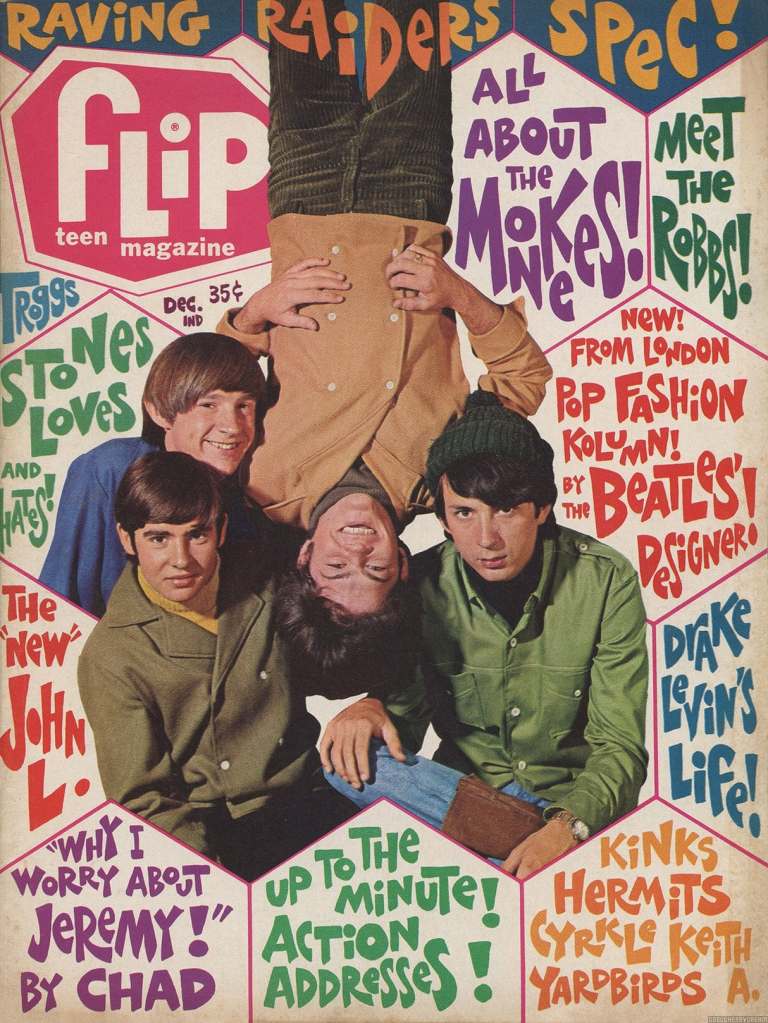

December 1966

Some will think that featuring a “groovy” book from 1968 is some sort of nostalgia trip. It is anything but.

Cultural perspective has two dimensions, breadth and depth. Broad, as in covering more than a little piece of your world. Deep, as in covering time before the time you were born or just a few years before that.

At college, I often researched at a huge university library. This was before digital conversion, so the stacks were overstuffed with bound volumes of newspapers and magazines that went far back into the previous century. I wasn’t “nostalgic” for cultural items from decades earlier. I was, and still am, trying to gain perspective on how things were, how we got here, and where we might go.

Jimmy Kimmel features a segment where people walking down Hollywood Boulevard, young and old, are asked basic questions about current events, geography, history, etc. Some might shake their head and laugh at ridiculous responses, maybe calling some of these people ignorant.

I prefer thinking of them as culturally provincial, with knowledge and perspective narrowing more and more into a small circle and the last thing that happened.

That’s why Flip’s Groovy Guide and other artifacts from different times and different places are so important, as an antidote to cultural provincialism. Plus, a lot of fun!

One more thing.

If you think this book reflects a frivolous time, here are other books that were advertised on the back page:


THE NEW YORK TIMES ELECTION HANDBOOK, 1968 edited by Harold Faber.
The political experts of The New York Times provide an authoritative, informative manual designed to help the public sort out the facts at work in a controversial election.

HOW TO GET OUT OF VIETNAM: A Workable Solution to the Worst Problem of Our Time by John Kenneth Galbraith.
The distinguished economist, political theorist, and bestselling author offers a practical plan for U. S. withdrawal from “a war we cannot win, should not wish to win, are not winning, and which our people do not support.”

THE HIPPIES by Burton Wolfe. At once highly critical and deeply sympathetic, this is an in-depth examination of the hippie kingdom—its “government,” its organizing principle, its leaders and members, the drug scene, the communes, the poverty, the disease.

BEST CAMPUS HUMOR OF THE SWINGING 60’s edited by Bill Adler.
A unique tribute to the freshness and diversity of college humor, ranging in subject from Vietnam to college exams, from LSD to campus sex.

THE SECOND CIVIL WAR: ARMING FOR ARMAGEDDON by Garry Wills.
An eye-witness account of the explosive racial crises that occurred in New York, Albany, and Detroit dur ing the summer of 1967.

THE HIPPIE PAPERS edited by Jerry Hopkins.
An eye-opening collection of outspoken articles from the nation’s underground press on subjects ranging from LSD to free love, from Vietnam to police brutality.


Thanksgiving: Simple Gifts

Shaker Sewing Table

The Shaker dance song Simple Gifts (Joseph Brackett, 1848) is the ultimate Thanksgiving song. It is also the ultimate American song, provided we recognize that in America, the most religious and richest nation on earth, simplicity and humility are ideals worth aspiring to and striving for.

Ken Burns writes this about his documentary The Shakers:

They called themselves the United Society of Believers in Christ’s Second Appearing, but because of their ecstatic dancing, the world called them Shakers. Though they were celibate, they are the most enduring religious experiment in American history. They believed in pacifism, natural health and hygiene, and for more than 200 years insisted that their followers should strive for simplicity and perfection in everything they did.

Shaker design, including furniture and baskets, may be familiar to you. So may the melody of Simple Gifts. It is frequently used in pop culture, and is most famous musically in Aaron Copland’s orchestral masterpiece, Appalachian Spring. And while the tune is often heard, the lyrics are not as frequently sung. Here is an appropriately unadorned version by Judy Collins.

Even if you can’t read music, you can look at the musical score and see how very simple this song is:

Here are the lyrics. Happy Thanksgiving.

‘Tis the gift to be simple, ’tis the gift to be free
‘Tis the gift to come down where we ought to be,
And when we find ourselves in the place just right,
‘Twill be in the valley of love and delight.

When true simplicity is gain’d,
To bow and to bend we shan’t be asham’d,
To turn, turn will be our delight,
Till by turning, turning we come ’round right.

Music: Without Canadian artists where would we be?

Among the treasures recorded by k.d. lang is Hymns of the 49th Parallel, an album of covers of songs by her fellow Canadians—the artistry of Neil Young, Joni Mitchell, Leonard Cohen, and others. And of course k.d. herself.

This should give you a clue to just how important Canadians have been to popular music and other arts. If Canada was represented by just one of these extraordinary artists, it would be enough. Taken together (need I add The Band, The Guess Who, Arcade Fire, Celine Dion, Alanis Morrisette, The Weeknd, Shania Twain, Drake, Rush and more?) it is a banquet of music. (See Rolling Stone’s 50 Greatest Canadian Artists of All Time. No surprise that Joni is #1, Neil #2, Rush #3, Leonard #4. Okay, maybe I’d move Leonard Cohen up a notch, but that’s quibbling.)

Listening to just Canadian artists until this madness is over is asking too much. Listening to lots of Canadian artists, maybe having one Canada-only day each week, is not punishment and would be a joy.

Since I often include one video track in my music posts, I have a quandary. Look at the list above. Just the ones named add up to hundreds of tracks. So if I offer just one or two, that doesn’t take away from the mountain of song. O Canada!

Election Day Music: This Land Is Your Land by Woody Guthrie

This land was made for you and me.

Music: Listening to Phil Spector’s wall of sound on a phone

I listen to music on speakers or earbuds. Occasionally on a four-speaker tablet. Rarely on a phone speaker.

When Phil Spector created his “wall of sound” recordings in the 1960s, they were intended to be played by AM stations broadcasting to transistor or car radios. The definition of lo-fi. He believed that the right kind of layered big production could overcome these limitations. He is legendary for that music.

These days, it is the limitations of Spector’s productions that show up on high-tech equipment. And yet…

To simulate what it was like to hear the records on a tiny radio speaker, I played the tracks on a phone speaker. Do you know what? The sound is rough around the edges. But what Spector wanted was to give a new generation of pop music listeners an experience they never had before. It works. Try it. Turn it up.

© 2024 by Bob Schwartz

A tablet is just a transistor radio with a big screen and quad speakers

My first portable music device was a transistor radio. AM radio, tuner dial, 2-inch speaker, audio jack. It may amaze you to know that you can still buy a similar radio from Sony, Panasonic and others (see above), relatively cheap, now including AM and FM.

Today I listen to music on a tablet, millions of tracks on demand instead of a dozen stations, touch screen, pictures of artists and albums, quad speakers, infinite information.

The thought I had this morning is that with all the significant differences, the tablet is just a transistor radio. Or to be precise, it is and it isn’t. If you don’t understand that, you might.

Happy listening, however you do.

© 2023 by Bob Schwartz

Phil Spector for Christmas

Sure he was a Jew making a Christmas album. Sure he was a convicted murderer.

Phil Spector is also in the pantheon of record producers. He changed pop music forever. Brian Wilson of the Beach Boys, another production genius, started his career trying to better him.

Then there is A Christmas Gift for You from Phil Spector (1963). There were attempts to contemporize Christmas classics before, there have been many attempts after. To make the music sound eternal but new. This is the ultimate. In 2019, Rolling Stone ranked it the greatest Christmas album of all time. Brian Wilson cited this as his favorite album of all time.

Which is why searching Christmas Eve morning for something that hit the target—music not too familiar, music not straining too hard to be “different”—I ended up with Spector. His gift to us.

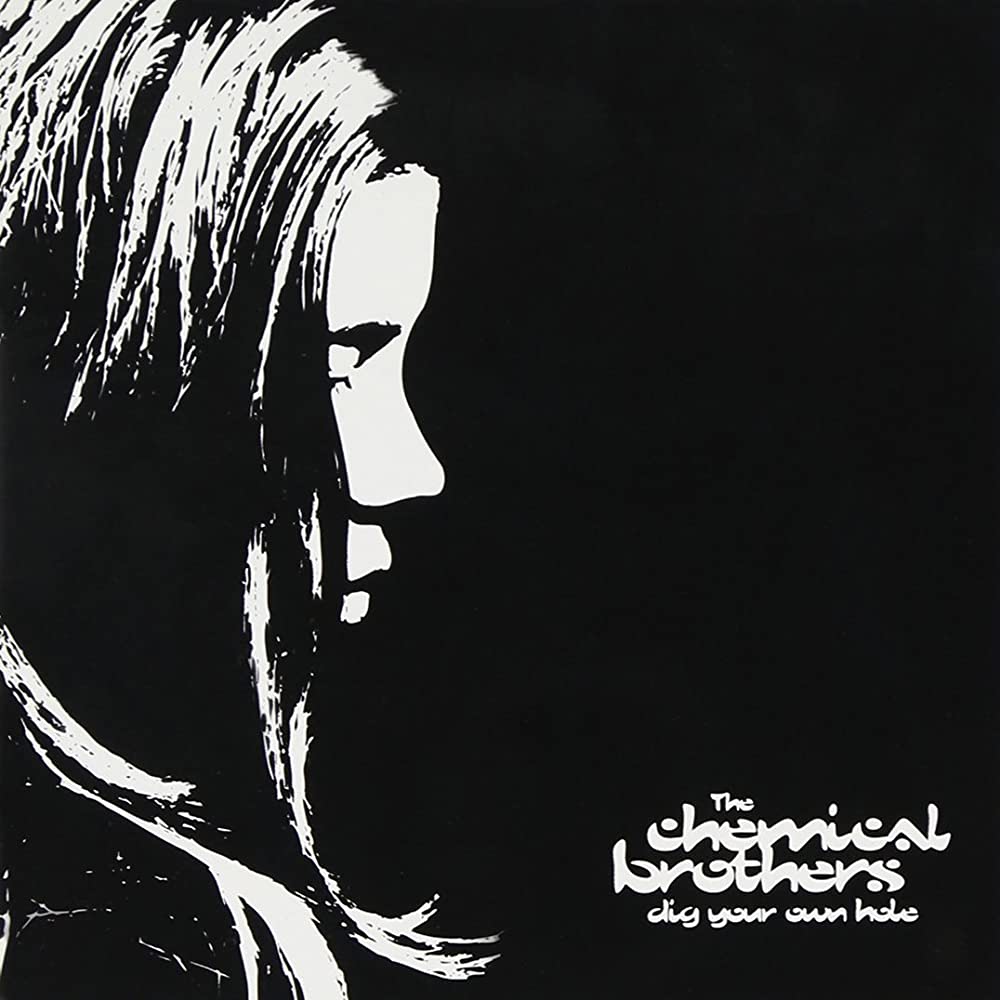
Setting Sun by The Chemical Brothers. Sweet musical anarchy.

Controlled chaos. Sweet musical anarchy. Setting Sun (1997) by The Chemical Brothers:


You’re the devil in me I brought in from the cold
You said your body was young but your mind was very old
You’re coming on strong and I like the way
The visions we had have faded away
You’re part of a life I’ve never had
I’ll tell you that it’s just too bad


Inspired by the Beatles’ Tomorrow Never Knows—“Turn off your mind/relax and float downstream”—thirty years downstream was not necessarily relaxing but was exciting and expanding. Twenty-five years since and we can be/should be/are finding things in the lost and found sound. Even ourselves. Soundtrack for a revolution?

Listen below. The video is an appropriate bonus. “This is not dying.”

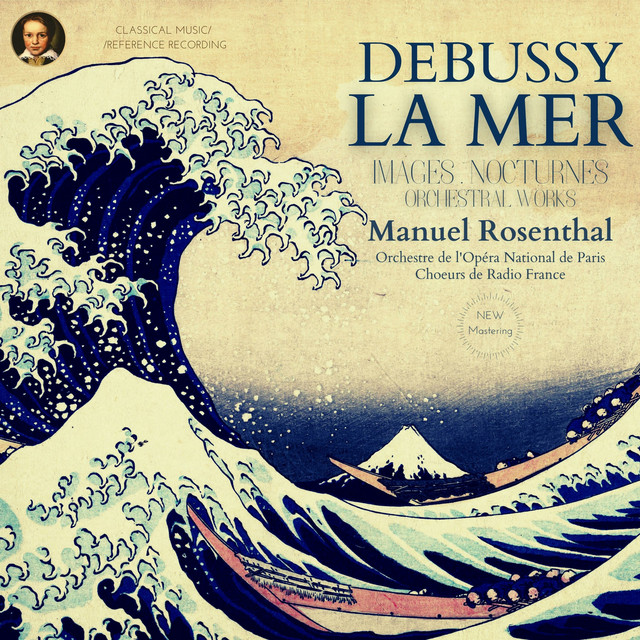
Debussy in the desert

Debussy in the desert

listening to La Mer in the desert
Debussy hiding behind saguaros
irony as vast as the sea

© 2023 by Bob Schwartz

Music: Ronnie Spector is gone and hearts break

Ronnie Spector died this past week.

It profanes talking about her by starting with Phil Spector, but it is an unavoidable preface.

Phil Spector was a genius record producer who changed pop music. He helped turn Ronnie’s extraordinary talent into memorable hits with the Ronettes. He was also a very strange man who abused women, including Ronnie after marrying her, and including another woman he murdered.

Adolescent boys (boys of any age) loved Ronnie Spector. Crush love. It was the pure voice, strong but soft, kittenish but grown cat. It was the songs, tuneful and romantic, about how she wanted you (Be My Baby) or was looking for someone like you (Walking in the Rain) or knew that after you split up it would be better than ever (Best Part of Breaking Up).

Just as much, it was the look. There was and are plenty of beautiful sexy women around, some in your real life, more in the world of entertainment. But none of them looked like Ronnie Spector. Maybe the beauty was a bonus on top of the voice, maybe the other way round. Either way, it is a gift that is cherished.