Progressive Christians can save America and restore humane democracy
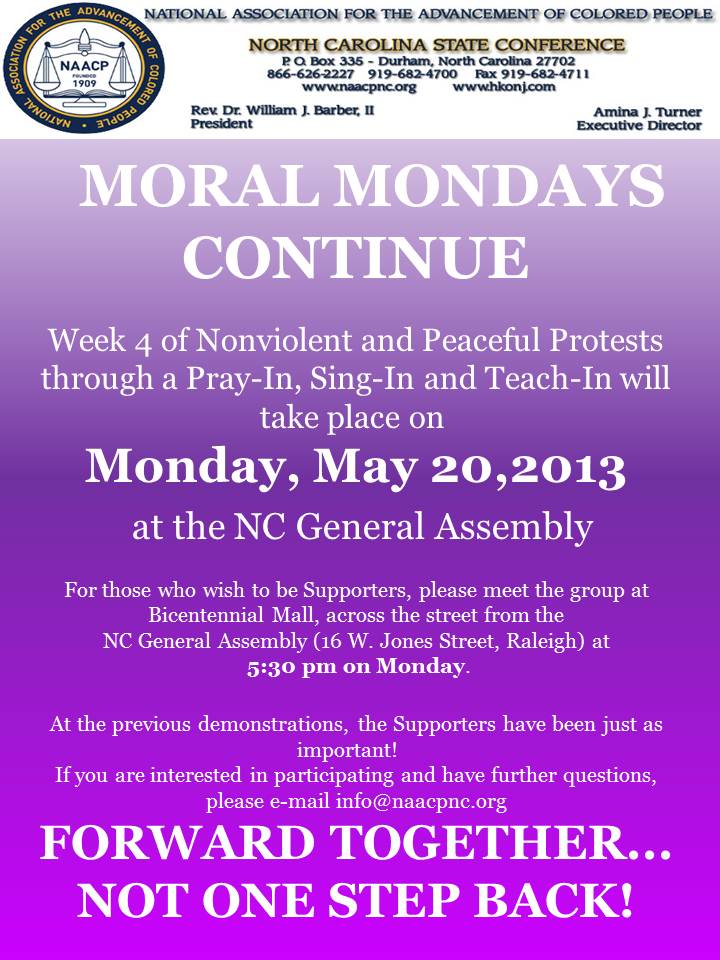
Thirteen years ago, a North Carolina minister, Bishop William Barber II, began the Moral Mondays movement. I posted about here.
Join us for Moral Mondays: A Southern Call to Conscience as we engage in a season of nonviolent moral resistance against extremism in government. Founded in 2013 in North Carolina by Bishop William J. Barber, II, Moral Mondays is a protest movement that centers impacted people, people of faith, and moral leaders who hold elected leaders and government accountable to enact a moral agenda that responds to the urgent needs of the poor.
We are calling on people of moral conscience to join us for Moral Mondays throughout the summer and fall as we work to enact a moral budget and moral public policies for the nation.
Though this was 2013, a few years before the Trump era, there has never been a time when regressive movements in America tried to take us back to a less humane, democratic and moral time. Fortunately, there has never been a time when progressive, humane and moral movements have not pushed back and forward. Moral Mondays was one of those.
Why do I emphasize that progressive Christians can save America now and restore humane and moral democracy? There are of course millions of non-Christians and non-religious citizens who have gotten behind that work in the past and millions are doing that today. Our efforts are worthy and necessary.
Progressive Christians are in a unique position. There have been and are a large number of Christians who believe as a matter of faith that America is a Christian nation and that their faith demands that much of our 21st century progress, like much of the 19th and 20th century progress, is not what God or Jesus wants. It is fine for Jews, Muslims, Buddhists, and those of other faiths or no faith to argue otherwise. But other Christians who believe differently are not so easily dismissed, although dismissed they have been and will be. We can look to the most prominent Christian in the world, Pope Leo (who happens to be American), as an example of what can be said and done.
This is a call that progressive Christians stand up and stand out together for an alternative vision of America—a humane, democratic and above all moral America. Moral Mondays was and is such a movement.
It wasn’t and isn’t easy. Christian churches supported slavery, using the Bible as proof text. Opposing Christians tried to explain that as a matter of Christian principle and as a matter of humane morality, they were wrong and it was wrong.
It is Monday. Moral Monday. We would like to think of every day of the week—including the sacred days for our various faiths—as Moral days. But if one day a week is all we can handle, it’s a start.