Bob Schwartz

Tag: Mitt Romney

Scissoring And Shunning Sheldon

Pay no attention, just for a moment, to the images above of billionaire Romney supporter Sheldon Adelson and to Sarah Silverman demonstrating the sexual act she would perform on him, if he agrees to instead give his money to Barack Obama.

The diversity of Jewish views on spiritual, social and political issues might be described as a crazy quilt that has never been pieced together. Or as a big tent without a ringmaster, no Pope to say what goes and what does not. This is admirable in some ways, but especially in stressed times, it can be uneasy and inconvenient.

Progressivism is a constant in Jewish thought and action, and just as constantly challenged by pragmatic and contrary considerations. The rise of Jewish neo-conservatism in America is a recent example, and the ready acceptance of Christian Evangelical support of Israel is another—paradoxical in that certain Christian eschatology clearly envisions the end of the Jewish people in Israel, at least as Jews.

Sheldon Adelson is taking this to a next step. He is using his unlimited campaign resources to target and convince Jews who may have mistakenly voted for Obama last time that only Mitt Romney and the Republicans offer a true Jewish vision of America and the world.

That’s where Sarah Silverman comes in. Having little by way of intellectual or humanistic argument to convince him, she offers to perform an exotic sex act on him,  if he will transfer to Obama the $100 million he has promised to use on behalf of Romney. We are going to hear a lot about bad taste, going too far, etc., but this is an indecent and brilliant piece of satire on many levels, worthy of tragic comic god Lenny Bruce.

Still, Sheldon Adelson is not going to take up this proposal. So here is another more decent one.

Even though Judaism has no final arbiter, outside of certain sects, this doesn’t mean that the Jewish communities are judgment-free. So while Sheldon Adelson can’t be “excommunicated” it can be made clear by other Jews that the agenda he is promoting with a tiny bit of his massive fortune does not represent Jewish ideals and that what he is doing is a schanda fur die goyim—a shame before the people and the nations.

Whether or not he gets scissored by Sarah Silverman, Sheldon Adelson should be shunned. There is no way to make it official, and even if there were the guess is that his billions could fix it. But conscience can’t be bought, any more than elections can (or that’s what we used to think anyway). Whether or not one is a Jew, let alone a “good” Jew, is something ultimately left to God and the individual. But that shouldn’t stop us from making clear that those who claim to act in the name of Judaism are not necessarily one of us.

Us And Them: Presidential Pink Floyd

In response to ABC’s Robin Roberts’ questions about Mitt Romney’s tax returns, Ann Romney stood firm:

“We’ve given all you people need to know and understand about our financial situation and about how we live our life.”

The benefit of the doubt might indicate that “you people” meant “the media” rather than the huddled masses yearning for information and transparency. But it does seem to fit the storyline that the Romneys believe, appropriately, that the rich are different.

In either case, Pink Floyd’s Us and Them from Dark Side of the Moon came to mind. Us and Them is hauntingly beautiful and multivalently obscure. Hundreds of interpretations have been generated (war? money? Kent State? Syd Barrett?). Who knows? This is art and Pink Floyd, for God’s sake, and like the rest of Dark Side it both washes over you and seeps into you.

Us and them
And after all we’re only ordinary men.
Me and you.
God only knows it’s not what we would choose to do.

Black and blue
And who knows which is which and who is who.
Up and down.
But in the end it’s only round and round.

Haven’t you heard it’s a battle of words
The poster bearer cried.
Listen son, said the man with the gun
There’s room for you inside.

Down and out
It can’t be helped but there’s a lot of it about.
With, without.
And who’ll deny it’s what the fighting’s all about?

Us and Them is clearly the theme of this Presidential campaign. So much so that we should adapt the Dark Side of the Rainbow approach, in which Dark Side of the Moon is mind-blowingly synchronized as the soundtrack to The Wizard of Oz. In this case, Dark Side can be synchronized to your choice of campaign videos. This is not as crazy as it sounds, especially given that both Obama and Romney have exhibited their musical chops. It is doubtful that either one has ever tried singing anything from Pink Floyd, or in Romney’s case even heard the band, but it would be fun and enlightening. The bright promise of politics in Eclipse, maybe?:

All that you touch
All that you see
All that you taste
All you feel.
All that you love
All that you hate
All you distrust
All you save.
All that you give
All that you deal
All that you buy,
beg, borrow or steal.
All you create
All you destroy
All that you do
All that you say.
All that you eat
And everyone you meet
All that you slight
And everyone you fight.
All that is now
All that is gone
All that’s to come
and everything under the sun is in tune
but the sun is eclipsed by the moon.

Barack and Mitt: The Most Unpopular Candidates in American History


This is an unprecedented Presidential campaign. Just ask the Social Security Administration.

The SSA keeps track of baby names, a database that goes back to 1879. It just released its list of the 1000 most popular male and female names for 2011—Jacob to Armani to Ethen (sic), Sophia to Francesca to Damaris. None of that necessarily matters for the Presidential race.

What does matter is this: Never in American history have both major party candidates for the Presidency had names that were not among the 1000 most popular—ever.

In 2008 it was easy to surmise that one name (not John) had never made it to the Top 1000, and Barack still hasn’t. But this year’s race includes two overwhelmingly unpopular names.

Romney’s real first name Willard has made appearances on the chart: the last time in 1989 when it was #966, and it reached its highest position in 1915 (#58). But that isn’t the name he has ever used. The name Mitt is nowhere to be found.

The Presidential names (including candidates) you think might not make the list do. Woodrow, last seen in 1983 (#954), went from #234 in 1911 to #44 in 1913, Wilson’s first year in office. Ike bounced around the middle to bottom of the pack from the 19th century on, but at least it is on the list, finally falling off the Top 1000 in 1957 (while Ike was still in office). Rutherford always struggled, giving up in 1905 at #910. Even Newt had its day (though not much of one), appearing near the bottom between 1880 and 1907.

But no Barack. And no Mitt.

Does this have any consequence? As for any correlation between electoral success and relative name popularity—at the time of election or at some significant life stage for voters—there is no consistent pattern, no seeming name advantage.

All we know is this: There has never been an election between two candidates with such unusual and unpopular names. Just one more element in an election unlike any other.

Likeability and Political Forgiveness


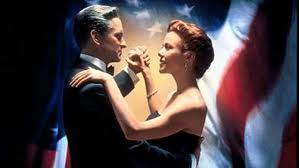
In the most charming of political romantic comedies, The American President, an incandescently beautiful lobbyist (Annette Bening) chastises the handsome and liberal President (Michael Douglas), though not to his face:

The President has critically misjudged reality. If he honestly thinks that the environmental community is going to whistle a happy tune while rallying support around this pitifully lame mockery of environmental leadership just because he’s a nice guy and he’s done better than his predecessors, then your boss is the Chief Executive of Fantasyland.

The President is a very nice guy. He overhears this tirade, which leads to their meeting cute, having sex in the White House, splitting up, getting back together, and living happily ever after, romantically and politically. All is forgiven.

Everyone agrees that likeability matters. There is an apparent likeability gap between President Obama and Mitt Romney. Under normal circumstances, relative likeability is a solid predictor of Presidential outcomes. But these are anything but normal times. There are plenty of world-class doctors who are personality challenged, and given the choice between the one you would have a beer with and the one who can keep you alive, there isn’t much choice.

Still, likeability provides something that other characteristics cannot: room for forgiveness. That is why likeability matters, in politics and elsewhere. Everyone screws up, and the willingness of others to get over or past that is essential. Without denying his substantial talents and achievements, Bill Clinton survived on his likeability more than once. In the much darker and non-romantic comedy Primary Colors, based on Joe Klein’s roman a clef about pre-Presidential Bill Clinton, the candidate’s close friend and no-bullshit confidant, played by Kathy Bates, sums up the Peck’s Bad Boy of politics:

Now what kind of shit is that, Jack? Oh, excuse me. I forgot. It’s the same old shit. The shit no one ever calls you on, ever. Because you are so completely fucking special! Because everyone was always so proud of you. Me, too. Me, the worst.

Likeability matters because it makes you special, at least long enough to get beyond the worst of it. As President Obama confessed early on, he is not a perfect man, and would not be a perfect President. He hasn’t been, but who can be? The judgment depends on just how badly imperfect you are and how much people will forgive. That’s the well we all go to, and likeability keeps the well filled—at least for a while. Mitt Romney is not a perfect man or a perfect candidate. At some point, he will likely have to go to the well of likeability and forgiveness. We wonder whether there will be anything there when he does.