Bob Schwartz

Tag: medicine

Prophetic perspective on AI: Ivan Illich and Tools for Conviviality
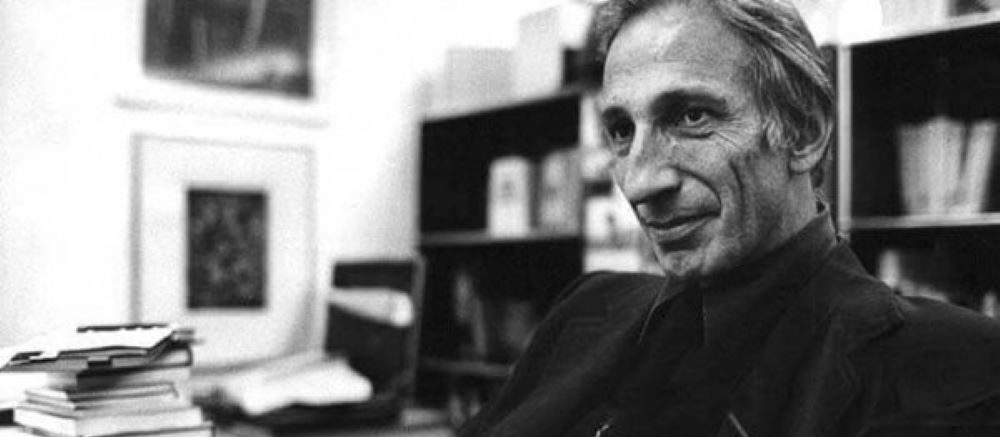
“One of the world’s great thinkers…. in the last 20 years of his life he became an officially forgotten, troublesome figure. This position obscures the true importance of his contribution.”
Guardian obituary of Ivan Illich, 8 December 2002

“The hypothesis on which the experiment was built must now be discarded. The hypothesis was that machines can replace slaves. The evidence shows that, used for this purpose, machines enslave men.”
Ivan Illich, Tools for Conviviality (1973)

If you have heard of Ivan Illich or include him in your conversations, you are in a small minority. His published critiques of major institutions—education, medicine, technology—had the establishment and those increasingly dominant institutions treating him as a “troublesome” marginal thinker. When you read Illich today, however, he comes across like a prophet. Prophets are almost always troublemakers.

From the Guardian obituary:


Ivan Illich: A polymath and polemicist, his greatest contribution was as an archaeologist of ideas, rather than an ideologue
Andrew Todd and Franco La Cecla
Sun 8 Dec 2002

Ivan Illich, who has died of cancer aged 76, was one of the world’s great thinkers, a polymath whose output covered vast terrains. He worked in 10 languages; he was a jet-age ascetic with few possessions; he explored Asia and South America on foot; and his obligations to his many collaborators led to a constant criss-crossing of the globe in the last two decades.

Best known for his polemical writings against western institutions from the 1970s, which were easily caricatured by the right and were, equally, disdained by the left for their attacks on the welfare state, in the last 20 years of his life he became an officially forgotten, troublesome figure. This position obscures the true importance of his contribution….

Illich was born in Vienna into a family with Jewish, Dalmatian and Catholic roots. His was an errant life, and he never found a home again after his family had to leave Vienna in 1941. He was educated in that city and then in Florence before reading histology and crystallography at Florence University.

He decided to enter the priesthood and studied theology and philosophy at the Vatican’s Gregorian University from 1943 to 1946. He started work as a priest in an Irish and Puerto Rican parish in New York, popularizing the church through close contact with the Latino community and respect for their traditions. He applied these same methods on a larger scale when, in 1956, he was appointed vice-rector of the Catholic University of Puerto Rico, and later, in 1961, as founder of the Centro Intercultural de Documentación (CIDOC) at Cuernavaca in Mexico, a broad-based research center which offered courses and briefings for missionaries arriving from North America….

Illich retained a lifelong base in Cuernavaca, but travelled constantly from this point on. His intellectual activity in the 1970s and 1980s focused on major institutions of the industrialized world. In seven concise, non-academic books he addressed education (Deschooling Society, 1971), technological development (Tools For Conviviality, 1973), energy, transport and economic development (Energy And Equity, 1974), medicine (Medical Nemesis, 1976) and work (The Right To Useful Unemployment And Its Professional Enemies, 1978, and Shadow Work, 1981). He analyzed the corruption of institutions which, he said, ended up by performing the opposite of their original purpose….

Illich lived frugally, but opened his doors to collaborators and drop-ins with great generosity, running a practically non-stop educational process which was always celebratory, open-ended and egalitarian at his final bases in Bremen, Cuernavaca and Pennsylvania.

Ivan Illich, thinker, born September 4 1926; died December 2 2002


I have been rereading Tools for Conviviality, especially in light of the overwhelming AI phenomenon, and find it as insightful as anything I’ve read—even though it was written more than fifty years ago and it doesn’t directly address AI. Great thinking from great thinkers always ages well.

No brief excerpt can do Tools for Conviviality justice. Here are just a few paragraphs:


The symptoms of accelerated crisis are widely recognized. Multiple attempts have been made to explain them. I believe that this crisis is rooted in a major twofold experiment which has failed, and I claim that the resolution of the crisis begins with a recognition of the failure. For a hundred years we have tried to make machines work for men and to school men for life in their service. Now it turns out that machines do not “work” and that people cannot be schooled for a life at the service of machines. The hypothesis on which the experiment was built must now be discarded. The hypothesis was that machines can replace slaves. The evidence shows that, used for this purpose, machines enslave men. Neither a dictatorial proletariat nor a leisure mass can escape the dominion of constantly expanding industrial tools.

The crisis can be solved only if we learn to invert the present deep structure of tools; if we give people tools that guarantee their right to work with high, independent efficiency, thus simultaneously eliminating the need for either slaves or masters and enhancing each person’s range of freedom. People need new tools to work with rather than tools that “work” for them. They need technology to make the most of the energy and imagination each has, rather than more well-programmed energy slaves….

I here submit the concept of a multidimensional balance of human life which can serve as a framework for evaluating man’s relation to his tools. In each of several dimensions of this balance it is possible to identify a natural scale. When an enterprise grows beyond a certain point on this scale, it first frustrates the end for which it was originally designed, and then rapidly becomes a threat to society itself. These scales must be identified and the parameters of human endeavors within which human life remains viable must be explored.

Society can be destroyed when further growth of mass production renders the milieu hostile, when it extinguishes the free use of the natural abilities of society’s members, when it isolates people from each other and locks them into a man-made shell, when it undermines the texture of community by promoting extreme social polarization and splintering specialization, or when cancerous acceleration enforces social change at a rate that rules out legal, cultural, and political precedents as formal guidelines to present behavior. Corporate endeavors which thus threaten society cannot be tolerated. At this point it becomes irrelevant whether an enterprise is nominally owned by individuals, corporations, or the state, because no form of management can make such fundamental destruction serve a social purpose….

It is now difficult to imagine a modern society in which industrial growth is balanced and kept in check by several complementary, distinct, and equally scientific modes of production. Our vision of the possible and the feasible is so restricted by industrial expectations that any alternative to more mass production sounds like a return to past oppression or like a Utopian design for noble savages. In fact, however, the vision of new possibilities requires only the recognition that scientific discoveries can be used in at least two opposite ways. The first leads to specialization of functions, institutionalization of values and centralization of power and turns people into the accessories of bureaucracies or machines. The second enlarges the range of each person’s competence, control, and initiative, limited only by other individuals’ claims to an equal range of power and freedom.

To formulate a theory about a future society both very modern and not dominated by industry, it will be necessary to recognize natural scales and limits. We must come to admit that only within limits can machines take the place of slaves; beyond these limits they lead to a new kind of serfdom. Only within limits can education fit people into a man-made environment: beyond these limits lies the universal schoolhouse, hospital ward, or prison. Only within limits ought politics to be concerned with the distribution of maximum industrial outputs, rather than with equal inputs of either energy or information. Once these limits are recognized, it becomes possible to articulate the triadic relationship between persons, tools, and a new collectivity. Such a society, in which modern technologies serve politically interrelated individuals rather than managers, I will call “convivial.”

After many doubts, and against the advice of friends whom I respect, I have chosen “convivial” as a technical term to designate a modern society of responsibly limited tools…. I am aware that in English “convivial” now seeks the company of tipsy jollyness, which is distinct from that indicated by the OED and opposite to the austere meaning of modern “eutrapelia,” which I intend. By applying the term “convivial” to tools rather than to people, I hope to forestall confusion.

“Austerity,” which says something about people, has also been degraded and has acquired a bitter taste, while for Aristotle or Aquinas it marked the foundation of friendship. In the Summa Theologica, II, II, in the 186th question, article 5, Thomas deals with disciplined and creative playfulness. In his third response he defines “austerity” as a virtue which does not exclude all enjoyments, but only those which are distracting from or destructive of personal relatedness. For Thomas “austerity” is a complementary part of a more embracing virtue, which he calls friendship or joyfulness. It is the fruit of an apprehension that things or tools could destroy rather than enhance eutrapelia (or graceful playfulness) in personal relations.

Ivan Illich, Tools for Conviviality


If You Pray, Pray for Dr. Fauci

In her New York Times column today, Maureen Dowd interviews Dr. Anthony Fauci.

If you have been paying attention, you know that 79-year-old Dr. Fauci has been the trusted national voice of fact and reason in response to the pandemic. He is currently director of the National Institute of Allergy and Infectious Diseases, and has served six presidents.

In the interview, we learn that Dr. Fauci has been working 18-hour days, and at one point worked four or five days on three hours sleep each day. Because as a doctor, scientist and public servant he wants us to understand, wants us to behave appropriately, and wants as few Americans as possible to suffer and maybe die.

Part of that interview:


Thank God the Doctor Is In

By Maureen Dowd

March 21, 2020

WASHINGTON — It’s not easy being a national treasure.

“I’m exhausted,” confessed Tony Fauci when I reached him Thursday evening in the middle of another 18-hour workday.

“I have changed my tune a bit, probably thanks to my wife,” said the 79-year-old director of the National Institute of Allergy and Infectious Diseases. “About a week ago, I was going about four or five days in a row on about three hours of sleep, which is completely crazy, ’cause then I’ll be going on fumes. The last couple of nights, I’ve gotten five hours’ sleep, so I feel much better.”

He said he misses the endorphins of power walking, and he is wracked when he gets home at midnight and it’s too late to answer calls and emails.

“I gotta get rid of this guilt feeling,” he murmured about that moment’s 727 emails.

He said he has not been tested for the coronavirus but takes his temperature every day and usually has it taken another couple times before White House press conferences and meetings in the Oval.

When I spoke with him, he had been missing from the White House briefing for two days and Twitter blew a gasket, with everyone from Susan Rice to Laurence Tribe seeking an answer to the urgent query, “Where is Dr. Fauci?”

Donald Trump, the ultimate “me” guy, is in a “we” crisis and it isn’t pretty. The president is so consumed by his desire to get back his binky, a soaring stock market, that he continues to taffy-twist the facts, leaving us to look elsewhere — to Dr. Fauci and governors like Andrew Cuomo and Gavin Newsom — for leadership during this grim odyssey.

Dr. Fauci chuckled at speculation that he was banished due to his habit of pushing back on Trump’s hyperbolic and self-serving ad-libbing.

“That’s kind of funny but understandable that people said, ‘What the hell’s the matter with Fauci?’ because I had been walking a fine line; I’ve been telling the president things he doesn’t want to hear,” he said. “I have publicly had to say something different with what he states.

“It’s a risky business. But that’s my style, Maureen. You know me for many years. I say it the way it is, and if he’s gonna get pissed off, he’s gonna get pissed off. Thankfully, he is not. Interestingly.”

The first time I talked to Dr. Fauci was during a panic in the mid-80s about stopping another virus, the cause of the heartbreaking AIDs crisis. Then, as now, he was honest, brave and innovative. He told me that he tries to be diplomatic when he has to contradict the president about what “game-changer” cures might be on the horizon and whether everyone who wants to be tested can get tested.

“I don’t want to embarrass him,” the immunologist says, in his gravelly Brooklyn accent. “I don’t want to act like a tough guy, like I stood up to the president. I just want to get the facts out. And instead of saying, ‘You’re wrong,’ all you need to do is continually talk about what the data are and what the evidence is.

“And he gets that. He’s a smart guy. He’s not a dummy. So he doesn’t take it — certainly up to now — he doesn’t take it in a way that I’m confronting him in any way. He takes it in a good way.”

On Friday, a trigger-happy Trump was so quick to talk up the fabulous possibilities of an antimalarial drug in combating the virus that Dr. Fauci had to pump the brakes, taking the microphone to explain that we do not know yet because controlled testing is needed.

The president returned to the lectern to press his unscientific case and compliment himself: “I’m a smart guy,” he said. “I feel good about it. And we’re going to see. You’re going to see soon enough.”

Probably thinking about all his government staffers working round-the-clock, Dr. Fauci could not help rubbing his forehead and cheek — going against his own advice to the public — when Trump cracked a joke about the “Deep State Department.”

Though the scientist listens respectfully when the president and the vice president are talking, he somehow manages to emit an “Oh my God, please don’t say that” vibe when the two men scamper over the line. When Mike Pence went into false-hope overdrive, saying, “I just can’t emphasize enough about the incredible progress that we have made on testing,” Dr. Fauci and Dr. Deborah Birx, the administration’s virus response coordinator, exchanged a whispered aside that sent the internet into a frenzy.

Dr. Fauci assured me that, despite their crosscurrents and an early overconfidence about how easy it would be to control the path of the virus, the president “absolutely” now gets the threat of “the invisible enemy,” as Trump calls the virus.

DSM-5: Antagonism and Narcissistic Personality Disorder


DSM-5

This post was first published more than two years ago. It refers to no individual by name, but since it is regularly viewed by dozens of people each week, I am confident the message got through. Now that the issue of this personality disorder is finally at the top of the news, here it is again for those who may have missed it. Still no name mentioned, but there is no doubt what it suggests.

Mental health is a serious matter and mental health practitioners are serious professionals. These are not to be treated lightly and off-handedly.

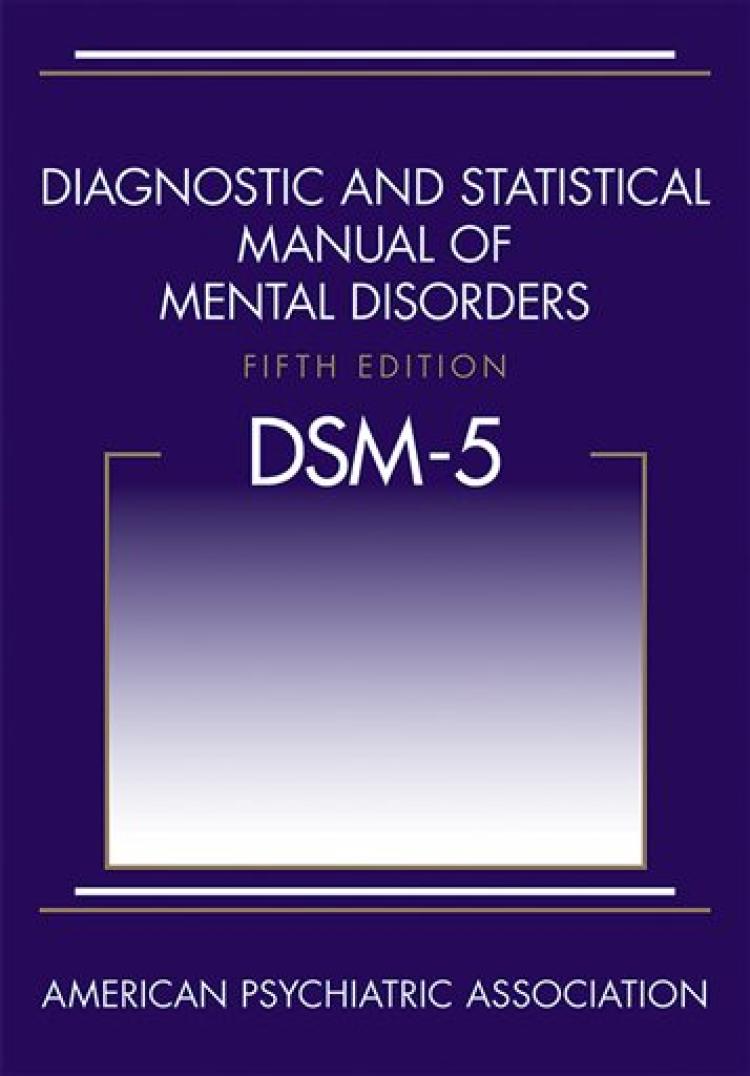
The Diagnostic and Statistical Manual of Mental Disorders, Fifth Edition (DSM-5) is the “bible” of the mental health profession: “a classification of mental disorders with associated criteria designed to facilitate more reliable diagnoses of these disorders.” It is not a reference to be thrown around and used casually by non-professionals.

The DSM can nonetheless be fascinating, especially when certain strong behavioral traits observed in others seem to closely match the traits and possible related disorders referenced in the DSM.

With the above caution and caveat, here are selections from DSM-5 about the Personality Trait Domain of Antagonism. More from the DSM about the way this may or may not relate to Narcissistic Personality Disorder will follow in a subsequent post.

Personality trait: A tendency to behave, feel, perceive, and think in relatively consistent ways across time and across situations in which the trait may be manifest.

Personality trait facets: Specific personality components that make up the five broad personality trait domains in the dimensional taxonomy of Section III “Alternative DSM-5 Model for Personality Disorders.” For example, the broad domain Antagonism has the following component facets: Manipulativeness, Deceitfulness, Grandiosity, Attention Seeking, Callousness, and Hostility.

Antagonism: Behaviors that put an individual at odds with other people, such as an exaggerated sense of self-importance with a concomitant expectation of special treatment, as well as a callous antipathy toward others, encompassing both unawareness of others’ needs and feelings, and a readiness to use others in the service of self-enhancement. Antagonism is one of the five broad personality trait domains defined in Section III “Alternative DSM-5 Model for Personality Disorders.”

Manipulativeness: Use of subterfuge to influence or control others; use of seduction, charm, glibness, or ingratiation to achieve one’s ends. Manipulativeness is a facet of the broad personality trait domain Antagonism.

Grandiosity: Believing that one is superior to others and deserves special treatment; self-centeredness; feelings of entitlement; condescension toward others. Grandiosity is a facet of the broad personality trait domain Antagonism.

Deceitfulness: Dishonesty and fraudulence; misrepresentation of self; embellishment or fabrication when relating events. Deceitfulness is a facet of the broad personality trait domain Antagonism.

Attention seeking: Engaging in behavior designed to attract notice and to make oneself the focus of others’ attention and admiration. Attention seeking is a facet of the broad personality trait domain Antagonism.

Callousness: Lack of concern for the feelings or problems of others; lack of guilt or remorse about the negative or harmful effects of one’s actions on others. Callousness is a facet of the broad personality trait domain Antagonism.

Hostility: Persistent or frequent angry feelings; anger or irritability in response to minor slights and insults; mean, nasty, or vengeful behavior. Hostility is a facet of the broad personality trait domain Antagonism.

Trump’s Shtarkers

There is news that the offices of Trump’s long-time New York doctor were raided in February 2017 by Trump associates. A great Yiddish word comes immediately to mind: shtarker.

The Hill reports:

President Trump’s longtime personal doctor in New York said a trio of Trump associates raided his office in February 2017, seizing the president’s medical records.

Dr. Harold Bornstein told NBC News that Trump’s bodyguard, Keith Schiller, a lawyer with the Trump Organization and a third man came to his office the morning of Feb. 3, 2017. They took lab reports and Trump’s medical charts, he said.

“They must have been here for 25 minutes or 30 minutes. It created a lot of chaos,” Bornstein said, adding that he felt “raped, frightened and sad.”

Stark in Yiddish means strong, and so one of the usages of shtarker is to mean “strong man” or “tough guy.” But it acquired another, more sinister meaning in the lexicon of crime. A shtarker is a strong-arm man, an enforcer, a thug.

It is a word definitely well-known to the Russian and Eastern European Jews who surrounded Michael Cohen in his family and business (see A Brief History of Michael Cohen’s Criminal Ties . It is a word that may not be known to all of Trump’s people,  but it is a concept that some of them understand, endorse and are not afraid to use.

Brain Fiction: Self-Deception and the Riddle of Confabulation

What if someone lies in the face of overwhelming contrary evidence? What if that person really believes what he is saying?

Confabulation is the construction of false answers to a question while genuinely believing that you are telling the truth.

This mysterious phenomenon usually accompanies neurological or cognitive disorders, and the puzzle of it has been the subject of some study among researchers. In his book Brain Fiction: Self-Deception and the Riddle of Confabulation, William Hirstein takes this study further than it has gone before:

“Both a neuroscientist and a philosopher, William Hirstein writes from his unique vantage point with great scholarship, precision, and clarity to tackle some of the deeper mysteries of the human mind. Brain Fiction is full of profound insights, and I recommend it to all who wish to better understand our human nature.”

—Fredric Schiffer, M.D., Harvard Medical School, author of Of Two Minds

Here is a description of the book:

Some neurological patients exhibit a striking tendency to confabulate—to construct false answers to a question while genuinely believing that they are telling the truth. A stroke victim, for example, will describe in detail a conference he attended over the weekend when in fact he has not left the hospital. Normal people, too, sometimes have a tendency to confabulate; rather than admitting “I don’t know,” some people will make up an answer or an explanation and express it with complete conviction. In Brain Fiction, William Hirstein examines confabulation and argues that its causes are not merely technical issues in neurology or cognitive science but deeply revealing about the structure of the human intellect.

Hirstein describes confabulation as the failure of a normal checking or censoring process in the brain—the failure to recognize that a false answer is fantasy, not reality. Thus, he argues, the creative ability to construct a plausible-sounding response and some ability to check that response are separate in the human brain. Hirstein sees the dialectic between the creative and checking processes—”the inner dialogue”—as an important part of our mental life. In constructing a theory of confabulation, Hirstein integrates perspectives from different fields, including philosophy, neuroscience, and psychology to achieve a natural mix of conceptual issues usually treated by philosophers with purely empirical issues; information about the distribution of certain blood vessels in the prefrontal lobes of the brain, for example, or the behavior of split-brain patients can shed light on the classic questions of philosophy of mind, including questions about the function of consciousness. This first book-length study of confabulation breaks ground in both philosophy and cognitive science.

A sample chapter can be read here. A couple of brief excerpts:

Why then does confabulation happen? Confabulation seems to involve two sorts of errors. First, a false response is created. Second, having thought of or spoken the false response, the patient fails to check, examine it and recognize its falsity. A normal person, we want to say, would notice the falsity or absurdity of such claims. The patient should have either not created the false response or, having created it, should have censored or corrected it. We do this sort of censoring in our normal lives. If I ask you whether you have ever been to Siberia, for instance, an image might appear in your mind of you wearing a thick fur coat and hat and braving a snowy storm, but you know that this is fantasy, not reality. In very general terms, the confabulating patient lacks the ability to assess his or her situation, and to either answer correctly, or respond that he or she does not know. Apparently, admitting ignorance in response to a question, rather than being an indication of glibness and a low level of function, is a high-level cognitive ability, one that confabulators have lost. ‘‘I don’t know,’’ can be an intelligent answer to a question, or at least an answer indicative of good cognitive health….

Young children sometimes confabulate when asked to recall events. Ackil and Zaragoza (1998) showed first-graders a segment of a film depicting a boy and his experiences at summer camp. Afterward the children were asked questions about it, including questions about events that did not happen in the film. One such question was, ‘‘What did the boy say Sullivan had stolen?’’ when in fact no thefts had taken place in the film. The children were pressed to give some sort of answer, and the experimenters often suggested an answer. When the children were interviewed a week later, the false events as well as the suggested answers had been incorporated into their recollections of the movie.

DSM-5: Paranoia

DSM-5

I did not think that I would be returning to the DSM quite so soon after my recent post.

The caveat in my last post about the DSM bears repeating. Mental health is a serious issue. Using diagnostic tools and terminology merely for entertainment and “pop psychology” can be careless. On the other hand, these tools can help provide insights that may be useful, particularly when the subject and the subject matter are very important or even critical.

Non-professionals talk loosely and colloquially about paranoia. The DSM approaches this clinically and scientifically:

Paranoid Personality Disorder

Diagnostic Criteria

A pervasive distrust and suspiciousness of others such that their motives are interpreted as malevolent, beginning by early adulthood and present in a variety of contexts, as indicated by four (or more) of the following:

  1. Suspects, without sufficient basis, that others are exploiting, harming, or deceiving him or her.
  2. Is preoccupied with unjustified doubts about the loyalty or trustworthiness of friends or associates.
  3. Is reluctant to confide in others because of unwarranted fear that the information will be used maliciously against him or her.
  4. Reads hidden demeaning or threatening meanings into benign remarks or events.
  5. Persistently bears grudges (i.e., is unforgiving of insults, injuries, or slights).
  6. Perceives attacks on his or her character or reputation that are not apparent to others and is quick to react angrily or to counterattack.
  7. Has recurrent suspicions, without justification, regarding fidelity of spouse or sexual partner.

Diagnostic Features [selected]

They suspect on the basis of little or no evidence that others are plotting against them and may attack them suddenly, at any time and without reason.

They are preoccupied with unjustified doubts about the loyalty or trustworthiness of their friends and associates, whose actions are minutely scrutinized for evidence of hostile intentions.

They may refuse to answer personal questions, saying that the information is “nobody’s business.”

They read hidden meanings that are demeaning and threatening into benign remarks or events. For example, an individual with this disorder may misinterpret an honest mistake by a store clerk as a deliberate attempt to shortchange, or view a casual humorous remark by a co-worker as a serious character attack.

They may view an offer of help as a criticism that they are not doing well enough on their own.

Individuals with this disorder persistently bear grudges and are unwilling to forgive the insults, injuries, or slights that they think they have received.

Minor slights arouse major hostility, and the hostile feelings persist for a long time.

Because they are constantly vigilant to the harmful intentions of others, they very often feel that their character or reputation has been attacked or that they have been slighted in some other way.

They are quick to counterattack and react with anger to perceived insults.

DSM-5: Antagonism and Narcissistic Personality Disorder


DSM-5

Mental health is a serious matter and mental health practitioners are serious professionals. These are not to be treated lightly and off-handedly.

The Diagnostic and Statistical Manual of Mental Disorders, Fifth Edition (DSM-5) is the “bible” of the mental health profession: “a classification of mental disorders with associated criteria designed to facilitate more reliable diagnoses of these disorders.” It is not a reference to be thrown around and used casually by non-professionals.

The DSM can nonetheless be fascinating, especially when certain strong behavioral traits observed in others seem to closely match the traits and possible related disorders referenced in the DSM.

With the above caution and caveat, here are selections from DSM-5 about the Personality Trait Domain of Antagonism. More from the DSM about the way this may or may not relate to Narcissistic Personality Disorder will follow in a subsequent post.

Personality trait: A tendency to behave, feel, perceive, and think in relatively consistent ways across time and across situations in which the trait may be manifest.

Personality trait facets: Specific personality components that make up the five broad personality trait domains in the dimensional taxonomy of Section III “Alternative DSM-5 Model for Personality Disorders.” For example, the broad domain Antagonism has the following component facets: Manipulativeness, Deceitfulness, Grandiosity, Attention Seeking, Callousness, and Hostility.

Antagonism: Behaviors that put an individual at odds with other people, such as an exaggerated sense of self-importance with a concomitant expectation of special treatment, as well as a callous antipathy toward others, encompassing both unawareness of others’ needs and feelings, and a readiness to use others in the service of self-enhancement. Antagonism is one of the five broad personality trait domains defined in Section III “Alternative DSM-5 Model for Personality Disorders.”

Manipulativeness: Use of subterfuge to influence or control others; use of seduction, charm, glibness, or ingratiation to achieve one’s ends. Manipulativeness is a facet of the broad personality trait domain Antagonism.

Grandiosity: Believing that one is superior to others and deserves special treatment; self-centeredness; feelings of entitlement; condescension toward others. Grandiosity is a facet of the broad personality trait domain Antagonism.

Deceitfulness: Dishonesty and fraudulence; misrepresentation of self; embellishment or fabrication when relating events. Deceitfulness is a facet of the broad personality trait domain Antagonism.

Attention seeking: Engaging in behavior designed to attract notice and to make oneself the focus of others’ attention and admiration. Attention seeking is a facet of the broad personality trait domain Antagonism.

Callousness: Lack of concern for the feelings or problems of others; lack of guilt or remorse about the negative or harmful effects of one’s actions on others. Callousness is a facet of the broad personality trait domain Antagonism.

Hostility: Persistent or frequent angry feelings; anger or irritability in response to minor slights and insults; mean, nasty, or vengeful behavior. Hostility is a facet of the broad personality trait domain Antagonism.

Hillary Clinton Has the Rockin’ Pneumonia and the Boogie Woogie Flu

Huey "Piano" Smith

Hillary Clinton and her campaign aren’t known for their grasp of pop culture. Back in 1992, the Clintons chose Fleetwood Mac’s Don’t Stop Thinking About Tomorrow as the campaign theme song. As much as you might like Fleetwodd Mac, by that time it wasn’t the height of hip. (Note however, that Hillary never did stop thinking about tomorrow. It’ll soon be here.)

Admittedly, Huey “Piano” Smith’s R&B classic Rockin’ Pneumonia and the Boogie Woogie Flu is not exactly new school. But it never stopped being cool.

So don’t you think the whole Hillary pneumonia thing could be going much better for her if she had just explained:

It’s true, my doctor told me on Friday that I had the rockin’ pneumonia and the boogie woogie flu. Yes, I wanted to jump but I was afraid I’d fall. But now, I wanna scream, I want you all to know that I feel better than fine.

I don’t know about you, but that’s all the medical report I would need.

Ebola Stress Test

Kaci Hickox

Stress tests. We see them in medicine, in banking, in construction.

How well will the patient’s heart perform when he is on a treadmill? How sound are a bank’s finances in the worst case scenario? How will building materials stand up under maximum pressure?

Public crises are stress tests. So far, Ebola is the latest demonstration of the tendency for our civic infrastructure to crack—or show signs of it—under pressure.

Quietly, where no one can hear, some leaders and citizens are probably worried that if this was a real Ebola outbreak in the U.S., and not the thankfully tiny and so far isolated problem it is, we would fall apart. Utterly fail the test.

The latest episode concerns this weekend’s rapid response by multiple states to Craig Spencer, a doctor returning from West Africa and becoming sick with Ebola in New York City last week. In addition to New York and New Jersey, other states are now or may be requiring returning health care workers to be quarantined.

There is a problem: none of these states appear to have thought through any of it—most especially the practical aspects of whisking someone coming home from a heroic medical mission into isolation that is supposed to be comfortable, suitable, sensible, and sensitive under the circumstances. It now seems the scenario is act first, plan later.

Nurse Kaci Hickox is the first one caught in this trap. She is not sick and is showing no symptoms. Arriving at Newark Airport Friday night, she was taken to a tent behind a hospital, with a portable toilet, no shower, no television, and little cellphone reception. She castigated all involved, particularly Governor Chris Christie, who said she had symptoms and was sick, when she hadn’t and wasn’t. She plans a federal lawsuit challenging the quarantine.

“I also want to be treated with compassion and humanity, and I don’t feel I’ve been treated that way in the past three days. I think this is an extreme that is really unacceptable. I feel like my basic human rights have been violated.”

(Update: Governor Christie has relented, allowing her to return home to Maine, where, if you read between the lines, the message is that it will then be Maine’s problem to monitor her and where, if something goes wrong, it will be on their head.)

We seem to have forgotten how to solve problems, enthralled by our own voice either positing solutions, making points, or complaining. Or maybe it is that this is America, with a history of being bigger, stronger, smarter, and most of all, righter, in all circumstances. Even if that was ever true, politics—in the big sense of privileging positions over effective and thoughtful answers—has poisoned that well. Worthy questions and deliberate solutions are rejected out of hand because of the source, because they don’t fit some preconceived notion or program, or simply because they won’t help win or not lose elections.

Whether or not quarantine of heroic Ebola care givers returning from West Africa is a good idea, it is certainly a good idea to evaluate and plan exactly how you are going to practically handle it. Maybe, though, we shouldn’t be at all surprised. In recent years we did, after all, send hundreds of thousands of troops abroad, and when the promised rewards for their heroic service came due, we seemed unable to fulfill and, worse, were suddenly unenthusiastic about keeping the promise anyway.

If this is a war on Ebola, we better make sure we are committed to those who are sacrificing, part of which is actual planning and resourcing, not ignorant and reflexive pontificating and politicking. So far, this is looking too much like some of our other recent wars. Maybe we can use this as an opportunity to get better and be better at it.