Those of us concerned about the next four years of American leadership, which starts today, can react and respond in many ways. We consider how to act, what to say and what to think.
Today I offer a simple idea. Not a solution, just a simple idea.
Starting today, and as long as it is valuable, keep a dedicated light lit. In your window, on your desk, wherever it can be seen by you and by others. That is far from all we might choose to do or say. But it is a bright start.
We just celebrated two holidays where light is an essential element, whether in a lamp or from a star. Also, many traditions include lights that stay lit constantly as reminders and messages.
I have long used battery-operated electric candles around the house, for various occasions. Now I see that the idea of an eternal light, on this occasion, for this purpose, can be useful.
Starting today, I am keeping one of those candles on my desk, lit at all times, and when night falls, one in my office window. What is that saying for me, what might that say for you? What if someone asks: Why is there a candle in your window, what does it mean? We might benefit from thinking about that.
If I say be happy today, January 20, 2025, you may wonder what to be happy about. Light a light, keep it lit, and you may discover.
Hanukkah, which begins on the evening of December 25, is known as the Festival of Lights. It might also be called the Festival of Light—more light.
Each night the light of the candles increases (but see note below). Just as each day after the winter solstice the sunlight increases.
If you light the candles to celebrate the storied rededication of the Temple, you might also recognize the miracle of each of us bringing more light into the world—one candle at a time.
So this Hanukkah, you might add this to the blessings:
יותר אור הלילה yoter or halila More light tonight!
Happy Hanukkkah!
Notes:
1
The Talmud (Shabbat 21b:5) reports that there was disagreement among the rabinnic schools about whether to add or subtract candles each night:
“Beit Shammai and Beit Hillel disagree as to the nature of that adjustment. Beit Shammai say: On the first day one kindles eight lights and, from there on, gradually decreases the number of lights until, on the last day of Hanukkah, he kindles one light. And Beit Hillel say: On the first day one kindles one light, and from there on, gradually increases the number of lights until, on the last day, he kindles eight lights.”
Even though the School of Hillel won the argument, you should feel free to follow the School of Shammai. If anyone complains, just tell them you read it in the Talmud.
2
As for the freedom to reimagine Hanukkah, the following is from an essay on Hanukkah in the Apocrypha by Rabbi Aaron D. Panken, of blessed memory:
“The eight-day Jewish holiday of Hanukkah (“Dedication” or “Initiation”) is remarkable in a number of ways. According to the Jewish conception of scripture, it is decidedly postbiblical, the earliest significant holiday with no basis in the Tanakh. It is unambiguously political, commemorating both a staunch uprising against a Syrian-Greek tyrant and a spirited attack on those Jews sympathetic to the Greek way of life. It is unrelentingly religious, valorizing the struggles of priestly leaders who protect a particular interpretation of their faith at all costs under the grimmest of circumstances. It is also unceasingly interpreted, as scholars, communal leaders, and practicing Jews have applied many innovative new frames (including economic, territorial, military, consumerist, and Zionist) to the holiday, allowing it to evolve with the times while retaining its relevance and remaining one of the most widely observed Jewish celebrations.”
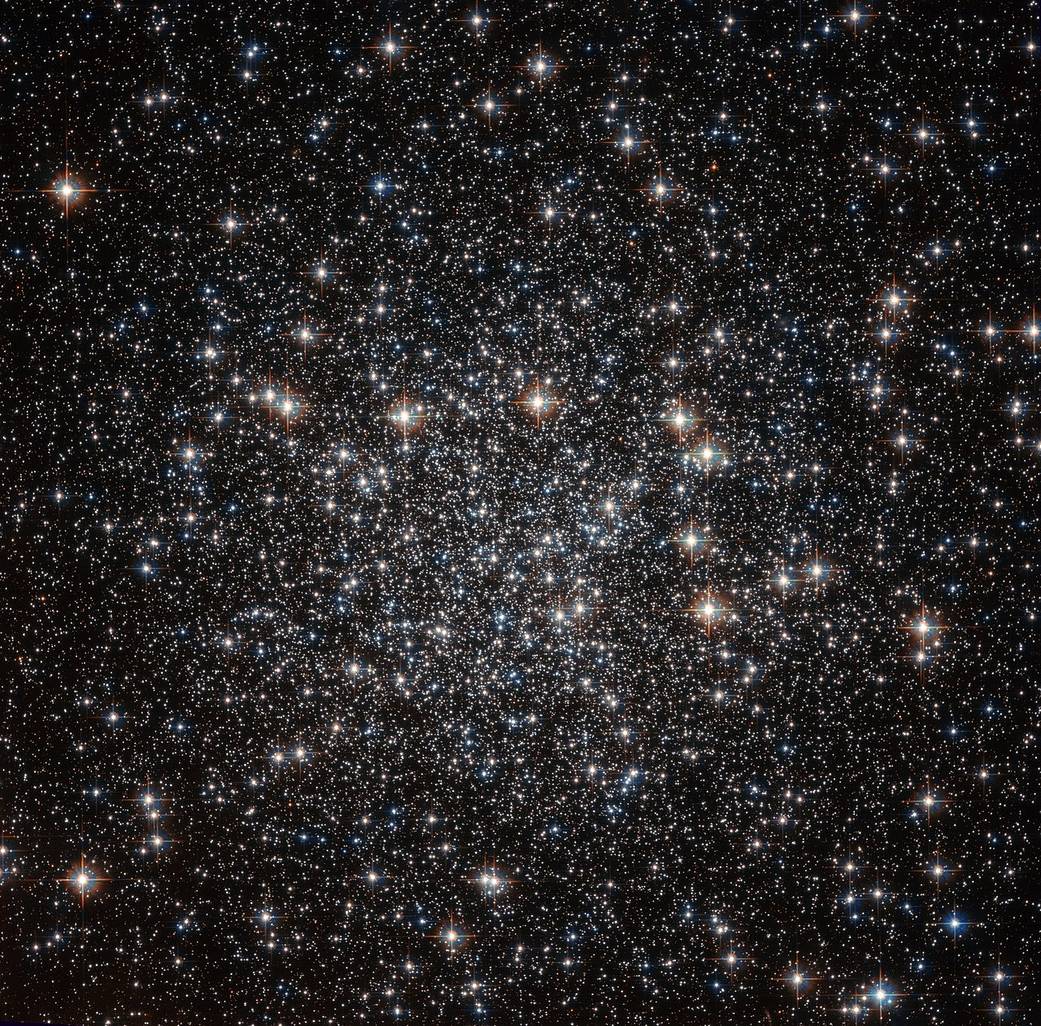
Constellations are useful
when we see through them
to the stars
We are occupied with connecting dots. We study and follow the pictures emerging from these dots. Like looking in the night sky and telling stories about people and things there. They are there but distract us from the stars themselves. Our systems of religion and psychology and society have power only fueled by the dots as constellations have power only fueled by the simple points of light.
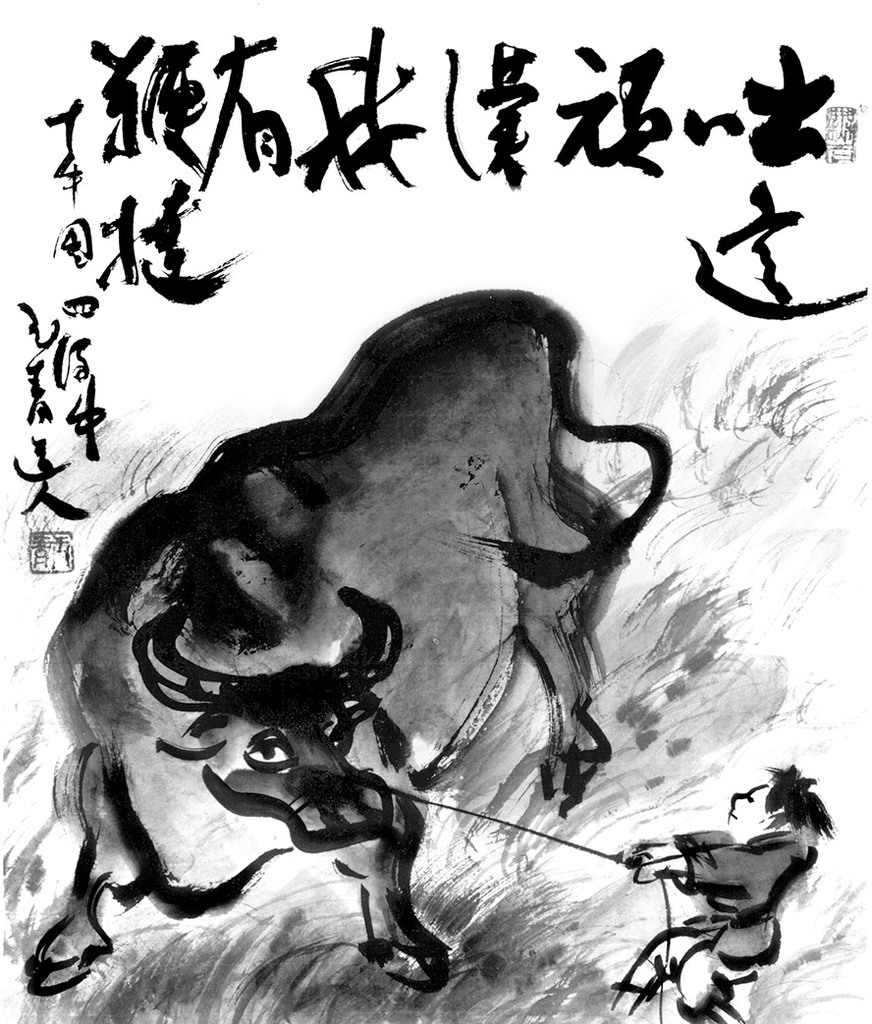
Gyokusei Jikihara, Ten Ox-Herding Pictures, 4. Catching the Bull
Light On
As I lay waking in bed
Listening to the Zen poem
Verses on the Faith Mind by Sengcan
The reader said
“The illustrator Gyokusei Jikihara, sensei,
is a Japanese master of calligraphy and nanga painting.
Still painting and teaching at the age of ninety-nine,
he will celebrate his one-hundredth birthday on August 1, 2004.”
Then the ceiling light came on spontaneously
Like a sun rising
With no one at the switch.
Sengcan died in 606.
Jikihara died in 2005.
If I live to be one hundred
I will remember this.
Sengcan says
“Don’t waste your time in arguments and discussion
attempting to grasp the ungraspable.”
I don’t think
I will
I keep a flameless LED candle on a table. I frequently light the candle, by a switch on the bottom (it also has a timer). It is not the kind that is meant to look like a wax candle, or one that hides the obviously fake plastic cutout of a flame. It is what it is: a battery-powered white plastic cylinder that lights up and “flickers.”
Someone came by and suggested I might better have a real candle with a real flame burning. She called the candle “ersatz.” My first answer is that keeping real candles burning unattended is unsafe and possibly messy. But that’s not my real answer.
The light from this candle is real. When I walk into the dark room, it lights the way. When I light it, it brightens. When I turn it off, it darkens. True, if I were expecting the candle to warm me, it won’t do that, although a single candle isn’t much good for that anyway. I don’t know what more I could ask of this candle (remember, it has a timer, and so can even turn itself on and off).



 Bob Schwartz