Bob Schwartz

Tag: Judaism

Defeating ISIS: Lessons from the American and Israeli Wars of Independence

We can’t “defeat” ISIS. Not if that means declaring “victory” over Middle East-based Muslim radicalism and terror.

There are lessons from the American and Israeli Wars of Independence. This isn’t to suggest any moral equivalence comparing those world-changing events to the monstrosity of ISIS. But there are things to learn.

Both Wars of Independence were attempts to upend empire and established order and create a new model (both uprisings, not coincidentally, involving the British). Both were insurgencies by True Believers, one political and economic, one religious. Both are examples of the power of the heart, because the heart not only wants what the heart wants, it will do anything to get what the heart wants. True belief will find a way.

The British thought that their massive and formal force would roll right over the Americans. They did not count on all sorts of stealthy and tricky techniques, on secret communications, on a guerilla war. Mostly, the British didn’t account for the depth of American commitment: hearts and minds and souls. It may not always work that way, but competitions often go, simply, to the side that just wants it more. And that would be the Americans.

The British were never quite sure what they were doing in Palestine. But they did know something about world order and keeping order. Besides, some Brits didn’t much like the Jews anyway. The Zionists believed, literally, that they had God on their side. As far as hearts and minds and souls getting what they want, doing anything to win did mean the occasional act of terror (for example, the 1946 bombing of the King David Hotel in Jerusalem, leaving 96 dead). As far as who wanted it more, the founders of the modern Jewish state not only defeated the British, but turned back all attempts by hate-fueled neighbors to root them out.

In the aftermath of Paris, just as with 9/11 and other recent terrible events, if we keep talking simplistically about “defeating”, “eliminating” or “building American-style democracy”, we are—there’s no other way to say this—fools. We should eliminate and prevent horror, terror and monstrosity wherever and whenever we can. But if we think that the toxic mixture of true belief, grievance and pathology is just going to vanish because we are purer and more powerful, that would be funny if it weren’t so sad and dangerous.

If you don’t think that hearts, minds and souls matter when it comes to extremism, just look at the sorry record of irresolute and wasteful wars when we ignore that. We may feel righteous and superior, and want to vindicate civilization. But that doesn’t relieve us of the responsibility to be smart. Smart about what we face, what we can accomplish and how to accomplish it. So we can do some good, and do less harm.

New Beginnings: The Torah and the I Ching

Bet

In Jewish congregations, the annual Torah reading cycle begins again this week with the first chapters of the Bible. In Hebrew it begins with the word b’reishit, and in its best-known translation, the first verse goes like this:

In the beginning, God created the heavens and the earth.

And with that comes a puzzle.

If B’reishit is the beginning of a very big and consequential story, and if the creators of the Torah were sensitive to the mystical meanings of the Hebrew alphabet and language, why does the Torah begin with the second letter bet (B) rather than the first letter alef (A)?

Looking at a bigger picture, this connects to a related puzzle and an unlikely source: the I Ching.

The I Ching is a classic of Chinese literature and philosophy, a text as ancient as the Torah and just as influential.

Richard J. Smith writes in The I Ching: A Biography:

The Changes first took shape about three thousand years ago as a divination manual, consisting of sixty-four six-line symbols known as hexagrams. Each hexagram was uniquely constructed, distinguished from all the others by its combination of solid (——) and/or broken (— —) lines. The first two hexagrams in the conventional order are Qian and Kun; the remaining sixty-two hexagrams represent permutations of these two paradigmatic symbols….

The operating assumption of the Changes, as it developed over time, was that these hexagrams represented the basic circumstances of change in the universe, and that by selecting a particular hexagram or hexagrams and correctly interpreting the various symbolic elements of each, a person could gain insight into the patterns of cosmic change and devise a strategy for dealing with problems or uncertainties concerning the present and the future.

The first intriguing note is that the I Ching (pronounced Yi Jing) begins with those hexagrams Qian and Kun—known generally in English as Heaven and Earth. The cosmos of change and the I Ching begin then with Heaven and Earth.

It is at the close of the 64 hexagrams that the conundrum appears. Hexagram 63, the penultimate one, is Ji Ji—After Completion. This should be the end of the story. But it isn’t. The final hexagram, Hexagram 64, is Wei Jei—Before Completion. In the end, it doesn’t stop. It begins again. The Book of Changes emphasizes that the changes never end.

This is an explanation of why the Torah does not begin with the beginning of the alphabet. If it starts with A, that presumes a Z, A to Z, or in Hebrew, alef to tav. Creation would thus be represented as a finite element of a finite cosmos. In the text it starts instead, as the Latin phrase goes, in media res—in the middle of things. Just as the Torah will end in the middle of things, after completion of a journey, but with Moses never allowed to experience what is yet to happen, before the next completion. On and on, always beginning, never done. Just like the I Ching. Just like the Torah itself.

The Radical Book of Job

The Bible is a radical document. Just ask Pope Francis, who will be visiting the U.S. for Yom Kippur. Just ask the conservative critics of Pope Francis, who have been made very uncomfortable.

The Gospels particularly offer subversive guidelines for individuals and society. But there is also much of this in the Old Testament. Take the Book of Job.

As a Bible text, the book of Job is one of the most complex and challenging for biblical translators, interpreters and scholars. So it is no surprise that it has been boiled down in common understanding and tradition to a simple story. A good man suffers, his faith in God is shaken, God explains, the man renews his faith, God returns him to good fortune. End of story.

Except that is not what happens. There are many ways to interpret Job that look nothing like that. A number of characters appear, do a lot of talking, and offer divergent views of what Job should do in the face of his intolerable burden. Most infamously his wife, whose recommendation to her husband is “Curse God and die.” Someone named Elihu makes a late brief appearance (likely the result of a later addition to the book), offering his own take on things. And of course, God has (almost) the final word.

In his overview of Job in The Jewish Study Bible, Prof. Ed Greenstein reviews the possibilities, including this one:

A second, and arguably even more prevalent, theme in Job is that of honesty in talking about God. The book examines and tests the limits of appropriate speech. The test of Job is all about speech—will Job, severely afflicted with anguish and physical distress, “blaspheme [God] to [His] face” (1.11)? The dialogues, it goes without saying, consist only of speech—there is no action within them. Job’s companions continually denigrate the way he talks (e.g., 11.2–4), and he feels he must beg to be heard (13.13). Their view is shared by readers such as the Talmudic Sage Rav, who suggests that “dirt be put in Job’s mouth” to silence him.

But while the friends regard Job’s discourse as no more than hot air, “useless talk” (e.g., 15.2–3), Job takes pride in his absolute commitment to speaking only truth (see 27.3–4). The radical turning point in the book comes at its conclusion: God turns to Job’s companions and reproves them for not speaking “truthfully” (nekhonah is adverbial) about Him as Job “My servant” had done (42.7–8). Job may not have arrived at the truth, but he had reason to believe in what he was saying, as it came to him honestly, unlike the words of the companions, who merely repeated uncritically the wisdom they had received. Seen this way, the book of Job promotes honesty in theological discourse and rejects a blind reliance on tradition.

Promoting honesty in theological discourse and rejecting blind reliance on tradition. A radical approach we can consider this Yom Kippur, along with the universe of our humble introspections and pleas for forgiveness. A radical approach that Pope Francis seems very good at. A radical approach missing in the hot air and useless talk we hear from so many of our self-righteous public figures.

Rosh Hashanah: God Is Busy Writing

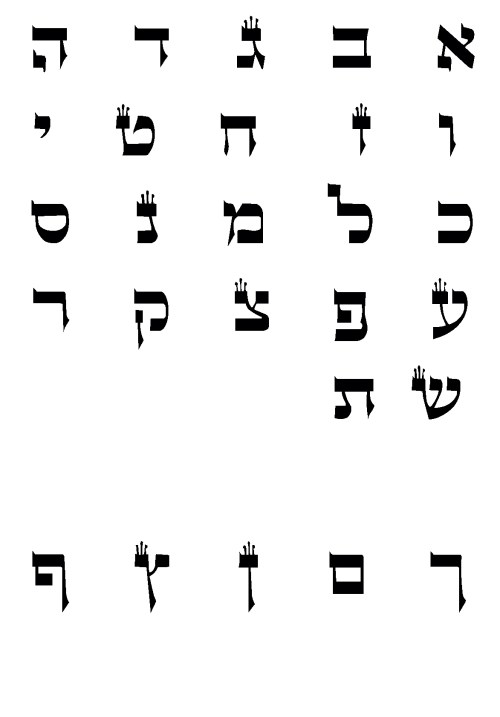
Hebrew Alphabet

This week begins the Jewish Days of Awe, starting with Rosh Hashanah, the New Year. Shana Tova – a good year.

A tale about Hasidic master Reb Levi Yitzchak of Berditchev (1740-1809):

It was Yom Kippur. The faithful, weak from fasting, were waiting for the Rebbe to begin the Mussaf prayer, but he too was waiting. An hour went by, and another. Impatience turned into anguish. This time the Rebbe was really going too far. It was late. Why was he waiting?

When he finally emerged from his meditation, he explained: “There is in our midst someone who cannot read. It is not his fault; he has been too busy providing for his family to go to school or study with a teacher. But he wishes to sing. And so he allows his heart to speak: ‘You are God; I am but a man. You are Almighty and know everything; I am weak and ignorant. All I can do is decipher the twenty-two letters of the sacred tongue; let me give them to You to make into prayers for me and they will be more beautiful than mine.’ ” The Rebbe raised his voice: “And that, brethren, is why we had to wait. God was busy writing.”

From Souls on Fire: Portraits and Legends of Hasidic Masters by Elie Wiesel


Bacon and Ribs Illegal in America When Jews and Muslims Take Over

When Orthodox Jews or Muslims are in charge, bacon, ribs, and all sorts of other things will be made illegal.

Of course, that will never happen. Not because Orthodox Jews or Muslims will never take control of American democracy (anything’s possible). But because the U.S. Constitution—that imperfectly perfect protector of individual rights—would not permit it.

In the secular sphere, there is no higher law than the Constitution. Beyond being the law of the land, it is the law of the law of the land. Those who study it in the context of world history and politics recognize that it is a one-of-a-kind, no-other-time-or-place achievement.

Those who say there is some kind of higher law than that in the civic arena are misinformed, or in some cases, such as Ted Cruz who should know better, strategically mistaken. The question those folks have to answer is this: If there is higher law than the Constitution, whose law is it? If it’s “God’s” law, recall that God talks to lots of people in lots of religious traditions, and apparently isn’t always heard to say the same thing to everyone. It will shock some Christians to learn that God has been speaking to Jews for thousands more years, and while there seemed to have been plenty of talk about a messiah, nothing to indicate that one actually arrived. Or asked county clerks in Kentucky to stop issuing marriage licenses. Or told presidential candidates who claim to believe in law and order to defy the law of the law of the land. In his name. Amen.

Time

Salvador Dali - The Persistence of Memory

Driving down a country road, a man sees a farmer. The farmer is holding up a pig so that the pig can eat apples from a tree. The man stops and says to the farmer, “You know, that’s not very efficient. If you put the pig down, shook the tree and let the apples fall to the ground, it would save a lot of time.” The farmer says, “You may be right, but what’s time to a pig?”


The result of our thinginess is our blindness to all reality that fails to identify itself as a thing, as a matter of fact. This is obvious in our understanding of time, which, being thingless and insubstantial, appears to us as if it had no reality.

Indeed, we know what to do with space but do not know what to do about time, except to make it subservient to space. Most of us seem to labor for the sake of things of space. As a result we suffer from a deeply rooted dread of time and stand aghast when compelled to look into its face. Time to us is sarcasm, a slick treacherous monster with a jaw like a furnace incinerating every moment of our lives. Shrinking, therefore, from facing time, we escape for shelter to things of space. The intentions we are unable to carry out we deposit in space; possessions become the symbols of our repressions, jubilees of frustrations. But things of space are not fireproof; they only add fuel to the flames. Is the joy of possession an antidote to the terror of time which grows to be a dread of inevitable death? Things, when magnified, are forgeries of happiness, they are a threat to our very lives; we are more harassed than supported by the Frankensteins of spatial things.

It is impossible for man to shirk the problem of time. The more we think the more we realize: we cannot conquer time through space. We can only master time in time.

Abraham Joshua Heschel
The Sabbath


At the time the mountains were climbed and the rivers were crossed, you were present. Time is not separate from you, and as you are present, time does not go away.

As time is not marked by coming and going, the moment you climbed the mountains is the time being right now. If time keeps coming and going, you are the time being right now. This is the meaning of the time being.

Does this time being not swallow up the moment when you climbed the mountains and the moment when you resided in the jeweled palace and vermilion tower? Does it not spit them out?

Zen Master Dogen
The Time-Being
The Essential Dogen

The Eight Ways of Hanukkah

happy-hanukkah

Hanukkah, which begins at sunset with the lighting of the first candle, may be the most interesting, confusing, and confused of Jewish holidays. Let me count the ways.

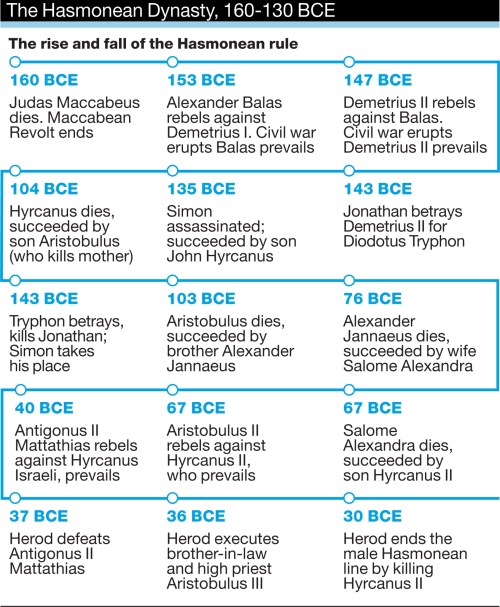
1. It is the most historic of the traditional Jewish holidays. The historicity of more important holidays is somewhat shrouded in antiquity, bible stories, and faith. We have a pretty good chronicle of the events commemorated by Hanukkah: the Jewish rebellion of around 163 BCE led by the Maccabee family against the Seleucid/Syrian occupiers of Israel.

2. The best chronicle of Hanukkah is found in the Books of Maccabees. Maccabees is found in the bible, but because of textual happenstance, not in the Jewish Bible. Books of Maccabees are part of the Roman Catholic and Eastern Orthodox bibles, and are apocryphal books of the Protestant bible. But the Jewish biblical canon (the books officially included) was closed before these books were available. So if Jews want to read this particular biblical story, they have to turn to Christian bibles. Not that there’s anything wrong with that.

3. Hanukkah is probably not just about the Maccabees. As with other holidays, including Christmas, it is likely a melding of other seasonal celebrations at that time of year.

4. Because Hanukkah is extra-biblical, it did not achieve the stature of other holidays. You will often see it referred to as a “minor” holiday. In baseball terms, though, Hanukkah is at least AAA minor league, that is, completely ready to play in the majors. Which, as it turned out, it kind of does.

5. How Hanukkah became a much more important holiday than ever is covered by the wonderful book Hanukkah in America. For one thing, the original story of the Maccabees is about fighting not just the occupiers but the tendency of Jews in that situation toward assimilation and Hellenization. This obviously resonated in America, where secular culture and particularly Christmas became a juggernaut.

6. The candelabra used on Hanukkah for the eight nights of lights is usually referred to, by Jews and non-Jews alike, as a menorah. This is not exactly right. A menorah is a lamp, more particularly the seven-armed lamp that is an abiding symbol of Judaism and Israel. The lamp lit at Hanukkah is more properly called a hanukkiah. But hardly ever is.

7. The spelling of the word Hanukkah in English remains an unsettled mess. “Hanukkah” is now prevalent, but there is still plenty of the older “Chanukah” or, less likely, “Chanukkah” or other variations. The problem stems from trying to transliterate a Hebrew word into English—especially a word that has the guttural “ch” sound not heard in English (that is, not “ch” as in China). But as the saying goes: You can spell it Hanukkah or Chanukah, just don’t call me late for latkes. (No, that’s not an actual saying.)

8. This is from a little book that is a century old. The Hanukkah Festival: Outline of Lessons for Teachers (1914) was published by The Teachers’ Institute of the Hebrew Union College in Cincinnati and written by Rabbi Louis Grossmann, its principal. One of the benedictions for lighting the candles goes well beyond Judaism, history, or faith. It should work for just about anyone, tonight and every night.

Eight days long the Lights burned in the homes of our Fathers, and eight days long they rejoiced. One little flask of sacred oil was enough to illumine the Temple and to keep it bright. So each one of us may gladden those with whom we are, and the Light within our heart may make bright all who are about us.

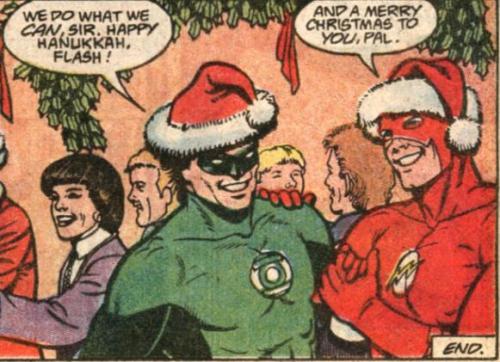
Happy Hanukkah.

Why I Read the Qur’an This Yom Kippur

Qur'an

There comes a time on Yom Kippur, the holiest day on the Jewish calendar, when the official proceedings pause. In the space between morning and afternoon services, lunch on a fast day not being an option, some people engage in group discussions of matters biblical and theological. A sort of hungry High Holy Days Torah study.

This year, I read the Qur’an.

At Yom Kippur services, the Book of Jonah is read. I made that the topic of my High Holy Days blog post, writing that Jonah is a tale we tell to the youngest children, as if, literally, a five-year-old would get it. In fact, Jonah is unique among all Old Testament prophetic books, and may be one of the most variously interpreted texts in the Hebrew Bible. So if you or that five-year-old think it is the simple story of obedience to God and the power of repentance, you might think twice.

Then a few days later, it was reported that an Iranian psychotherapist had just been hanged for, among other things, misinterpreting the Qur’an and insulting the prophet Jonah. For those unfamiliar with the Qur’an, many of the major figures of the Bible—Abraham, Noah, Moses, Jesus, and others—make appearances there. Sometimes it is a quick mention, but they are important links in the chain leading to Mohammed. Jonah among them.

This then became for me the Yom Kippur of Jonah. The Book of Jonah is so short, four brief chapters, that it can be read in minutes. While I have read many of the suras (chapters) in the Qur’an, I had never focused on the role of Jonah.

My interest in Qur’an began years ago with an extraordinary 3-volume set, Judaism, Christianity, and Islam by Professor F. E. Peters. Peters is one of the leading scholars on the shared foundations of these faiths, and this work offers parallel scriptural excerpts from each on a range of themes. I was well-versed in the Bible, Jewish and Christian, but had never read a single word of Qur’an. This began my still-ongoing attempt to fill that gap.

Literacy and familiarity with Abrahamic scriptures—reading them, being aware of structure and content, knowing some of the theological and interpretive issues—might run from 0 (no knowledge) to 10 (comprehensive knowledge). On that scale, many if not most Jews would probably score a 2 for the Hebrew Bible (maybe higher if limited to Torah and assorted familiar books of the Tanach), 0 for the New Testament, and a negative number for the Qur’an, that is, a studied and sometimes antagonistic ignorance. No blame for any of that, though we hope that those who engage in discussion or offer opinions about them might do it with some measure of knowledge.

The sura Jonah (Yonus) in the Qur’an is not what a non-Muslim might expect. Jonah is mentioned only once in it at verse 98:

If only a single town had believed and benefited from its belief! Only Jonah’s people did so, and when they believed, We relieved them of the punishment of disgrace in the life of this world, and let them enjoy life for a time.

The next verse of the sura encourages the Prophet (Mohammed) to be patient in waiting for unbelievers to come around:

Had your Lord willed, all the people on earth would have believed. So can you [Prophet] compel people to believe?

The more familiar biblical story is found at verse 139 of the sura Al-Saffat (37). As with many of the Qur’an’s recaps of these stories, it is very condensed:

Jonah too was one of the messengers. He fled to the overloaded ship. They cast lots, he suffered defeat, and a great fish swallowed him, for he had committed blameworthy acts. If he had not been one of those who glorified God, he would have stayed in its belly until the Day when all are raised up, but We cast him out, sick, on to a barren shore, and made a gourd tree grow above him. We sent him to a hundred thousand people or more. They believed, so We let them live out their lives.

It isn’t clear from the reports how the psychotherapist, who was leading a Qur’an study, insulted Jonah. It is true that much of official Islam “discourages” unorthodox translation and interpretation (in some cases with fatwas, imprisonment, and death). It is also true that translators, scholars, and teachers have continued to push the boundaries anyway, shaking up the tradition and risking it all.

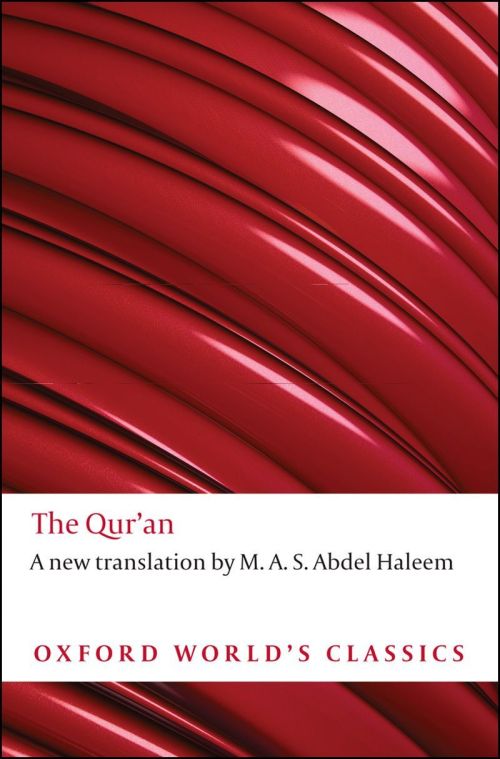
If you have an interest in seeing what the modern generation of Qur’an translations reads like, see M.A.S. Abdel Haleem’s The Qur’an: A New Translation (2005)
(from which the above excerpts are taken).

Don’t wait until next Yom Kippur. You don’t even need a holiday, Jewish or Christian. If you are of the non-Muslim Abrahamic persuasion, or even if you’re not persuaded at all, have a look at the Qur’an. You may believe in many respects besides religious—historical, social, cultural—that the Bible is one of the most important books in the world. You may also have to admit that in its impact, the Qur’an is its equal.

We hear regularly about how there are people killing for the Qur’an, or at least for their often misguided interpretations of it. Remember that there are also those trying to correct those interpretations, and they are dying for it.

Jonah, Yom Kippur, Iran and Irony

Mohsen Amir-Aslani

Sometimes coincidence is irony to the point of cruelty.

This week, the Book of Jonah is read as a part of the Yom Kippur service.

Last week, Iranian psychotherapist Mohsen Amir-Aslani was hanged for, among other things, insulting the prophet Jonah.

In a post last week, Jonah and the New Year, I gave free rein to biblical possibilities. I pointed out, “It is supposedly so simple a story that we tell it to the youngest children. It isn’t that simple.”

For many reasons, it is a good thing that I am not in Iran. It is also a good thing to be part of a faith and a country that not only tolerate interpretive iconoclasm but (theoretically) encourage and thrive on it. According to the report in The Guardian:

Mohsen Amir-Aslani was arrested nine years ago for his activities which the authorities deemed were heretical. He was engaged in psychotherapy but also led sessions reading and reciting the Qur’an and providing his own interpretations of the Islamic holy book, his family said….

According to the source, Iran’s ministry of intelligence was behind Amir-Aslani’s arrest. “He was initially held for making innovations in Islam and providing his own interpretations of the Qur’an but later he was accused of insulting prophet Jonah and also faced accusations of having sex outside marriage,”

This week, whether you read the Book of Jonah at Yom Kippur services or on your own, consider Amir-Aslani. We can do little directly about this aspect of Iranian life. And if we are not Muslims, there is little that we can do about the evolution of someone else’s religion, other than encouragement and modeling progressive behavior. The best we can do—and it is no small thing—is to honor openness in religion by demonstrating openness in our own religion. By supporting innovation, and making sure it is never tantamount to a capital crime.

Jonah and the New Year

Jonah

“Like Jonas himself I find myself traveling toward my destiny in the belly of a paradox.”
Thomas Merton
The Sign of Jonas

The Jewish High Holy Days begins this evening, starting with Rosh Hashanah (New Year 5775) and ending on the tenth day with Yom Kippur (Day of Atonement). So it is a good time to talk about Jonah.

On Yom Kippur, the Book of Jonah is read at services. It is supposedly so simple a story that we tell it to the youngest children. It isn’t that simple.

Prof. Barry Bandstra writes:

The book of Jonah has been interpreted in many different ways: as a satire on prophetic calling and the refusal of prophets to follow God’s call; as a criticism of Israelite prophets who were insincere in preaching repentance (because they really wanted to see destruction); as a criticism of the Jewish community’s unwillingness to respond to prophetic calls to repentance (in contrast with Nineveh); as a criticism of an exclusive view of divine election (God only cares about “chosen people”); as an assertion of God’s freedom to change God’s mind over and against prophets who would limit that freedom; as emphasizing the problem with true and false prophecy (even true prophets have words that do not come true); or as an allegory of Israel in exile (both Jonah and Judah look to God for destruction of an evil empire). De La Torre argues for an interpretation of the book that views Jonah as a marginalized person frustrated with God for not punishing those who have brutally oppressed people. Person reads the book of Jonah as a conversation between author and reader, focusing on the implied verbal rejection of God’s command by Jonah in 1:3.

The entire very brief Book of Jonah is at the end of this post. It goes something like this:

God tells Jonah to preach to the wicked city of Nineveh.
Jonah runs away from this assignment and gets on a ship.
A storm batters the ship and the sailors figure out Jonah is the cause.
The sailors say they don’t want to throw him overboard to appease God, but then they do anyway.
Jonah is swallowed by a big fish.
After three days, the fish disgorges Jonah on land.
Jonah finally preaches repentance to Nineveh.
Nineveh does repent.
God has mercy and doesn’t destroy Nineveh.
Jonah complains that he went through a lot of trouble, so God should have destroyed Nineveh.
God gives Jonah a special plant and then destroys it, as an example of how a prophet has nothing to do with what happens and shouldn’t care how God ultimately deals with things. God explains:

“You are concerned for the castor-oil plant which has not cost you any effort and which you did not grow, which came up in a night and has perished in a night. So why should I not be concerned for Nineveh, the great city, in which there are more than a hundred and twenty thousand people who cannot tell their right hand from their left, to say nothing of all the animals?”

So for the New Year, among the many things you may ask yourself:

Was God too lenient? Was Jonah not compassionate enough, taking joy in the misfortune of others? Am I or should I be more like God? Like Jonah? Like the sailors on the ship? Like the people of Nineveh? Like the fish? Can I tell my right hand from my left?

Whatever your faith or no-faith, you can never have enough New Years and new starts. Please have a happy one.


Book of Jonah from the Jerusalem Bible (J.R.R. Tolkien)

Selecting a Catholic translation of the Book of Jonah on Rosh Hashanah may seem odd. There are two reasons. The Jerusalem Bible is the best English-language combination of literary style and scholarship. And this particular book has a very special translator/editor: J.R.R. Tolkien.

The original Jerusalem Bible, published in English in 1966, was conceived as a very modern Catholic Bible—modern in terms of both language and scholarship. A French edition had already been published, and for the English version, a number of English-language scholars and writers were enlisted. Some texts were translated from original languages (Hebrew, Greek) while other texts were re-translations of the French. Tolkien was brought on as an editor, but he did create one book in English, taken from the French: The Book of Jonah.

Jonah 1

1. The word of Yahweh was addressed to Jonah son of Amittai:
2. ‘Up!’ he said, ‘Go to Nineveh, the great city, and proclaim to them that their wickedness has forced itself upon me.’
3. Jonah set about running away from Yahweh, and going to Tarshish. He went down to Jaffa and found a ship bound for Tarshish; he paid his fare and boarded it, to go with them to Tarshish, to get away from Yahweh.
4. But Yahweh threw a hurricane at the sea, and there was such a great storm at sea that the ship threatened to break up.
5. The sailors took fright, and each of them called on his own god, and to lighten the ship they threw the cargo overboard. Jonah, however, had gone below, had lain down in the hold and was fast asleep,
6. when the boatswain went up to him and said, ‘What do you mean by sleeping? Get up! Call on your god! Perhaps he will spare us a thought and not leave us to die.’
7. Then they said to each other, ‘Come on, let us draw lots to find out who is to blame for bringing us this bad luck.’ So they cast lots, and the lot pointed to Jonah.
8. Then they said to him, ‘Tell us, what is your business? Where do you come from? What is your country? What is your nationality?’
9. He replied, ‘I am a Hebrew, and I worship Yahweh, God of Heaven, who made both sea and dry land.’
10. The sailors were seized with terror at this and said, ‘Why ever did you do this?’ since they knew that he was trying to escape from Yahweh, because he had told them so.
11. They then said, ‘What are we to do with you, to make the sea calm down for us?’ For the sea was growing rougher and rougher.
12. He replied, ‘Take me and throw me into the sea, and then it will calm down for you. I know it is my fault that this great storm has struck you.’
13. The sailors rowed hard in an effort to reach the shore, but in vain, since the sea was growing rougher and rougher.
14. So at last they called on Yahweh and said, ‘O, Yahweh, do not let us perish for the sake of this man’s life, and do not hold us responsible for causing an innocent man’s death; for you, Yahweh, have acted as you saw fit.’
15. And taking hold of Jonah they threw him into the sea; and the sea stopped raging.
16. At this, the men were seized with dread of Yahweh; they offered a sacrifice to Yahweh and made vows to him.

Jonah 2

1. Now Yahweh ordained that a great fish should swallow Jonah; and Jonah remained in the belly of the fish for three days and three nights.
2. From the belly of the fish, Jonah prayed to Yahweh, his God; he said:
3. Out of my distress I cried to Yahweh and he answered me, from the belly of Sheol I cried out; you heard my voice!
4. For you threw me into the deep, into the heart of the seas, and the floods closed round me. All your waves and billows passed over me;
5. then I thought, ‘I am banished from your sight; how shall I ever see your holy Temple again?’
6. The waters round me rose to my neck, the deep was closing round me, seaweed twining round my head.
7. To the roots of the mountains, I sank into the underworld, and its bars closed round me for ever. But you raised my life from the Pit, Yahweh my God!
8. When my soul was growing ever weaker, Yahweh, I remembered you, and my prayer reached you in your holy Temple.
9. Some abandon their faithful love by worshipping false gods,
10. but I shall sacrifice to you with songs of praise. The vow I have made I shall fulfil! Salvation comes from Yahweh!
11. Yahweh spoke to the fish, which then vomited Jonah onto the dry land.

Jonah 3

1. The word of Yahweh was addressed to Jonah a second time.
2. ‘Up!’ he said, ‘Go to Nineveh, the great city, and preach to it as I shall tell you.’
3. Jonah set out and went to Nineveh in obedience to the word of Yahweh. Now Nineveh was a city great beyond compare; to cross it took three days.
4. Jonah began by going a day’s journey into the city and then proclaimed, ‘Only forty days more and Nineveh will be overthrown.’
5. And the people of Nineveh believed in God; they proclaimed a fast and put on sackcloth, from the greatest to the least.
6. When the news reached the king of Nineveh, he rose from his throne, took off his robe, put on sackcloth and sat down in ashes.
7. He then had it proclaimed throughout Nineveh, by decree of the king and his nobles, as follows: ‘No person or animal, herd or flock, may eat anything; they may not graze, they may not drink any water.
8. All must put on sackcloth and call on God with all their might; and let everyone renounce his evil ways and violent behaviour.
9. Who knows? Perhaps God will change his mind and relent and renounce his burning wrath, so that we shall not perish.’
10. God saw their efforts to renounce their evil ways. And God relented about the disaster which he had threatened to bring on them, and did not bring it.

Jonah 4

1. This made Jonah very indignant; he fell into a rage.
2. He prayed to Yahweh and said, ‘Please, Yahweh, isn’t this what I said would happen when I was still in my own country? That was why I first tried to flee to Tarshish, since I knew you were a tender, compassionate God, slow to anger, rich in faithful love, who relents about inflicting disaster.
3. So now, Yahweh, please take my life, for I might as well be dead as go on living.’
4. Yahweh replied, ‘Are you right to be angry?’
5. Jonah then left the city and sat down to the east of the city. There he made himself a shelter and sat under it in the shade, to see what would happen to the city.
6. Yahweh God then ordained that a castor-oil plant should grow up over Jonah to give shade for his head and soothe his ill-humour; Jonah was delighted with the castor-oil plant.
7. But at dawn the next day, God ordained that a worm should attack the castor-oil plant — and it withered.
8. Next, when the sun rose, God ordained that there should be a scorching east wind; the sun beat down so hard on Jonah’s head that he was overcome and begged for death, saying, ‘I might as well be dead as go on living.’
9. God said to Jonah, ‘Are you right to be angry about the castor-oil plant?’ He replied, ‘I have every right to be angry, mortally angry!’
10. Yahweh replied, ‘You are concerned for the castor-oil plant which has not cost you any effort and which you did not grow, which came up in a night and has perished in a night.
11. So why should I not be concerned for Nineveh, the great city, in which there are more than a hundred and twenty thousand people who cannot tell their right hand from their left, to say nothing of all the animals?’