Bob Schwartz

Tag: Holidays

Live Streaming: High Holy Days at Central Synagogue

Central Synagogue

Central Synagogue in New York is one of the great synagogues and congregations in America.

If you are not attending High Holy Days services in-person anywhere, for whatever reason (don’t usually attend, not convenient, not Jewish, etc.), here is your opportunity to join in the services at Central Synagogue. Without leaving the comfort of wherever you have your PC, tablet or phone. For as little or as long a visit as you like.

Central Synagogue live streams its services. Here is just a partial schedule. (You can see the complete schedule here.) All times Eastern Time.

Erev Rosh Hashanah
Sunday, October 2, 8:00pm

Rosh Hashanah
Monday, October 3
Morning Service 9:30am

Kol Nidrei
Tuesday, October 11
6:00pm or 8:00pm

Yom Kippur
Wednesday, October 12
Morning Service 10:45am
Afternoon Service 3:30pm

No prayer books? No problem. You can download those from Central Synagogue too.

Rosh Hashanah Prayer Book

Kol Nidrei and Yom Kippur Morning Prayer Book

Yom Kippur Afternoon Prayer Book

These are the highest of all Jewish services with the highest of all Jewish music and prayer on the highest of all Jewish holidays at one of the most extraordinary Jewish congregations with one of the most extraordinary rabbis. And all you need is a browser.

Selichot and Angels


Selichot

Do Jews pray to angels? Do all of us need all the help we can get?

The Jewish Days of Awe begin soon, starting with Rosh Hashanah on the evening of October 2, ending with Yom Kippur on the evening of October 11.

It is a time of teshuvah, often translated as “repentance”, but more precisely “turning”—that is, turning away from ourselves and our ways and to God and godly ways. To start the process of reflection, on a Saturday night before Rosh Hashanah a special set of preparatory prayers begin to be recited, known as Selichot. This year, Selichot begins tonight, on the night of Saturday, September 24.

The conventional cast of characters in the soulful dialogue of teshuvah and the Days of Awe are yourself, the people and world around you, and God. But Rabbi Geoffrey W. Dennis, in the fascinating Encyclopedia of Jewish Myth, Magic and Mysticism, adds an unexpected player:

Machnisei Rachamim (Conveyors of Compassion)

This is a prayer petitioning the angels to intervene with God:

Conveyers of compassions, obtain our mercy before the Master of compassion,
Makers of prayer, make our prayer heard before the Hearer of prayer.
Makers of wailing, make our wail heard, before the Hearer of wailing.
Conveyers of tears, convey our tears before the King who yields to tears.
Strive to raise up supplication, raise up supplication and plea,
Before the King, high and exalted. The King, high and exalted.

This prayer is only recited at Selichot, a penitential service recited prior to the coming of Rosh Hashanah.

This prayer is anomalous in that the rule that Jews should pray only to God, and not to intermediaries, extends back to Talmudic times: “If troubles come upon a person, do not entreat the angel Michael or the angel Gabriel. Rather, entreat Me alone and I will help you immediately” (J. Ber. 9:1). Maimonides makes this normative, “It is only fitting to pray to God and it is not fitting to pray to any other.”

The Maharal of Prague was sufficiently troubled by the appearance of this prayer that he amended the wording (Netivot Olam, Netiv Ha’Avodah no.12), an innovation that did not catch on. In modern times, no less an ultra-Orthodox authority than the Hatam Sofer wrote that at Selichot he personally skips over this prayer (Orach Chaim no. 166), a shocking confession from the leader of a community that insists ALL of the tradition is sanctified and obligatory. The prayer has been entirely edited out of Selichot liturgy in the modernist Reform movement.

And yet at least one Midrash exists that endorses the idea of angels as intermediaries of our prayers (S of S R. 2:7). And many Jews worldwide recite the words barchuni l’shalom … (“bless me with peace”), when they sing the popular Shabbat hymn, Shalom Aleichem. This prayer is found only in the Ashkenazi (northern European) tradition, suggesting it was written when Jews were surrounded by a Christian culture that emphasized the use of divine intermediaries (saints) and even had services in honor of specific angels (Michaelmas).

Books: It’s Ramadan, Curious George

It's Ramadan, Curious George

Something can be significant and cute. It’s Ramadan, Curious George is that.

Published this past May, the book is a way to introduce little ones to the possibility that others believe differently, that there are other religious and cultural traditions than their own. In this case, a Muslim holiday is introduced through the antics of that famous playful monkey. (George distracts his hungry friend by playing checkers with him.)

Day of Fasting

H.A. and Margret Rey, the creators of Curious George, were German Jews living in Paris when the Nazis invaded in 1940:

Knowing that they must escape before the Nazis took power, Hans cobbled together two bicycles out of spare parts. Early in the morning of June 14, 1940, the Reys set off on their bicycles. They brought very little with them on their predawn flight — only warm coats, a bit of food, and five manuscripts, one of which was Curious George.

The Reys made it to New York with the manuscript. The first Curious George book was published in 1941 (this is the 75th anniversary). The rest is history, and a part of the lives of millions of kids (and their parents).

It is possible to help make the world better one book, and one monkey, at a time.

Vesak: Buddha Day

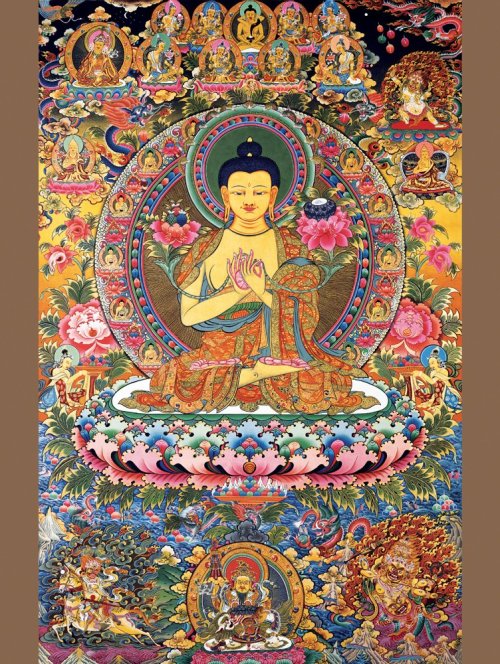
Sakyamuni Buddha

Today is Vesak, the holiday also known as Buddha Day.

Around the world, especially in Buddhist Asia, Vesak combines a celebration of the Buddha’s birth, enlightenment and passing. This year the holiday was noted by the UN, by President Obama, by Canadian Prime Minister Trudeau, and by many others. This is part of the growing recognition that the world might benefit from even a little bit of Buddhism added to our complex, crazy and chaotic affairs.

Here is the Mangala Sutta (The Sutra on Happiness), a wise and uplifting discourse of the Buddha that is one of the best-loved and most frequently recited texts in the Southeast Asian Buddhist world.  Only twelve verses long, it is a recital of auspicious things, and along with texts such as the Metta Sutta, is believed to bring happiness and good fortune when chanted or heard.

The Sutra on Happiness

I heard these words of the Buddha one time when the Lord was living in the vicinity of Savatthi at the Anathapindika Monastery in the Jeta Grove. Late at night, a deva appeared whose light and beauty made the whole Jeta Grove shine radiantly. After paying respects to the Buddha, the deva asked him a question in the form of a verse:

“Many gods and men are eager to know
what are the greatest blessings
which bring about a peaceful and happy life.
Please, Tathagata, will you teach us?”

(This is the Buddha’s answer):

“Not to be associated with the foolish ones,
To live in the company of wise people,
Honoring those who are worth honoring—
This is the greatest happiness.

“To live in a good environment,
To have planted good seeds
And to realize that you are on the right path—
This is the greatest happiness.

“To have a chance to learn and grow,
To be skillful in your profession or craft,
Practicing the precepts and loving speech—
This is the greatest happiness.

“To be able to serve and support your parents,
To cherish your own family,
To have a vocation that brings you joy—
This is the greatest happiness.

“To live honestly, generous in giving,
To offer support to relatives and friends,
Living a life of blameless conduct—
This is the greatest happiness.

“To avoid unwholesome actions,
Not caught by alcoholism or drugs,
And to be diligent in doing good things—
This is the greatest happiness.

“To be humble and polite in manner,
To be grateful and content with a simple life,
Not missing the occasion to learn the Dharma—
This is the greatest happiness.

“To persevere and be open to change,
To have regular contact with monks and nuns,
And to fully participate in Dharma discussions—
This is the greatest happiness.

“To live diligently and attentively,
To perceive the Noble Truths,
And to realize nirvana—
This is the greatest happiness.

“To live in the world
With your heart undisturbed by the world,
With all sorrows ended, dwelling in peace—
This is the greatest happiness.

“For the one who accomplishes this
Is unvanquished wherever she goes;
Always he is safe and happy—
Happiness lives within oneself.”

Translated by Thich Nhat Hahn

Metta Mama

Metta Mama

As a mother watches over her child, willing to risk her own life to protect her only child, so with a boundless heart should one cherish all living beings, suffusing the whole world with unobstructed loving-kindness.

May all beings be happy.
May they live in safety and joy.

Metta Sutta

The miracles never end.
The conception, the birth, the growth.
Yet none of it happens
All of it flows
From you the source, the spring.
Ask:
How is it possible
Being merely human
Perfect and flawed
To give so much
For the other
To the other
Happiness, safety and joy?
Answer:
It is no other
Than yourself.
This child
No other than yourself.

Thanks to the wondrous mother I had and the wondrous mother of our child who graces our lives.

Happy Mother’s Day.

Matzo: Dealing with Eating the Bread of Affliction

Organic Spelt Matzo

Matzo is referred to as “the bread of affliction,” symbolizing the exodus of the Jews from Egypt, who didn’t have time to allow the bread to rise as they fled through the wilderness. Talk about flatbread, this is the ultimate.

If you are observing the Passover and avoiding bread for the next week, or even if you’re not, some thoughts about eating matzo.

  1. Put away the toaster. Save the counter space. You won’t need it for bread. And you can’t toast matzo. Even if you could, it would slip through the slot.
  1. Make matzo brei for breakfast. Matzo brei is kind of a cross between pancakes and French toast, made by soaking matzo in water, mixing it with eggs, and cooking it in a frying pan. Delicious all year round. You don’t have to Jewish and it doesn’t have to be Passover.
  1. Try all the varieties of matzo, or at least the ones that don’t seem a little extreme (Organic Spelt, I’m looking at you). Once upon a time there was only plain matzo, just like there used to be plain white bread. Now everything is mixed in: Egg, Yolk-Free, Egg and Onion, Spelt, Mediterranean, Whole Wheat, Garlic and Rosemary, and Everything (which actually doesn’t have everything, just garlic, onion and poppy seeds. Go figure.)
  1. Don’t try to make sandwiches. At the seder, the tradition is to eat a tiny sandwich of horseradish and haroset (a sweet paste representing the mortar of the building the Jews slaved on) between two pieces of matzo. The great sage Hillel supposedly created this sandwich, and his name is attached to it. Even this tiny sandwich throws matzo crumbs all over the place. A full-size matzo sandwich is not a good idea. No matter how wise Hillel was.

Happy Passover.