Bob Schwartz

Tag: Hanukkah

Tomorrow (December 8) is Bodhi Day? What should I post?

December includes three notable religious holidays.

Christmas, commemorating the birth of Jesus. It is a major holiday, one of the two most important Christian holidays, and one that has become a secular celebration, especially in America.

Hanukkah, commemorating the retaking and rededication of the Temple in Jerusalem. Religiously, it is a minor holiday, not even included in the Hebrew Bible. Traditionally, it has become a cultural and social counterbalance to Christmas, especially in America.

Bodhi Day isn’t about the birth of a significant person or about the military victory over a religious oppressor. It is about a man who sat under a tree and ultimately woke up, or, as it is usually put, attained enlightenment.

I never rely on AI to do my writing, but I have given my friend Claude a chance to concisely explain Bodhi Day observances:


Bodhi Day (also known as Rohatsu in Japanese tradition) commemorates the day when Siddhartha Gautama attained enlightenment and became the Buddha. It’s typically observed on December 8th in the Mahayana tradition, though some traditions follow different calendars.

Here’s how Bodhi Day is observed in different parts of the world:

Japan (Rohatsu):

  • The day marks the end of a weeklong sesshin (intensive meditation retreat) in Zen monasteries
  • Practitioners often meditate through the night, mirroring the Buddha’s enlightenment experience
  • Traditional decorations include strings of colored lights, representing the stars the Buddha saw upon enlightenment

Southeast Asian Countries:

  • In countries like Thailand and Sri Lanka, the enlightenment is actually celebrated as part of Vesak Day in May
  • Temples are decorated with flowers and lights
  • Devotees participate in meditation sessions and listen to dharma talks
  • Food offerings are made to monks and sharing meals with the community is common

United States and Western Countries:

  • Buddhist temples and centers often hold special meditation sessions
  • Some practitioners decorate small ficus trees (similar to the Bodhi tree) with lights
  • Educational programs about the Buddha’s enlightenment are organized
  • Many observe the day with a traditional breakfast of milk and rice, recalling the offering made to the Buddha by Sujata

China and Taiwan:

  • Known as Laba Festival (腊八节)
  • Traditionally celebrated with Laba congee, a special porridge made with various grains and dried fruits
  • Temples hold ceremonies and offer free congee to visitors
  • Many people visit temples to make offerings and pray for blessings

Modern Observances:

  • Some Buddhists maintain a more contemplative practice, spending the day in meditation
  • Many practitioners dedicate themselves to acts of kindness and compassion
  • Some observe the day by reading Buddhist texts or sutras
  • Virtual meditation sessions and teachings have become common, especially in recent years

The focus across all these observances remains on the core meaning of the Buddha’s enlightenment – the realization that freedom from suffering is possible through understanding and practicing the dharma.

Claude


Each year I wonder what to say about Bodhi Day, the Buddha, and Buddhism. With a day to go, I still don’t know.

But tomorrow I will.

The diverse candles of Hanukkah

Today is the last day of Hanukkah. The menorah was filled up last night and now it’s burned down and done. Just in time to mention the candles.

Once buying Hanukkah candles was simple: a box of white or a box of assorted colors. Now everything is different. Now there are choices. Lots of choices.

Here are some of the choices. For next year.

Dripless
Multicolored
Striped
Tapered
Metallic
Silver
Blue Frost
Colorful
Beeswax
Handmade
Sunburst
Hand Decorated
3-Tone
Pastel
Diamond Etched
Crayon
Spiral
Honeycomb Beeswax
Blue Hued
Natural
Organic
Vegetable Wax
Multi Splash
Sweet Scented
Tall
Wave Etched
Twisted
Thin
Blaze of Fire
Purple
Paraffin Wax
Tri Color
Handcrafted

© 2023 by Bob Schwartz

A year when a Jew needs a little extra Christmas

I don’t celebrate Christmas, not theologically. But I have always enjoyed the season culturally, socially and emotionally. It is fun and uplifting. Setting aside whether or not a messiah was born, who wouldn’t like to believe we have an opportunity for a better life and a better world? A new possibility. Besides, this concept is a Jewish one, though today the Jewish views range from it hasn’t happened yet to we aren’t waiting for it and it doesn’t matter anyway.

Hanukkah coincides on the calendar but has nothing to do with Christmas. This hasn’t stopped it from in some ways becoming Jewish Christmas, whether as a gift-giving holiday or in balancing big Christmas trees with big menorahs. For more on this, see Hanukkah in America: A History (the Kindle edition is on sale for $3.99—a steal!). The topline of the Hanukkah story is also inspirational: a family of Jewish warriors reclaimed their territory from an occupying power and restored and sanctified the Temple. The oil lamp that should have burned for one day lasted for eight. A miracle.

The story of the oil lamp may be legend, but the history of the family is very real. They began the Hasmonean dynasty which ruled Judea for generations. The history of the dynasty is filled with infighting, intrigue and occasional despotism. (The story is not included in the Hebrew Bible. Instead, it is only found in some versions of Christian Bibles, as the Books of Maccabees.)

News of current war in that very region is with us every day—for some of us, every hour or minute. It is important to pay attention and learn. It is also heartbreaking, agonizing and exhausting.

Which brings me back to Christmas.

Most years I think Christmas music appears too early. Most years I don’t watch the Hallmark-style Christmas TV rom-coms until later in December (Hallmark-style because there are now about a dozen channels or streaming services showing these). Why is this year different from other years?

This year I have begun listening to Christmas music already. This year I have begun watching Christmas rom-coms already. I will be doing that for weeks, maybe into the New Year.

It doesn’t mean I won’t be watching the war too—every day, multiple times a day. Speaking only for myself, only as this one Jew, I need a break once in a while. If centuries of Christmas inspired different music, some fun, some silly, some sublime, I’m listening. If people want to find themselves in ridiculous situations at Christmas and end up falling in love, I’m watching.

If a baby was supposedly born who supposedly would enable a kinder and more peaceful world—a still distant but worthwhile dream—there is no reason not to hope.

© 2023 by Bob Schwartz

Hanukkah Hexadecimal Code


If four sides of a dreidel and eight candles are proving too simple for you, here is a way to expand the Hanukkah holiday—mathematically and mystically.

The eight-candle menorah is binary, that is, a candle is either lit (1) or unlit (0).

With eight binary places, the menorah is a type of hexadecimal, a code central to digital processing. Each of the eight places in a hexadecimal is occupied by a digit or a letter.

If you assign each of the eight candles, left to right, either a 0 or a 1, you can convert each from a hexadecimal to a numeric value:

First night of Hanukkah = 00000001 = 1
Second night = 00000011 = 17
Third night = 00000111 = 273
Fourth night = 00001111 = 4,369
Fifth night = 00011111 = 69,905
Sixth night = 00111111 = 1,118,481
Seventh night = 01111111 = 17,895,697
Eighth night = 11111111 = 286,331,153

Is this of any use? Some suggestions:

1. A secret code to identify each day of Hanukkah with a number. When greeting someone on the second day of Hanukkah, you might say “Happy 17”. Please be sure to explain the system behind your greeting, lest it is thought you are experiencing a psychological break or are high (assuming you are not).

2. Gematria is a system that assigns numbers to each Hebrew letter in a word, and then calculates a value for each word, which value is then associated with other words of the same value. You can look online to find the gematria associations for each of the above values. In addition to gematria, there are countless systems that assign values to letters and meaning to numbers.

For the larger numbers, you may not find an associated meaning. But you can factor the larger numbers to find smaller associated meanings. So, for example, the eighth night value of 286,331,153 factors to 17 × 257 × 65537. The smaller numbers such as 17 and 257 are widely discussed.

Chag urim sameach! (Happy Festival of Lights). And if I don’t see you, Happy 273!

The Hanukkah Guest: A Story from Rabbi Nachman of Bratslav

“Now, when you bring your thoughts to Paradise, you are there, on that holy mountain. But when your thoughts return to this world, you will find yourself here once again.”

The Hanukkah Guest, a story from Reb Nachman of Bratslav, retold by Howard Schwartz in A Palace of Pearls:

On the first night of Hanukkah, a poor man, who lived alone, chanted the Hanukkah blessings and lit the Hanukkah candle. He gazed at the candle for a long moment, and then there was a knock at the door. When he opened it, he saw a stranger standing there, and he invited him in. They began to discuss things, as people do, and the guest asked the man how he supported himself. The man explained that he spent his days studying Torah, and that he was supported by others, and didn’t have an income of his own. After a while, their talk became more intimate, and the man told the guest that he was striving to reach a higher level of holiness. The guest suggested that they study Torah together. And when the man discovered how profound were the guest’s insights, he started to wonder if he were a human being or an angel. He began to address the guest as Rabbi.

Time flew by, and the man felt as if he had learned more in that one night than in all the other years he had studied. All at once the guest said that he had to leave, and the man asked him how far he should accompany him. The guest replied, “Past the door.” So the man followed the guest out the door, and the guest embraced him, as if to say goodbye, but then he began to fly, with the man clinging to him. The man was shivering, and when the guest saw this, he gave him a garment that not only warmed him, but, as soon as he put it on, he found himself back in his house, seated at the table, enjoying a fine meal. At the same time, he saw that he was flying.

The guest brought him to a valley between two mountains. There he found a book with illustrations of vessels, and inside the vessels there were letters. And the man understood that with those letters it was possible to create new vessels. The man was taken with a powerful desire to study that book. But when he looked up for an instant, he found himself back in his house. Then, when he turned back to the book, he found himself in the valley once more. The guest, whoever he was, was gone. The man, feeling confident, decided to climb up the mountain. When he reached the summit, he saw a golden tree with golden branches. From the branches hung vessels like those illustrated in the book. The man wanted to pick one of those vessels, as one picks fruit from a tree, but as soon as he reached for one, he found himself back in his house, and there was a knock at the door. He opened the door and saw it was the mysterious guest, and he pleaded with him to come in. The guest replied, “I don’t have time, for I am on my way to you.” The man was perplexed, and asked the guest to explain what he meant. The guest said, “When you agreed to accompany me beyond the door, I gave your neshamah, your highest earthly soul, a garment from Paradise. Now, when you bring your thoughts to Paradise, you are there, on that holy mountain. But when your thoughts return to this world, you will find yourself here once again.” And that is how it remained for the rest of that man’s life, and the story has still not come to an end.

Hanukkah: Joy Comes with the Morning

Reading Psalm 30 is a Hanukkah tradition. Not nearly as well-known or widely practiced as lighting the Hanukkah candles, eating fried foods (latkes and donuts) and playing dreidel, but just as essential.

Psalm 30 contains one of the most uplifting of all biblical verses. The sometimes perplexing Hebrew leads to a variety of English translations, but it is best known this way:

Weeping may linger for the night,
but joy comes with the morning.
Psalm 30:5

Prof. Marc Zvi Brettler explains the connection between Psalm 30 and Hanukkah:

Jewish custom mandates that a psalm be recited for each weekday, and a special psalm for each festival. This custom goes back at least to late rabbinic times, as recorded in the post-Talmudic Tractate Soferim (ch. 18), where Psalm 30 is associated with Chanukah. Ostensibly, the psalm was chosen because the superscription, מזמור שיר חנכת הבית לדוד, refers to the dedication (chanukah) of the temple.

Traditionally, the superscription refers to the dedication of the First Temple, Solomon’s Temple, though some scholars connect it to the dedication of the Second Temple (some psalms are clearly Second Temple in origin). Thus, the connection between Psalm 30 and Chanukah would be a loose one, but the best the rabbis could find—after all, Chanukah occurred in 164 B.C.E., hundreds of years after the dedication of the Second Temple in 515 BCE. Thus, the psalm cannot be referring to Chanukah … or can it?

In fact, I, along with many other biblical scholars, believe that the superscription to Psalm 30 does not refer to the dedication of the Temple (first or second) but literally refers to Chanukah….

A number of points connect this psalm and the Maccabean uprising. First, the psalm describes overcoming, at great odds, enemies—an apt description of the Maccabean experience and the exact situation that led up to Chanukah. In addition, the psalm mentions chasidim (v. 5). The NJPS translates this phrase properly as the “faithful,” the typical meaning of this term in early psalms. Yet we know from both 1 and 2 Maccabees that in the second century B.C.E. a group or party developed, associated with the Maccabees, who called themselves Chasidim, as reflected in the Greek term asidaioi.

In other words, it is possible that someone (on the winning side) after the Hasmonean victory in 164 BCE could have read Psalm 30 and imagined: “David prophesized this about us!” The psalm, for that very reason, may even have been recited as part of the dedication ceremony on Chanukah in 164 BCE since it was seen as broadly appropriate—or even prophetic—to what had happened.

What does Psalm 30 say? In The Jewish Study Bible translation:

Psalm 30

1 A psalm of David. A song for the dedication of the House.
2 I extol You, O Lord,
for You have lifted me up,
and not let my enemies rejoice over me.
3 O Lord, my God,
I cried out to You,
and You healed me.
4 O Lord, You brought me up from Sheol,
preserved me from going down into the Pit.

5 O you faithful of the Lord, sing to Him,
and praise His holy name.
6 For He is angry but a moment,
and when He is pleased there is life.
One may lie down weeping at nightfall;
but at dawn there are shouts of joy.

7 When I was untroubled,
I thought, “I shall never be shaken,”
8 for You, O Lord, when You were pleased,
made [me] firm as a mighty mountain.
When You hid Your face,
I was terrified.
9 I called to You, O Lord;
to my Lord I made appeal,
10 “What is to be gained from my death,
from my descent into the Pit?
Can dust praise You?
Can it declare Your faithfulness?
11 Hear, O Lord, and have mercy on me;
O Lord, be my help!”
12 You turned my lament into dancing,
you undid my sackcloth and girded me with joy,
13 that [my] whole being might sing hymns to You endlessly;
O Lord my God, I will praise You forever.

Whether you celebrate Hanukkah or Christmas or nothing, light candles or tree lights, believe in God or gods or none, this is a message for all seasons and all time. Especially this season and these times.

When we are troubled, with a desecrated temple, death or illness, heartbreak, we can find a path to turn our lament and mourning into dancing. Weeping may linger for the night (many nights), but joy and light come with the morning.

Hanukkah begins on the evening of December 22. Chag urim sameach (Happy Festival of Lights).

The Hanukkah Guest, Told by Rabbi Nachman of Bratslav

Artist: Xul Solar (1887-1963)

Hanukkah begins on the evening of Sunday, December 2, and continues for eight nights and days. One candle is lit on the first night, with a candle added each night. Light increases.

Every story has something hidden. What is concealed is the hidden light.
Reb Nachman of Bratslav (1772-1810)

The Hanukkah Guest

On the first night of Hanukkah, a poor man, who lived alone, chanted the Hanukkah blessings and lit the Hanukkah candle. He gazed at the candle for a long moment, and then there was a knock at the door. When he opened it, he saw a stranger standing there, and he invited him in. They began to discuss things, as people do, and the guest asked the man how he supported himself. The man explained that he spent his days studying Torah, and that he was supported by others, and didn’t have an income of his own. After a while, their talk became more intimate, and the man told the guest that he was striving to reach a higher level of holiness. The guest suggested that they study Torah together. And when the man discovered how profound were the guest’s insights, he started to wonder if he were a human being or an angel. He began to address the guest as Rabbi.

Time flew by, and the man felt as if he had learned more in that one night than in all the other years he had studied. All at once the guest said that he had to leave, and the man asked him how far he should accompany him. The guest replied, “Past the door.” So the man followed the guest out the door, and the guest embraced him, as if to say goodbye, but then he began to fly, with the man clinging to him. The man was shivering, and when the guest saw this, he gave him a garment that not only warmed him, but, as soon as he put it on, he found himself back in his house, seated at the table, enjoying a fine meal. At the same time, he saw that he was flying.

The guest brought him to a valley between two mountains. There he found a book with illustrations of vessels, and inside the vessels there were letters. And the man understood that with those letters it was possible to create new vessels. The man was taken with a powerful desire to study that book. But when he looked up for an instant, he found himself back in his house. Then, when he turned back to the book, he found himself in the valley once more. The guest, whoever he was, was gone. The man, feeling confident, decided to climb up the mountain. When he reached the summit, he saw a golden tree with golden branches. From the branches hung vessels like those illustrated in the book. The man wanted to pick one of those vessels, as one picks fruit from a tree, but as soon as he reached for one, he found himself back in his house, and there was a knock at the door. He opened the door and saw it was the mysterious guest, and he pleaded with him to come in. The guest replied, “I don’t have time, for I am on my way to you.” The man was perplexed, and asked the guest to explain what he meant. The guest said, “When you agreed to accompany me beyond the door, I gave your neshamah, your highest earthly soul, a garment from Paradise. Now, when you bring your thoughts to Paradise, you are there, on that holy mountain. But when your thoughts return to this world, you will find yourself here once again.” And that is how it remained for the rest of that man’s life, and the story has still not come to an end.

A Palace of Pearls: The Stories of Rabbi Nachman of Bratslav by Howard Schwartz

A Hanukkah Gift from Isaac Bashevis Singer

The pessimism of the creative person is not decadence but a mighty passion for the redemption of man. While the poet entertains he continues to search for eternal truths, for the essence of being. In his own fashion he tries to solve the riddle of time and change, to find an answer to suffering, to reveal love in the very abyss of cruelty and injustice. Strange as these words may sound I often play with the idea that when all the social theories collapse and wars and revolutions leave humanity in utter gloom, the poet—whom Plato banned from his Republic—may rise up to save us all.
Isaac Bashevis Singer, Nobel Prize Lecture (1978)

Among his many incomparable stories, Isaac Bashevis Singer left a number that take place at Hanukkah. I had planned to excerpt one of those as a Hanukkah gift—his gift to us.

But then I came across the lecture he gave when he received the Nobel Prize in Literature in 1978. I’ve included an excerpt below. It is a bit long, but with eight days of Hanukkah, you could just read one paragraph each night.

If you are someone who writes, as a profession or a passion, you naturally wonder whether you are wasting your time, or worse, wasting the time of your readers. Singer suggests maybe not.

Happy Hanukkah!


The Nobel Prize in Literature 1978
Isaac Bashevis Singer – Nobel Lecture
8 December 1978

The storyteller and poet of our time, as in any other time, must be an entertainer of the spirit in the full sense of the word, not just a preacher of social or political ideals. There is no paradise for bored readers and no excuse for tedious literature that does not intrigue the reader, uplift him, give him the joy and the escape that true art always grants. Nevertheless, it is also true that the serious writer of our time must be deeply concerned about the problems of his generation. He cannot but see that the power of religion, especially belief in revelation, is weaker today than it was in any other epoch in human history. More and more children grow up without faith in God, without belief in reward and punishment, in the immortality of the soul and even in the validity of ethics. The genuine writer cannot ignore the fact that the family is losing its spiritual foundation. All the dismal prophecies of Oswald Spengler have become realities since the Second World War. No technological achievements can mitigate the disappointment of modern man, his loneliness, his feeling of inferiority, and his fear of war, revolution and terror. Not only has our generation lost faith in Providence but also in man himself, in his institutions and often in those who are nearest to him.

In their despair a number of those who no longer have confidence in the leadership of our society look up to the writer, the master of words. They hope against hope that the man of talent and sensitivity can perhaps rescue civilization. Maybe there is a spark of the prophet in the artist after all.

As the son of a people who received the worst blows that human madness can inflict, I must brood about the forthcoming dangers. I have many times resigned myself to never finding a true way out. But a new hope always emerges telling me that it is not yet too late for all of us to take stock and make a decision. I was brought up to believe in free will. Although I came to doubt all revelation, I can never accept the idea that the Universe is a physical or chemical accident, a result of blind evolution. Even though I learned to recognize the lies, the clichés and the idolatries of the human mind, I still cling to some truths which I think all of us might accept some day. There must be a way for man to attain all possible pleasures, all the powers and knowledge that nature can grant him, and still serve God – a God who speaks in deeds, not in words, and whose vocabulary is the Cosmos.

I am not ashamed to admit that I belong to those who fantasize that literature is capable of bringing new horizons and new perspectives – philosophical, religious, aesthetical and even social. In the history of old Jewish literature there was never any basic difference between the poet and the prophet. Our ancient poetry often became law and a way of life.

Some of my cronies in the cafeteria near the Jewish Daily Forward in New York call me a pessimist and a decadent, but there is always a background of faith behind resignation. I found comfort in such pessimists and decadents as Baudelaire, Verlaine, Edgar Allan Poe, and Strindberg. My interest in psychic research made me find solace in such mystics as your Swedenborg and in our own Rabbi Nachman Bratzlaver, as well as in a great poet of my time, my friend Aaron Zeitlin who died a few years ago and left a literary inheritance of high quality, most of it in Yiddish.

The pessimism of the creative person is not decadence but a mighty passion for the redemption of man. While the poet entertains he continues to search for eternal truths, for the essence of being. In his own fashion he tries to solve the riddle of time and change, to find an answer to suffering, to reveal love in the very abyss of cruelty and injustice. Strange as these words may sound I often play with the idea that when all the social theories collapse and wars and revolutions leave humanity in utter gloom, the poet – whom Plato banned from his Republic – may rise up to save us all.

The high honor bestowed upon me by the Swedish Academy is also a recognition of the Yiddish language – a language of exile, without a land, without frontiers, not supported by any government, a language which possesses no words for weapons, ammunition, military exercises, war tactics; a language that was despised by both gentiles and emancipated Jews. The truth is that what the great religions preached, the Yiddish-speaking people of the ghettos practiced day in and day out. They were the people of The Book in the truest sense of the word. They knew of no greater joy than the study of man and human relations, which they called Torah, Talmud, Mussar, Cabala. The ghetto was not only a place of refuge for a persecuted minority but a great experiment in peace, in self-discipline and in humanism. As such it still exists and refuses to give up in spite of all the brutality that surrounds it. I was brought up among those people. My father’s home on Krochmalna Street in Warsaw was a study house, a court of justice, a house of prayer, of storytelling, as well as a place for weddings and Chassidic banquets. As a child I had heard from my older brother and master, I. J. Singer, who later wrote The Brothers Ashkenazi, all the arguments that the rationalists from Spinoza to Max Nordau brought out against religion. I have heard from my father and mother all the answers that faith in God could offer to those who doubt and search for the truth. In our home and in many other homes the eternal questions were more actual than the latest news in the Yiddish newspaper. In spite of all the disenchantments and all my skepticism I believe that the nations can learn much from those Jews, their way of thinking, their way of bringing up children, their finding happiness where others see nothing but misery and humiliation. To me the Yiddish language and the conduct of those who spoke it are identical. One can find in the Yiddish tongue and in the Yiddish spirit expressions of pious joy, lust for life, longing for the Messiah, patience and deep appreciation of human individuality. There is a quiet humor in Yiddish and a gratitude for every day of life, every crumb of success, each encounter of love. The Yiddish mentality is not haughty. It does not take victory for granted. It does not demand and command but it muddles through, sneaks by, smuggles itself amidst the powers of destruction, knowing somewhere that God’s plan for Creation is still at the very beginning.

There are some who call Yiddish a dead language, but so was Hebrew called for two thousand years. It has been revived in our time in a most remarkable, almost miraculous way. Aramaic was certainly a dead language for centuries but then it brought to light the Zohar, a work of mysticism of sublime value. It is a fact that the classics of Yiddish literature are also the classics of the modern Hebrew literature. Yiddish has not yet said its last word. It contains treasures that have not been revealed to the eyes of the world. It was the tongue of martyrs and saints, of dreamers and Cabalists – rich in humor and in memories that mankind may never forget. In a figurative way, Yiddish is the wise and humble language of us all, the idiom of frightened and hopeful Humanity.

https://www.nobelprize.org/mediaplayer/index.php?id=1517

Be an American Maccabee

This Hanukkah in America we are all called to be Maccabees. Not only Jews, but everyone.

Our highest values are under siege, from powerful outside forces and from our own choices. We aren’t necessarily certain of our own values. We are busy and distracted. We don’t know how to respond. It is inconvenient and risky. What if we make things worse for ourselves? What if we lose? Even when the temple is desecrated, we may stand by and feel helpless.

Jews among all people know this situation. Instead of standing by we stand up. The history is mixed and messy, the results not always ideal. But since days of old we do it because we are called.

This Hanukkah in America the lights are still burning, if dimming. We can’t depend on others, or even God, to make sure the lights don’t go out. That is up to us, the Maccabees.

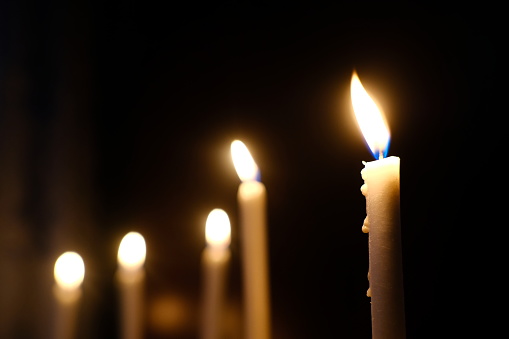
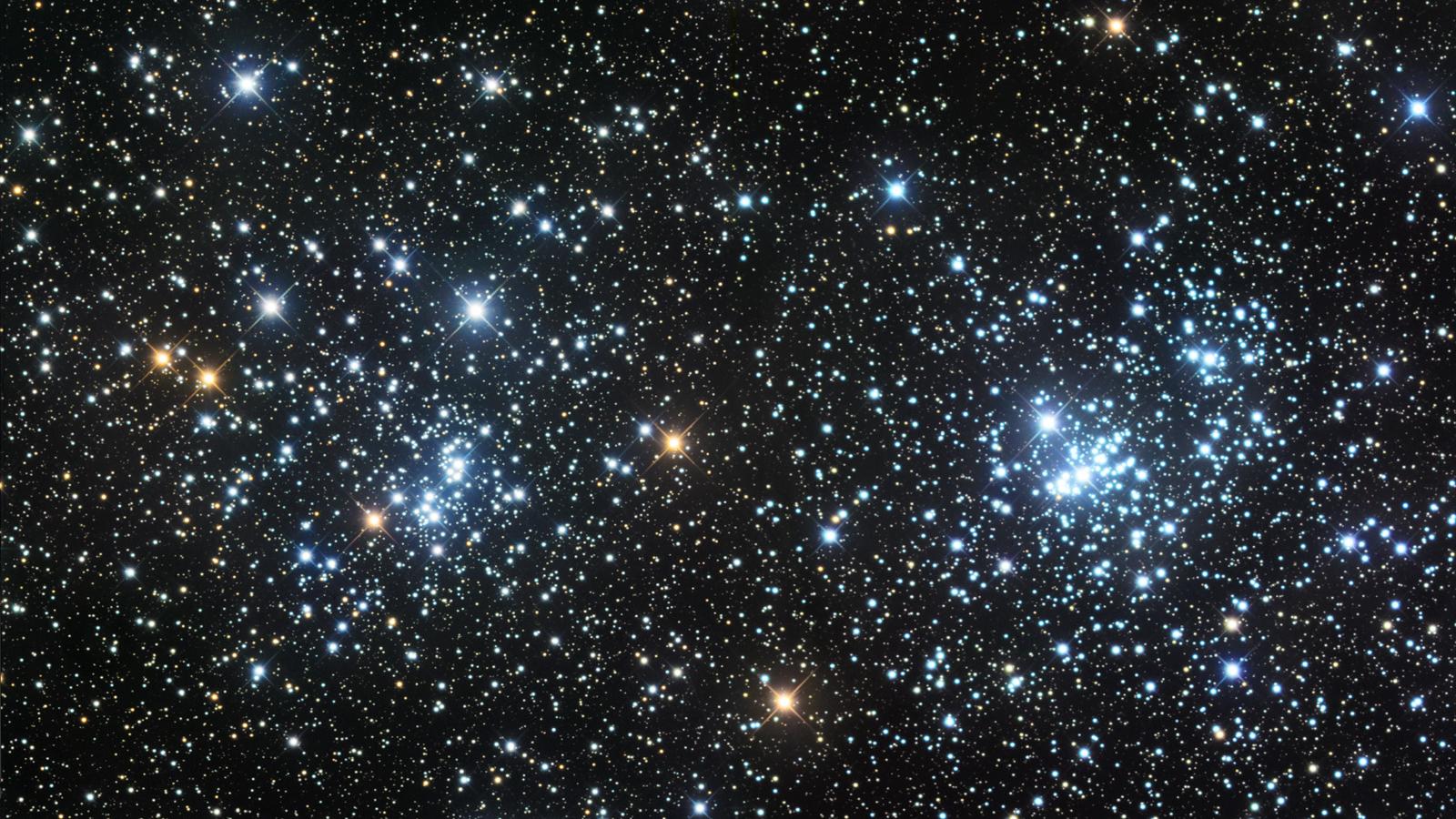
Only Candles Only Stars


Stars

Only Candles Only Stars

Let there be lights (מארת) in the vault of the heavens … and they shall be lights (מאורת) in the vault of the heavens (Genesis 1:14-16)

All of the lights
On the candles, trees, houses
Beneficial artifice
The best we can do.
Even the stars
Awakening guiding
Are incomplete.

The light that eludes
In the dark cold of winter
Hiding in plain sight.