Bob Schwartz

Tag: Hanukkah

The Hanukkah Guest: A Story from Rabbi Nachman of Bratslav

“Now, when you bring your thoughts to Paradise, you are there, on that holy mountain. But when your thoughts return to this world, you will find yourself here once again.”

The Hanukkah Guest, a story from Reb Nachman of Bratslav, retold by Howard Schwartz in A Palace of Pearls:

On the first night of Hanukkah, a poor man, who lived alone, chanted the Hanukkah blessings and lit the Hanukkah candle. He gazed at the candle for a long moment, and then there was a knock at the door. When he opened it, he saw a stranger standing there, and he invited him in. They began to discuss things, as people do, and the guest asked the man how he supported himself. The man explained that he spent his days studying Torah, and that he was supported by others, and didn’t have an income of his own. After a while, their talk became more intimate, and the man told the guest that he was striving to reach a higher level of holiness. The guest suggested that they study Torah together. And when the man discovered how profound were the guest’s insights, he started to wonder if he were a human being or an angel. He began to address the guest as Rabbi.

Time flew by, and the man felt as if he had learned more in that one night than in all the other years he had studied. All at once the guest said that he had to leave, and the man asked him how far he should accompany him. The guest replied, “Past the door.” So the man followed the guest out the door, and the guest embraced him, as if to say goodbye, but then he began to fly, with the man clinging to him. The man was shivering, and when the guest saw this, he gave him a garment that not only warmed him, but, as soon as he put it on, he found himself back in his house, seated at the table, enjoying a fine meal. At the same time, he saw that he was flying.

The guest brought him to a valley between two mountains. There he found a book with illustrations of vessels, and inside the vessels there were letters. And the man understood that with those letters it was possible to create new vessels. The man was taken with a powerful desire to study that book. But when he looked up for an instant, he found himself back in his house. Then, when he turned back to the book, he found himself in the valley once more. The guest, whoever he was, was gone. The man, feeling confident, decided to climb up the mountain. When he reached the summit, he saw a golden tree with golden branches. From the branches hung vessels like those illustrated in the book. The man wanted to pick one of those vessels, as one picks fruit from a tree, but as soon as he reached for one, he found himself back in his house, and there was a knock at the door. He opened the door and saw it was the mysterious guest, and he pleaded with him to come in. The guest replied, “I don’t have time, for I am on my way to you.” The man was perplexed, and asked the guest to explain what he meant. The guest said, “When you agreed to accompany me beyond the door, I gave your neshamah, your highest earthly soul, a garment from Paradise. Now, when you bring your thoughts to Paradise, you are there, on that holy mountain. But when your thoughts return to this world, you will find yourself here once again.” And that is how it remained for the rest of that man’s life, and the story has still not come to an end.

What does a chicken emoji have to do with Hanukkah?

I don’t generally use emojis. But I sent a Hanukkah text greeting to a loved one who does use emojis and I decided to lean in.

When I searched emojis for Hanukkah, I got the usual suspects: menorah, Jewish star, wrapped gift box, etc.

And a chicken.

Is there something I don’t know about Hanukkah? Potato latkes are a traditional food, and you can’t make latkes without eggs, and you can’t have eggs without chickens or some other egg-laying animal.

Maybe that’s it. Or maybe something more esoteric that the keyboard developers know about.

I guess I will declare this chicken

the unofficial mascot of Hanukkah. At least for now.

The First Command: Let there be light.

The First Commandment in the Bible is not the First Command in the Bible. That is found in the first few lines at Genesis 1:3:

יְהִ֣י א֑וֹר
Y’hi or
Let there be light

In a sense, that is more essential than any of the later commandments, whether 10 or 613 or any number in between.

If our actions, words or thoughts are maintaining or increasing the light, we are doing well.

If our actions, words or thoughts are decreasing or putting out the light, we are not doing as well.

Even though the First Command is not literally aimed at us, as the commandments are, it is obvious that we can be charged with the responsibility.

This is a Season of Lights. Y’hi or.

Woody Guthrie + Hanukkah = A wondrous musical miracle!

The story of the Hanukkah songs written by Woody Guthrie (1912-1967) is a wondrous musical miracle.

In more than 3,000 songs, including the true American national anthem This Land Is Your Land, Woody Guthrie chronicled the struggles of working-class Americans and championed labor rights, social justice, and resistance to oppression.

Then there is the story of Woody Guthrie and Hanukkah:


In 1942, Woody Guthrie moved to Brooklyn and married Marjorie Mazia, a Jewish dancer with the Martha Graham Dance Company. They lived across from Marjorie’s mother, Aliza Greenblatt, a respected Yiddish poet and activist. Through his close relationship with Greenblatt, Guthrie became acquainted with Judaism, studying Jewish texts and history and sharing songs with his mother-in-law.

In the late 1940s (primarily 1949-early 1950s), Guthrie wrote several Hanukkah songs, some for local Brooklyn community centers where he had bookings for children’s Hanukkah parties, and some for his own children. He identified the Jewish struggle with that of displaced Oklahomans and other oppressed peoples, filling notebooks with lyrics about Hanukkah, Jewish history, and spiritual life.

The remarkable twist came decades later. After Guthrie’s death in 1967, these songs sat forgotten in his archives for almost 30 years until his daughter Nora discovered the Hanukkah lyrics around 1998. Nora asked the Klezmatics, a Grammy-winning klezmer band, to compose new music for her father’s unpublished lyrics. The result was the 2006 album “Woody Guthrie’s Happy Joyous Hanukkah,” which blended klezmer with American folk and bluegrass.


If you don’t know much or enough about Woody Guthrie, Hanukkah or klezmer music, this is the perfect opportunity to listen and learn.

Giving light away

Oh wondrous light, light, light, lighter
You give all your brightness away and it only makes you brighter
You Get Brighter, The Incredible String Band

T’is the season of lights, whatever your tradition or belief. Give it away.

The new Hanukkah dilemma

The old Hanukkah dilemma for Jews was the coincidence of the holiday with the increasingly overwhelming Christian holiday of Christmas. The dilemma isn’t entirely solved, though in general we treat them as two of the December celebrations, though they have profound distinctions. There is universal agreement that Hanukkah is a minor Jewish holiday, just as there is universal agreement that Christmas is one of the two super-major Christian holidays. But inspiring winter lights, gifts, celebrations and fun are also universally appreciated.

The new Hanukkah dilemma is not as simple or simply solved. The historical holiday is based on a small band of Jewish guerillas defying the odds in defeating an oppressive empire. The storied miracle of the oil lamp is paired with a real military victory. Unfortunately, the Jewish dynasty that took over followed the well-known path of becoming oppressors themselves. If The Who created the rock opera, meet the new boss, same as the old boss.

The war in Gaza is not the first example of Israeli aggression in the name of security. It is not the first example in world history of aggression in the name of religious hegemony. Whether Israel or any other country or religion, whether now or any other era, questions arise about how the initiatives are conducted, what suffering is inflicted, and what happens next.

In the case of Hanukkah, the approach has been to stress the story of a bright miracle, including the immediate outcome of Jewish independence, but mostly look away from the darker elements of the history. In a certain light, that is exactly how the war in Gaza is being approached. By some Jews, but not all. Not by me. It’s a dilemma.

Our menorah, a box of candles, and a box of matches stand ready for Sunday evening. Will it matter if I don’t light the candles? Like the proverbial falling tree unseen in the forest, is it a hollow protest with no effect? If I do light the candles, will my wish for peace, repair and a new Jewish and Israeli ethos mean anything?

I guess that more light is better than less or none.

Some December dates to remember

December is full of important holidays and dates. Following are some I will be featuring in the month ahead. In the meantime, feel free to learn more about them—even the ones you are familiar with.


December 8
Bodhi Day is the Buddhist holiday that commemorates the day that Gautama Buddha is said to have attained enlightenment.

December 8
Anniversary of the death of John Lennon (1940-1980)

December 10
Anniversary of the death of Thomas Merton (1915-1968)

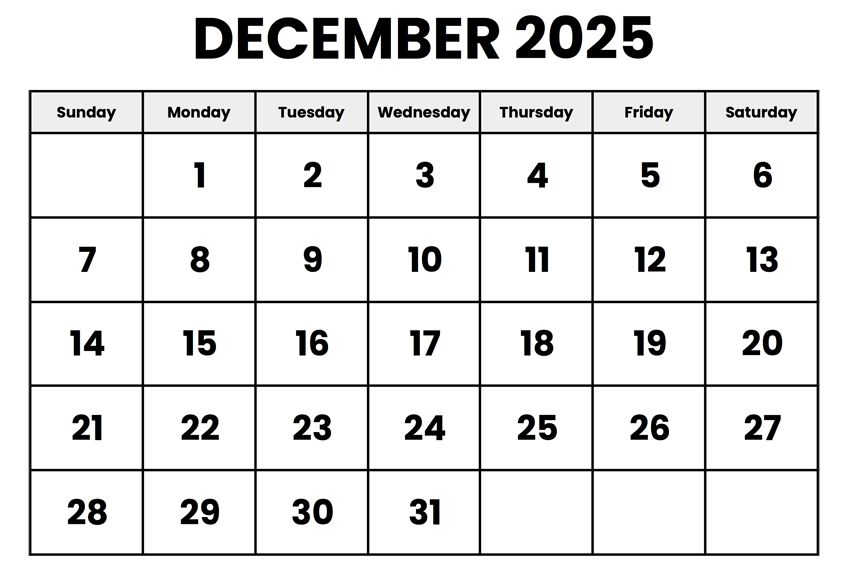
December 15-December 22, 2025
Hanukkah

December 25
Christmas


Happy Bright Friday

Please pull back for a moment from thinking about what bargains we might find on Black Friday.

Black Friday used to be the one day after Thanksgiving, but is now an entire season of deals that seems to begin in October.

If you step back from bargain hunting, you might wonder why it is called “Black Friday”.


The term “Black Friday” has an interesting history. While widespread retail sales on this day began in the mid-20th century, the name itself has contested origins:
The most commonly cited explanation is that it refers to retailers moving from being “in the red” (operating at a loss) to being “in the black” (turning a profit) due to the surge in sales. However, this explanation appears to be a later rebranding.

The term actually originated in Philadelphia in the 1960s, where police used it to describe the chaos of heavy pedestrian and vehicle traffic that flooded the city the day after Thanksgiving. The crowds came for the Army-Navy football game held on Saturday and began their holiday shopping on Friday. Police had to work long shifts dealing with traffic and crowds, which they found unpleasant—hence the “black” descriptor.

Retailers initially disliked the negative connotation and tried to rebrand it as “Big Friday,” but the name Black Friday stuck. By the 1980s, retailers embraced the term, reframing it with the more positive “red to black” accounting narrative.


Just for a moment—the deals will wait—let’s change colors. Yesterday, at Thanksgiving, we may have been able to share company and a table with family and friends. In the coming weeks, we will be celebrating holidays that have light as a theme.

So let’s set aside the black and feature the light. This, the day after Thanksgiving, is Bright Friday. Are there light Bright Friday things waiting to be grabbed? Sure, if you know what they are and can find them.

Happy Bright Friday!

© 2025 Bob Schwartz

Reimagining Hanukkah: More light tonight!

Hanukkah, which begins on the evening of December 25, is known as the Festival of Lights. It might also be called the Festival of Light—more light.

Each night the light of the candles increases (but see note below). Just as each day after the winter solstice the sunlight increases.

If you light the candles to celebrate the storied rededication of the Temple, you might also recognize the miracle of each of us bringing more light into the world—one candle at a time.

So this Hanukkah, you might add this to the blessings:

יותר אור הלילה
yoter or halila
More light tonight!

Happy Hanukkkah!

Notes:

1

The Talmud (Shabbat 21b:5) reports that there was disagreement among the rabinnic schools about whether to add or subtract candles each night:

“Beit Shammai and Beit Hillel disagree as to the nature of that adjustment. Beit Shammai say: On the first day one kindles eight lights and, from there on, gradually decreases the number of lights until, on the last day of Hanukkah, he kindles one light. And Beit Hillel say: On the first day one kindles one light, and from there on, gradually increases the number of lights until, on the last day, he kindles eight lights.”

Even though the School of Hillel won the argument, you should feel free to follow the School of Shammai. If anyone complains, just tell them you read it in the Talmud.

2

As for the freedom to reimagine Hanukkah, the following is from an essay on Hanukkah in the Apocrypha by Rabbi Aaron D. Panken, of blessed memory:

“The eight-day Jewish holiday of Hanukkah (“Dedication” or “Initiation”) is remarkable in a number of ways. According to the Jewish conception of scripture, it is decidedly postbiblical, the earliest significant holiday with no basis in the Tanakh. It is unambiguously political, commemorating both a staunch uprising against a Syrian-Greek tyrant and a spirited attack on those Jews sympathetic to the Greek way of life. It is unrelentingly religious, valorizing the struggles of priestly leaders who protect a particular interpretation of their faith at all costs under the grimmest of circumstances. It is also unceasingly interpreted, as scholars, communal leaders, and practicing Jews have applied many innovative new frames (including economic, territorial, military, consumerist, and Zionist) to the holiday, allowing it to evolve with the times while retaining its relevance and remaining one of the most widely observed Jewish celebrations.”

Ecclesiastes/Kohelet for Winter Solstice, Christmas and Hanukkah

Ben Shahn

Today is the Winter Solstice in the Northern Hemisphere, when daylight starts growing. (Summer Solstice elsewhere, where daylight begins waning.)

Next week, Christmas and Hanukkah coincide, with the first candle of Hanukkah on Christmas night.

Whether your view is astronomical, with earth revolving round the sun, spiritual, with growing light, or religious, with a Messiah born or a temple retaken and rededicated, it is a special time.

Ecclesiastes (known as Kohelet in the Hebrew Bible) has grown into my favorite biblical book. Its view is consistent with all of those perspectives, whether a planet circling, darkness waning, children born, sacred spaces renewed.

We learn from Kohelet what we may not be taught during the holidays, but which the solstice demonstrates: All things pass.

This does not suggest that we restrain joy, our joy or especially the joy we bring to others. We can be the sun of the winter solstice, brighter day by day. We can be the candles, brighter every day, one to eight.

No book of the Bible has been more mysterious than Kohelet, the mystery being, with its somewhat existential view, why the compilers of the Hebrew Bible included it at all. The solstice tells us, as does the book itself, again and again.

All things pass, and in that passing, our role is to live. Seasons come and go, holidays come and go, we come and go.

Here, on Winter Solstice, with Christmas, Hanukkah and many other holidays for many people to come, we live.


In everything that happens below the sun.
Go eat your bread and enjoy. Drink your wine
Happily. God long ago approved your acts.
Let your clothes always be freshly washed.
Keep your hair scented with good oil.
Enjoy life with the woman you love
During all the shining days you are given
Below the sun. Your unique purpose is
To bellow a good life below the sun.
Use all your powers while you are here.
Ecclesiastes 9:4-10

Willis Barnstone, Poets of the Bible