Bob Schwartz

Tag: Hamlet

Day of the Dead/Dia de los Muertos and skulls
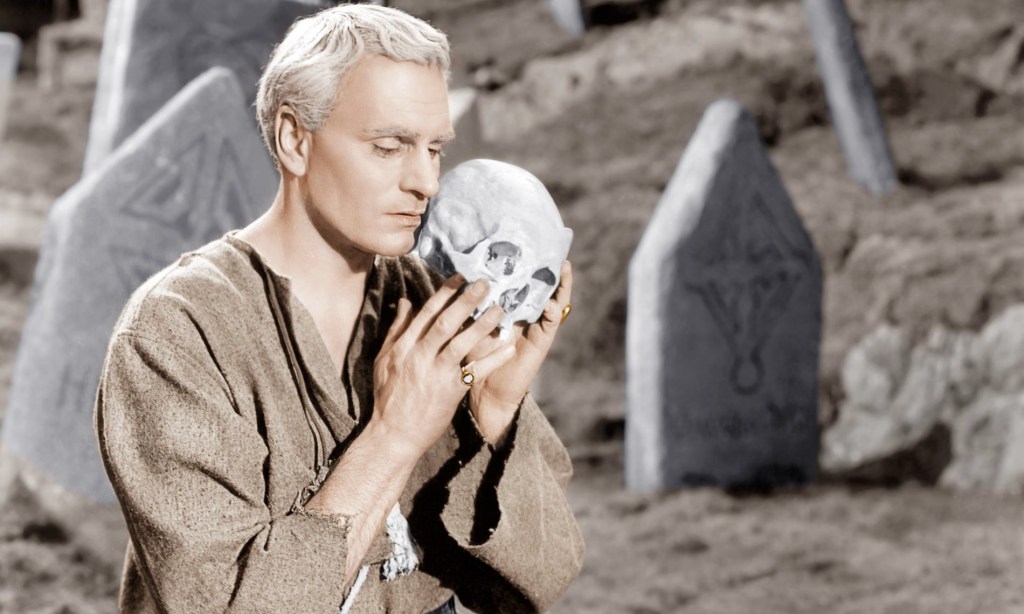
Alas poor Yorick! I knew him…”
Hamlet, Act 5, Scene 1

Today, November 1, is Day of the Dead/Dia de los Muertos in Mexico and elsewhere. (It is also All Saints’ Day on many Christian calendars.)

Above is a famous skull scene from Hamlet. Shakespeare was all about everything, including death.

Here in Hamlet, Mercutio is stabbed, but still finds a way to pun his way out:

Ask for me tomorrow, and you shall find me a grave man.
Hamlet, Act 3, scene 1

Dia de los Muertos has many traditions associated with remembering and honoring those in our hearts who have died before us. It is also a way of remembering that we too will die and be somebody’s memory. While thinking about that may sadden and scare us, it is not a dark day.

Skulls/calaveras are a main motif of Dia de los Muertos. Faces are painted as skulls. Candy sugar skulls are enjoyed.
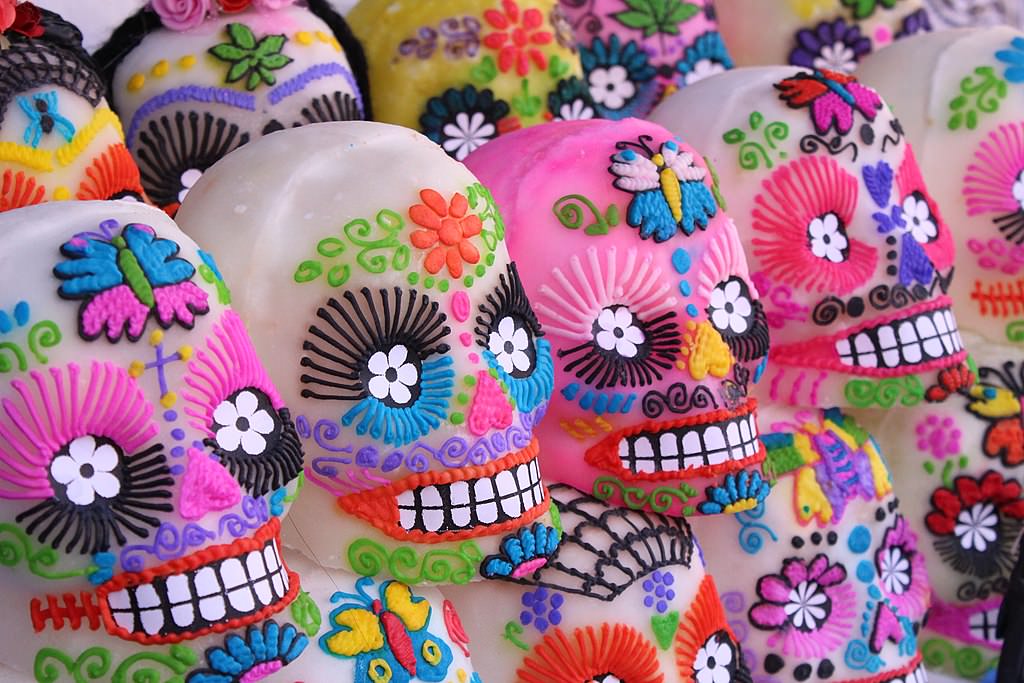
A late tradition from the 19th century is the calavera literaria. These are humorous or sarcastic writings about someone who is still alive as if they were dead. What you might hear at a roast or wake.

Thinking about death on this Day of the Dead or any day:

“Cultivate the thought, “The time of my death is unknown, and were it to come suddenly, my sole recourse would be this practice….In this way, make sure you fortify your mind so that no matter when you die, you do so joyfully and with palpable warmth within.”
Tibetan Buddhist master Sé Chilbu Chökyi Gyaltsen (1121-1189)

The Hamlet Voters

I am not Prince Hamlet, nor was meant to be;
Am an attendant lord, one that will do
To swell a progress, start a scene or two,
Advise the prince; no doubt, an easy tool,
Deferential, glad to be of use,
Politic, cautious, and meticulous;
Full of high sentence, but a bit obtuse;
At times, indeed, almost ridiculous—
Almost, at times, the Fool.

T.S. Eliot
The Love Song of J. Alfred Prufrock

It is reported that there are voters who are still undecided in this Presidential campaign.

Assuming they actually exist, they are the most simultaneously sought after and puzzling population in this country.

It’s easy to see why they are sought after with such a close election looming.

The puzzlement is slightly more complex. The questions to them roughly run like this: Have you been paying any attention at all to the candidates and the issues? Just how confused are you?

With all due respect and affection for fellow citizens, if you watched any of the focus groups of undecided voters that the news media have assembled, the answers may be: no, and just a bit.

But there is another explanation. The undecided voters are suffering from a Hamlet-like affliction. They are Hamlet voters.

Hamlet, you recall, found himself in the middle of overwhelming circumstances—his uncle had murdered his father, married his mother, and taken over the kingdom. Trying to right the wrong and unseat the chief of state, Hamlet at first feigned madness, and then, as best we can tell, really did go mad. One of his characteristics was an inability to decide and act: his speech considering suicide, “To be or not to be”, is one of the most famous in world literature.

These undecided voters seem to be equally confused and frozen, though their circumstances are not near as dire or existential. There is an important question about who will be the chief of state, but that’s where the similarity should end. Even Hamlet managed to make up his mind, though his action did result in just about everybody dying, including himself.

No one is asking undecided voters to be involved in anything like that. It’s time. Learn what you can, think as best you can. With his dying breath, Hamlet appointed Prince Fortinbras the new President of Denmark. You don’t have to go that far. No sword fights, no poison. All you have to do is decide and vote.