Bob Schwartz

Tag: guns

What Sorts of Weapons Might George Zimmerman Now Carry?

Bandolier
Robert Zimmerman says that his brother George will now be “looking over his shoulder.” There has been plenty of angry and overheated rhetoric aimed at George Zimmerman in the wake of the not guilty verdict in the case of his killing Trayvon Martin. Whether or not he needs to be in fear of his safety and life, that is something he is going to have to reasonably decide—a decision he has experience with.

In case he does decide he needs extra protection, Florida statute gives him lots of options:

Title XLVI, Chapter 790
WEAPONS AND FIREARMS

790.06 License to carry concealed weapon or firearm.—
(1) The Department of Agriculture and Consumer Services is authorized to issue licenses to carry concealed weapons or concealed firearms to persons qualified as provided in this section. Each such license must bear a color photograph of the licensee. For the purposes of this section, concealed weapons or concealed firearms are defined as a handgun, electronic weapon or device, tear gas gun, knife, or billie, but the term does not include a machine gun as defined in s. 790.001(9). (emphasis added)

So now that George has gotten his handgun back, he doesn’t have to stop there. He is free to add a bigger handgun, a Taser, a tear gas gun, a knife or billie club—or all of them. This is Florida, right on the edge of the subtropics, so it is almost literally a jungle out there. If he chooses not to stay in Florida, which he might deem a good idea, he may feel more comfortable out West, where there are states with conceal carry laws even more accepting of the Zimmerman philosophy, and where standing your ground while armed to the teeth is historically a way of life on the frontier. He might begin a new career writing cowboy fiction, where phrases like “you got me!” would not be out of place.

That was the 19th century, of course, and this is the 21st, but unfortunately for the sometimes glacial advance of civilization, some things never seem to change. If anything, they can look like they are moving backward.

Forget the Senators, Love the Mayors

Mayor Annise Parker

If you are one of those angered and ashamed of members of the U.S. Senate today, you are not alone.

Forty-six U.S. Senators voted against the Manchin Amendment to the Safe Communities, Safe Schools Act of 2013. This amendment to the gun violence bill was crafted by Senator Joe Manchin (D-West Virginia) and Senator Pat Toomey (R-Pennsylvania) to be the mildest, least objectionable expansion of background checks conceivable. They tried.

The amendment was rejected. The vote was 54 Yeas to 46 Nays, less than the 60 votes needed under the Senate rules. All the other amendments attempting to enhance regulation also failed.

Three Republicans voted for the amendment, including Toomey, Susan Collins of Maine and John McCain of Arizona. McCain deserves special mention. From the year 2000 on, including the 2008 Presidential election, his “maverick” and “straight talk” credentials have been an on-again, off-again affair. At least for this amendment (though he did not support any other regulation), he took a stand.

Here are the Senators who voted against any expansion of background checks, no matter how small:

Alexander (R-TN)
Ayotte (R-NH)
Barrasso (R-WY)
Baucus (D-MT)
Begich (D-AK)
Blunt (R-MO)
Boozman (R-AR)
Burr (R-NC)
Chambliss (R-GA)
Coats (R-IN)
Coburn (R-OK)
Cochran (R-MS)
Corker (R-TN)
Cornyn (R-TX)
Crapo (R-ID)
Cruz (R-TX)
Enzi (R-WY)
Fischer (R-NE)
Flake (R-AZ)
Graham (R-SC)
Grassley (R-IA)
Hatch (R-UT)
Heitkamp (D-ND)
Heller (R-NV)
Hoeven (R-ND)
Inhofe (R-OK)
Isakson (R-GA)
Johanns (R-NE)
Johnson (R-WI)
Lee (R-UT)
McConnell (R-KY)
Moran (R-KS)
Murkowski (R-AK)
Paul (R-KY)
Portman (R-OH)
Pryor (D-AR)
Reid (D-NV)
Risch (R-ID)
Roberts (R-KS)
Rubio (R-FL)
Scott (R-SC)
Sessions (R-AL)
Shelby (R-AL)
Thune (R-SD)
Vitter (R-LA)
Wicker (R-MS)

For a change, we have a post-partisan moment, where some Democrats and Republicans can agree on something: the status quo of guns in America is just fine.

Forget the Senators. Whether they believe it or not, a political steamroller is on its way that, no matter how they calculate home state interests or expect the NRA to protect them, will flatten them like Wile E. Coyote in a Roadrunner cartoon. Too wily by half.

Let’s talk about mayors, the politicians who can’t distance themselves from the harsh realities of American life, politicians who, unlike others, have to actually work for a living and try, as best they can, to do a little something to make things better.

Mayors Against Illegal Guns is a coalition of over 900 mayors from big cities and small towns across the country:

As mayors, our highest responsibility is to enforce the law and to protect the people we serve. One of the most difficult challenges we face in meeting this responsibility is preventing criminals from illegally obtaining guns and using them. The issue of illegal guns is not conservative or liberal; it is an issue of law and order — and life or death.…

[W]hat binds us together is a determination to fight crime, and a belief that we can do more to stop criminals from getting guns while also protecting the rights of citizens to freely own them.  We have seen how the polarizing rhetoric of gun politics on all sides only obscures the tragic reality we see every day on our streets: violent criminals with easy access to illegal guns.

Above is a photo of Mayor Annise Parker of Houston. She is shown as a representative mayor against illegal guns because Houston is also the home of Senator Ted Cruz, one of the most vocal opponents of any gun legislation.

Maybe what we need to do is replace these Senators at the next available opportunity with almost any of these mayors. These mayors aren’t all angels, but they don’t have time to be blowhards or ideological purists. They know how to get the job done, know what it is to tackle difficult issues, and know what it’s like to do the dirty work of cleaning up messes—and most of all figuring out how to avoid some of those messes in the first place. They could do better, in part because nobody could do worse.

Gun Violence Legislation

HenQ: Why is there a picture of a chicken on this post about gun violence legislation?

A: Because a small number of U.S. Senators have decided that the best way to approach the very important issue of legislation to curb gun violence in America is to block a vote on any legislation.

Q: Why is this text so big?

A: Because there have been previous posts about gun violence and about political courage, and after saying the same thing multiple times, it can be therapeutic, if not any more effective, to say the same thing louder. Also, if any of those Senators are not wearing their glasses, they will still be able to see the chicken and read this message about the historic lack of political courage. (Idea borrowed from John Hancock.)

Q: Isn’t this childish and unbecoming adult and reasoned debate?

A: Which? The use of a chicken post? Or the failure of well-paid and trusted public servants to stand up and do their job?

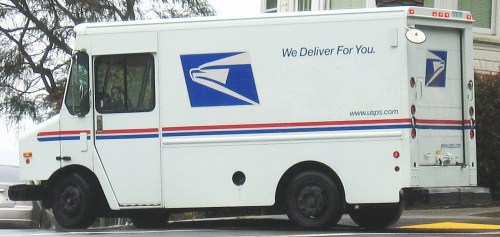
Arm Postal Workers

United States Postal Service
It seems that the National Rifle Association and an incongruously growing number of fearful politicians are currently lining up behind a proposal to train and arm teachers to fight the threat of gun violence. In the view of some, this makes more sense than requiring universal background checks and limiting assault weapons and oversized ammunition magazines.

The scenario is that when psychopaths like Adam Lanza try to force their way into Sandy Hook School in Newtown, Connecticut, they will be shocked and awed to find themselves facing a militia of teachers, a special forces unit capable of both taking out terrorists and teaching reading to six-year-olds.

Good plan. But it doesn’t go far enough.

It is time to arm postal workers.

We know, to begin, that postal workers have faced their own sort of psychopathic terror over the years. Not often, and certainly not often enough to have earned the undeserved meme “going postal.” But on the principle that you can never have too many guns in the hands of good guys and gals, it would be a welcome preventative.

On top of that, postal workers walking their delivery routes regularly navigate the mean streets of America, just as our police do. Why not, then, train, arm and deputize these postal workers as sworn peace officers? This has many benefits: the streets will be safer, and the Postal Service will be playing a vital role—a role that should fend off any questions about their budgetary problems, especially with changes in the use of mail.

Part of being a good American is coming up with good ideas to keep our country safe—especially ideas that increase the number of guns and gun owners. Saving the Postal Service is just a bonus. You’re welcome, NRA.

Why Do Some Republicans and Democrats Hate Voting?

Profiles in Courage
With the news that some Republican Senators (including presidential hopefuls like Rand Paul and Marco Rubio)  plan to filibuster new gun control legislation, thus avoiding any votes on the proposed restrictions, it is now clear: Some current Republicans—and some Democrats—hate voting.

The evidence is mounting. During the 2012 elections, there were numerous instances of Republican legislatures and officials adding voter requirements, reducing voting hours, etc., which made it more difficult or frustrating to vote. The intent was to suppress Democratic votes; the evidence of that might be considered circumstantial, except that Republican strategists, arrogantly or stupidly, told us that it was their intention.

As was pointed out during the election, voter suppression has a long and inglorious history in America. Suppression of black voting was an art form in the South, though nominally the party lines were seemingly different. At the depth of Jim Crow, the South was Democratic. (In modern terms, though, these were DINOs—Democrats in Name Only. These Southern Democrats were different, and after living for a while as Dixiecrats, they underwent political reassignment surgery and became Republicans.)

The latest manifestation of this antipathy to voting is in the U.S. Senate, legendary and self-proclaimed “greatest deliberative body in the world.” (Be respectful; stop laughing.) Filibusters are an integral part of the Senate. When a Senator or group of them wanted to prevent a vote, he or they would have to hold the floor, and talk until they dropped or had to use the bathroom, or until the bill’s proponents gave up—as seen in the movies, most famously Mr. Smith Goes to Washington, and as seen in the attempts to block civil rights legislation in the 1960s. That all changed with a new Senate rule, promulgated a few years ago by Democratic Senators, allowing Senators to block a vote by simply saying that there would be no vote. There is no vote unless 60 Senators agree. And no Senator—setting aside Rand Paul’s recent talking filibuster stunt—needs to even stand up and talk, or even appear on the floor at all.

To understand why it is so important not to vote, we have the cautionary tale of some high profile Democrats. Congressional votes are not just a problem at the next election; they can come back to haunt you years later. In 1996, many Democrats voted for the Defense of Marriage Act (DOMA), and a Democratic President, Bill Clinton, signed it. DOMA came before the Supreme Court this week, which served as an uncomfortable reminder to those Democrats that times—and the party line—have changed. The briefs in the case included a mea culpa from some of those legislators, and just last week, Hillary Clinton released a strangely dark and dour video confessing her evolution on the question of marriage equality (Bill had previously apologized).

Even worse problems dogged Democrats who in 2003 enthusiastically voted for the Iraq War. Besides John Kerry’s “for it before I was against it” election year explanation, the war’s anniversary last week left some of them in a “what was I thinking?” mode.

What they were thinking during the Iraq War vote, and during the DOMA vote, was: I am a person of conscience, but that conscience will do no good if I lose this seat, so I have to ask just how this will play back home. The answer for both DOMA and the Iraq War, under the circumstances of the moment, was: not very favorably.

The lesson for some: Whether it is voting at the polls or voting in the Senate, sometimes discretion is the better part of valor, and sometimes less is more, and sometimes less voting is just better.

In the case of the ballot box, trying to suppress voting is un-American. In the case of standing up and being counted in the Senate, not voting is a dereliction of duty since, as a Senator, that’s your job.

On the other hand, those who fight and run away live to fight another day. That’s how the saying goes. The primary part of that, though, is that you at least fight in the first place. If all you do is run away by, say, not voting, it’s all about survival, and not about conscience and accountability. You may win an election, you may even get to be President. But if you’re thinking about being in the next volume of Profiles in Courage, don’t bother looking for your name.

Plows. Guns.

Plow - Dorothea Lange
Above is one of the photos taken by Dorothea Lange for the Farm Services Administration during the Depression. Shot in 1937, it is captioned “The cotton sharecropper’s unit is one mule and the land he can cultivate with a one-horse plow. Greene County, Georgia.”

The plow is a thing that made America what it is. Whether pushed by hand, or pulled by an animal or an engine, it embodies the hard work that helps bring food from the earth to feed a family or a nation, especially during hard times.

The gun is also a thing that made America what it is. Unlike the plow, about which there is little controversy, guns have played an equivocal role, sometimes for good, sometimes not.

There is no constitutional amendment about plows.

There is no biblical passage about guns.

There is, as is often pointed out, a very famous biblical verse about plows. And about pruning hooks. And about their value relative to swords and spears.

Isaiah seems certain that plows and pruning hooks are good. He seems less enthusiastic about the downside of swords, spears and, presumably, guns.

Nothing absolute or definitive, no unconditional endorsement of pacifism or non-violence, unless maybe you are someone who takes the Bible seriously or even literally. Just a little something to think about.

They will beat their swords into plowshares
and their spears into pruning hooks.
Nation will not take up sword against nation,
nor will they train for war anymore.
Isaiah 2:4

God Does Not Like Guns

William Strutt - Peace
God does not like guns. God is also not crazy about nuclear weapons, and about all the easy to use and widely available tools of destruction in between.

This isn’t obvious. As scholars of religion and violence point out, the Old Testament is a compendium of both divine and divine-inspired and endorsed human mayhem. In the continuing battle against moral evil, which often has a religious component or context, the imperative to take up arms goes unquestioned among some, but not all. Finally, an entire eschatological theology is based on a battle that ends and transcends history as we know it, leading once and for all to the heaven on earth we have all been awaiting.

Let us pull back to the now and here, particularly last night in Newtown, Connecticut, where clergy of all faiths talked about God, if not for God.

The events in Newtown opened up a door to a new world. It was not Armageddon in an epic sense, but it was the end of the world for some, and everyone felt that. The door is a passage to the place where we leave the theology of the Second Amendment behind, where we stop listening to the priests of the National Rifle Association and their interpretations of what the founding gods meant.

This is the time to extend last night in Newtown to every congregation in America. There, leaders will explain to congregants whether God loves guns, and particularly whether God loves guns in such massive quantities and destructiveness.

The leaders can then cite Isaiah 11, and explain how “a child will lead them” is not merely some hermeneutic puzzle pointing to a messiah. Instead, it is reflected in the instruction by Jesus: “Let the little children come to me, and do not stop them; for it is to such as these that the kingdom of heaven belongs.”

The leaders will close by acknowledging that the faithful congregants will hear and themselves espouse practical arguments that stand in the way. Leaders will then patiently explain that all faith is ultimately impractical and heedless of impossibility. God does not like guns, but as his instruments, we are bound to do the worldly work of reducing their number and universal availability. If we claim to be faithful, that is more than just a good deed. It is a divine mission. God, it appears, will be more disappointed than ever if we fail.

If Not Now When: Today Is the Day to Talk About Guns

National Rifle Association - Newtown
In the immediate hours after the Newtown, Connecticut shootings, Presidential spokesman Jay Carney was asked whether this would move the President on the issue of gun control. “Today is not the day to talk about guns,” he replied. The focus, he said, should be on the victims and their families.

A few massacres ago, around the time of the Colorado movie theatre shootings, that sounded better. The boldness of those activists wanting to instantly seize the moment and make a point about gun control seemed insensitive. There would be time enough, soon, to talk about public policy.

“Today is not the day,” doesn’t sound so good or so responsible any more. Whether or not we go for years without another incident like this, or whether, as is more likely, it is a matter of a few weeks or months, the day to talk is today.

The National Rifle Association and the related Second Amendment groups are the most powerful and successful lobby in modern America. Grover Norquist is a pretender, thinking that his threats of losing elections have changed America. As much as Americans hate taxes, many love having their guns, and the NRA has helped those Americans get them, keep them and be allowed to use them.

The NRA’s biggest, though not only, problem is that they have constitutional paranoia. They perceive even the slightest hint of regulation as the first step on a slippery slope. That paranoia has mutated and spread to politicians of almost all types. Except that those politicians aren’t pathologically afraid of guns being taken away; they are pathologically afraid of losing their jobs.

Fortunately for him, the President just got his contract renewed for four years. Even if he has something to propose that won’t get the support of his own party, let alone Republicans, even if what he proposes will have trouble passing constitutional muster, that should not stop him, if he is the man of principle we believe him to be.

The dead can’t vote, and in the case of the children killed today at Sandy Hook Elementary School, they weren’t old enough anyway. So we have to speak for them and vote for them. Today is the day. President Obama, lead us and show us what to do.