Bob Schwartz

Tag: Government

Fire and Fury: Inside the Trump White House

Veteran journalist Michael Wolff’s Fire and Fury: Inside the Trump White House won’t be officially published until next week. Its revelations are already the biggest news story of the day, and will continue to be for a while. (Trump’s response to Steve Bannon’s incendiary quotes in the book is to say that after he fired Bannon, Bannon “lost his mind.”)

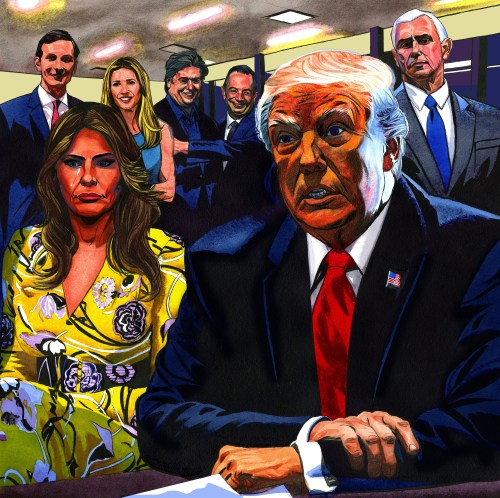
If you’d like to read extended excerpts before it is published, see New York Magazine. Plus, the magazine illustrations by Jeffrey Smith  are as extraordinarily dramatic as the content.

Umberto Eco: Ur-Fascism

Celebrated Italian author and scholar Umberto Eco (1932-2016)  published an article in 1995 entitled Ur-Fascism .

Eco grew up during the time of Mussolini. In the article, he jumps from memories of that experience to describe some varieties of fascism and other types of totalitarianism. Not all are well-defined fascism, he says, but he does identify the core characteristics of what he calls Ur-Fascism.

I think it is possible to outline a list of features that are typical of what I would like to call Ur-Fascism, or Eternal Fascism. These features cannot be organized into a system; many of them contradict each other, and are also typical of other kinds of despotism or fanaticism. But it is enough that one of them be present to allow fascism to coagulate around it.

Eco goes on to list 14 features of Ur-Fascism. This is the excerpted list; please read the article for an expanded explanation. And as you read it, please consider which of those features you might be seeing now.

1. The first feature of Ur-Fascism is the cult of tradition….As a consequence, there can be no advancement of learning.

2. Traditionalism implies the rejection of modernism….In this sense Ur-Fascism can be defined as irrationalism.

3. Irrationalism also depends on the cult of action for action’s sake. Action being beautiful in itself, it must be taken before, or without, any previous reflection.

4. No syncretistic faith can withstand analytical criticism. The critical spirit makes distinctions, and to distinguish is a sign of modernism.

5. Besides, disagreement is a sign of diversity. Ur-Fascism grows up and seeks for consensus by exploiting and exacerbating the natural fear of difference.

6. Ur-Fascism derives from individual or social frustration. That is why one of the most typical features of the historical fascism was the appeal to a frustrated middle class, a class suffering from an economic crisis or feelings of political humiliation, and frightened by the pressure of lower social groups.

7. To people who feel deprived of a clear social identity, Ur-Fascism says that their only privilege is the most common one, to be born in the same country. This is the origin of nationalism.

8. The followers must feel humiliated by the ostentatious wealth and force of their enemies….Thus, by a continuous shifting of rhetorical focus, the enemies are at the same time too strong and too weak.

9. For Ur-Fascism there is no struggle for life but, rather, life is lived for struggle.

10. Elitism is a typical aspect of any reactionary ideology, insofar as it is fundamentally aristocratic, and aristocratic and militaristic elitism cruelly implies contempt for the weak. Ur-Fascism can only advocate a popular elitism.

11. In such a perspective everybody is educated to become a hero. In every mythology the hero is an exceptional being, but in Ur-Fascist ideology, heroism is the norm.

12. Since both permanent war and heroism are difficult games to play, the Ur-Fascist transfers his will to power to sexual matters. This is the origin of machismo (which implies both disdain for women and intolerance and condemnation of nonstandard sexual habits, from chastity to homosexuality). Since even sex is a difficult game to play, the Ur-Fascist hero tends to play with weapons—doing so becomes an ersatz phallic exercise.

13. Ur-Fascism is based upon a selective populism, a qualitative populism, one might say. In a democracy, the citizens have individual rights, but the citizens in their entirety have a political impact only from a quantitative point of view—one follows the decisions of the majority. For Ur-Fascism, however, individuals as individuals have no rights, and the People is conceived as a quality, a monolithic entity expressing the Common Will. Since no large quantity of human beings can have a common will, the Leader pretends to be their interpreter….Because of its qualitative populism Ur-Fascism must be against “rotten” parliamentary governments.

14. Ur-Fascism speaks Newspeak.

Eco closes with this:

Ur-Fascism is still around us, sometimes in plainclothes. It would be so much easier, for us, if there appeared on the world scene somebody saying, “I want to reopen Auschwitz, I want the Black Shirts to parade again in the Italian squares.” Life is not that simple. Ur-Fascism can come back under the most innocent of disguises. Our duty is to uncover it and to point our finger at any of its new instances—every day, in every part of the world.

American Nazi Rally, Madison Square Garden

This post was drafted a month ago, but I decided that maybe I had been mentioning Nazi Germany too frequently. If you’ve read some of those earlier posts (here and here, for example), you see that I have never made an explicit connection between the current situation and that one.

Now President Obama has been bold enough to speak of this expressly:

“We have to tend to this garden of democracy or else things could fall apart quickly.…That’s what happened in Germany in the 1930s, which despite the democracy of the Weimar Republic and centuries of high-level cultural and scientific achievements, Adolph Hitler rose to dominate. Sixty million people died. . . .So, you’ve got to pay attention. And vote.”

Naturally, the reaction has been swift from Trump apologists—who already hate Obama—claiming that it is heinous to compare Trump to Hitler, and no such death of democracy is in the offing. On the contrary, they say, we are finally on our way to reviving our past glory.

The message in a democracy is inarguable: know your history, pay attention, and vote. Part of not knowing and not paying attention is the delusion that “it can’t happen here.”

Above is a picture of the American Nazi Rally at Madison Square Garden on February 20, 1939. It was a full house of 22,000 “patriots”, with a giant god-like image of George Washington on stage, thought of as the father of their White Christian America.

Those who tried to disrupt the Madison Square Garden rally were arrested. Which is worse: being silent knowing that something is horribly wrong, or not being believed—actually being arrested—when you speak up?


Age of Folly: America Abandons Its Democracy

A frivolous society can acquire dramatic significance only through what its frivolity destroys.
—Edith Wharton

I am tempted to include the entire Preface to Lewis Lapham’s Age of Folly in this post. Instead, I include excerpts and then encourage you to buy the ebook for just $2.99. As with all lucid insights into the current situation, it will not make you happier, but it will provide enlightening perspective.

The book is a collection of Latham’s essays, “essays arranged in order of their composition and stepping off on a march of folly with America’s 1991 invasion of Iraq—a reality TV show armed with self-glorifying high explosives and a nonsensical casus belli—and ending with Donald Trump’s 2016 presidential campaign, a self-glorifying photo-op bursting star-spangled bombast in air.”


Preface

A frivolous society can acquire dramatic significance only through what its frivolity destroys.
—Edith Wharton

It’s been six months since Donald Trump moved into the White House with his Twitter account, but I’m still talking to people unable or unwilling to believe he is president of the United States. Eager to bring late-breaking reports of Trump’s uncivil and unconstitutional behavior, they come bearing gifts of high-minded outrage and condescending mockery soon followed by variations on the question, How can such things be?

The short answer is Edith Wharton’s. A longer answer is the one spread across the pages of this book, essays arranged in order of their composition and stepping off on a march of folly with America’s 1991 invasion of Iraq—a reality TV show armed with self-glorifying high explosives and a nonsensical casus belli—and ending with Donald Trump’s 2016 presidential campaign, a self-glorifying photo-op bursting star-spangled bombast in air. Over the course of the twenty-five years from point A to point B, a weakened but still operational democracy gives way to a stupefied and dysfunctional plutocracy.

To regard Trump as an amazement beyond belief is to give him credit where none is due. He is undoubtedly a menace, but he isn’t a surprise. Product and mirror of an age distinguished by its extravagant displays of vanity and greed, Trump’s positioning of government as trivial pursuit is the way things are and have been in Washington and Wall Street for the last quarter of a century….

The camera doesn’t do democracy. Democracy is the holding of one’s fellow citizens in respectful regard not because they are beautiful or rich or famous, but because they are one’s fellow citizens and therefore worth the knowing what they say and do. The work is difficult and slow; too many words with too little action doesn’t move the merchandise. The cameras on the road with the biggest name on earth weren’t covering a play of ideas; they were attracted to the splendor and flash of money, to the romance of crime and the sweet decaying smell of overripe celebrity.

Because the camera sees but doesn’t think, it makes no meaningful distinction between a bubble bath in Las Vegas staffed by pretty girls and a bloodbath in Palmyra staffed by headless corpses. The return on both investments is the bankable flow of wish and dream drawn from the bottomless wells of human ignorance and fear, from the always rushing river of mankind’s limitless desire. It didn’t matter what Trump said or didn’t say, whether he was cute and pink or headless.

Trump pitched his campaign on the storyline the movie-going American electorate loves beyond all others—the one about the knight errant up against the system and the odds, the lonesome-pine hero in the trail-weary saddle riding into town to gun down the degenerate sheriff and rescue the God-fearing settlers, to set the crooked straight, restore civic virtue, distribute a fair share of the loot to the schoolteacher, the shepherd, and the store-keep.

It didn’t matter that Trump was a prosperous fool. He sold newspapers, boosted television ratings. He was maybe short on sense and sensibility, but he was long on market share. The infotainment media in all of its factions and instrumentations (CNN and the New York Times as well as Fox News and Rush Limbaugh’s dittoheads) recognized Trump as a preposterous clown and transparent fraud but nevertheless framed him in the gilt-edged cliché of the underdog outlaw—up there in lights with robber barons Rockefeller and Vanderbilt, gunslingers Eastwood and Stallone, Mafia dons Corleone and Soprano. The unifying and all-purpose product placement won the election for Trump, rewarded the media with a Rumpelstiltskin spinning straw into gold. Already in the first months of the primary season the numbers moving up in the opinion poll leaderboards encouraged Leslie Moonves, chief executive officer of CBS, to assure the network’s bankers at JPMorgan Chase that “Trump’s candidacy may not be good for America, but it’s damn good for CBS.”…

In office as president of the United States, Trump presents himself as signature endorsement of concentrated wealth, a camera-ready product placement promoting money as the hero with a thousand faces, all of them the face of Trump. Trump at the top of every hour on the networks and cable channels, on page one in every morning’s newspaper. Trump overruling the rule of law, under investigation for obstructing justice, withdrawing from the Paris climate accords, firing FBI director James Comey, ordering fifty-seven cruise missiles into Syria, dropping the Mother Of All Bombs on Afghanistan, signing executive orders lifting regulation of the oil, gas, coal, and banking industries. Trump embodying the Time magazine sales promotion of America, dominant power in the world, more dominant than any since Rome, reshaping norms and creating new realities, saying and doing whatever it takes to discredit government by the people, of the people, and for the people—to nullify it in theory and dispose of it in practice.

The self-glorifying opposition to Trump is as foolish as the man itself. The “Resistance” composed of outraged sensibilities unable or unwilling to believe that Trump is president of the United States—Hillary Clinton voters, Democratic Party nomenclatura and crowd-sourced Pussy Hats, NeverTrump reactionaries, Bernie or Bust revolutionaries, sit-down protesters and stand-up comics—devotes its efforts to the project of Trump’s impeachment. Impeachment will be sought on whatever grounds (yet to be discovered or manufactured) can be cultivated to yield political scandal and tabloid entertainment.

Meanwhile in the White House gilded cage the unscripted and overweight canary sings his ferocious songs of sixpence, and on all sides of every story the voices of objection and dissent rise to near hysteria. Trump accuses former President Barack Obama of tapping his telephones, denounces the news media as “the enemy of the people”; the news media liken Trump to the Devil, accuse him of treason, hear in his frivolous noise the sound of Nazi boots marching into Poland.

The consequence is the destruction of a credible political discourse without which democracy cannot exist. James Fenimore Cooper, author of The Last of the Mohicans, made the point in his 1838 political essay, The American Democrat. The vitality of America’s democracy, said Cooper, is the capacity of its citizens to tell the truth, speak and think without cant….

Age of Folly fills in at least some of the backstory behind President Donald Trump’s appearance as Time magazine’s 2016 “Man of the Year.” The essays in Part I proceed in the order of their composition as monthly columns in Harper’s Magazine; the essays in Part II, all but one written to introduce issues of Lapham’s Quarterly, construe history as means rather than end, a hedge against the despairing of the present and a weapon to defend the hope of the future against the inertia of the past. History doesn’t save the day or provide a PowerPoint presentation of a new and better world. It is the fund of energy and mind that makes possible the revolt against what G. K. Chesterton once called “the small and arrogant oligarchy of those who only happen to be walking about.” We have less reason to fear what might happen tomorrow than to beware what happened yesterday.

July 4, 2017

Sophie Scholl: “Somebody, after all, had to make a start.”

Readers of Brigitte, the largest women’s magazine in Germany, voted Sophie
Scholl the most important woman of the 20th century.

You probably do not know Sophie Scholl. She was a founder of the White Rose movement, a tiny group of German students who distributed leaflets opposing the Nazi regime. In 1943 she and two others were arrested, tried and immediately executed for treason. At the trial she simply said, “Somebody, after all, had to make a start.”


From A Noble Treason: The Story of Sophie Scholl and the White Rose Revolt Against Hitler:

A young Munich barrister named Leo Samberger opened his mail one morning in February of 1943, and, as he said afterward, he couldn’t believe his eyes. That was a time when every new day seemed to bring some new event to unsettle the nerves or stun the senses. The war, in its fourth year, had made the unexpected routine and the startling commonplace.

Even so, Leo Samberger was shaken when he opened what he thought was a letter but turned out to be a leaflet. It was neatly typed, singlespaced, with no illustration or typographical flourish of any kind. It was a solid block of type that made no more concession to the reader than a page from a textbook. But Leo Samberger caught his breath as he ran his eye down the page. “The day of reckoning has come, the reckoning of German youth with the most detestable tyranny that our people has ever endured. . .”…

With an intensity that broke through every phrase, the leaflet denounced the “corporal of World War I” whose amateur strategy had just cost the German people three hundred thousand of their sons in the bloodbath at Stalingrad. Here the leaflet, in its bitterness, used sardonically the saying that the Ministry of Propaganda had popularized to hail the achievements of Adolf Hitler: “Führer, wir danken Dir!” (Leader, we thank you!).

Then, at the end, came an impassioned call for revolt: “The name of Germany will be disgraced forever unless the German youth rises up, in both atonement and vengeance, to crush its tormentors and to build a new and nobler Europe.”…

The story circulated that some students had been caught scattering leaflets along corridors on the stairway between floors, and in the central hall under its high, domed skylight. The leaflets had been swiftly gathered up and spirited away by custodians before they could spread their corruption among the students. Copies were being closely examined in the rector’s office, to which, again, the Gestapo had been summoned. The names of the perpetrators were not immediately made known, nor was their fate….

Now it became clear why the chief judge of the People’s Court had been hastily flown from Berlin to preside at this trial and why the courtroom was so liberally seeded with representatives of the armed power of the state. The charges that Freisler had read from the indictments were among the gravest that could be brought against a German by his government in wartime.

It appeared from the evidence that the infamous deeds cited by the prosecution had been perpetrated over a period of many months by an organization with the curiously incongruous name of “the White Rose”. Page after page told of the activities of this group that had secretly and subversively produced thousands of leaflets attacking the government and the war effort and circulated them in many different cities, thereby threatening the very survival of the Reich.

Freisler made no pretense of being judicial. He ranted. He bellowed. He encouraged the prosecution and ignored the defense. At his post in the doorway Leo Samberger turned his eyes from the flaming figure on the bench to the defendants. There were three of them. Though he didn’t know them, he recognized their faces from seeing them many times in the concert halls of Munich that he himself frequented. They were college students, young, educated, clean-cut—his own sort. It seemed hardly credible that they were sitting in the dock with a death penalty over their heads as a consequence of what had happened at the university only three days before….

All three maintained their self-possession in a way that won a grudging admiration even in that room, but Sophie made a particular impression. Not only did she stand out as the lone female caught up in these proceedings, but she had an indefinable quality of her own. She was twenty-two years old, dark, and with a curious aura of mingled girlishness and gravity. Now and then during the trial, her brow would crease into a quick, musing frown, which those who knew her would have recognized as characteristic. Even here, in the courtroom with her life at stake, the frown did not signify anxiety or dismay. It meant that she was turning over in her mind a point, an implication, or a shading and weighing it to get it right.

She was wearing a rumpled and rather mannish sort of coat that contributed little to her appearance. She had endured three days of nearly unbroken interrogation in a Gestapo prison, and she looked worn and tired. But her quiet appeal, hovering always between girl and woman, was unimpaired. It was overlaid, now, with a kind of subdued defiance apparent in the cast of her features and the set of her head. Once Roland Freisler, squirming with fury inside his scarlet robe, demanded to know how any German could possibly do what the indictment charged against the trio in the dock. It was Sophie who responded, clearly and coolly:

“Somebody, after all, had to make a start. What we wrote and said is also believed by many others. They just don’t dare to express themselves as we did.”

As the proceedings wore on, it became obvious that no defense worth the name would be offered. The court-appointed defense attorneys scarcely troubled to conceal their aversion to their task or to disguise their approval of the charges. The verdict itself was never in doubt. Berlin had not sent Roland Freisler winging down to Munich to preside over an acquittal.

Yet there was, as Leo Samberger noted, a pronounced tension in the courtroom as the words were about to be spoken that would, quite literally, cost three young people their heads. Such a thing had never happened before even in a Nazi courtroom. And the words came from the bench as expected: “. . . for the protection of the German people, and of the Reich, in this time of mortal struggle, the Court has only one just verdict open to it on the basis of the evidence: the death penalty. With this sentence the People’s Court demonstrates its solidarity with the fighting troops!”

Even before the auditorium was drained of its gray, black, and brown uniforms, the condemned trio was hurriedly surrounded by a cordon of police, put in manacles, and led away.

The three of them were taken directly from the court to the place of execution, to Stadelheim, on the outskirts of the city. There, that same afternoon, all three were beheaded, the girl, Sophie, going under the guillotine first. It was all done with a speed and brutality that signaled something like panic in high places.
American Dislike of Studying History and Government Comes to Haunt Us

I have loved reading about American history and government since, well, since I have been reading. I was an officer in our high school Future Voters of America club, and I was a delegate to a mock presidential convention. A nerd then, and maybe still.

That is not typical for a large number of Americans, who seem disinclined to read much (and that is read, not just listen or watch) about these subjects. Partly that is because these subjects are usually required in school and are not always very well taught, with all due respect to those who have the sometimes thankless job of teaching.

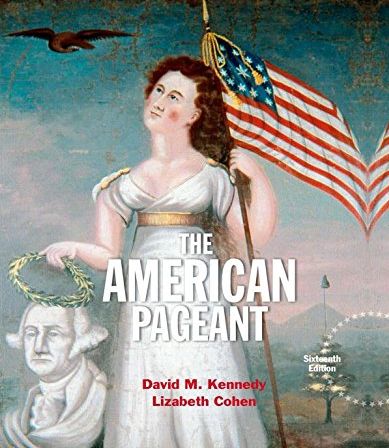
My high school American History teacher was also our basketball coach, a decently smart and affable guy who happened to have been given one of the all-time exciting American History textbooks to teach from: The American Pageant, which thanks to the unique approach of its original author, historian Thomas A. Bailey, remains in print in its 16th edition. It was, and hopefully still is, one of the most fun reads of any textbook on any subject. Yes, I said “fun.” Without speaking for my classmates, I was excited to read each chapter.

I don’t believe all Americans think of learning about history and government as fun. More like work, maybe hard and distasteful and avoidable work. Except that avoiding knowing history and government means that when, as can happen, things get way out of whack, you won’t recognize what is happening, or recognize that as a historical matter, the consequences may be unfortunate, if not dire.

As can happen, things may get way out of whack, and they have. Maybe those who find learning about American history and government useless might squeeze it into their busy schedules. Particularly if they love America, because as we know, true love means learning about the one you love.

It took Nixon 1,734 days. It took Trump only 109.

It took Nixon 1,734 days. It took Trump only 109.

Richard Nixon’s Saturday Night Massacre took place on October 20 1973. Besieged by investigations into Watergate, on that night he fired independent special prosecutor Archibald Cox, which resulted in Attorney General Elliot Richardson and Deputy Attorney General William Ruckelshaus resigning. That was 1,734 days after Nixon took office.

Today Donald Trump fired Attorney General James Comey, who was leading one of the investigations into possible ties between the Trump campaign and Russia. It is 109 days after Trump took office.

It still took nearly a year, but Nixon resigned on August 8, 1974, in the face of certain Senate conviction of impeachment articles passed by the House. The articles begin:

ARTICLE 1

In his conduct of the office of President of the United States, Richard M. Nixon, in violation of his constitutional oath faithfully to execute the office of President of the United States and, to the best of his ability, preserve, protect, and defend the Constitution of the United States, and in violation of his constitutional duty to take care that the laws be faithfully executed, has prevented, obstructed, and impeded the administration of justice. (emphasis added)

We don’t know that the Republican-led House will have the courage to hold impeachment hearings, let alone pass articles of impeachment. Unlike the Nixon situation, where Republicans cooperated in a bipartisan upholding of core American and constitutional principles, it is hard to tell exactly what some Republicans believe or will do in these circumstances.

The only thing certain is that with this firing of the FBI Director, we are in dark territory. Will it get even darker? Will we see the light? And will no Congress rid us of this turbulent president?

See The Case for Impeachment by Allan J. Lichtman

The Long Hot Summer

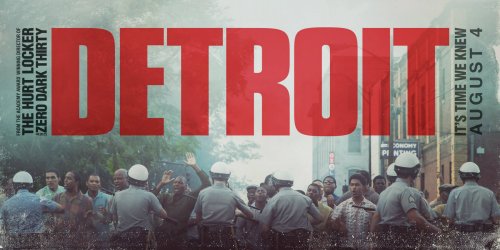
The movie Detroit will be released on August 4. Directed by Academy Award winner Kathryn Bigelow, it is about the Detroit riots in the American summer of 1967.

Fifty years ago, the summer of 1967—known as “the long hot summer”—was an unforgettable moment in American race relations. The Detroit riots were just part of it. That summer, 163 riots took place in American cities and towns, including in Atlanta, Boston, Cincinnati, Tampa, Birmingham, Chicago, New York, Milwaukee, Minneapolis, New Britain, Rochester, Plainfield, and Newark.

And in Detroit. During five days there, 43 people died, 1,189 people were injured, 7,231 people were arrested, 2,509 stores were looted or burned, 388 families were displaced, and 412 buildings burned or damaged enough to be demolished.

As a result, President Johnson appointed the Kerner Commission to investigate and report. Months later the government published The Kerner Report: The National Advisory Commission on Civil Disorders.


From the Introduction to the 2016 reprint edition of The Kerner Report by Julian E. Zelizer of Princeton University:

The report remains one of the most insightful government examinations of the state of race relations in twentieth-century America, with lessons that reverberate today and others that were ignored….

The Kerner Commission’s findings would be unlike almost any other report that the federal government had produced about race relations in America. Although the report stuck to conventional liberal ideas about how to improve racial equality, its analysis of the problems in the cities pointed to some radical critiques about the problem of institutional racism in America. The widely discussed report offered hard-hitting arguments about the ways in which white racism was built into the institutions and organization of urban America, so much that racial inequality was constantly reproduced over generations. The report tackled controversial issues like police violence against African Americans that had often been kept on the sidelines of mainstream political discourse….

In July, two major riots devastated the cities of Newark, New Jersey, and Detroit, Michigan. These were the worst of 163 riots that broke out that summer, in places large and small, ranging from Plainfield, New Jersey, to Wadesboro, North Carolina. On July 12, rioting started in Newark after rumors that the police had mistreated an African American cab driver whom they were arresting. To the eyes of some close to the Johnson administration, Newark’s unrest was the culmination of many years of frustration with excessive police violence. In fact, President Johnson refrained from sending in any troops to achieve calm, fearing that doing so would only stoke the racial flames engulfing the city. After five days of devastating violence, the riots ended with twenty-six people dead, hundreds injured, and massive property damage to the community.

The violence in Detroit started on July 23, not long after the smoke from the Newark riots had cleared….

The rioters, they found, were usually educated and had been employed in previous years. Most of them were angry about the kind of racial discrimination they faced when seeking employment and places to live. They were frustrated with the state of their neighborhoods and wanted access to the political system from which they had been disenfranchised. They also were described as wanting to participate in the consumer culture that American leaders had boasted about. The rioters were not driven by radical agitators, nor were they recent transplants to the city. The report depicted them instead as ordinary, longtime residents of neighborhoods who could no longer withstand the deplorable conditions under which they and their families lived….

No institution received more scrutiny than the police. The rioting had shown without any doubt that law enforcement had become a problem in race relations. Rather than constructive domestic policies, more aggressive policing had become the de facto response from city officials. “In several cities,” the report stated, “the principal official response has been to train and equip the police with more sophisticated weapons.” The police played a big role in almost all of the riots, according to the commissioners. Indeed, in contrast to the findings of the McCone Commission, the Kerner report noted that systematic police violence against African Americans was at the heart of the riots of this period, more so than almost any other issue….

In provocative fashion, the report blamed “white racism” for producing the conditions that were at the heart of the riots. With a powerful account of the history of race relations, the commission had traced the problems in the cities all the way back to slavery. The point was not that white Americans were intentionally committing racial injustice against African Americans, but that racism was imbedded in institutions….

There have been some notable improvements since the time the report was published, however. The civil rights legislation of the 1960s did legitimate racial integration, while social programs from that period—such as Medicaid and food stamps—created an important base of support to alleviate the conditions that the poor faced. A growing African American middle class has also been one of the most important positive developments in race relations.

Yet the problems highlighted in the Kerner Commission’s report remain hauntingly relevant today. Many parts of inner-city America remain as unstable, if not more so, than when Kerner looked into the conditions that existed in the late 1960s. Lack of jobs, inadequate education, racial discrimination, and police brutality all remain prevalent in modern times. Poverty has also been spreading to the suburbs, bringing these issues into new areas, while economic inequality has generally become more severe and hardened. The war on crime and the war on drugs have replaced urban policy. For those who didn’t make it out, hope for change has only diminished….

The Kerner report still stands as a powerful statement about the struggles that African Americans face in a country where racism shapes many of our key institutions. The Kerner report, a shining argument that government can indeed respond to national problems, still has a great deal to offer policymakers and citizens as they wrestle with racial tension in the aftermath of the racial unrest in Ferguson, Staten Island, Cincinnati, and Baltimore in 2014 and 2015. In all of these cases police violence against urban residents again brought attention to the racial disparities that afflict many parts of the nation.

New CEO: “I thought it would be easier.”

Imagine that you hired a new CEO for your very, very big company (annual budget: $3.8 trillion). The job he takes is universally considered the most difficult job in the world.

Imagine that not all the shareholders approved him. In fact, the shareholders were very, very divided on his being hired.

Imagine that in his early days, he demonstrated some serious gaps in his knowledge and ability to do the job.

Then imagine the new CEO is interviewed and says this:

“I loved my previous life. I had so many things going. This is more work than in my previous life. I thought it would be easier.”

Would you:

  1. Keep him and expect him to get better at his job.
  2. Excuse him because he is new on the job.
  3. Fire him.
  4. Pray.

“Trump jokes about replacing Haley, takes it back”

Washington Post today:

There was a bit of awkwardness at President Donald Trump’s lunch with U.N. diplomats when he made an undiplomatic comment about Nikki Haley, his ambassador to the U.N.

Trump was kicking off Monday’s lunch with ambassadors of countries on the U.N. Security Council when he asked the room if they liked Haley, the U.S. ambassador to the U.N.

Trump said that if they didn’t, “she could easily be replaced.”

The comment sparked some awkwardness, but seemed to be taken in jest. Haley and others gathered around the lengthy table laughed.

Above is a photo of Nikki Haley and Donald Trump at the lunch.