Bob Schwartz

Tag: fascism

Fascists begin with thugs: Mussolini’s Blackshirts and Hitler’s Brownshirts
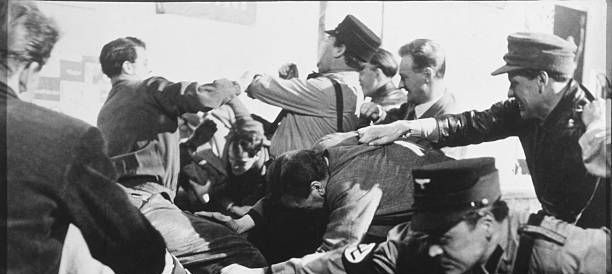
Hitler’s SA

“Hitler’s SA beat up Jews, vandalized Jewish businesses, and intimidated voters and political opponents. This violence helped suppress opposition while the Nazis maintained a veneer of legality.”

Both Mussolini (the inventor of modern fascism) and Hitler began their rise to power with the help of organized thugs. Mussolini had his Blackshirts and Hitler had his Brownshirts (officially the SA, Sturmabteilung, “Storm Detachment).

These are not the only authoritarians, dictators and fascists to enlist thugs to help them. Above is a picture of Hitler’s thugs beating up German citizens in the streets.

Overview:


The Blackshirts (or Squadristi) were paramilitary fascist groups that emerged in Italy after World War I and became essential to Mussolini’s rise to power.

Origins and composition:
The Blackshirts formed around 1919-1920, initially as loosely organized squads of war veterans, unemployed workers, and disaffected young men. They wore black shirts as their uniform, which became their identifying symbol. Many members were ex-soldiers who felt betrayed by Italy’s treatment after WWI despite being on the winning side.

Their role in Mussolini’s rise:
The Blackshirts served as Mussolini’s instrument of violent intimidation and political control:

  • Strike-breaking and anti-socialist violence: They attacked socialist organizations, labor unions, and leftist politicians, beating opponents and burning down socialist newspapers, meeting halls, and cooperatives. This earned them support from landowners and industrialists who feared socialist revolution.
  • Creating chaos and positioning fascism as the solution: By generating political violence and instability, they helped create conditions where Mussolini could present himself and his fascist movement as the force that could restore order.
  • The March on Rome (1922): Tens of thousands of Blackshirts marched on Rome in October 1922 in a show of force. Though it was more political theater than military coup, the threat of violence pressured King Victor Emmanuel III to appoint Mussolini as Prime Minister rather than risk civil war.

The Blackshirts essentially functioned as Mussolini’s private army, using systematic violence to eliminate opposition and intimidate the political establishment into accepting fascist rule.


The Brownshirts, officially called the Sturmabteilung (SA, meaning “Storm Detachment”), were the Nazi Party’s paramilitary organization that played a crucial role in Hitler’s rise to power through street violence and intimidation.

Origins and composition:
Founded in 1921, the SA initially served as security for Nazi rallies. They wore brown uniforms (hence “Brownshirts”) and attracted war veterans, unemployed young men, and working-class Germans during the economic turmoil of the Weimar Republic. Led by Ernst Röhm, the SA grew rapidly during the late 1920s and early 1930s, eventually numbering in the hundreds of thousands.

Their role in Hitler’s rise:

  • Street violence and intimidation**: The SA engaged in brutal street fights with communists and socialists, attacked political opponents, and disrupted rival parties’ meetings. They created an atmosphere of chaos and civil conflict that undermined confidence in the Weimar government.
  • Projecting strength and inevitability: Through massive rallies, marches, and their visible presence in brown uniforms, the SA made the Nazi movement appear powerful and unstoppable, attracting supporters who wanted to be on the “winning side.”
  • Terror tactics: They beat up Jews, vandalized Jewish businesses, and intimidated voters and political opponents. This violence helped suppress opposition while the Nazis maintained a veneer of legality.
  • Electoral intimidation: During elections in the early 1930s, the SA’s presence at polling places and their attacks on opponents helped create conditions favorable to Nazi electoral success.

After Hitler became Chancellor in 1933, the SA helped eliminate remaining opposition. However, Hitler later purged the SA leadership in the “Night of the Long Knives” (1934) when they became a political liability.
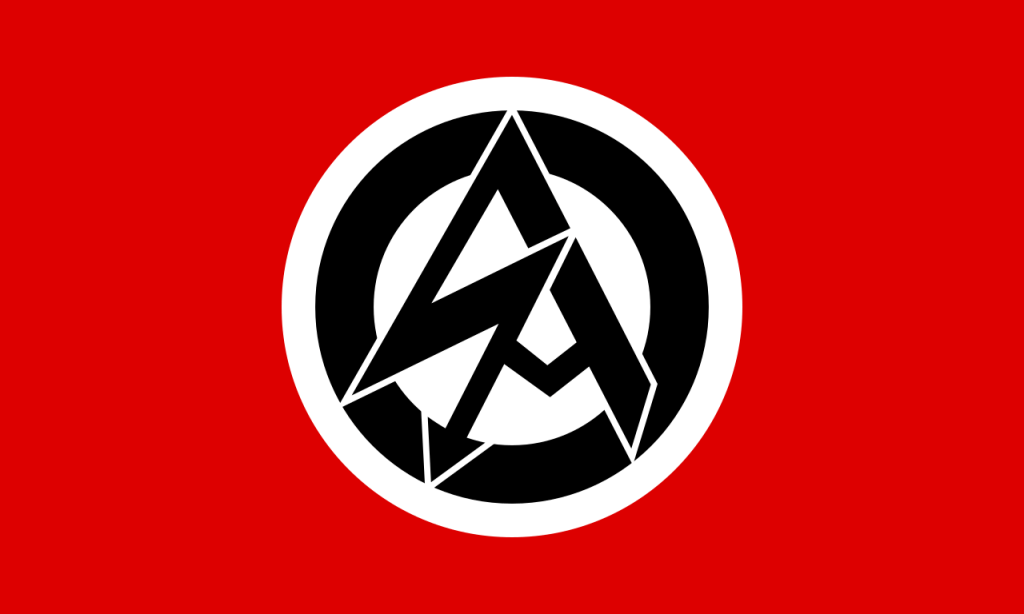

SA flag

Umberto Eco: Ur-Fascism

This post is from 2017, seven years ago, the first year of a strange American administration. Like the woman in the shoe who couldn’t keep track of her children, older posts may be worthy, but I don’t remember them all. Thanks to astute readers who stumbled upon this and reminded me that it is always current.


Celebrated Italian author and scholar Umberto Eco (1932-2016)  published an article in 1995 entitled Ur-Fascism .

Eco grew up during the time of Mussolini. In the article, he jumps from memories of that experience to describe some varieties of fascism and other types of totalitarianism. Not all are well-defined fascism, he says, but he does identify the core characteristics of what he calls Ur-Fascism.

I think it is possible to outline a list of features that are typical of what I would like to call Ur-Fascism, or Eternal Fascism. These features cannot be organized into a system; many of them contradict each other, and are also typical of other kinds of despotism or fanaticism. But it is enough that one of them be present to allow fascism to coagulate around it.

Eco goes on to list 14 features of Ur-Fascism. This is the excerpted list; please read the article for an expanded explanation. And as you read it, please consider which of those features you might be seeing now.

1. The first feature of Ur-Fascism is the cult of tradition….As a consequence, there can be no advancement of learning.

2. Traditionalism implies the rejection of modernism….In this sense Ur-Fascism can be defined as irrationalism.

3. Irrationalism also depends on the cult of action for action’s sake. Action being beautiful in itself, it must be taken before, or without, any previous reflection.

4. No syncretistic faith can withstand analytical criticism. The critical spirit makes distinctions, and to distinguish is a sign of modernism.

5. Besides, disagreement is a sign of diversity. Ur-Fascism grows up and seeks for consensus by exploiting and exacerbating the natural fear of difference.

6. Ur-Fascism derives from individual or social frustration. That is why one of the most typical features of the historical fascism was the appeal to a frustrated middle class, a class suffering from an economic crisis or feelings of political humiliation, and frightened by the pressure of lower social groups.

7. To people who feel deprived of a clear social identity, Ur-Fascism says that their only privilege is the most common one, to be born in the same country. This is the origin of nationalism.

8. The followers must feel humiliated by the ostentatious wealth and force of their enemies….Thus, by a continuous shifting of rhetorical focus, the enemies are at the same time too strong and too weak.

9. For Ur-Fascism there is no struggle for life but, rather, life is lived for struggle.

10. Elitism is a typical aspect of any reactionary ideology, insofar as it is fundamentally aristocratic, and aristocratic and militaristic elitism cruelly implies contempt for the weak. Ur-Fascism can only advocate a popular elitism.

11. In such a perspective everybody is educated to become a hero. In every mythology the hero is an exceptional being, but in Ur-Fascist ideology, heroism is the norm.

12. Since both permanent war and heroism are difficult games to play, the Ur-Fascist transfers his will to power to sexual matters. This is the origin of machismo (which implies both disdain for women and intolerance and condemnation of nonstandard sexual habits, from chastity to homosexuality). Since even sex is a difficult game to play, the Ur-Fascist hero tends to play with weapons—doing so becomes an ersatz phallic exercise.

13. Ur-Fascism is based upon a selective populism, a qualitative populism, one might say. In a democracy, the citizens have individual rights, but the citizens in their entirety have a political impact only from a quantitative point of view—one follows the decisions of the majority. For Ur-Fascism, however, individuals as individuals have no rights, and the People is conceived as a quality, a monolithic entity expressing the Common Will. Since no large quantity of human beings can have a common will, the Leader pretends to be their interpreter….Because of its qualitative populism Ur-Fascism must be against “rotten” parliamentary governments.

14. Ur-Fascism speaks Newspeak.

Eco closes with this:

Ur-Fascism is still around us, sometimes in plainclothes. It would be so much easier, for us, if there appeared on the world scene somebody saying, “I want to reopen Auschwitz, I want the Black Shirts to parade again in the Italian squares.” Life is not that simple. Ur-Fascism can come back under the most innocent of disguises. Our duty is to uncover it and to point our finger at any of its new instances—every day, in every part of the world.

Umberto Eco: Ur-Fascism

Celebrated Italian author and scholar Umberto Eco (1932-2016)  published an article in 1995 entitled Ur-Fascism .

Eco grew up during the time of Mussolini. In the article, he jumps from memories of that experience to describe some varieties of fascism and other types of totalitarianism. Not all are well-defined fascism, he says, but he does identify the core characteristics of what he calls Ur-Fascism.

I think it is possible to outline a list of features that are typical of what I would like to call Ur-Fascism, or Eternal Fascism. These features cannot be organized into a system; many of them contradict each other, and are also typical of other kinds of despotism or fanaticism. But it is enough that one of them be present to allow fascism to coagulate around it.

Eco goes on to list 14 features of Ur-Fascism. This is the excerpted list; please read the article for an expanded explanation. And as you read it, please consider which of those features you might be seeing now.

1. The first feature of Ur-Fascism is the cult of tradition….As a consequence, there can be no advancement of learning.

2. Traditionalism implies the rejection of modernism….In this sense Ur-Fascism can be defined as irrationalism.

3. Irrationalism also depends on the cult of action for action’s sake. Action being beautiful in itself, it must be taken before, or without, any previous reflection.

4. No syncretistic faith can withstand analytical criticism. The critical spirit makes distinctions, and to distinguish is a sign of modernism.

5. Besides, disagreement is a sign of diversity. Ur-Fascism grows up and seeks for consensus by exploiting and exacerbating the natural fear of difference.

6. Ur-Fascism derives from individual or social frustration. That is why one of the most typical features of the historical fascism was the appeal to a frustrated middle class, a class suffering from an economic crisis or feelings of political humiliation, and frightened by the pressure of lower social groups.

7. To people who feel deprived of a clear social identity, Ur-Fascism says that their only privilege is the most common one, to be born in the same country. This is the origin of nationalism.

8. The followers must feel humiliated by the ostentatious wealth and force of their enemies….Thus, by a continuous shifting of rhetorical focus, the enemies are at the same time too strong and too weak.

9. For Ur-Fascism there is no struggle for life but, rather, life is lived for struggle.

10. Elitism is a typical aspect of any reactionary ideology, insofar as it is fundamentally aristocratic, and aristocratic and militaristic elitism cruelly implies contempt for the weak. Ur-Fascism can only advocate a popular elitism.

11. In such a perspective everybody is educated to become a hero. In every mythology the hero is an exceptional being, but in Ur-Fascist ideology, heroism is the norm.

12. Since both permanent war and heroism are difficult games to play, the Ur-Fascist transfers his will to power to sexual matters. This is the origin of machismo (which implies both disdain for women and intolerance and condemnation of nonstandard sexual habits, from chastity to homosexuality). Since even sex is a difficult game to play, the Ur-Fascist hero tends to play with weapons—doing so becomes an ersatz phallic exercise.

13. Ur-Fascism is based upon a selective populism, a qualitative populism, one might say. In a democracy, the citizens have individual rights, but the citizens in their entirety have a political impact only from a quantitative point of view—one follows the decisions of the majority. For Ur-Fascism, however, individuals as individuals have no rights, and the People is conceived as a quality, a monolithic entity expressing the Common Will. Since no large quantity of human beings can have a common will, the Leader pretends to be their interpreter….Because of its qualitative populism Ur-Fascism must be against “rotten” parliamentary governments.

14. Ur-Fascism speaks Newspeak.

Eco closes with this:

Ur-Fascism is still around us, sometimes in plainclothes. It would be so much easier, for us, if there appeared on the world scene somebody saying, “I want to reopen Auschwitz, I want the Black Shirts to parade again in the Italian squares.” Life is not that simple. Ur-Fascism can come back under the most innocent of disguises. Our duty is to uncover it and to point our finger at any of its new instances—every day, in every part of the world.