Religious traditions struggle with handling “politics”. They make a category error.
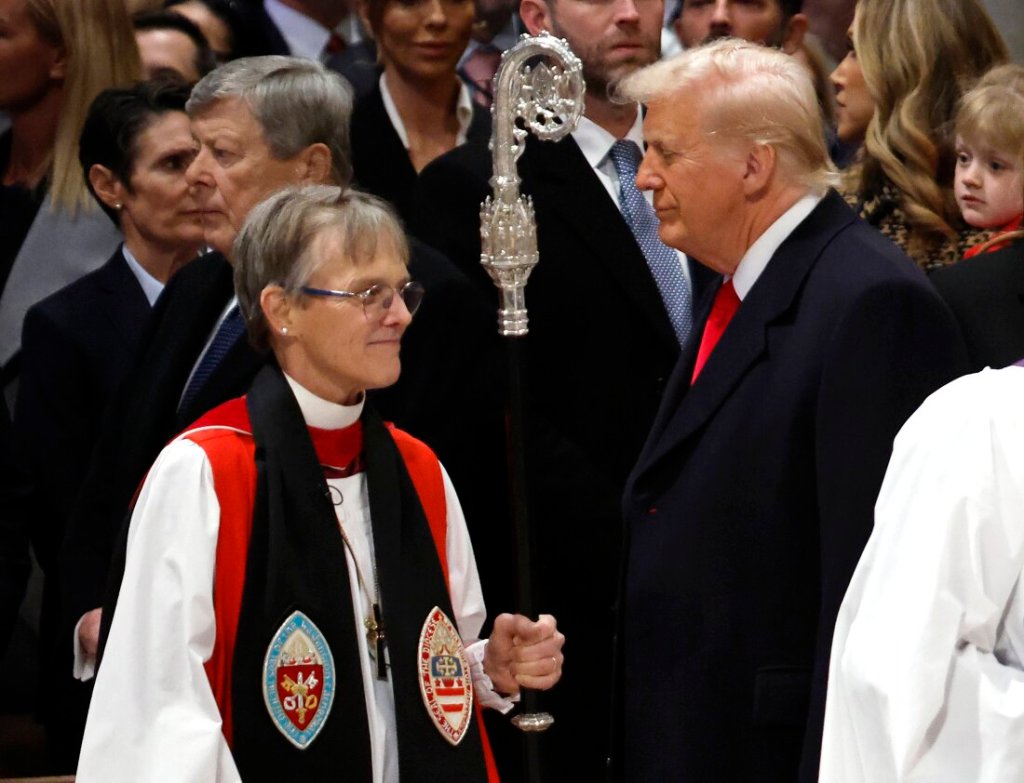
Rt. Rev. Marian Edgar Budde, Episcopal Bishop of Washington, presided over the National Prayer Breakfast, giving the sermon at the National Cathedral on Tuesday. Trump and many officials were in attendance.
In the sermon, she pled with Trump to show mercy and compassion toward scared individuals, including immigrants, those fleeing war and persecution, and gay, lesbian and transgender children. After the service, Trump and others attacked her, including some within her own church who believe that “politics” does not belong at the pulpit or in the pews.
This opposition may come from a category error. If this is purely and solely about “politics”—who you vote for and who you support for election—then the category applies. But it isn’t, and never has been. In many cases, and particularly in the current environment, the more fitting categories are ideology and philosophy.
Ideology and philosophy are the siblings of belief, if not identical twins. As for the religious traditions, belief is the central and essential element.
If the ideology and philosophy reflected in political support—the beliefs—are different, contrasting, contradictory to the beliefs of those religious traditions, how can it not be an issue for discussion by those traditions?
This is in no way to question the good faith and conscientiousness of those in the traditions who see politics as a categorical red line. It is just, at this moment and many moments past, the wrong category. The faithful may and sometimes do hold ideologies, philosophies and beliefs that are anathema to the core of traditions.
Which is exactly what Bishop Budde was saying, for which she now says she has nothing to apologize for. Others may say that she was not doing her job, touching on politics. She wasn’t touching on politics. She was affirming the very soul of her faith. That is her job.
© 2025 by Bob M. Schwartz
 Bob Schwartz