Bob Schwartz

Tag: Democratic Party

Hillary in Iowa 2008
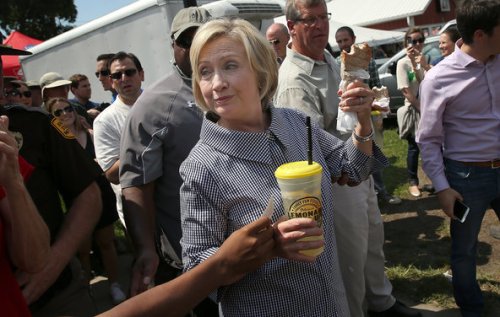
 

Hillary Iowa State Fair

“Character is destiny.”
Heraclitus

Will Iowa 2016 be Iowa 2008 for Hillary? Here are her thoughts back in 2008, as documented in Game Change: Obama and the Clintons, McCain and Palin, and the Race of a Lifetime by John Heilemann and Mark Halperin:

The problem was, she hated it there. Every day felt like she was stuck in a Mobius strip: another barn, another living room, another set of questions about immigration (from people who were anti-) and the war (ditto). She’d get back on the plane, slump into her seat, heave a deep sigh, and grunt, “Ugh.”

The Iowans didn’t seem to be listening to her, just gawking at her, like she was an animal in a zoo. Hillary would hear from her staff the things voters were saying about her: “She’s so much prettier in person,” “She’s so much nicer than I thought.” It made her ill. She found the Iowans diffident and presumptuous; she felt they were making her grovel. Hillary detested pleading for anything, from money to endorsements, and in Iowa it was no different. She resisted calling the local politicos whose support she needed. One time, she spent forty-five minutes on the phone wooing an activist, only to be told at the call’s end that the woman was still deciding between her and another candidate. Hillary hung up in a huff.

“I can’t believe this!” she said. “How many times am I going to have to meet these same people?”

Over and over, she complained about the system that gave Iowa so much power in selecting the nominee. “This is so stupid,” she would say. “So unfair.” She bitched about Iowa’s scruffy hotels and looked for excuses to avoid staying overnight. But among the sources of her frustration and bewilderment, the absence of connection was paramount. “I don’t have a good feeling about this, guys,” she told her staff on the plane. “I just don’t have a good feeling about this place.”
Veterans Day: The Annual Shame of a Nation

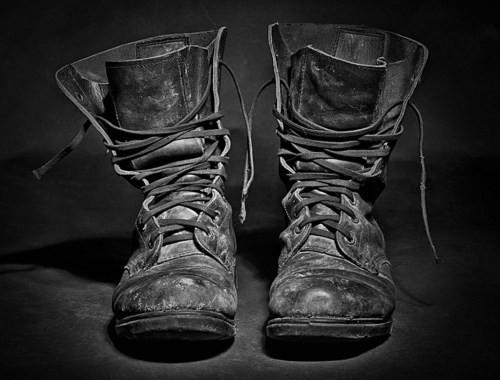
Veterans Boots

Failure to take full and proper care of veterans is not a Democratic or Republican shame. The only reason to focus on Republicans here is that last night, in their debate, on the eve of Veterans Day, only four passing mentions of veterans were made during two hours.

The debate was formally about the economy, but since every one behind the podiums is practiced at changing the subject, there’s no reason some or all of them couldn’t have just said: The economy is an important topic, but just tonight, this particular night, I’d like to focus my time exclusively on veterans matters.

Here’s what one of them might have said:

There is enough responsibility to go around for getting this nation involved in military conflicts. It doesn’t matter what party started it or finished it or didn’t finish it. It doesn’t matter whether it was a great idea or a terrible idea or whether it is too soon to tell. As a nation, we do what we do, and we have to pay the price and keep our promises. In the case of military service, that promise is to spare no expense or effort to not only make combatants whole, or whole as humanly possible, but to elevate their service to priority status in our national consciousness and commitments.

That’s why I’m going to spend whatever minutes I have on this national debate platform tonight to talk specifically about immediate solutions to veterans issues, rather than casting blame or blowing hot air. I also call upon the millionaires and billionaires supporting us and trying to influence the election to divert just a little of that money to nonpartisan efforts such as Iraq and Afghanistan Veterans of America to start solving the problem. Of course, making this a government first priority would be nice too. Because if it comes down to a choice between any of us actually getting the nomination, which is admittedly a long shot for most of us anyway, and the comfort and well-being of those men and women we’ve flag-wavingly asked to fight on our behalf, I’d rather ask that those veterans be made whole than that I be President.

I know. Dream on.

No Refugees in the Democratic Debate

Adding insult to their injury, Syrian refugees were missing from last week’s Democratic debate.

There were some other important issues mentioned, often presented in sound bites, but many more conspicuous by their absence. But you would think the party that considers itself the more progressive, caring, humane and globally sensitive would take the opportunity to at least mention to the 15 million viewers that we are experiencing one of the biggest humanitarian crises since the end of World War II. The same goes, maybe goes double, for the individual candidates who had the floor and could have just once brought it up.

(Note: Jim Webb did raise refugees while talking about his wife, who is a refugee from Vietnam. But that was not in the context of the current crisis.)

The explanation of this is simple and typical, though not particularly happy. Raising questions you can’t answer, or can’t answer with some vague, equivocal, pointless comment is to be avoided. Either voters will realize that you have no answer, or if you do answer from your conscience and heart, you just might lose votes. Either way, as a candidate, you’re screwed.

This isn’t a Democratic purview. When Republicans get together in their overstuffed debate scrum, there isn’t much to be said about the refugee crisis, except that it is an obvious ruse to allow Islamic terrorists to enter our country. It does seem like an elaborate scheme—displacing millions of men, women, and children just to get a chance to disrupt American stability—but you know how tricky those people can be.

And so, the next time a Democratic candidate wants to tell one of those rise from adversity stories that is a sure fire way to seem human and humane, maybe he or she can mention the shared and horrific adversity that won’t just go away—even if he or she has some magic plan to “fix” Syria (which he or she doesn’t). Maybe the next time, at the podium or on a debate stage. Those refugees will certainly still be there, in an increasing hell on earth.

Biden and Colbert

Whatever your politics, it was TV history last night on The Late Show. Joe Biden and Stephen Colbert talking, just two great guys leaning in and getting real, while millions watched, and many teared up.

It starts with Colbert. The question has been whether and how he would progress from being a character on The Colbert Report to a different character that is more himself. There was that moment on the final Daily Show when Colbert exposed his most sincere and unironic thanks to Jon Stewart, the man who gave him his chance.

But last night’s Late Show interview skipped all the midpoints of developing a Colbert talk show persona to transcending any idea of what a late-night host might be. Beyond showing himself as a man of faith, Colbert served almost as a therapist and priest. He didn’t stay away from the pain. He compassionately went right for it, not for spectacle, but for the healing truth, and to reveal the depths of Biden’s quandary.

Reflecting their shared history of family tragedy, it was like a reunion of two old souls. On top of that, Colbert wore not only his faith but his politics on his sleeve, something that just isn’t done in his position. It was clear that he was urging Biden to run not because it was a good idea, but because Colbert and the Nation needed him.

It doesn’t take much to get Biden to speak from his soul. Hello will usually do. But Colbert brought out an extra dimension of that. Where certain candidates now running make us cringe, Biden made me and plenty of others cry. Where certain candidates make us want to run the other direction, listening to Joe just made me want to be a better person.

In the moment, it didn’t matter that Colbert was in only the third show of his widely-covered new TV venture. Or that Biden was in the final weeks of the will-he-or-won’t-he candidacy drama. It just was what it was, and what it was was good and human, so humbly and nobly human. Something we don’t see much on TV. Or in politics.

Cuba: No Democracy, No Embassy, So Recall the Ambassador to China

U.S. Embassy in Beijing

If you listen to those opposing normal diplomatic relations with Cuba, you learn that we should not do so until Cuba moves toward democracy.

With that rationale, we should be ending diplomatic relations with many countries, because no matter what our ideals and aspirations, the world still includes some fairly undemocratic nations.

Such as China. We have had full diplomatic relations with the People’s Republic of China since 1979, a period that includes both Republican and Democratic Presidents and Congresses. There is no way to characterize China as a democratic, democratic-leaning, democratic-seeking nation. So we should immediately recall our latest ambassador, former Sen. Max Baucus, and immediately close our embassy in Beijing.

Of course, that doesn’t make sense. As nothing has made sense in our relations with Cuba, even before Fidel Castro overthrew the Batista regime in 1959. The U.S. supported Batista and opposed Communism in the hemisphere. Commercial interests, legal and illegal, made money. Once Castro was in power, and refugees of substantial and modest means resettled in the U.S., it was thought that isolating Cuba would make it come around to right thinking and lucrative democracy. That didn’t work, and neither did the one attempt at forcing the issue, the debacle of the Bay of Pigs invasion.

If we had given Cuba the benefit of the doubt that we have given other non-democracies, not to mention the money we have invested in those nations, some good might have come of it, with little downside. But as with many issues, politics in the form of financial support, or the threat of withholding it, distorts what may be for the best.

Which is why, with Obama moving to normalize Cuban relations, you won’t hear anybody calling for the closing of the Beijing embassy, but lots of grandstanding and bluster about how a Cuban ambassador will mean the end of the world.

All Politicians Are Progressives

Horse Carriage - Lincoln
Either you embrace innovation or you don’t. And so all politicians who use an iPhone or love the NFL are progressives.

Innovation has two faces. One is the innovation that solves problems. The other is innovation that just does stuff—even if you didn’t ask for it, even if you never knew you wanted it or needed it. Moving from horse transport to self-contained mechanical carriages solved a basic problem, but over time added features some of which are useful and practical for the central function, others of which are just enjoyment that becomes essential. Because times change, as do human expectations and aspirations. Innovation feeds that.

So unless you are a politician who doesn’t have a smartphone, or who doesn’t use a phone or computer at all, or doesn’t drive a tricked-out luxury car (it counts even if you have a driver), you are the beneficiary and tacit endorser of innovation. Which is why when some politicians hearken back to the comprehensive goodness of 18th century America—or 19th or 20th, depending on the issue—it is dangerously silly. This economic Drecession requires an embrace of 360 degree innovation, not just untaxing and unburdening ourselves to prosperity. Not just churning out a generation of STEMers to magically bring us back to former glory. And not just putting digital devices in the hands of every school child either.

This is not the exclusive purview of any political party. There is a tendency, even among the most well-meaning, to take pages from a beloved playbook that are no longer viable. When the legendary coach Sid Gillman changed pro football forever in the 1950s by making the forward pass the centerpiece of the game, it was scoffed at—until he started winning championships and opponents had to permanently rethink the defensive game.

If politicians want to ride around in fancy horse-drawn carriages and send their messages by horse-carried post (if they haven’t made the Post Office disappear), that’s okay. But chances are they’ve embraced innovation in practically every minute of their lives (they love their Twitter!) because, well, it is 2013. It is 2013, everywhere, in every facet, and pretending otherwise is just horse-and-buggy policy. Or maybe just a convenient way to get elected.

Another Fleetwood Mac Presidency?

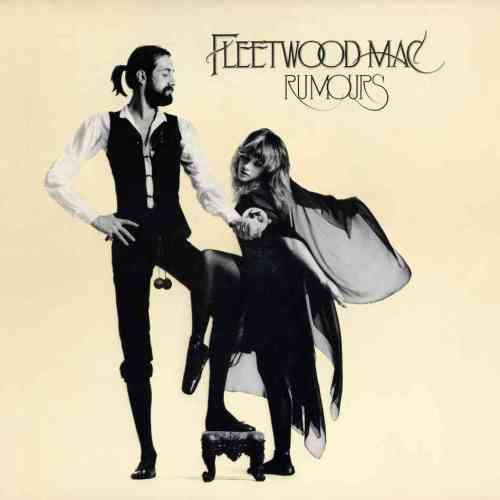
Fleetwood Mac - Rumours
That’s not Bill and Hillary Clinton on the cover of the Rumours album.

Pandora popped this album up and three things came to mind. The music is still pretty good, as well-crafted as any pop of its day, but it does sound  a bit dated. The second thought is about this now-iconic photo of Mick Fleetwood and Stevie Nicks. What in the name of artsy pretentiousness is going on, and why does Mick have two balls hanging near his crotch?

The final thought was of the Clintons. If you were there, you will never, ever get the identity between Bill and the campaign theme song Don’t Stop out of your head, hard as you try.

Hillary’s presidential candidacy is a big topic that has to be dealt with in bite-size chunks. Among the sub-topics is whether she will run, whether she will win the nomination, whether she will win the presidency, and whether any of it is a good idea for the party or the country. All that is stuff for another day.

The subject here is what it means in terms of Fleetwood Mac. Does Hillary still like and listen to them, or did she never, instead just giving in to another of Bill’s peccadilloes? Did she think of herself more as a Stevie Nicks or as a Christine McVie? Did she think more of Stevie or Christine? Did Bill think more about Stevie or Christine?

(As a bonus, consider that the songs on Rumours are famously confessional about broken relationships and secret infidelities among band members. That’s why it’s called Rumours. Ironic, yes?)

The big question is whether a Hillary candidacy is a hark back to Mac, essentially a call for the better days of the mid-1970s or early-1990s, the decades that frame the Clinton Years. If it is, the question then is what kind of place, if any, there is for Fleetwood Mac in 2016. It’ll soon be here.

John Boehner and the Judgment of History

John Boehner
John Boehner says he isn’t worried that compromising on taxes will result in his losing his job as House Speaker. It is a matter of principle.

He may be telling the truth, but it doesn’t matter.

When asked whether Americans will blame the Republicans for the stalemate, his answer isn’t that he doesn’t care, but that it would be wrong. President Obama and the Democrats are to blame, even if polls say that many people believe otherwise.

That doesn’t matter either.

The question isn’t whether Boehner cares about keeping his job (which he does) or whether he cares that many Americans blame him and the Republicans (which he does).

The question is about history.

Republicans have for quite a while seemed to be unconcerned about the judgment of history. There’s a practical reason for this: people vote, not history. And most people aren’t that interested in history. Anyway, history is often equivocal, so in those moments when people do care, history can be spun to say almost anything.

But, for example, history continues to be a problem for the Republicans and their most historic President. The principles of and lessons from Lincoln are not always congruent with current GOP practice and rhetoric. This is how Southern Republicans during the Civil Rights era didn’t just come to distance themselves from the Great Emancipator; they fled the party.

History is turning on the Republicans. An entire two-term Presidency—eight years of George W. Bush—has had to be nearly buried so that the party could move on. The most recent financial misstep, the 2011 debt ceiling debacle, looked at first like it could be blamed on an ineffectual President. But history has stepped in. Obama’s leadership has been established and electorally endorsed, And now that event looks like a dark mirror of this moment—a mirror featuring John Boehner’s face.

When the movie of this moment is made, the question for Boehner is who he wants to be. He’s not going to be Lincoln, he’s not going to be Thaddeus Stevens. The way it looks now, he may be one of those supporting characters, a middling Congressional leader serving as an antagonist, helping to move the action along by opposing it. He is a decent man, he may yet keep his Speakership, and the country may yet, hopefully, avoid another crisis. But history won’t care about any of that. It is ruthless in its judgment, and John Boehner still has time to sway it.