Bob Schwartz

Tag: Beatles

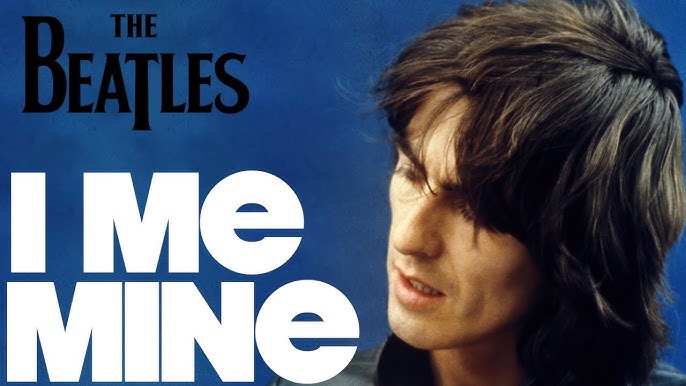
Preferred personal pronoun: Not I me mine

There is a lot of attention paid now to preferred pronouns, such as he his she her they their.

Not as much attention to first person pronouns.

If you pay close attention, you will notice how often people, yourself included, say I me mine. Whatever your, his, her, their preference, that one doesn’t change.

Is there too much I me mine in speech and thought? You decide.

George Harrison wrote what turned out to be the last track the Beatles ever recorded, I Me Mine (1970).


I Me Mine

All through the day
I me mine, I me mine, I me mine
All through the night
I me mine, I me mine, I me mine
Now they’re frightened of leaving it
Everyone’s weaving it
Going on strong all the time
All through the day I me mine

I me me mine
I me me mine
I me me mine
I me me mine

All I can hear
I me mine, I me mine, I me mine
Even those tears
I me mine, I me mine, I me mine
No-one’s frightened of playing it
Everyone’s saying it
Flowing more freely than wine
All through the day I me mine

I me me mine
I me me mine
I me me mine
I me me mine

All I can hear
I me mine, I me mine, I me mine
Even those tears
I me mine, I me mine, I me mine
No-one’s frightened of playing it
Everyone’s saying it
Flowing more freely than wine
All through your life I me mine


Listen without prejudice: While we try to get past identity, can we get past musical genre too?

Beyonce

There are now as many musical genres and sub-genres as stars in the sky.

Speaking of stars, we cannot escape learning that Beyonce has a new album that is identified by many as country music. Her PR folks are stressing that it isn’t a country album, it’s a Beyonce album, all the while stirring the genre pot for maximum coverage.

The best and most creative pop music frequently crosses genres. The individual Beatles grew up loving to listen to everything—music hall, R&B, Little Richard, rockabilly, country, rock, etc.—and turned that love into a lasting catalog of ever-listenable songs. (If you want pure country, listen to the Beatle’s I Don’t Want to Spoil the Party below.) Years later, Kurt Cobain put his love of the Beatles into the strangely melodic sound of grunge.

George Michael had something else in mind when he titled his 1990 album Listen Without Prejudice. But that message also applies to musical silos, or for that matter cultural silos of all kinds. When you listen, or read, or watch, pay less attention to the tags and more attention to the actual work and its qualities for you. It isn’t a crime to love a particular track or artist. It isn’t a crime to not love a particular track or artist. Just listen to it on its own terms, whatever it’s called. Otherwise you might miss something.

© 2024 by Bob Schwartz

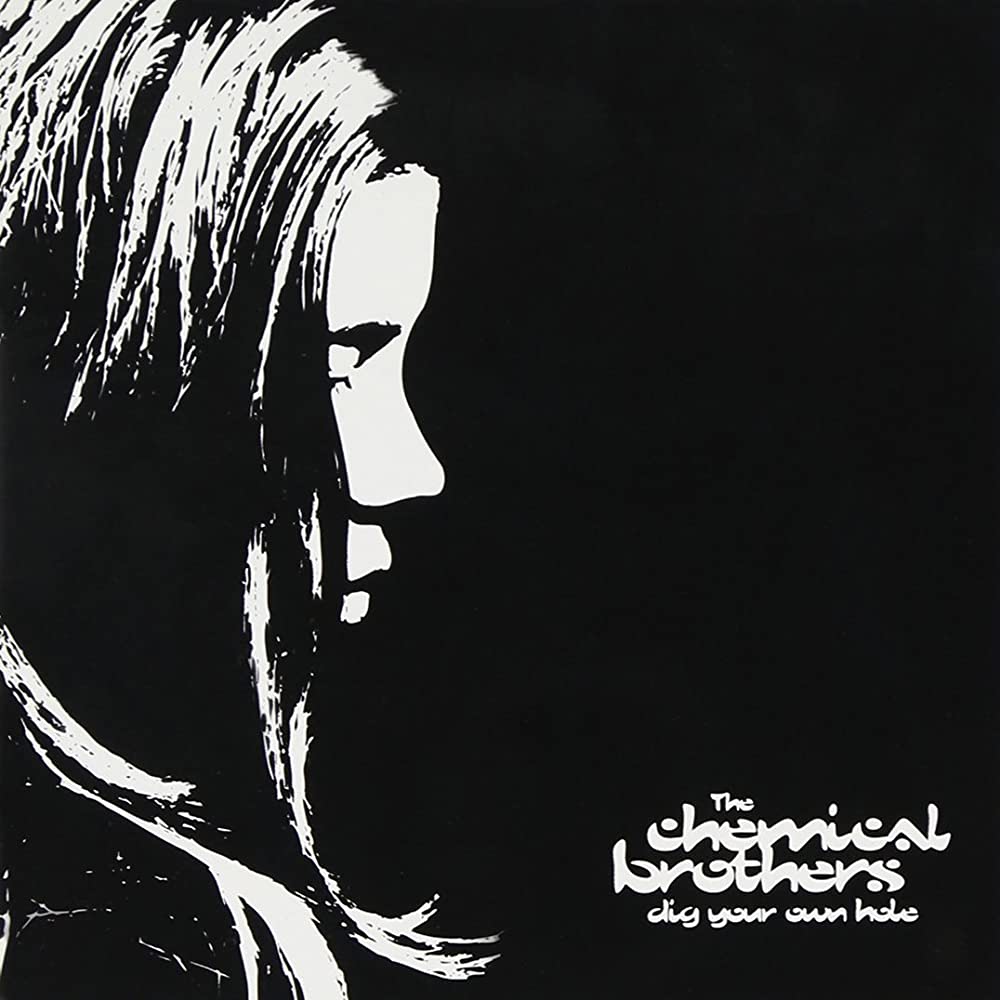
Setting Sun by The Chemical Brothers. Sweet musical anarchy.

Controlled chaos. Sweet musical anarchy. Setting Sun (1997) by The Chemical Brothers:


You’re the devil in me I brought in from the cold
You said your body was young but your mind was very old
You’re coming on strong and I like the way
The visions we had have faded away
You’re part of a life I’ve never had
I’ll tell you that it’s just too bad


Inspired by the Beatles’ Tomorrow Never Knows—“Turn off your mind/relax and float downstream”—thirty years downstream was not necessarily relaxing but was exciting and expanding. Twenty-five years since and we can be/should be/are finding things in the lost and found sound. Even ourselves. Soundtrack for a revolution?

Listen below. The video is an appropriate bonus. “This is not dying.”

One Direction of A Hard Day’s Night

This Is Us - A Hard Day's Night
This summer marks the anniversary of A Hard Day’s Night, released in July 1964. That isn’t exactly a round-numbered anniversary, but the upcoming release of One Direction’s This Is Us movie brings it to mind. According to the film’s producers:

ONE DIRECTION: THIS IS US is a captivating and intimate all-access look at life on the road for the global music phenomenon. Weaved with stunning live concert footage, this inspiring feature film tells the remarkable story of Niall, Zayn, Liam, Harry and Louis’ meteoric rise to fame, from their humble hometown beginnings and competing on the X-Factor, to conquering the world and performing at London’s famed O2 Arena. Hear it from the boys themselves and see through their own eyes what it’s really like to be One Direction.

The Beatles weren’t the first pop stars to create a movie to exploit and enhance their popularity and to satisfy the insatiable appetite of fans. Elvis had been doing if for years, with some decent creative results. But A Hard Day’s Night turned out to be something new and completely else. It combined great writing and direction with four young men who were personable, lovable, witty, and who were also the most artistically successful performer/songwriters of the 20th century (which wasn’t yet proven in 1964). In some ways, it couldn’t help but be at least okay (as for okay, see Help, the Beatles’ second movie). Instead it was outstanding, considered a great movie in it’s own right, and an inspiration for pop movies to come.

A Hard Day’s Night is not a documentary; it’s a non-documentary fictionalized chronicle of a television appearance. If you’re a movie fan, a pop music fan, or both, see it, even if you’re neutral on the Beatles. And if you’re a 1D fan, here are some of the critics’ takes on four British lads who’d never been in a movie before, but had knocked around in front of audiences for years, in some of the sleaziest dives in Europe. All these years later, A Hard Day’s Night is still on all-time lists (99% critics rating on Rotten Tomatoes)—as, of course, is the music.

“Not only has this film not dated, it may even look fresher than it did in 1964; the zigzag cutting and camera moves, the jaunty ironies and pop-celebrity playfulness, are all standard issue now on MTV and its offspring.”

“It’s a fine conglomeration of madcap clowning in the old Marx Brothers’ style, and it is done with such a dazzling use of camera that it tickles the intellect and electrifies the nerves.”

“To watch the final concert segment is to look back decades and realize, as you do seeing vintage footage of Duke Ellington or Frank Sinatra or John Coltrane, that it’s never really gotten any better.”

“The music video by which all other music videos must be judged. And none top it.”

“No previous rocksploitation film had ever done so splendid a job of selling its performers.”

“An hour and a half of pure, chaotic bliss.”

One Direction’s This Is Us opens on August 30. Your turn, lads.

121212 Concert: The Music of Dorian Gray

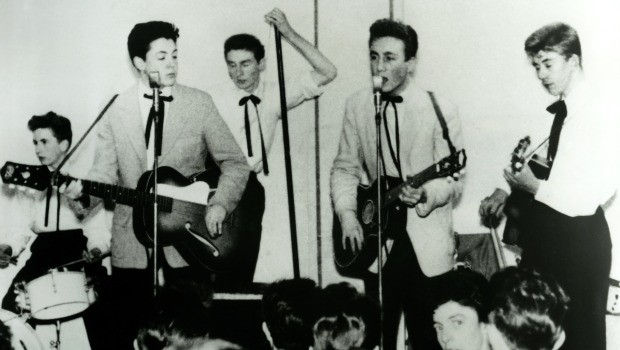
The QuarrymenThat’s a photo of a very young McCartney and Lennon, not yet the most important musicians in modern history. It’s a picture of promise, holding out the happy hope that from small things, big things one day come.

The 121212 Concert marathon was remarkable in ways related and peripheral to the core cause of Sandy relief. None of these collateral issues—not Kanye West’s leather skirt, not out of control ticket scalpers finding insane concertgoers—compares to the epiphany that rock is not, as it turns out, forever. At least not on stage.

Jethro Tull, at one time Grammy award winners for “Best Heavy Metal Album” (you can look it up), sang: “When you’re too old to rock and roll, but you’re too young to die.”

Chris Martin of Coldplay performed a sweet acoustic set, including a rare appearance by R.E.M.’s Michael Stipe. But Martin’s most interesting non-musical moments were his remarks about the age of performers. First he joked about his being their instead of One Direction because the late hour was past their bedtime. But then he turned to the other end of the life cycle, suggesting that viewers donate in the amount of the age of the performers, which would raise billions.

Rock has always been about three things: how you perform musically, how you perform non-musically (dancing, stage presence), and how you look. Here, with unreserved love for the recorded music and live performances of those mentioned, are some observations about the ”veteran” rockers.

The Rolling Stones are on their 50th anniversary tour. The music sounds pretty good. Charlie Watts, the most stoic drummer ever—maybe the most stoic rock musician ever—just sits there, an older version of his younger self. Keith Richards no longer looks like junkie and instead looks like a grandmother. Mick…is scary. His singing is not what it was, but it isn’t frightening either. But he is skeletal, his face drawn, his hair of questionable ownership, and his moves jerkily frenetic enough to raise fears of his falling down. Listening is still enjoyable, but you may seriously consider closing your eyes.

The Who were better musically than the Stones. They are on tour performing the entire Quadrophenia album live, and their set included instrumentally near-perfect renditions of those songs. Pete Townsend’s guitar windmills were a little slower and less emphatic than they used to be, but we know he can still play. It has been decades, and still no one will ever replace Keith Moon (tied with John Bonham as the all-time greatest drummer). The Who did what Queen and others have done with deceased essential bandmates: showed a video performance integrated into the live show. There was the video of Moon doing his distinctive vocals from Bell Boy, microphone in one hand, sticks working in the other, and at the end, Roger Daltry saluting him from the stage. Roger Daltrey. He can’t get all the notes, but it’s still an inimitable voice. The singing, it turned out, was not the problem. For reasons still (or never) to be fathomed, Daltrey believed that billions in the audience wanted to see his chest—including the stitch-scars from heart surgery—and so he obliged by keeping his shirt open for a couple of hours. It was actually just a few songs, but it seemed much longer.

Billy Joel redeemed the old guys. He has always written great songs suited to his vocal strengths and limitations, and both his playing and singing were so enjoyable and so not embarrassing.

Which brings us back to where we began, with the cute half of Liverpool’s very young Quarrymen. Paul McCartney has had a good number of big public performances in the past months. He dropped in on Bruce Springsteen in Hyde Park. He closed the Olympics. Some of what we heard was just okay, but unlike everybody else in the 121212 Concert, just okay would have been forgiven and enough because…it’s Paul. As it turns out, no apologies are needed. His own set was fun and memorable. But his fronting the one-time-only reunited Nirvana was a big moment. Kurt Cobain was a Beatles fan, and there is no doubt his unique introduction of hooky, clever melody into hard and dark rock and punk was done under their influence. At the end of the one song, Nirvana’s locomotive Dave Grohl looked down from his drum kit at McCartney, beaming, maybe amazed to be there, maybe thinking how much Cobain would have loved this.

The Spotify Cover Game


Note: Two online music services launched in 2006, one in Palo Alto, California, one in Stockholm, Sweden. Both shared a vision of offering on-demand, track-by-track access to streaming music. Lala, the American service, was a simple and usable platform. It was offered free, and was based on an evolving business model that had something to do with future subscriptions and music sales. It was a wonder. In 2009, Apple bought the company, possibly to integrate the platform into a future streaming service of its own. That vapor service never materialized and, instead, Apple killed Lala.

At the same time, Spotify was developing its own more sophisticated service in Europe. Music licensing held up its introduction in America until 2011. Lala lovers, still smarting from its demise, have to admit that Spotify is indeed everything Lala was and more. Spotify is flourishing, though it still has to prove the viability of its business model, but we enjoy it while it lasts. Maybe Apple will buy it and kill it too. Sorry—still a little bitter.

Spotify has changed the way we listen to music. What music lovers hoped would happen in the future happened: Click on a track, there it is on your computer. The future is here.

Spotify enables a lot of listener creativity and sharing. There are thousands of playlists created and available. Of course, commercial media, artists, and labels are drawn to popular platforms like moths to flame, and there are now plenty of those generated playlists too.

Spotify also allows unlimited exploration and discovery. Among the unique paths is what might be called the Spotify Cover Game. You can choose any song and listen to nearly every version of it ever recorded, minus the small number still unlicensed and unavailable.

The Spotify Cover Game is fun and educational. To try it, take any popular song from any era. Search for the track, and the results will list all—sometimes dozens—of the recorded versions from different artists.

To demonstrate, Mad Men fans might pick The Beatles’ Tomorrow Never Knows from Revolver. (For non-Mad Men fans, this is the track that in a recent episode young and sexy Megan Draper plays for her older and sexy husband Don Draper to introduce him to the Beatles in 1966.)

Here is a very partial list of artists you can hear performing Tomorrow Never Knows on Spotify:

Phil Collins
Junior Parker
Jimi Hendrix
Michael Hedges
Danielle Dax
The Pink Fairies
Cowboy Mouth
Wayne Krantz
Living Colour
Trouble
Monsoon
Tangerine Dream
The Mission UK
Dwight Twilley
Herbie Hancock & Dave Matthews
Dweezil Zappa
Grateful Dead
Phil Manzanera

The proof of the song is in the covers, and Tomorrow Never Knows doesn’t fail. Whether vocals or instrumental only, it pushes artists to rise to the occasion as they aspire to recreate a cultural milestone.

Best: Herbie Hancock and Dave Matthews. A surprise, given the competition from Jimi Hendrix, Living Colour, and others, and given that neither Hancock nor Matthews are noted for this kind of psychedelia.

Worst: Grateful Dead, hands down. They are noted for their psychedelia, but in this particular live version from a 1992 concert in Oakland, the vocals are literally unlistenable and the music isn’t all that great either. Probably better the next night or if you were really high.

Most Interesting: Legendary bluesman Junior Parker, who recorded it as part of a Beatles album. His smooth and full-bodied voice is in stark contrast to the usual ethereal takes. Accompanied by a spare arrangement of hypnotic bass with a touch of guitar and keyboard, this is a perfect realization and transformation of the original. One of the most interesting Beatles covers ever.

In addition to hearing the multiple ways that the strongest songs are treated, the SCG—and Spotify itself—is about serendipity, the exploration and discovery of unheard artists and tracks. The Hancock/Matthews track, for example, is from a 2010 collection of collaborative covers called The Imagine Project (containing Imagine, but it’s not a Beatles-only collection). There you will find a cover of the Peter Gabriel-Kath Bush anthem of hope in hard times, Don’t Give Up, with John Legend and P!nk performing. Nearly (only nearly) as good as the original, it is mesmerizing, heartbreaking, and uplifting at the same time:

No fight left or so it seems
I am a man whose dreams have all deserted
I’ve changed my face, I’ve changed my name
But no one wants you when you lose…

Moved on to another town
Tried hard to settle down
For every job, so many men
So many men no one needs

Don’t give up
’cause you have friends
Don’t give up
You’re not the only one
Don’t give up
No reason to be ashamed
Don’t give up
You still have us
Don’t give up now
We’re proud of who you are
Don’t give up
You know it’s never been easy
Don’t give up
’cause I believe there’s a place
There’s a place where we belong

That’s the Spotify Cover Game. Try it. Enjoy. Explore. Discover. And don’t give up.