Bob Schwartz

Tag: Barack Obama

Mitt Romney Doesn’t Believe He Is Running Against A President

A political conundrum has been solved, and the solution is a startling answer to what has been going wrong so far for the Romney-Ryan ticket.

Both candidates spent the first 24 hours of the current foreign crisis injudiciously and recklessly criticizing the President, in the face of being chastised by both Democrats and Republicans for their amateurish efforts.

The obvious question to ask both of them is what foreign policy expertise or experience informs their criticism. This would be their likely answer: well, what foreign policy expertise or experience did Barack Obama have when he took office in 2009?

Exactly. Precisely. Except for one thing. This isn’t candidate Obama they are running against. This is a man who has for four years been negotiating the wild waters of global politics, and in the view of many, though clearly not all, he isn’t doing a bad job.

That’s where the revelation came in. In a nearly literal sense, they don’t believe Barack Obama has been President for these four years. They may not subscribe to “birther” notions that would legally disqualify Obama from holding the office, though we aren’t sure of that. But functionally, they seem to believe that the smart but shallow and inexperienced young Senator who took office in 2009 is the same man they face now.

They believe they are running against young Senator Obama—or maybe even younger community organizer Obama, law student Obama, pot-smoking college student Obama. The only thing they have to do is run a better campaign than the unsuccessful John McCain did. Maybe this isn’t a clinical break from reality, enough to put their mental stability in doubt, but the effect has been to raise real questions about their political stability.

The President has tried to help them. In his speech at the Democratic National Convention, he announced loudly, plainly and unequivocally, “I am the President.” Mitt Romney and Paul Ryan apparently weren’t listening, and even if they heard, they still don’t believe.

The Romneys And The Regular People


Wild speculation continues to spin about what the Romneys don’t want to reveal in their tax returns. Low tax rates? Offshore investments? Questionable tax shelters?

Following Occam’s razor, the simplest explanation is that they simply don’t want to bolster what we already know: the Romneys are not regular people. We have seen glimpses of that in the little bits of disclosure, but year after year of low-tax ultra-income would just make the point more overwhelming and concrete.

Ann Romney seems to be a good person who has been a good wife and mother. She has suffered from health problems, maybe more than her fair share. Compassion demands that we regard that suffering without criticism and with open-hearted empathy.

But her speech to the Republican National Convention was ridiculous in the literal sense. She talked about the plight of regular people as if she had long-time close relationships with lots of them and had deep, first-hand understanding of their struggles. Anything is possible, but that is far-fetched. There is nothing wrong with the Romneys’ life. People are entitled to their lives and experiences; sometimes it’s not even a matter of choice when those rarefied lives are foist on them by circumstances.

Over the years that Mitt Romney has clumsily been running for President, pundits of both parties have offered a simple solution to him and, presumably, to his wife: just be yourself, whoever that is. America hates phonies. The Republicans ought to know this, given how often they charge President Obama with that crime.

Mitt Romney is not a regular person, and has never been. Neither is Ann. Maybe you can win the Presidency as an openly stratospherically rich and out of touch person, maybe you can’t. But watching someone try so hard to hide that is not only poor politics, it is downright depressing.

Donald Trump, The Birth Certificate And The WMDs


Donald Trump continues to pump up the question of Barack Obama’s birth certificate, even on the eve of the Republican National Convention. In fact, the big “surprise” he has in store for the convention may have something to do with that (publication of the President’s “actual” birth certificate, perhaps?)

There are two sides to the question of Barack Obama’s birth: one small group that seemingly refuses to accept the reality that he was born in the United States, and one very large group—including plenty of Republicans—who can’t understand how there is a small group still denying that reality.

This is all about reality, and the way that politics deals with it.

The underlying truth about the curious stubbornness of “birther” partisans is not that they deny the President was born in Hawaii. It’s that they deny and refuse to accept that he is the President, wherever he was actually born. They will never be satisfied by any proof that Barack Obama wasn’t born outside the United States, because as a necessary political matter, he really was born outside.

We faced a similar issue nine years ago. In the prelude to the Iraq War, two possible realities fought it out, and there were large numbers of both believers and skeptics about the reality of WMDs, which was the casus belli. Some circumstantial evidence was offered for their existence, which didn’t quite satisfy a number of reasonable people. But as a political matter, WMDs had to exist, and since there was no way of definitively answering the question short of invasion, invade we did. All these years later, there is broad consensus that there were no WMDs. But that hasn’t stopped a small but durable band of believers from still insisting that they were there, because as a political matter they have to have been. For them, there will never be enough proof to the contrary.

It may not seem like it in the midst of this election season, but politics actually has some good uses. Denying reality is not one of them. Politics is supposed to serve reality, not the other way around.

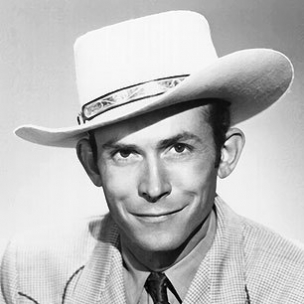
The One The Only The Real Hank Williams


Sometimes something good can come from something bad.

Somebody wearing the ill-fitting name Hank Williams has been going around saying nasty things about President Obama (he’s a Muslim, he hates America). Despite that name being a few sizes too big for him, it appears he has somehow managed to have some success as a musician and as the son of a more famous father. But as with the name, the shoes are also way too big to fill.

Hank Williams (1923-1953) was one of the great musical artists and folk poets in America. He died too young at the age of 29, but had already produced songs that entertained millions and inspire musicians fifty years after his death. His songs have been covered by scores of artists as diverse as Al Green, Beck, Bob Dylan, Bruce Springsteen, George Thorogood, Keb’ Mo’, Keith Richards, Red Hot Chili Peppers and Tom Petty.

If you haven’t heard of Hank Williams, you are missing something. If you haven’t heard him, because you “don’t like country music”, you are missing something. Don’t believe it? Believe the Pulitzer Prize Board, which in 2010 awarded him a Special Citation for “his craftsmanship as a songwriter who expressed universal feelings with poignant simplicity and played a pivotal role in transforming country music into a major musical and cultural force in American life.”

So if someone named Hank Williams, Jr. is going around badmouthing the President, what good can come of that?

Just this: In the midst of looking around for things to say about Hank Williams, a brand new independent film came to light. The Last Ride is the story of a fateful trip. Hank Williams was heading out for a series of concerts to end in Canton, Ohio on New Year’s Day 1953. Bad weather prevented flying, so a college student was hired to drive him from Nashville to the concerts. Before reaching Ohio, on January 1, Williams died in West Virginia. Last Ride is the story of that trip. The film has already been screened in New York and Los Angeles, and later this week can be seen in Nashville, Dallas, Seattle and Bakersfield.

There’s plenty of Hank Williams music around. Give it a listen. Because if the only Hank Williams you know about is the Junior who seems so out of touch with reality, there’s someone to discover. Hank Williams—the one the only—was nothing but real.

Hear the lonesome whippoorwill
He sounds too blue to fly
The midnight train is whining low
I’m so lonesome I could cry

I’ve never seen a night so long
When time goes crawling by
The moon just went behind a cloud
To hide its face and cry

Did you ever see a robin weep
When leaves begin to die
That means he’s lost the will to live
I’m so lonesome I could cry

The silence of a falling star
Lights up a purple sky
And as I wonder where you are
I’m so lonesome I could cry

The Financier at 100


This year is the 100th anniversary of Theodore Roosevelt’s independent run for the Presidency on the Progressive Party ticket. He continues to come up in aspirational discussions, as much or more from Democrats as from Republicans. President Obama referred to him admiringly earlier this year. The Progressive Party Platform of 1912 remains a touchstone statement of political ideals.

The year 1912 is significant in other, less celebrated ways. At that time, issues of economic and social disparities were not limited to politicians. This year is the centennial of author and journalist Theodore Dreiser’s novel The Financier, the first book in his Trilogy of Desire series about tycoon Frank Cowperwood, followed by The Titan (1914) and The Stoic (1947).

Starting with Sister Carrie (1900), Dreiser explored the personal and social impact of class distinctions and ever-increasing wealth on early twentieth-century America. Dreiser was a pioneer in what’s come to be called the naturalist movement, telling stories in a plain, unromanticized way that allowed the darkest moments and motives to speak for themselves. More than a century later we’ve come to accept that style of storytelling. But at the time it was not the norm, and the effect on literature was profound.

Among the robber barons of the nineteenth century, Charles Tyson Yerkes (1837-1905)  is less well-known than J. P. Morgan, Andrew Carnegie or John D. Rockefeller. But you know some of his legacy, including the Chicago Loop and the London Underground. Yerkes’ roller coaster life of ambition—rich today, felon tomorrow, richer the next—was the inspiration for Dreiser’s financier Frank Cowperwood.

Any story of unbridled greed and ambition, fiction or non-fiction, is so common that it is hardly worth mentioning, especially if it is a hundred years old. But Theodore Dreiser was no ordinary observer, attested to by his stature as one of America’s great novelists. At the end of the first volume of Frank Cowperwood’s rise and fall and rise, Dreiser includes a curious little coda. Just a few paragraphs long, it is a description of a fish whose “great superiority lies in an almost unbelievable power of simulation.” The language may seem a bit dense for the twenty-first century reader, but in the context of The Financier, the point is clear:

You cannot look at it long without feeling that you are witnessing something spectral and unnatural, so brilliant is its power to deceive. From being black it can become instantly white; from being an earth-colored brown it can fade into a delightful water-colored green. Its markings change as the clouds of the sky. One marvels at the variety and subtlety of its power.

Here it is in its entirety:

Concerning Mycteroperca Bonaci

There is a certain fish, the scientific name of which is Mycteroperca Bonaci, its common name Black Grouper, which is of considerable value as an afterthought in this connection, and which deserves to be better known. It is a healthy creature, growing quite regularly to a weight of two hundred and fifty pounds, and lives a comfortable, lengthy existence because of its very remarkable ability to adapt itself to conditions. That very subtle thing which we call the creative power, and which we endow with the spirit of the beatitudes, is supposed to build this mortal life in such fashion that only honesty and virtue shall prevail. Witness, then, the significant manner in which it has fashioned the black grouper. One might go far afield and gather less forceful indictments—the horrific spider spinning his trap for the unthinking fly; the lovely Drosera (Sundew) using its crimson calyx for a smothering-pit in which to seal and devour the victim of its beauty; the rainbow-colored jellyfish that spreads its prismed tentacles like streamers of great beauty, only to sting and torture all that falls within their radiant folds. Man himself is busy digging the pit and fashioning the snare, but he will not believe it. His feet are in the trap of circumstance; his eyes are on an illusion.

Mycteroperca moving in its dark world of green waters is as fine an illustration of the constructive genius of nature, which is not beatific, as any which the mind of man may discover. Its great superiority lies in an almost unbelievable power of simulation, which relates solely to the pigmentation of its skin. In electrical mechanics we pride ourselves on our ability to make over one brilliant scene into another in the twinkling of an eye, and flash before the gaze of an onlooker picture after picture, which appear and disappear as we look. The directive control of Mycteroperca over its appearance is much more significant. You cannot look at it long without feeling that you are witnessing something spectral and unnatural, so brilliant is its power to deceive. From being black it can become instantly white; from being an earth-colored brown it can fade into a delightful water-colored green. Its markings change as the clouds of the sky. One marvels at the variety and subtlety of its power.

Lying at the bottom of a bay, it can simulate the mud by which it is surrounded. Hidden in the folds of glorious leaves, it is of the same markings. Lurking in a flaw of light, it is like the light itself shining dimly in water. Its power to elude or strike unseen is of the greatest.

What would you say was the intention of the overruling, intelligent, constructive force which gives to Mycteroperca this ability? To fit it to be truthful? To permit it to present an unvarying appearance which all honest life-seeking fish may know? Or would you say that subtlety, chicanery, trickery, were here at work? An implement of illusion one might readily suspect it to be, a living lie, a creature whose business it is to appear what it is not, to simulate that with which it has nothing in common, to get its living by great subtlety, the power of its enemies to forefend against which is little. The indictment is fair.

Would you say, in the face of this, that a beatific, beneficent creative, overruling power never wills that which is either tricky or deceptive? Or would you say that this material seeming in which we dwell is itself an illusion? If not, whence then the Ten Commandments and the illusion of justice? Why were the Beatitudes dreamed of and how do they avail?

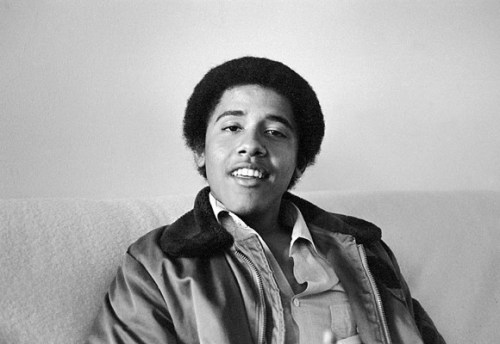
Barack’s Birthday Card

This is not intended as a criticism of President Barack Obama, or of First Lady Michelle Obama (who by all accounts is loved by a vast majority of Americans, and much more popular than her husband), or of the Obama campaign.

But I did receive this e-mail message:

Bob —

Barack’s 51st birthday is coming up.

I hope you’ll wish him a happy birthday by signing the card we’re putting together for him.

You’ll be adding Bob, alongside thousands of other supporters’ names — folks from all 50 states, from all different backgrounds. Together, all those names will be impressive — they’ll show the strength of this campaign and our support for Barack.

And I know he’s going to love it.

Add your name today — and then ask a friend to join you:

These last few months until Election Day won’t be easy — so let’s show Barack we have his back every step of the way.

– Michelle

The short answer, respectfully and with all the regard I have for the President, is “maybe”.

Does the President really need a birthday card? Given the choice, wouldn’t he rather have our money and our votes?

The President’s birthday on August 4 just happens to be a few days away from my own. It is reported that they will be holding a small birthday party for the President in Chicago, which will serve as a campaign fundraiser. As far as I know, unless it’s a big surprise, nobody will be holding a fundraiser for my birthday.

It is unlikely that the President, the First Lady or the campaign are reading this. And if you are, shame on you, because you all have way more important things to do. But on the odd chance you are, here’s a deal. If Barack Obama, or even Michelle Obama, or even Jim Messina or some other campaign staffer will sign my card, I will sign Barack’s. It’s the least I can do.

Scissoring And Shunning Sheldon

Pay no attention, just for a moment, to the images above of billionaire Romney supporter Sheldon Adelson and to Sarah Silverman demonstrating the sexual act she would perform on him, if he agrees to instead give his money to Barack Obama.

The diversity of Jewish views on spiritual, social and political issues might be described as a crazy quilt that has never been pieced together. Or as a big tent without a ringmaster, no Pope to say what goes and what does not. This is admirable in some ways, but especially in stressed times, it can be uneasy and inconvenient.

Progressivism is a constant in Jewish thought and action, and just as constantly challenged by pragmatic and contrary considerations. The rise of Jewish neo-conservatism in America is a recent example, and the ready acceptance of Christian Evangelical support of Israel is another—paradoxical in that certain Christian eschatology clearly envisions the end of the Jewish people in Israel, at least as Jews.

Sheldon Adelson is taking this to a next step. He is using his unlimited campaign resources to target and convince Jews who may have mistakenly voted for Obama last time that only Mitt Romney and the Republicans offer a true Jewish vision of America and the world.

That’s where Sarah Silverman comes in. Having little by way of intellectual or humanistic argument to convince him, she offers to perform an exotic sex act on him,  if he will transfer to Obama the $100 million he has promised to use on behalf of Romney. We are going to hear a lot about bad taste, going too far, etc., but this is an indecent and brilliant piece of satire on many levels, worthy of tragic comic god Lenny Bruce.

Still, Sheldon Adelson is not going to take up this proposal. So here is another more decent one.

Even though Judaism has no final arbiter, outside of certain sects, this doesn’t mean that the Jewish communities are judgment-free. So while Sheldon Adelson can’t be “excommunicated” it can be made clear by other Jews that the agenda he is promoting with a tiny bit of his massive fortune does not represent Jewish ideals and that what he is doing is a schanda fur die goyim—a shame before the people and the nations.

Whether or not he gets scissored by Sarah Silverman, Sheldon Adelson should be shunned. There is no way to make it official, and even if there were the guess is that his billions could fix it. But conscience can’t be bought, any more than elections can (or that’s what we used to think anyway). Whether or not one is a Jew, let alone a “good” Jew, is something ultimately left to God and the individual. But that shouldn’t stop us from making clear that those who claim to act in the name of Judaism are not necessarily one of us.

Us And Them: Presidential Pink Floyd

In response to ABC’s Robin Roberts’ questions about Mitt Romney’s tax returns, Ann Romney stood firm:

“We’ve given all you people need to know and understand about our financial situation and about how we live our life.”

The benefit of the doubt might indicate that “you people” meant “the media” rather than the huddled masses yearning for information and transparency. But it does seem to fit the storyline that the Romneys believe, appropriately, that the rich are different.

In either case, Pink Floyd’s Us and Them from Dark Side of the Moon came to mind. Us and Them is hauntingly beautiful and multivalently obscure. Hundreds of interpretations have been generated (war? money? Kent State? Syd Barrett?). Who knows? This is art and Pink Floyd, for God’s sake, and like the rest of Dark Side it both washes over you and seeps into you.

Us and them
And after all we’re only ordinary men.
Me and you.
God only knows it’s not what we would choose to do.

Black and blue
And who knows which is which and who is who.
Up and down.
But in the end it’s only round and round.

Haven’t you heard it’s a battle of words
The poster bearer cried.
Listen son, said the man with the gun
There’s room for you inside.

Down and out
It can’t be helped but there’s a lot of it about.
With, without.
And who’ll deny it’s what the fighting’s all about?

Us and Them is clearly the theme of this Presidential campaign. So much so that we should adapt the Dark Side of the Rainbow approach, in which Dark Side of the Moon is mind-blowingly synchronized as the soundtrack to The Wizard of Oz. In this case, Dark Side can be synchronized to your choice of campaign videos. This is not as crazy as it sounds, especially given that both Obama and Romney have exhibited their musical chops. It is doubtful that either one has ever tried singing anything from Pink Floyd, or in Romney’s case even heard the band, but it would be fun and enlightening. The bright promise of politics in Eclipse, maybe?:

All that you touch
All that you see
All that you taste
All you feel.
All that you love
All that you hate
All you distrust
All you save.
All that you give
All that you deal
All that you buy,
beg, borrow or steal.
All you create
All you destroy
All that you do
All that you say.
All that you eat
And everyone you meet
All that you slight
And everyone you fight.
All that is now
All that is gone
All that’s to come
and everything under the sun is in tune
but the sun is eclipsed by the moon.

There Is No MAD In Politics


The Supreme Court decision in American Tradition Partnership, Inc. v. Bullock confirms that states like Montana must follow the rule of Citizens United and allow corporations the same political speech rights as individuals, including speaking money in elections.

War Games (1983) is a charming movie with a serious message. The charming comes from a young Matthew Broderick, playing a computer geek whose gaming nearly starts a global thermonuclear war. He is able to avert it, and the serious message for everyone is spoken by the computer: “The only winning move is not to play.”

When nuclear weapons were used for the first and only time in 1945, and it was obvious that portions of the world could be destroyed in an instant, responses followed.  There were moves to keep them out of the hands of “bad guys”, there were demonstrations to “ban the bomb” from everyone, there were attempts to limit and reduce the weapons that everyone eventually got.

And then there was the idea of Mutually Assured Destruction (MAD). It was simple: If anyone with those weapons could as easily be destroyed as they could destroy, it would be “madness” for them to strike. And as much as our deepest humanity wants to deny it, MAD is the reigning paradigm that has prevented nuclear weapons from being used even once in the almost seventy years since Hiroshima and Nagasaki.

In post-Citizens United politics, there is no MAD. There is worthwhile talk of disclosure, transparency and constitutional amendments to at least moderate the influence of corporate money in elections. But there is also a realpolitik sense that in the meantime those with the biggest weapons may well win. And the prospective winners have no worries about being destroyed by any opposing arsenal. That is why, understandably, the Obama campaign very quickly pivoted on the issue of Super Pacs. It was a matter of political survival.

MAD has saved us from blowing ourselves up. It is not available to save the politics of democracy. It is time for the most creative minds to figure out something beyond the virtuously obvious but ineffective. Whatever that might be.

Pete Rose And The Healthcare Decision

It looks as if the Supreme Court will issue its decision on the Affordable Care Act (aka Heritagecare) this week. An unreported story is the relationship of this to baseball legend Pete Rose.

There has probably been more betting on the outcome of this legal question than any before, at venues such as Intrade. Presumably the bettors include some number of lawyers; with more than a million lawyers in the U.S., what are the odds of that?

Major League Baseball has so far banned Pete Rose from the Hall of Fame because he bet on games. Not games he or his team were involved in, just games. Ever since the Black Sox scandal almost a century ago, baseball has had a zero tolerance rule on gambling by anyone in the sport.

The courts and the bar associations that regulate the practice of law have well developed and strict rules of conduct for lawyers. Obviously illegal gambling is just that— illegal—and clearly out of bounds. Gambling addictions that affect practice have also taken a prominent place in the rules of professional responsibility.

But it doesn’t appear that reasonable and prudent legal gambling of any kind is an ethical problem for lawyers. Unless, that is, there is some kind of Pete Rose issue about it. Specifically: Can lawyers responsibly and ethically bet on court decisions with which they have absolutely no relationship? The answer awaits investigation, and maybe some law review articles.

As for the case itself, they say that only fools predict difficult Supreme Court decisions. So a fool rushes in:

1. The Court will have the law stand or fall as a whole and not pick and choose. There is no severability clause. The court can appropriately say that with such an integrated and complex piece of legislation, if Congress got it wrong constitutionally, it is up to Congress to get it right.

2. If it falls on the basis of the mandate, as widely expected, the reasoning of the majority is going to be a sight to behold and study. A principle of jurisprudence at every level is to decide legal issues as narrowly as possible, unless there is an intention to make a bold legal statement. When the Supreme Court speaks, the bolder the statement, the more far-reaching the impact. In a three-branch democracy, any statement about the limits of powers is very loud and long-echoing.

3. We may not have nine opinions, but we may have an almost complete set of concurring and dissenting opinions. For those who have never read dissents in Supreme Court opinions, be aware that in difficult and controversial cases, it is not unheard of or inappropriate for dissenting Justices to politely but clearly state that the majority is in all respects wrong (see the four dissents in Bush v. Gore).

And now, the bottom line. Intrade traders have placed their bets, and they say the chances of “The US Supreme Court to rule individual mandate unconstitutional before midnight ET 31 Dec 2012” are 76.5%. Judging by the comments on the site, the bettors are some combination of knowledgeable thinkers and anti-Obama ideologues. Intrade and those analysts willing to go out on a limb are right. The mandate will be found wanting, with strenuous disagreement among the Justices. And on the basis of non-severability, so will the entire Affordable Care Act.

Or, then again, maybe not.