Bob Schwartz

Tag: Barack Obama

Are Presidential Comparisons Odious?

Lydgate - Horse, Sheep and Goose
Comparisons are odious.

This phrase, roughly meaning that comparing people and situations can be unhelpful and counterproductive, is centuries old. It is variously attributed, but as good a source as any seems to be medieval British writer John Lydgate. It comes from his poem The Debate of the Horse, Goose, and Sheep (1436–37).

(For those concerned that this blog just makes stuff up, be assured that scholarly authorities have been consulted. Maura Nolan’s John Lydgate and the Making of Public Culture (2006) was not read in its 290-page entirety, but it was used. Consider this pertinent passage:

Lydgate’s debt to Gower in this passage is obvious; though he has clearly read both Isidore and Higden’s accounts (and possibly Bromyard’s as well), he takes from the Confessio Amantis the notion that the vagaries of Fortune constitute the lesson of the exemplum, a lesson he later directly applies to present-day rulers, ‘‘wise gouernours of euery londe and region’’ (65, lines 25–26). Note: Lydgate makes a similar point in ‘‘The Debate of the Horse, Goose, and Sheep,’’ dated 1436–37 by Pearsall ( John Lydgate (1371–1449), 51), telling his readers that ‘‘thees emperours . . . with ther victories & triumphes’’ (lines 638–39) are subject to Fortune and fall. The political message is explicit: ‘‘Beth war, ye pryncis, your suggettis to despise’’ (line 643). See MacCracken, ed., Minor Poems of John Lydgate, part 2, 539–66)

(Please feel free to show off to your friends and colleagues who wonder if your liberal arts degree, if you have one, is worth anything. Knowing that “In the fifteenth century Lydgate was the most famous poet in England, filling commissions for the court, the aristocracy, and the guilds. He wrote for an elite London readership that was historically very small, but that saw itself as dominating the cultural life of the nation” should impress them.)

About Presidents and odious comparisons: In the many crises of his presidency, including the most recent, President Obama has endured more comparisons than perhaps any other President. Just in the past few days, we have heard about Woodrow Wilson, George W. Bush, Lyndon B. Johnson, Ronald Reagan, Bill Clinton, Jimmy Carter, John F. Kennedy, and in this very blog, Harry Truman.

Comparisons are natural for a few reasons. It is an office that has been held by a relatively small number of people over more than two centuries, and so how you do the job is defined as much by what others did as some sort of abstract definitions and expectations. There is also the flawed logic: the United States is the greatest country in the world, the President is the leader of the United States, therefore the President is the greatest leader in the world. At moments yes, but please check history, the sometimes impossibility of situations, and the nature of imperfection of all powerful humans. Finally, Obama is so unlikely, if not unlike any of his predecessors, that you almost want to jump to comparisons.

My best attempts to find out what the horse, sheep and goose were debating about six centuries ago, and what it has to do with comparisons, have come up empty. So I do have had to make this part up. If the debate was about which one is superior—whether a horse, sheep or goose is better—the answer is elusive and equivocal. This is in no way to cut the current President the slightest bit of slack, as readers of the blog already know. But the presidency is not a single job, even in more stable and simple times, which these are not. So compare away, but don’t let those comparisons obscure clear thinking and distract us with reveries (or lingering antipathies) about this leader or that. That would be odious, in a country and world with odium enough.

Syria: So This Was the Plan All Along

The Sting
The Syria strategy may have looked improvised or haphazard. It turns out that all along it was a master plan. A sting. A long con. Aimed at having Assad turn over his chemical weapons.

It began with President Obama’s mention of a chemical weapons red line two years ago. Even after there was evidence that chemical weapons were being used a year ago, it was too soon to make a play. And then it was time.

Everybody knew their part. The President beat the limited and unbelievably small war drums. The international community and Congress demurred, feigning reluctance. Most of all, John Kerry’s penchant for overtalking was the most valuable tool. One loose remark after another, and then the trap was sprung. He mentioned the “impossible” possibility that Assad would turn over his chemical weapons in a week. The State Department would pretend that this offhanded remark was not administration policy. Assad and his Russian handler took the bait. Very soon—maybe not a week but soon—Syrian chemical weapons would be in the hands of the international community, ready to be destroyed.

Back in the real world, here is another possible behind the scenes scenario.

John Kerry continued to say stuff, lots of stuff. Asked if there was any way for Assad to avoid a strike, Kerry did indeed mention turning over the chemical weapons in a week. It was an accident.

Vladimir Putin and Bashar al-Assad are power hungry political survivors, one more venal and voracious than the other. One or both of them sensed an opening.

It was Putin who may have said: This chemical weapons business is bad for all of us. The world knows you are our client state, and while I don’t mind defending you most of the time, this isn’t in either of our best interests. You can do whatever you want to hold on to power by conventional means; we will continue to help. The chemical weapons can be our trump card and it is time to play it. Once we come to the table, we can keep this negotiation going for months. As long as there is the appearance or the slightest possibility of progress, there will be no military action. Meanwhile, you can continue to pursue your war with no interference. I get to look a little bit like a hero and statesman—I don’t expect miracles—and you get to look like someone who isn’t averse to being part of civilized humanity. We both win.

The American scenario is already unfolding. While the administration is cautious about this latest development, it does claim that whatever good comes out of it will be due to their willingness to respond militarily. For the moment, it is hard to say who is more relieved, the President or Congress. The President may avoid having his request for authorization turned down. In Congress, those who continued to sit on the fence may be gloating, as a vote may be delayed or never taken.

And John Kerry? With all due respect, when you are smart and articulate, if you keep talking long enough, something good is bound to happen.

Syria Videos and the ASPCA

ASPCA Ad
Almost everyone knows the Sarah McLachlan television ad for the ASPCA, her haunting song Angel playing as background for heart-tugging scenes of cats and dogs. It is widely reviled and sometimes mocked: some viewers can’t lunge quickly enough for the remote. It is also one of the most successful fundraising ads ever, considered by some a game changer.

This weekend, supporters of a military strike against Syria are using a similar approach. Horrific videos of victims, especially children, in the throes of chemical warfare in Syria are now circulating.

Emotional rather than rational appeals have to be carefully calibrated. There may be a sense that the emotional appeal is a last resort, because your rational argument is weak or failing. Viewers may also feel unduly manipulated, even insulted, by the premise that they are too stupid or uncaring to get the point otherwise. Finally, disgust may take over, nearly making further appreciation of whatever good arguments there are impossible to hear.

The ASPCA ad worked not because people were entirely guiltily coerced into giving. Those who did manage to stay and were not turned off had an aha moment: you know, I thought about it some more, and I get the point. Animals are mistreated and homeless, something I care about, and I can help.

This is where the Syria horror show falls down. Even when those who aren’t disgusted to the point of numbness think about it, they have trouble getting the point because, even if there is or once was a focused point in Syria, it keeps shifting, as do the rationales, as do the discussions of outcomes.

If you give to the ASPCA, there is reasonable certainty that your donation will go to programs reasonably designed to help mistreated and homeless animals. If you give your approval and support to an attack on Syria, what exactly are you getting for that donation?

Extreme emotional appeals are not necessarily illegitimate; in some cases, as with the Holocaust, they are necessary. But care is the keynote, knowing exactly what you are saying in support of what you are showing. Right now, the Syria videos are being shown in the context of a bunch of different explanations. The audience is left not only with uncertainty about where it all leads or should lead, but with a diminished regard for the presenter. These are serious times, and when the presenter is the President of the United States, none of us can afford that.

Yellowcake and Red Line: The Colors of Casus Belli

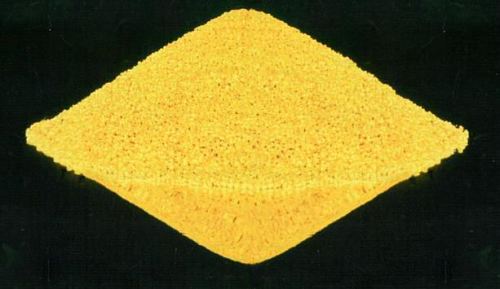
Yellowcake
You may not remember yellowcake. Not the kind you eat. The kind that is uranium, the stuff of nuclear fission, the stuff of weapons of mass destruction, the stuff that was supposed to be in Iraq but was never found there.

Colors seem to be troublesome in talking about reasons for going to war. So maybe President Obama should have picked a different metaphor than red line. Line in the sand comes to mind. Of course, lines in the sand have a different quality. They are harder to see, and are subject to being erased by wind or water, or by a quick brush of the foot.

Maybe better to stay away from colors and lines altogether, and instead do the much harder, painful and less appealing work, leaders and citizens, of talking honestly about our strengths and limitations, the world we have and the one we want to have, and how to practically and ideally get from here to there. That would be a nice grownup change from childish colors and macho ultimata.

What Would Truman Do?

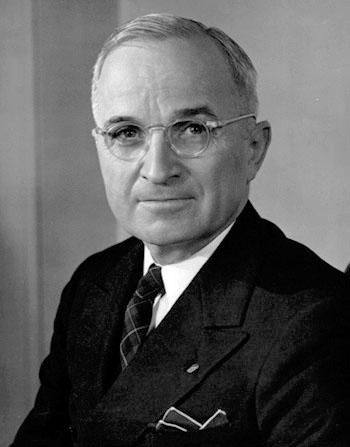
Harry Truman
Harry Truman is maybe the most interesting American President of the twentieth century, and maybe the most significant.

He held a power that no one had held in human history and he took the decision to use it. He had no precedent to guide him—except maybe God in the Bible. He dropped atomic bombs on Hiroshima and Nagasaki. From that point forward, everyone who uses nuclear weapons will be the second or third to do it.

He is also the only President in the twentieth century without a college degree, and one of the relatively few in American history. Grover Cleveland was the last before him. But there are some before that who did manage to stand out without college, such as George Washington and Abraham Lincoln.

Obama shares some things with Truman, and on other scores couldn’t be more unlike. Truman was an unabashed though pragmatic reformer: he used executive power to desegregate the military, but his Fair Deal liberal agenda failed in the face of a recalcitrant Republican Congress. Truman’s second term was the model for all other second term disasters, marked by a war that was both unpopular and unsuccessful and by a President whose effectiveness was a constant question.

Unlike Obama, Truman was not a spell-binding orator or a scholar. He had come up through politics and to the Senate the old back room way, and his ascension to the 1944 presidential ticket was a matter of political manipulation and happenstance. The legendary 1948 election pitted him against the dapper, smooth talking, hard-nosed, well-educated federal prosecutor and New York Governor. It was considered no contest for Thomas E. Dewey. Truman won.

The reasons that Truman has risen to the top ten on nearly all lists of great American Presidents (he is number 5 on a few) are many. This puts him in the range of both Roosevelts, TR and FDR, both of whom went to Harvard, both of them charismatic patricians with colorful histories and silver tongues. Among Truman’s gifts, the one most associated with him was a plain-spoken decisiveness in word and deed, even if the decision turned out troublesome or wrong.

There were reasons to like Truman at the time of his presidency, and a number of reasons not to. But there was a sense—even those who were his enemies at the time acknowledge it and historians have come to treasure it—that underneath it all was a man who had fought in a world war (only a few Presidents have), a man who had lived a modest life, a man who knew how to practice politics, a man who could surprise by analyzing deeply, a man who faced with the prospect of killing hundreds of thousands of people in a moment gave the order to do it.

Plain speaking. Decisive action. Truman was not the ideal President because there is no such thing. But at every critical juncture, it can’t hurt to ask: what would Truman do?

Syria Indecision: Give Them A (Small) Break

Decision Tree
Hard cases make bad law.

This is a maxim of the legal process. Roughly, it means that cases with lots of moving parts, with lots of collateral considerations, with no clear and straight path to resolution, produce rulings that are unsettling and unsatisfactory and, worse, have limited or counterproductive effect down the road.

Maybe the corollary is that hard foreign cases make bad foreign policy.

The indecision of Congressfolk is usually vexing, as so many of them claim to be weighing the factors, all the while putting their finger in the air to feel which way the wind blows.

This decision on attacking Syria seems to be different. There are certainly plenty of politicians who are trying to look thoughtful as they assess potential electoral damage. But this situation is so complex that for the moment, despite the usual frustration as a voter and citizen, a number of the Senators and Representatives deserve a little bit of a break. A lot of them are understandably having real trouble figuring out what to do—as are many of us.

The complexity isn’t just the result of a force of nature, and isn’t even due entirely to Assad. President Obama may have handled Syria with some degree of insight, intelligence and integrity, but he has made a difficult situation much harder. It is now widely agreed that announcing a chemical weapon “red line” long ago without a clear plan—public or at least private—to respond if and when it was crossed was a mistake. This contingency plan did not have to be tactically certain: how much evidence to need, which particular sites would be targeted. But the much bigger strategic issues—objectives and the dizzying range of possible consequences, good and bad—should have been vetted in all sorts of venues, including Congress.

That didn’t happen. So in short order, we are discussing the international conventions on chemical warfare, the forensics of discovering the use of chemical weapons, our ability to execute a limited strike, all the more or less likely impacts of a limited strike, the interpretation of the history of all our recent wars, comparison of our current situation to all those wars, and even the question of what exactly war is. So we have the Chairman of the Joint Chiefs of Staff telling a House committee this week that an air strike such as the one contemplated would be an act of war, while Secretary of State John Kerry, sitting right beside him, begged to differ: “We don’t believe we are going to war, in the classic sense of taking American troops and America to war.”

Americans are also being asked to learn more about a country and civil conflict that was often regarded as a video clip, sound bite or talking point—including discovering the shocking news that two million people are currently refugees from Syria (including one million children), leaving their country at a rate of one million people every six months.

Among those more or less likely impacts, there is a possibility that even this small action could precipitate wider and deeper crises, ones that might make our previous (mis)adventures look relatively small. We can’t be sure, of course, of this or just about anything else right now.

That’s a lot to discuss and digest. But we only have a few weeks, or so we are told. So, while Congress may be the most disliked institution in the country, seemingly stuffed with people who are uncertain about the proper ratio of self-interest to national interest, on this they are going to get a brief pass while they really do contemplate a genuinely serious and complicated situation. But after that break, when confusion is no longer an option, because deciding is the reason they get the honor and the big bucks, we expect them to vote conscientiously and to explain their vote clearly and unequivocally.

One more small matter: If any of them do vote “Present” in the final roll call on this, they should be expected to fall on their sword and offer their resignation forthwith. With only an 11% approval rate (and dropping), Congress doesn’t have room for any more of that sort of mushy politics.

John Kerry’s Munich Moment: Is Political Reporting Too Polite?

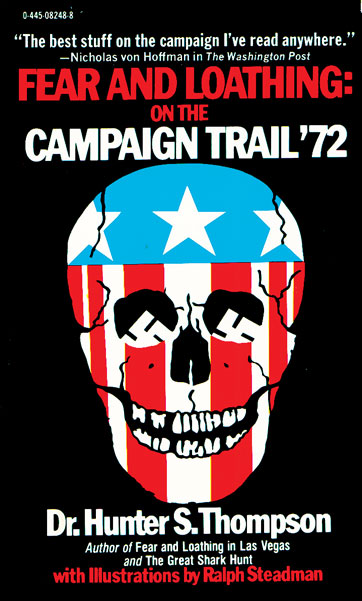
Fear and Loathing on the Campaign Trail
When the going gets weird, the weird turn pro.
Hunter S. Thompson

About a week ago, President Obama said that if Syria’s Bashar Assad was not stopped from using chemical weapons, we might find those same weapons used against America. When asked about this days later, a presidential spokesman ignored the question. This weekend Secretary of State John Kerry said that the decision to stop Assad’s use of the weapons was a “Munich moment.” Meaning: Just as the Munich Agreement of 1938 condoned Hitler’s occupation of Czech territory, emboldening and enabling his vision of global conquest, so would our failure to respond to Assad’s use of chemical weapons further his insidious master plan.

Experts who have bothered to talk about the prospect of these chemical weapons being used against America have dismissed it out of hand. As for the “Munich moment,” that requires a bit more nuance. Nobody claims, at least not yet, that Assad has any extra-territorial plans or delusions of regional grandeur. His plan seems to be simply to punish any Syrians who stand in the way of him and his family fiercely holding on to power. Garden variety despotry; Assad is no Hitler. If “Munich” means appeasing his inhumanity, that is also silly. The bulk of Assad’s inhumanity is also garden variety: guns, bombs, etc. Nothing that Obama has proposed is intended to take care of that.

The region really did have a Munich moment in 1990. Saddam Hussein invaded and annexed Kuwait. A thirty-four nation coalition, led by the U.S., pushed him back to his own borders. Both the history of the Gulf War and its aftermath—including the decision by Bush 1 to go no further and the decision by Bush 2 to finish the job—are beyond the scope of this note. This is just to say that if you want to know what a Munich moment looks like, that was it.

The authenticity and civility of our political life are always in question. We ask whether politicians and their supporters are speaking truth, saying what they mean, meaning what they say, and saying it all in a way that is reasonably respectful and polite. That’s a lot to ask of them, and our expectations are right now pretty low. It’s also a lot to ask of political pundits and commentators. Unconstrained by the limitations of office or election, some of them, left to right, go wherever their opinions take them. Fish gotta swim, birds gotta fly.

Then there are political journalists. This is where things get tricky. Calling a political statement a lie or stupid, or calling a politician a liar or stupid, is supposed to fail the professional standard on a few scores. It supposedly puts a journalist’s objectivity in question; that sort of discourse is best left to political minions and commentators. And if not carefully couched or softened, it can come off as inappropriately impolite and uncivil, another professional faux pas.

We should all miss Hunter S. Thompson right about now. His suicide in 2005 left a gap in political journalism that hasn’t been filled and probably never will be. He didn’t begin as a political reporter. He came up as a writer during the time of the so-called “new journalism” in the 1960s (Tom Wolfe, Gay Talese, et al), when the lines between the factual, the personal and the expressive broke down. By his own admission, Thompson was crazy, formally or informally; he was also a stunningly talented observer and writer. When he hit the political beat, it was right place, right time, right writer. If politics was an exercise in duplicity, venality and near-insanity, it needed a professional journalist just as insane. The collection of his Rolling Stone coverage of the 1972 presidential election, Fear and Loathing on the Campaign Trail, is not just on another planet from the classic campaign coverage up to then; it is in another solar system.

Thompson had a special relationship with Richard Nixon. He ended up respecting and applauding Nixon’s brilliant mind as an expert football strategist, but otherwise Thompson despised him. He wrote a 1994 obituary of Nixon.  In it he continues the case for that untempered loathing, but in this excerpt also explains why it is an appropriate attitude for a journalist:

Kissinger was only one of the many historians who suddenly came to see Nixon as more than the sum of his many squalid parts. He seemed to be saying that History will not have to absolve Nixon, because he has already done it himself in a massive act of will and crazed arrogance that already ranks him supreme, along with other Nietzschean supermen like Hitler, Jesus, Bismarck and the Emperor Hirohito. These revisionists have catapulted Nixon to the status of an American Caesar, claiming that when the definitive history of the 20th century is written, no other president will come close to Nixon in stature. “He will dwarf FDR and Truman,” according to one scholar from Duke University.

It was all gibberish, of course. Nixon was no more a Saint than he was a Great President. He was more like Sammy Glick than Winston Churchill. He was a cheap crook and a merciless war criminal who bombed more people to death in Laos and Cambodia than the U.S. Army lost in all of World War II, and he denied it to the day of his death. When students at Kent State University, in Ohio, protested the bombing, he connived to have them attacked and slain by troops from the National Guard.

Some people will say that words like scum and rotten are wrong for Objective Journalism — which is true, but they miss the point. It was the built-in blind spots of the Objective rules and dogma that allowed Nixon to slither into the White House in the first place. He looked so good on paper that you could almost vote for him sight unseen. He seemed so all-American, so much like Horatio Alger, that he was able to slip through the cracks of Objective Journalism. You had to get Subjective to see Nixon clearly, and the shock of recognition was often painful.

It’s not that we don’t have good and great political journalists working today; we may have more than ever. And it’s not that there aren’t plenty of partisans pointing out gaps in someone else’s facts and reasoning.

It’s just that an amazing amount of stuff gets said and seems to get by far too unchallenged or challenged too narrowly or politely. It wasn’t so long ago that the Republican party produced a nominating spectacle that is widely characterized as a circus or a clown car. But at the time, journalists were unwilling to even hint at how ridiculous some of it was, as the party of Lincoln earnestly considered nominating Herman Cain or Donald Trump as their standard bearer.

Sure we need objectivity, maybe now more than ever in a social media enriched/poisoned environment. What we shouldn’t do is confuse objectivity with comity and politeness. If Hunter Thompson was shockingly blunt—and so much fun to read—it was to wake people up from the soporific effect of treating truth and lies, intelligence and stupidity, as rhetorical equivalents, in the name of objectivity, politeness and respect. In the name of keeping the peace. That would be the media Munich moment.

Update: Rereading this post, I have to add that the closest we come to Hunter S. Thompson’s “gonzo” political journalism is The Daily Show on Comedy Central. This revelation came watching the first few days of Jon Stewart’s return after his summer away, coming back to a grim and arguably ridiculous political crisis. The Daily Show’s trick is to protest (too much) that it is a “fake” news show, which gives it total license to completely get its facts straight while speaking truth to absurdity. And when, as this week, vicious jokes aren’t quite enough, Stewart vents his frustration directly and straight, no humor. Oh, to see what The Daily Show would have made of the Nixon Years.

Syria and the Fog of Or Else

Fog
Rhetoric is no substitute for reasoning. Or strategy.

President Obama may soon be undertaking a response to Syria’s use of chemical weapons or going to Congress with the case for such a response.

His speculation yesterday that Syrian chemical weapons might end up in an attack on America, therefore implicating our national interest, is far-fetched. But it is a necessary thing to say, given the way that matters have developed.

The U.S. stood by as President Assad brutally attacked his own people so that he could maintain power in Syria. Despite the fact that the U.S. has always tried to steer global events subtly or not so subtly, intervening in the internal strife of sovereign nations is a “red line” that we are reluctant to cross. This doesn’t mean we haven’t crossed it. It just means that if and when we do this, we do our best to make a colorable, principled case for acting under exceptional circumstances.

There are three other reasons why we’ve held back in Syria, now and over the past two years. There is our very shaky track record of Middle East intervention. There is a book-length list of potential consequences of such intervention, starting with a more violent and destabilized Syria and ending with a more violent and destabilized region and world. Finally, we have no express idea of what we want and how we want to accomplish it, without which ill effects are all the more likely if we do choose to act.

Hints of chemical weapons allowed Obama to employ his own red line: no chemical weapons—or else. Because of world history and established international agreement, certain weapons of mass destruction are deemed so out of bounds that action is semi-automatically called for. That is, using chemical weapons trumps sovereignty. The international community might stand by for the internal slaughter of thousands, no matter how inhumane, but it is quasi-obligated to answer when certain civilized conventions come into play. In other words, the chemical weapons would offer a license to act, even if the other inhumanities didn’t

A license to act—if we knew what we could reasonably achieve, if people believe that it is worth losing lives to enforce the ban on chemical weapons, if it is actually about chemical weapons, if acting doesn’t make matters worse, if we knew exactly what we planned to do and how we would deal with all the possible aftermaths. None of which is clear now. None of which is likely to be clear anytime soon.

Welcome to the fog of or else.

Obama Must Renounce His Hawaiian Citizenship

Ted Cruz Birth Certificate

Now that we’ve (mostly) agreed that Barack Obama was born in Hawaii, there’s one final step: he must renounce his Hawaiian citizenship to legitimately serve as President of the United States.

That’s actually not right. Hawaii was a state when Obama was born there, and before that, it was an American territory (remember Pearl Harbor?).

But it is a splashy way to introduce the latest chapter in the story of Ted Cruz as possible presidential candidate.

Ted Cruz, U.S. Senator from Texas, was born in Calgary, Alberta, Canada to an American mother. The question of whether he is qualified to be President arises from Article Two, Section 1 of the U.S. Constitution, which restricts the presidency to “natural born Citizen[s]”. Even though there has been a colloquial understanding that this means “born in the U.S.A.”, the point has never been litigated, and there is a growing sense that it simply means born American, rather than naturalized.

There is no dispute that Cruz was an American citizen at birth, being born of an American citizen, even if abroad. But after he released his birth certificate this weekend (see above), to answer speculation that he might not be qualified, a new wrinkle has cropped up. As indisputably as he is an American citizen, it now appears that he is—at this very moment—also a Canadian citizen. A number of experts on Canadian law are making it clear that when you are born in Canada, citizenship is automatic. You can renounce it later on if you choose, as some do. But right now, Cruz is both an American and Canadian citizen, able to vote in Canadian elections and even run for office there. (Note how weirdly complicated this would have been had he been born there before 1947, when his birth would have made him both an American citizen and a British subject: God Save the Queen.)

It isn’t clear whether Cruz has long known he was also a Canadian citizen, whether he secretly participates in Canadian ceremonies, whether he privately exhibits the legendary Canadian civility and sensibility, whether his support of the XL Pipeline was specially motivated, whether his plan to bring the U.S. government to a halt is meant to make his Canadian homeland look better by comparison, whether he still has feelings for Her Royal Highness, given that he is a citizen of the Commonwealth, if not the United Kingdom.

There is a political issue here, though one that Cruz might be able to turn to his advantage. He might be able to continue his Senate role as a dual citizen (at least it’s Canada, not Russia), but the presidency is another matter. If he does choose to renounce, he could do it on an ideological basis, pointing out how the socialist leanings of his homeland to the north have left it far behind the achievements of free market America, and how, unless America is careful, it will end up exactly like Canada—the land he chose to leave at the age of four, precisely because he knew that America was the true land of freedom and opportunity. Not to mention a whole lot warmer, particularly in Texas.

Politics Usual or Unusual

Barack Obama
Most presidents, even the ones you love to hate, are idealists. At least at the start. For some, depending on the times, the makeup of Congress, and the skills of the national CEO , the presidency is where dreams go to die. Since the enemies of Obama–and he has bitter enemies in high places—have raised the ghost of Nixon, it is a good time to honestly set perspective.

The best way to measure the historic egregiousness of presidential misperformance is to count the friends who remained even as it was unfolding. There is a point at which that inchoate thing we might call the honor of the country is at stake, rather than just individual transgressions. Lying in office, either about sex or about phantom weapons, is apparently not enough to turn everybody against you. Killing the economy and then handing a near lifeless body to your successor isn’t either. Blowing up the Constitution is.

So what we have at this moment is not Nixonian by any stretch. What we have is the unpretty side of presidential pragmatism, the point at which feeling forced to play the game as it is played, rather than the way you had dreamed it could be played, is on unflattering display. Obama’s no good very bad week has led to a variety of dancing that no one should watch. There is Republican grave dancing, Obama supporter apologist dancing, and administration pretzel dancing. This last is exemplified by the Attorney General distancing himself from a possibly justifiable but absolutely controversial decision to monitor journalists to discover leaks, and at the same time pushing for a media shield law that would help make the particular investigation more difficult, less likely, or even impossible. That is, stop us before we kill again.

This all adds up to something not that spectacular, but for some a little disheartening in its plainness and obviousness. Politics is a life size business. Once in a while, some come along who stand taller, act more forthrightly, speak a little more inspiringly in ways that make us believe in the possible and in ourselves. We must have this because without vision, the people really do perish. Obama seems to be one of those. This week, though, he is stuck in a moment that is more usual, looking more usual. The unusual will be back, or at least it should, but right now, what it is is governing.