God of Moses God of Jesus God of Mohammed God of infinite names Sitting by the desert sea Pained and grieved. This is madness. These people Every inclination Is only evil All the time.* They take our names In vile vain.** There is the water Let us drive them in And start again Just like days of old Do better next time. But how would they learn? Hard hearts may soften Dissolved in blood and tears. We won’t abandon We don’t approve.
Whether you are living through war directly, living with its aftermath, or just thinking about it at a distance, peace is or should never be far from mind.
Here at a distance, thinking and talking about the Israel/Gaza war has been non-stop and contentious. Peace, however elusive and immediately unlikely, is not far from mind. In fact, having little influence on the course of the conflict, studying peace seems a good occupation. Just in case.
Until last week, I had never heard of the United States Institute of Peace (USIP) https://www.usip.org/ , let alone that it was established and funded by Congress.
The United States Institute of Peace is a national, nonpartisan, independent institute, founded by Congress and dedicated to the proposition that a world without violent conflict is possible, practical and essential for U.S. and global security. In conflict zones abroad, the Institute works with local partners to prevent, mitigate, and resolve violent conflict. To reduce future crises and the need for costly interventions, USIP works with governments and civil societies to build local capacities to manage conflict peacefully. The Institute pursues its mission by linking research, policy, training, analysis and direct action to support those who are working to build a more peaceful, inclusive world….
Congress established the U.S. Institute of Peace in 1984 following years of proposals for the creation of a national “peace academy,” notably from a nationwide grassroots movement and from World War II combat veterans elected to legislative office.
Among its many initiatives, the USIP has developed the Gandhi-King Global Academy, which includes a Global Campus with hours of tuition-free online course about peace and the process of peacemaking.
I hope to take some of these courses, and I hope to encourage others to do the same. I have never served in war, as have others of my family and friends, but even from a distance I’ve learned much about war. Too much. So have so many others.
That’s why Isaiah 2.4:
And they shall grind their swords into plowshares and their spears into pruning hooks. Nation shall not raise sword against nation nor shall they learn war anymore.
That’s why Down By the Riverside:
I’m gonna lay down my sword and shield down by the riverside ain’t gonna study war no more.
We don’t have the luxury of not studying the war right now. But we do have the opportunity, right now, of studying peace.
Influence is currently a powerful cultural force. We talk about influencers who hold sway over many followers.
Influence is nothing new. The word influence comes from influere—to flow in. There have always been people and things that shaped our social and personal lives. Some are those that we get to know personally—family, friends, teachers, strangers. Some are expressions and ideas from those we never meet face to face, but whose art and thought still carry us and steer us.
Who and what are your influences? Who and what have flowed into you?
“This is why people hate moral philosophy professors.” The Good Place TV series
The Good Place TV series, created by Michael Schur, is probably the only show to even mention moral philosophy professors, let alone feature one as a main character. Or to be expressly about education in moral philosophy.
The show suggests that maybe the antipathy toward moral philosophy professors is because they don’t offer decisive answers—on the one hand, on the other hand, on the third hand.
I suggest a different perspective. People don’t actually hate moral philosophy professors because they don’t actually know any. Also, the moral questions philosophers raise can be troublesome, inconvenient and uncomfortable. Difficult situations are hard enough as practical matters without adding the burden of philosophical investigation.
I have long thought that philosophers should aggressively take a forward position in our popular public conversations. News channels should regularly feature them on their constant panels of experts. Why? Because so many news issues contain an essential moral element—an element that is glossed over or completely ignored.
The latest issue that begs—screams—for that treatment is the current Israel/Gaza war. From the combatants to the those suffering to those cheering or booing from the sidelines, every choice is saturated with undiscussed moral questions. Raising those questions doesn’t mean actions or minds will be changed. It means that those choices will be beneficially couched in a bigger context.
So, philosophers, please answer the call. Push your way into the public conversation, not just in the classroom, not just in your writing, not just in social media posts, but on the biggest platforms you can find. You may not have a network TV show like Michael Schur, but you can find your stage.
A friend told me yesterday that one of his parishioners had suggested love as a solution to the current war in Israel.
I believe in the power and essentiality of love. In this case, though, I thought a more direct response—from those involved and those watching anxiously from the sidelines—is compassion. That led to my reviewing and researching resources on compassion. Here is some of what I found.
The world is aflame with evil and atrocity; the scandal of perpetual desecration of the world cries to high heaven. And we, coming face to face with it, are either involved as callous participants or, at best, remain indifferent onlookers … We pray because the disproportion of human misery and human compassion is so enormous. We pray because our grasp of the depth of suffering is comparable to the scope of perception of a butterfly flying over the Grand Canyon. We pray because of the experience of the dreadful incompatibility of how we live and what we sense.
Abraham Joshua Heschel
Solomon’s Crooked Crown
Solomon was busy judging others, when it was his personal thoughts that were disrupting the community.
His crown slid crooked on his head. He put it straight, but the crown went awry again. Eight times this happened.
Finally he began to talk to his headpiece. “Why do you keep tilting over my eyes?”
“I have to. When your power loses compassion, I have to show what such a condition looks like.”
Immediately Solomon recognized the truth. He knelt and asked forgiveness. The crown centered itself on his crown.
When something goes wrong, accuse yourself first. Even the wisdom of Plato or Solomon can wobble and go blind.
Listen when your crown reminds you of what makes you cold toward others, as you pamper the greedy energy inside.
Rumi, translated by Coleman Barks
Idiot Compassion
Idiot compassion is the highly conceptualized idea that you want to do good. Of course, according to the mahayana teachings of Buddhism you should do everything for everybody; there is no selection involved at all. But that doesn’t mean to say that you have to be gentle all the time. Your gentleness should have heart, strength. In order that your compassion doesn’t become idiot compassion, you have to use your intelligence. Otherwise, there could be self-indulgence, thinking that you are creating a compassionate situation when in fact you are feeding the other person’s aggression. If you go to a shop and the shopkeeper cheats you and you go back and let him cheat you again, that doesn’t seem to be a very healthy thing to do for others.
Chogyam Trungpa
Yehuda Amichai (1924–2000) is the best-loved modern Israeli poet. El Malei Rachimim—God Full of Mercy—is a Jewish prayer for the soul of a person who has died. In this poem he suggests that God has kept all the mercy for himself.
God-Full-of-Mercy, the prayer for the dead.
If God was not full of mercy, Mercy would have been in the world, Not just in Him.
I, who plucked flowers in the hills And looked down into all the valleys, I, who brought corpses down from the hills, Can tell you that the world is empty of mercy.
I, who was King of Salt at the seashore, Who stood without a decision at my window, Who counted the steps of angels, Whose heart lifted weights of anguish In the horrible contests.
I, who use only a small part Of the words in the dictionary.
I, who must decipher riddles I don’t want to decipher, Know that if not for the God-full-of-mercy There would be mercy in the world, Not just in Him.
Yehuda Amichai, translated by Barbara and Benjamin Harshav
It’s complicated. Everything. Today as much as ever, maybe more.
Then there is Sodo Yokoyama (1907-1980), known as the Grass Flute Zen Master.
Sodo was a student of Kodo Sawaki. Sawaki was a renowned Zen teacher who had well-known students, including Kosho Uchiyama, and his student Shohaku Okumura.
Less known, Sodo spent the last twenty-two years of his life sitting alone in a public park practicing zazen and playing music on a leaf. Children gathered around him.
Three days before his death, Sodo-san said, “I am grateful to have been able to study Buddhism, I am grateful to have been able to obtain great peace. I was saved by the sunset.
The sunset unaware of the sunset is still the sunset
“If people come to visit me,” he said on his deathbed, “tell them I said ‘thank you.’”
I hope this finds you and finds you well. I came across your name today in an old list of addresses. It reminded me that it has been years since we have been in touch. There are so many memories of the time we shared a neighborhood. I see online that ___ died three years ago. He was a small and good part of our lives. He was an irreplaceable part of yours. We are well and maybe surprisingly are living back here in ___. Anyway, if this does reach you and you want, please do reply.
Bob
Why do this? To prove that what happened happened? To show that the connection of Proximity and convenience Was more and is durable? To know that life before and life now Are all one life That time before and time now Are all one time And if one life and one time Then life and time go on forever? Or just to send love and say hello?
Among my old correspondence I found a letter that closed with this:
“The 90s are turning out to be the decade when the words “it can’t happen here” are quickly disappearing from the language.”
It doesn’t matter what the topic was. I’m not a forecaster who could see that whatever I meant then is doubled now. Anybody who studies history knows that no nation or society or generation is immune to unwelcome forces. None.
Monty Python was wrong in joking that “Nobody expects the Spanish Inquisition!” Actually, if you pay attention, everybody should expect the Spanish Inquisition or something like it. Anywhere, any time.
So much good goes on, thank goodness. But people being people, in the 1990s and today, stuff is going to happen. And “it can’t happen here” is never true.
There are no atheists among baseball fans around the playoffs.
That needs clarifying. “Baseball gods” are not necessarily God in the conventional sense. Some fans will indeed pray to the Abrahamic God for team success, or if not Judaeo/Christian/Muslim, to their own parallel supreme deities.
Baseball gods are where a fan, true believer or not, seeks extra help for their team. Whether your team is an overwhelming favorite to win the whole thing, including the World Series, or your team is a long shot, the principle is the same: talent is not enough.
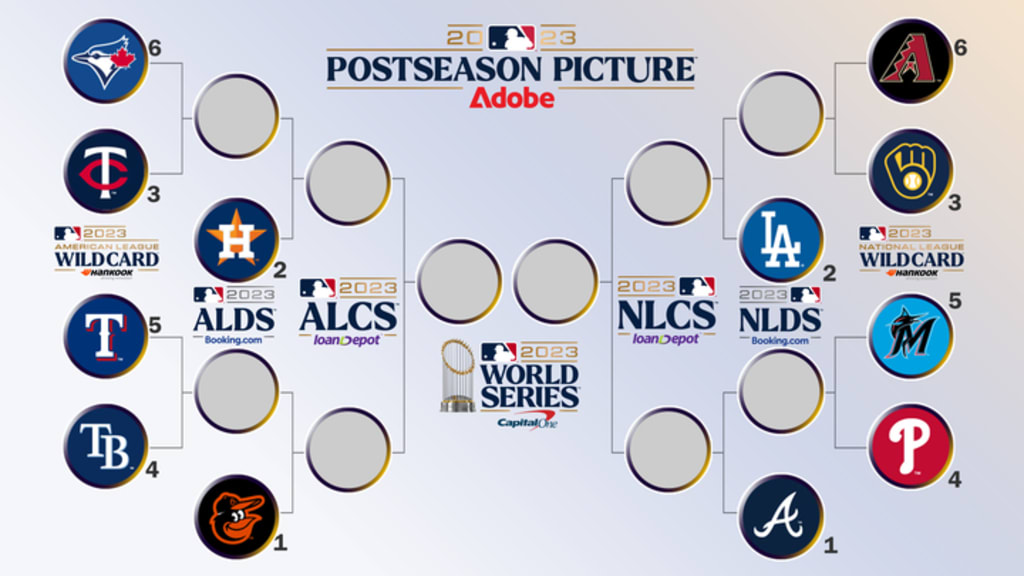
Twelve teams have survived the long, long season—162 grueling games—yet there are still more games to play against strong opponents. For those remaining games, talent is not enough. Something more is needed.
That’s where prayers to the baseball gods come in. Does each team have its own god? Is each of those gods equally powerful to give their team that extra something, that special boost, that can make the difference? Do those gods have playoffs among themselves? Who knows? Not me. Baseball theology is not my specialty.
It is too risky to leave baseball up to the talent of the players and the wisdom of the managers. If a little extra help is needed and sought, what’s the harm? In the playoffs, we want to enjoy the thrill of victory and avoid the agony of defeat. Whatever we believe, we pray on.




 Bob Schwartz