Full moon in the very early morning is glorious. This morning the full moon was setting behind a mountain. On closer look, it was setting behind a mountain but also directly behind a house atop the mountain. Was the pure nature of the moment interrupted? Was the house speaking along with the moon and the mountain? Even singing together in harmony?
The moon has moved on, gracing someone else’s sky. The mountain is still there. The house on the mountain is still there. The people in the house are still there, if they are there, still sleeping, having breakfast, or having finished breakfast, doing next things.
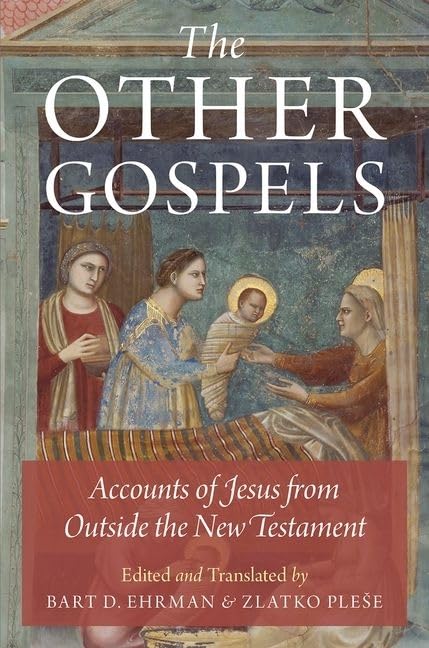
“Our canonical texts are largely silent about the events prior to and leading up to Jesus’ birth, but his unique standing as the Son of God led Christians to wonder about parts of the story left out. If he was special, as shown by the fact that he was conceived by a virgin—what can we say about his mother? Who was Mary? What made her special? How was she herself born? How did she maintain her own purity, to make her a worthy “vessel” for the Son of God?” The Other Gospels: Accounts of Jesus from Outside the New Testament Edited and translated by Bart D. Ehrman and Zlatko Pleše
The Proto-Gospel of James (The Birth of Mary, the Revelation of James) is one of the texts known as Infancy Gospels. These fill in the many details missing from the New Testament Gospels. Their authorship is unknown—who, when, where? For readers, whether faithful Christians or just those living in a Christmas culture, these are captivating stories.
From The Proto-Gospel of James:
Joseph Discovers Mary’s Condition
13
(1) When she was in her sixth month, behold, Joseph returned from his buildings. As he came into the house he saw that she was pregnant. Striking his face he cast himself to the ground on sackcloth, weeping bitterly and saying, “How can I look upon the Lord God? How can I utter a prayer for this young girl? For I received her from the temple of the Lord God as a virgin, but I did not watch over her. Who has preyed upon me? Who has done this wicked deed in my home and defiled the virgin? Has not the entire history of Adam been summed up in me? For just as Adam was singing praise to God, when the serpent came and found Eve alone, and led her astray, so too has this now happened to me.”
(2) Joseph rose up from the sackcloth, called Mary, and said to her, “You who have been cared for by God: why have you done this? Have you forgotten the Lord your God? Why have you humiliated your soul—you who were brought up in the Holy of Holies and received your food from the hand of an angel?”
(3) But she wept bitterly and said, “I am pure and have not had sex with any man.”22 Joseph replied to her, “How then have you become pregnant?” She said, “As the Lord my God lives, I do not know.”
14
(1) Joseph was very afraid and let her be, debating what to do about her. Joseph said, “If I hide her sin, I will be found to be fighting the Law of the Lord; if I reveal her condition to the sons of Israel, I am afraid that the child in her is angelic, and I may be handing innocent blood over to a death sentence. What then should I do with her? I will secretly divorce her.” Then night overtook him.
(2) Behold, an angel of the Lord appeared to him in a dream and said, “Do not be afraid of this child. For that which is in her comes from the Holy Spirit. She will give birth to a son, and you will name him Jesus. For he will save his people from their sins.” Joseph rose up from his sleep and glorified the God of Israel who had bestowed favor on him; and he watched over her.
The Authorities Discover Mary’s Condition
15
(1) But Annas the scribe came to see him and said, “Joseph, why have you not appeared before our council?” Joseph replied, “I was tired from my journey and rested on my first day back.” Annas then turned and saw that Mary was pregnant.
(2) He left and ran off to the priest and said to him, “Joseph, the one you have vouched for, has committed a great sin.” The priest replied, “What has he done?” He said, “He has defiled the virgin he received from the Lord’s temple and has stolen her wedding rights. And he has not revealed this to the sons of Israel.” The priest asked, “Joseph, has done this?” Annas the scribe replied, “Send some servants, and you will find that the virgin is pregnant.” The servants went off and found her just as he had said. They brought her back to the judgment hall, along with Joseph.
(3) The high priest said to her, “Mary, why have you done this? Why have you humiliated your soul and forgotten the Lord your God? You who were brought up in the Holy of Holies and received your food from the hand of an angel, and heard his hymns, and danced before him—why have you done this?” But she wept bitterly and said, “As the Lord my God lives, I am pure before him and have not had sex with any man.”
(4) The priest then said, “Joseph, why have you done this?” Joseph replied, “As the Lord my God lives, I am pure toward her.” The priest said, “Do not bear false witness, but speak the truth. You have stolen her wedding rights and not revealed it to the sons of Israel; and you have not bowed your head under the mighty hand that your offspring might be blessed.” Joseph kept his silence.
16
(1) The priest said, “Hand over the virgin you received from the Lord’s temple.” And Joseph began to weep bitterly. The priest said, “I will have both of you drink the Lord’s ‘water of refutation,’ and it will reveal your sin to your own eyes.”
(2) The priest gave it to Joseph to drink, and sent him away to the wilderness. But he came back whole. He then gave it to Mary to drink and sent her off to the wilderness. And she came back whole. All the people were amazed that their sin was not revealed.
(3) The priest said, “If the Lord God has not revealed your sin, neither do I judge you.” And he released them. Joseph took Mary and returned home, rejoicing and glorifying the God of Israel.
The Journey to Bethlehem
17
(1) An order went out from the king, Augustus, that everyone from Bethlehem of Judea was to be registered for a census. Joseph said, “I will register my sons. But what should I do about this child? How should I register her? As my wife? I would be too ashamed. As my daughter? The sons of Israel know that she is not my daughter. This day of the Lord will turn out as he wishes.”
(2) He saddled the donkey and seated her on it; and his son led it along, while Samuel followed behind. When they approached the third milestone, Joseph turned and saw that she was gloomy. He said to himself, “Maybe the child in her is causing her trouble.” Then Joseph turned again and saw her laughing. He said to her, “Mary, why is it that one time I see you laughing and at another time gloomy?” She replied, “Because my eyes see two peoples, one weeping and mourning and the other happy and rejoicing.”
(3) When they were half way there, Mary said to him, “Joseph, take me down from the donkey. The child inside me is pressing on me to come out.” He took her down from the donkey and said to her, “Where can I take you to hide your shame? For this place is a wilderness.”
Joseph Watches Time Stand Still
18
(1) He found a cave there and took her into it. Then he gave his sons to her and went out to find a Hebrew midwife in the region of Bethlehem.
(2) But I, Joseph, was walking, and I was not walking. I looked up to the vault of the sky, and I saw it standing still, and into the air, and I saw that it was greatly disturbed, and the birds of the sky were at rest. I looked down to the earth and saw a bowl laid out for some workers who were reclining to eat. Their hands were in the bowl, but those who were chewing were not chewing; and those who were taking something from the bowl were not lifting it up; and those who were bringing their hands to their mouths were not bringing them to their mouths. Everyone was looking up. I saw a flock of sheep being herded, but they were standing still. The shepherd raised his hand to strike them, but his hand remained in the air. I looked down at the torrential stream, and I saw some goats whose mouths were over the water, but they were not drinking. Then suddenly everything returned to its normal course.
The Birth of Jesus and the Witness of the Midwives
19
(1) I saw a woman coming down from the hill country, and she said to me, “O man, where are you going?” I replied, “I am looking for a Hebrew midwife.” She asked me, “Are you from Israel?” I said to her, “Yes.” She asked, “Who is the one who has given birth in the cave?” I replied, “My betrothed.” She said to me, “Is she not your wife?” I said to her, “She is Mary, the one who was brought up in the Lord’s temple, and I received the lot to take her as my wife. She is not, however, my wife, but she has conceived her child by the Holy Spirit.” The midwife said to him, “Can this be true?” Joseph replied to her, “Come and see.” And the midwife went with him.
(2) They stood at the entrance of the cave, and a bright cloud overshadowed it. The midwife said, “My soul has been magnified today, for my eyes have seen a miraculous sign: salvation has been born to Israel.” Right away the cloud began to depart from the cave, and a great light appeared within, so that their eyes could not bear it. Soon that light began to depart, until an infant could be seen. It came and took hold of the breast of Mary, its mother. The midwife cried out, “Today is a great day for me, for I have seen this new wonder.”
(3) The midwife went out of the cave and Salome met her. And she said to her, “Salome, Salome, I can describe a new wonder to you. A virgin has given birth, contrary to her natural condition.” Salome replied, “As the Lord my God lives, if I do not insert my finger and examine her condition, I will not believe that the virgin has given birth.”
20
(1) The midwife went in and said to Mary, “Brace yourself. For there is no small controversy concerning you.” Then Salome inserted her finger in order to examine her condition, and she cried out, “Woe to me for my sin and faithlessness. For I have put the living God to the test, and see, my hand is burning, falling away from me.”
(2) She kneeled before the Master and said, “O God of my fathers, remember that I am a descendant of Abraham, Isaac, and Jacob. Do not make me an example to the sons of Israel, but deliver me over to the poor. For you know, O Master, that I have performed my services in your name and have received my wages from you.”
(3) And behold, an angel of the Lord appeared and said to her, “Salome, Salome, the Master of all has heard your prayer. Bring your hand to the child and lift him up; and you will find salvation and joy.”
(4) Salome joyfully came and lifted the child, saying, “I will worship him, for he has been born as a great king to Israel.” Salome was immediately cured, and she went out of the cave justified. And behold a voice came saying, “Salome, Salome, do not report all the miraculous deeds you have seen until the child enters Jerusalem.”
Sure he was a Jew making a Christmas album. Sure he was a convicted murderer.
Phil Spector is also in the pantheon of record producers. He changed pop music forever. Brian Wilson of the Beach Boys, another production genius, started his career trying to better him.
Then there is A Christmas Gift for You from Phil Spector (1963). There were attempts to contemporize Christmas classics before, there have been many attempts after. To make the music sound eternal but new. This is the ultimate. In 2019, Rolling Stone ranked it the greatest Christmas album of all time. Brian Wilson cited this as his favorite album of all time.
Which is why searching Christmas Eve morning for something that hit the target—music not too familiar, music not straining too hard to be “different”—I ended up with Spector. His gift to us.
In 1966, Vietnam was not yet the broadly unpopular war it would become. News coverage was mostly supportive or neutral. It wasn’t until February 27, 1968 that CBS news anchor Walter Cronkite—“the most trusted man in America”—broadcast his message that victory was not possible.
In October 1966, Esquire magazine published a 33,000-word report by John Sack about his time embedded with “M” company in Vietnam. George Lois, the legendary Esquire art director, accompanied this with a simple stark cover, quoting a soldier. It is considered the first anti-Vietnam War cover from a major American magazine; it was not the last.
Note: Despite protests and many more casualties, the war would last another nine years. Without victory.
Hannah Arendt was a genius of twentieth century political philosophy. Her book The Origins of Totalitarianism (1951) is a seminal work. She was also one of the great Jewish thinkers of her time.
She faced obstacles. As a Jew, she once had a relationship with renowned philosopher Martin Heidegger, who was disgraced as a Nazi sympathizer and supporter. As a Jew and journalist, she covered the trial of Adolf Eichmann (Eichmann in Jerusalem), her analysis including the infamous term “banality of evil”. She suggested that Eichmann and others were not necessarily unique monsters, but were ordinary thoughtless people doing horrific things as a matter of course. This view did not sit well with many in the Jewish community. She also believed that Zionism, which she appreciated, had lost its way. Because of her perspectives on Eichmann and Zionism, she remains for some a pariah.
Hannah Arendt’s greatest contributions to Humanist Zionism are summoning a sophisticated historical context for the European Jewish experience, assessing the dangers of statist nationalism and imperialism, articulating a federalist alternative to nation-states, and diagnosing root pathologies in mainstream Zionism. She linked the onset of Zionism to the evolution in Europe of nationalism, the nation-state system, imperialism, modern antisemitism, and internal political and social dynamics in Europe’s Jewish communities. Although Arendt credited Zionists for giving Jews agency, she diagnosed the prevailing wing as suffering from two underlying maladies. First, it subscribed to a belief in an eternal antisemitism unaffected by broader historical developments or the choices made by Jewish communities. Consequently, mainstream Zionists regarded all outsiders as suspect and adopted a persecution complex. What followed was the second malady of a “tribal” nationalism, which rejects collaboration with the outside world as futile given unrelenting antisemitism.
Controversy surrounding Hannah Arendt is not going away.
A German foundation has said it will no longer be awarding a prize for political thinking to a leading Russian-American journalist after criticising as “unacceptable” a recent essay by the writer in which they made a comparison between Gaza and a Jewish ghetto in Nazi-occupied Europe.
Masha Gessen was due to be presented with the Hannah Arendt prize for political thought on Friday. But the award ceremony will now not take place as planned after the Green party-affiliated Heinrich Böll Foundation (HBS) said it was withdrawing its support. The HBS said it had reached its decision in agreement with the senate in Bremen, the northern port city where the ceremony was scheduled to take place….
The HBS said it objected to and rejected a comparison made by Gessen in a 9 December essay in the New Yorker between Gaza and the Jewish ghettos in Europe.
In the essay, Gessen, who uses they, criticised Germany’s unequivocal support of Israel, drawing attention to the Bundestag’s 2019 resolution condemning the Israel boycott movement BDS as antisemitic and quoting a Jewish critic of Germany’s politics of Holocaust remembrance as saying memory culture had “gone haywire”.
In the paragraph the HBS draws attention to, Gessen wrote that “ghetto” would be “the more appropriate term” to describe Gaza, but the word “would have drawn fire for comparing the predicament of besieged Gazans to that of ghettoized Jews. It also would have given us the language to describe what is happening in Gaza now. The ghetto is being liquidated.”
The foundation said Gessen was implying that Israel aimed to “liquidate Gaza like a Nazi ghetto”, adding that “this statement is unacceptable to us and we reject it”….
Supporters of Gessen, who is Jewish, and whose grandfather and great-grandfather were among family members murdered by the Nazis, have been quick to point out the irony of suspending a prize awarded in memory of Arendt, the German-born Jewish-American historian, philosopher and antitotalitarian political theorist who coined the phrase “the banality of evil”, in connection with the trial of leading Nazi Adolf Eichmann, which she covered as a journalist for the New Yorker.
Samantha Rose Hill, author of the profile Hannah Arendt and editor of Arendt’s collected poems, called it “an affront to Hannah Arendt’s memory. By their own logic, the Heinrich Böll Foundation needs to cancel the Hannah Arendt prize altogether.”
Another academic said that according to the reasons given for the decision, “Hannah Arendt wouldn’t get the Hannah Arendt award in Germany today.”
In an interview with Die Zeit published on Tuesday, Gessen spoke of the backlash Arendt had faced as one of Israel’s initial critics, warning against establishing a purely Jewish state in Palestine and in so doing excluding the Arab population.
In an open letter written with Albert Einstein and other Jewish intellectuals in 1948, Arendt had, Gessen pointed out, even compared the Israeli Freedom party to the Nazis after they used racially motivated violence against civilians.
“I am aware that this type of comparison, especially in Germany, is quickly seen as relativising the Holocaust. That’s why it’s so important to me that such a differentiated and intelligent thinker like Arendt didn’t shy away from this comparison,” Gessen told the newspaper.
Referring to people in Germany being wary of challenging “the logic of German memory policy” for fear of being accused of antisemitism, they added: “The problem is that criticism of Israel is often seen as antisemitic, which I think is the real antisemitic scandal. This overlooks the actual antisemitism.”
Today is the last day of Hanukkah. The menorah was filled up last night and now it’s burned down and done. Just in time to mention the candles.
Once buying Hanukkah candles was simple: a box of white or a box of assorted colors. Now everything is different. Now there are choices. Lots of choices.
Here are some of the choices. For next year.
Dripless Multicolored Striped Tapered Metallic Silver Blue Frost Colorful Beeswax Handmade Sunburst Hand Decorated 3-Tone Pastel Diamond Etched Crayon Spiral Honeycomb Beeswax Blue Hued Natural Organic Vegetable Wax Multi Splash Sweet Scented Tall Wave Etched Twisted Thin Blaze of Fire Purple Paraffin Wax Tri Color Handcrafted
Young people generally supporting Democrats have a problem. The president is supporting a war that they vehemently oppose, and nothing they say is being heard. Republicans see an opportunity. They don’t need those young people and are happy for the opposition. If those young people stay home and those who support the war vote Republican, they will win.
In 1968.
The analogy is imperfect but still helpful. Young people oppose U.S. unconditional support for Israel’s Gaza strategy, not because they are antisemitic, but because then and now, they have a sense that something is very wrong and that an American president—not for the first time—is doing little or nothing about it.
Republicans are giddy. Let the Democrats try to have an earnest and open discussion about the values implicated in the war. It will devolve into political chaos. We Republicans won’t waver. When asked about the limits of Israel’s war, we can say there is no limit to Palestinian civilians killed (Senator Lindsey Graham) or asked about how many Palestinians should be killed, we can say “all of them” (Florida legislator Michelle Salzman).
The Democratic National Convention will be held in Chicago in August 2024. The Gaza war and its horrific aftermath will still be ongoing. Some, maybe many, young people will be moved to show up to protest. Instead of being labelled radicals and communists, they will be labelled antisemitic. Maybe they won’t show up at the convention, and instead just won’t vote in November, or will vote for a third-party presidential candidate.
Mark Twain said, “History doesn’t repeat itself, but it often rhymes”. That rhyme is loud and clear.
When Herod realized that he had been outwitted by the Magi, he was furious, and he gave orders to kill all the boys in Bethlehem and its vicinity who were two years old and under, in accordance with the time he had learned from the Magi. — Matthew 2:16
Coventry Carol is a favorite Christmas carol. A complicated one. It is beautiful and haunting, performed by great singers and choirs. But unlike other carols of joy and hope, it memorializes a tragic part of the nativity story.
The Book of Matthew narrates what is known as the Massacre of the Innocents. This is the only place this story appears in the Gospels.
Herod is a historical figure, but consensus is that this event never happened. Instead, it echoes a similar story about Pharaoh and the Hebrews.
The carol was originally performed in Coventry, England as part of a sixteenth century mystery play called The Pageant of the Shearmen and Tailors. The play is based on chapter two in the Gospel of Matthew. The song is the testimony of the mothers:
Lully, lullah, thou little tiny child, Bye bye, lully, lullay. Thou little tiny child, Bye bye, lully, lullay.
O sisters too, how may we do For to preserve this day This poor youngling for whom we sing, “Bye bye, lully, lullay”?
Herod the king, in his raging, Chargèd he hath this day His men of might in his own sight All young children to slay.
That woe is me, poor child, for thee And ever mourn and may For thy parting neither say nor sing, “Bye bye, lully, lullay.”
Why add this incident to a gospel? Why sing about it, listen to it, and love it for five hundred years? The theme of the gospels, of this season of the year, of this particular year, is darkness and ugliness to light and beauty.
Weeping may last for a night, but joy comes in the morning. Psalm 30:5
News of the world Finger near screen Bad things better or worse Good things worse or better Interesting things the same Open hand Closed hand Fingers resting Fingers arrayed Wait and imagine the best
We are experiencing the most public and powerful discussion of antisemitism in generations. Claims that particular speech and actions are antisemitic are having substantial consequences—including the loss of opportunities, business and jobs.
What exactly is antisemitism? Yesterday the U.S. House of Representatives weighed in. And like everything else in the current environment, the result was divisive and controversial.
Fourteen House lawmakers voted against a GOP-led resolution Tuesday “denouncing the drastic rise of antisemitism” in the U.S. and around the world after the Oct. 7 Hamas attack on Israel, with many of the detractors accusing the legislation of conflating criticisms of the Israeli government with antisemitism.
The resolution stated that anti-Zionism is antisemitism.
The chamber cleared the resolution in a 311-14-92 vote, with 13 Democrats and one Republican voting “no.”
Ninety-two Democrats voted “present” after three prominent Jewish Democrats urged members of the conference to do so. They called the legislation “the latest unserious attempt by Republicans to weaponize Jewish pain and the serious problem of antisemitism to score cheap political points.”
The resolution, which spans four pages, “strongly condemns” all forms of antisemitism; reaffirms the House’s strong support for the Jewish community in the U.S. and around the globe; calls on elected officials and world leaders to condemn and fight all forms of antisemitism; rejects all forms of terror, hate, discrimination and harassment against individuals in the Jewish community; and “clearly and firmly states that anti-Zionism is antisemitism.”
Little reported is that Republicans sponsoring the resolution relied upon and included the definition provided by the International Holocaust Remembrance Alliance (IHRA). In the absence of a consensus working definition, in 2016 IHRA drafted a definition, including examples:
“Antisemitism is a certain perception of Jews, which may be expressed as hatred toward Jews. Rhetorical and physical manifestations of antisemitism are directed toward Jewish or non-Jewish individuals and/or their property, toward Jewish community institutions and religious facilities.”
To guide IHRA in its work, the following examples may serve as illustrations:
Manifestations might include the targeting of the state of Israel, conceived as a Jewish collectivity. However, criticism of Israel similar to that leveled against any other country cannot be regarded as antisemitic. Antisemitism frequently charges Jews with conspiring to harm humanity, and it is often used to blame Jews for “why things go wrong.” It is expressed in speech, writing, visual forms and action, and employs sinister stereotypes and negative character traits.
Contemporary examples of antisemitism in public life, the media, schools, the workplace, and in the religious sphere could, taking into account the overall context, include, but are not limited to:
Calling for, aiding, or justifying the killing or harming of Jews in the name of a radical ideology or an extremist view of religion.
Making mendacious, dehumanizing, demonizing, or stereotypical allegations about Jews as such or the power of Jews as collective — such as, especially but not exclusively, the myth about a world Jewish conspiracy or of Jews controlling the media, economy, government or other societal institutions.
Accusing Jews as a people of being responsible for real or imagined wrongdoing committed by a single Jewish person or group, or even for acts committed by non-Jews.
Denying the fact, scope, mechanisms (e.g. gas chambers) or intentionality of the genocide of the Jewish people at the hands of National Socialist Germany and its supporters and accomplices during World War II (the Holocaust).
Accusing the Jews as a people, or Israel as a state, of inventing or exaggerating the Holocaust.
Accusing Jewish citizens of being more loyal to Israel, or to the alleged priorities of Jews worldwide, than to the interests of their own nations.
Denying the Jewish people their right to self-determination, e.g., by claiming that the existence of a State of Israel is a racist endeavor.
Applying double standards by requiring of it a behavior not expected or demanded of any other democratic nation.
Using the symbols and images associated with classic antisemitism (e.g., claims of Jews killing Jesus or blood libel) to characterize Israel or Israelis.
Drawing comparisons of contemporary Israeli policy to that of the Nazis.
Holding Jews collectively responsible for actions of the state of Israel.
Members of Jewish communities, including leading rabbis and scholars, found this definition too broad, particularly in absolutely equating criticism of Israel and Zionism with antisemitism.
The Jerusalem Declaration on Antisemitism is a tool to identify, confront and raise awareness about antisemitism as it manifests in countries around the world today. It includes a preamble, definition, and a set of 15 guidelines that provide detailed guidance for those seeking to recognize antisemitism in order to craft responses. It was developed by a group of scholars in the fields of Holocaust history, Jewish studies, and Middle East studies to meet what has become a growing challenge: providing clear guidance to identify and fight antisemitism while protecting free expression. Initially signed by 210 scholars, it has now around 350 signatories.
Preamble
We, the undersigned, present the Jerusalem Declaration on Antisemitism, the product of an initiative that originated in Jerusalem. We include in our number international scholars working in Antisemitism Studies and related fields, including Jewish, Holocaust, Israel, Palestine, and Middle East Studies. The text of the Declaration has benefited from consultation with legal scholars and members of civil society.
Inspired by the 1948 Universal Declaration on Human Rights, the 1969 Convention on the Elimination of all Forms of Racial Discrimination, the 2000 Declaration of the Stockholm International Forum on the Holocaust, and the 2005 United Nations Resolution on Holocaust Remembrance, we hold that while antisemitism has certain distinctive features, the fight against it is inseparable from the overall fight against all forms of racial, ethnic, cultural, religious, and gender discrimination.
Conscious of the historical persecution of Jews throughout history and of the universal lessons of the Holocaust, and viewing with alarm the reassertion of antisemitism by groups that mobilize hatred and violence in politics, society, and on the internet, we seek to provide a usable, concise, and historically-informed core definition of antisemitism with a set of guidelines.
The Jerusalem Declaration on Antisemitism responds to “the IHRA Definition,” the document that was adopted by the International Holocaust Remembrance Alliance (IHRA) in 2016. Because the IHRA Definition is unclear in key respects and widely open to different interpretations, it has caused confusion and generated controversy, hence weakening the fight against antisemitism. Noting that it calls itself “a working definition,” we have sought to improve on it by offering (a) a clearer core definition and (b) a coherent set of guidelines. We hope this will be helpful for monitoring and combating antisemitism, as well as for educational purposes. We propose our non-legally binding Declaration as an alternative to the IHRA Definition. Institutions that have already adopted the IHRA Definition can use our text as a tool for interpreting it.
The IHRA Definition includes 11 “examples” of antisemitism, 7 of which focus on the State of Israel. While this puts undue emphasis on one arena, there is a widely-felt need for clarity on the limits of legitimate political speech and action concerning Zionism, Israel, and Palestine. Our aim is twofold: (1) to strengthen the fight against antisemitism by clarifying what it is and how it is manifested, (2) to protect a space for an open debate about the vexed question of the future of Israel/Palestine. We do not all share the same political views and we are not seeking to promote a partisan political agenda. Determining that a controversial view or action is not antisemitic implies neither that we endorse it nor that we do not.
The guidelines that focus on Israel-Palestine (numbers 6 to 15) should be taken together. In general, when applying the guidelines each should be read in the light of the others and always with a view to context. Context can include the intention behind an utterance, or a pattern of speech over time, or even the identity of the speaker, especially when the subject is Israel or Zionism. So, for example, hostility to Israel could be an expression of an antisemitic animus, or it could be a reaction to a human rights violation, or it could be the emotion that a Palestinian person feels on account of their experience at the hands of the State. In short, judgement and sensitivity are needed in applying these guidelines to concrete situations.
Definition
Antisemitism is discrimination, prejudice, hostility or violence against Jews as Jews (or Jewish institutions as Jewish).
Guidelines
A. General
It is racist to essentialize (treat a character trait as inherent) or to make sweeping negative generalizations about a given population. What is true of racism in general is true of antisemitism in particular.
What is particular in classic antisemitism is the idea that Jews are linked to the forces of evil. This stands at the core of many anti-Jewish fantasies, such as the idea of a Jewish conspiracy in which “the Jews” possess hidden power that they use to promote their own collective agenda at the expense of other people. This linkage between Jews and evil continues in the present: in the fantasy that “the Jews” control governments with a “hidden hand,” that they own the banks, control the media, act as “a state within a state,” and are responsible for spreading disease (such as Covid-19). All these features can be instrumentalized by different (and even antagonistic) political causes.
Antisemitism can be manifested in words, visual images, and deeds. Examples of antisemitic words include utterances that all Jews are wealthy, inherently stingy, or unpatriotic. In antisemitic caricatures, Jews are often depicted as grotesque, with big noses and associated with wealth. Examples of antisemitic deeds are: assaulting someone because she or he is Jewish, attacking a synagogue, daubing swastikas on Jewish graves, or refusing to hire or promote people because they are Jewish.
Antisemitism can be direct or indirect, explicit or coded. For example, “The Rothschilds control the world” is a coded statement about the alleged power of “the Jews” over banks and international finance. Similarly, portraying Israel as the ultimate evil or grossly exaggerating its actual influence can be a coded way of racializing and stigmatizing Jews. In many cases, identifying coded speech is a matter of context and judgement, taking account of these guidelines.
Denying or minimizing the Holocaust by claiming that the deliberate Nazi genocide of the Jews did not take place, or that there were no extermination camps or gas chambers, or that the number of victims was a fraction of the actual total, is antisemitic.
B. Israel and Palestine: examples that, on the face of it, are antisemitic
Applying the symbols, images and negative stereotypes of classical antisemitism (see guidelines 2 and 3) to the State of Israel.
Holding Jews collectively responsible for Israel’s conduct or treating Jews, simply because they are Jewish, as agents of Israel.
Requiring people, because they are Jewish, publicly to condemn Israel or Zionism (for example, at a political meeting).
Assuming that non-Israeli Jews, simply because they are Jews, are necessarily more loyal to Israel than to their own countries.
Denying the right of Jews in the State of Israel to exist and flourish, collectively and individually, as Jews, in accordance with the principle of equality.
C. Israel and Palestine: examples that, on the face of it, are not antisemitic (whether or not one approves of the view or action)
Supporting the Palestinian demand for justice and the full grant of their political, national, civil and human rights, as encapsulated in international law.
Criticizing or opposing Zionism as a form of nationalism, or arguing for a variety of constitutional arrangements for Jews and Palestinians in the area between the Jordan River and the Mediterranean. It is not antisemitic to support arrangements that accord full equality to all inhabitants “between the river and the sea,” whether in two states, a binational state, unitary democratic state, federal state, or in whatever form.
Evidence-based criticism of Israel as a state. This includes its institutions and founding principles. It also includes its policies and practices, domestic and abroad, such as the conduct of Israel in the West Bank and Gaza, the role Israel plays in the region, or any other way in which, as a state, it influences events in the world. It is not antisemitic to point out systematic racial discrimination. In general, the same norms of debate that apply to other states and to other conflicts over national self-determination apply in the case of Israel and Palestine. Thus, even if contentious, it is not antisemitic, in and of itself, to compare Israel with other historical cases, including settler-colonialism or apartheid.
Boycott, divestment and sanctions are commonplace, non-violent forms of political protest against states. In the Israeli case they are not, in and of themselves, antisemitic.
Political speech does not have to be measured, proportional, tempered, or reasonable to be protected under Article 19 of the Universal Declaration of Human Rights or Article 10 of the European Convention on Human Rights and other human rights instruments. Criticism that some may see as excessive or contentious, or as reflecting a “double standard,” is not, in and of itself, antisemitic. In general, the line between antisemitic and non-antisemitic speech is different from the line between unreasonable and reasonable speech.





 Bob Schwartz