Spring (Remember What)
Spring (Remember What)
Vivaldi and the birds of spring
made me forget everything
remember all I didn’t know
and need
© 2022 Bob Schwartz
Spring (Remember What)
Vivaldi and the birds of spring
made me forget everything
remember all I didn’t know
and need
© 2022 Bob Schwartz
It is often said, correctly, that the first casualty of war is truth.
A corollary, understandably, is that the first casualty can also be realism.
Understandably, because war is also a spiritual exercise, fueled by a mix of faith, ideology, desire, courage and hope. Those are not unrelated to realism. But depending on people and circumstances, they operate on a different plane.
Hearing often that Putin’s Ukraine invasion has not so far met his expectations, a realistic question is, in the event, what will he do? So a hopeful and uplifting answer is that the now renowned valor of Ukraine will slow him so much that he stops, and then withdraws. A realistic answer may be that if he is willing to have his people and his country bear the pain, in a head-to-head with Ukraine, even with Western resources added, Russia has an overwhelming advantage.
Hearing that the Russian people will rise up and depose Putin, the heart cautiously swells with that possibility (cautiously, because one never knows when one devil may replace another). Realistically, a tyrant who has spent decades honing his skills as a vicious top dog autocrat, and building an enforcement machine, will not be toppled so quickly.
Hearing that Putin is a war criminal, based on what we have already seen and are likely to yet see, is precise. And realistically beside the point. The label will have no current effect, and if Putin is the desperate and irrational animal some say, it may even make things worse, but in any case no better. The West continues to confuse, sometimes deliberately, rhetoric with action.
Is realism the opposite of hope? Can they coexist? They can and should coexist in appropriate measure. Too much realism can be dispiriting. Too little realism can prevent needed action. For the sake of Ukraine, let’s hope the leaders and talking heads know and respect the difference.
© 2022 Bob Schwartz

Western leaders and politicians are torn and vacillating about how deeply to intervene in Ukraine.
In his speech to British Parliament this week, Zelensky chose words from Hamlet to describe the desperate existential situation for Ukraine: “To be or not to be.”
The genius of Shakespeare, why he has lasted so long in culture, is his ability to crystalize human experience and history. That phrase is the opening of one of Shakespeare’s most famous soliloquys. Hamlet weighs the ultimate choice between suffering and suicide. It begins:
To be, or not to be, that is the question:
Whether ’tis nobler in the mind to suffer
The slings and arrows of outrageous fortune,
Or to take arms against a sea of troubles
And by opposing end them.
Though they don’t often earn it, this is one of the times Western leaders and politicians deserve a little of our sympathy. Whether it is an offer of arms, a no-fly zone, or troops on the ground, the potential consequence of intervention is dire—and politically controversial. The failure to do more has its own consequence, more likely than potential, of Ukraine’s bold resistance falling in the face of vastly superior Russian power. It is existential.
If this play ends well, Russia will eventually be exhausted without the West taking extreme military measures. If it ends badly, without that intervention, Russia will continue its scorched earth terrorism, leaving little of Ukraine that existed just weeks ago. In that case, we, those leaders and politicians, all of us, will replay the decisions made now. Except that this is no play.
Glory to Ukraine.
NATO (North Atlantic Treaty Organization) is an invitation-only membership alliance that includes 30 nations, big and small. It expanded after the fall of the Soviet Union to include many former Soviet states, including Estonia. But not Ukraine.
The NATO mutual defense provision is Article 5: an attack on one is an attack on all. However, Article 5 is often not fully understood. To reach its mutual defense mechanism, which is not automatic, all member nations must agree to invoke it, and then each member nation may decide how much, if at all, they want to be involved.
There is one way of looking at NATO as a solemn solid inviolable bargain. But the conditions attached to Article 5 indicate that it is a little porous and open. Not to disrespect a valuable tool of global freedom, but a little bit of “only if you feel that you can or should.”
All of which brings us to the distinction between letter and spirit. The letter of NATO is pretty clear. If you are in it you get the benefits and responsibilities (such as “tell us if you are willing to fight or not”). The spirit, of course is much bigger. NATO was established in the wake of World War II, to assure a stance of “never again” will we stand down, always again will we stand up, when lives and freedom are threatened.
With absolutely no disrespect to Estonia, it has made a very favorable deal. If even one Russian soldier crossed its border and committed one act of war, Article 5 would be considered (maybe invoked, see above), and the integrity of its territory and the lives of its 1.3 citizens would be protected by the most powerful armies in the world.
For three weeks, the integrity of Ukraine and the freedom of its 42 million people has been under attack, attacks that will not soon end. Yet expert statecraft and realpolitik have been dictating that NATO need not be directly involved, should not be directly involved.
In 1937 Jean Renoir made the film Grand Illusion (La Grande Illusion), on all best of all time lists, including best anti-war movie. World War I was a fresh memory, the foundation of World War II was being laid. These borders, these nationalities, are all grand illusions that we embrace but only lead us farther away from the primacy of our humanity.
It may be that one small free nation deserves the full force of military might, while another much, much bigger nation, because it sits on the other side of the NATO border, deserves all the non-military help we can muster, including our spiritual support, but is going to be left to fend for itself. That is a grand, and ultimately tragic, illusion.
The West is sacrificing Ukraine to avoid escalation and broadening conflict. Which is not an unworthy goal.
But if the goal is clear—Western leaders stressing the imminence of World War III—the price, the sacrifice, is not always so boldly and loudly articulated. What I call the Morning After.
We don’t know when the Morning After in Ukraine arrives or exactly what it looks like. The world is uplifted, and Putin appears to be surprised, by the resistance. It is floated that even when the Russians succeed in their occupation, resistance will continue, making it painful for Putin to keep hold of Ukraine, just as the sanctions have made it painful.
Painful as it may be to Russia, it will take and keep hold of Ukraine. It will continue to pursue deadly, frightening and inhumane means to succeed. Maybe Putin will use Ukraine as a bargaining chip, which bargains the West will categorically refuse. Or maybe Putin will just revel in having won a big victory, expanding the Russian footprint by adding (in his view taking back) Europe’s biggest territory. Millions of Ukrainians will be refugees, millions more will be terrified, thousands will be dead and injured, and cities will be devastated and demolished. With Putin as leader and his puppets in place.
Maybe that won’t be the Morning After. Maybe the internal resistance and external sanctions and isolation will convince Putin to withdraw. But don’t bet on it. And if that is roughly the Morning After, what will the conversations be like? Will the Western leaders ruefully agree that it tragically had to be this way so that the worse—the worst—could be avoided? Will Ukrainians feel honored to have been the sacrifice that possibly prevented World War III? How does the lamb feel?
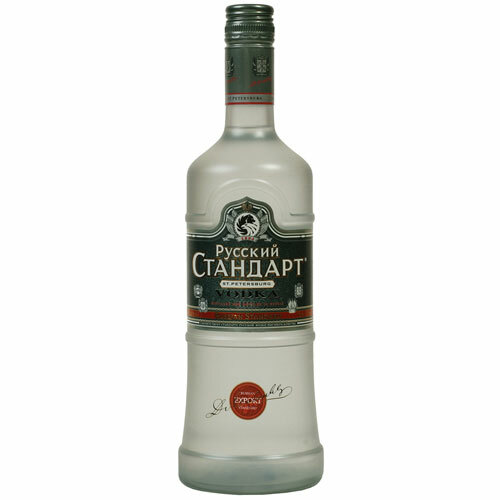
Bloomberg:
Russia’s invasion of Ukraine is shifting vodka sales in the U.S., despite the fact that little Russian-made vodka is actually sold outside of Russia.
Some stores or consumers have been dumping brands with Russian-sounding names. But only around 14% of global vodka volume is produced in Russia, and almost all of that is sold in Russia, according to market-research firm IWSR. Worldwide vodka sales totaled $75.7 billion in 2020, according to GlobalData, another research firm.
“Many vodka brands that trace their origin to Russia are actually no longer produced in Russia, so boycotts of those brands do very little to impact Russian businesses,” said Brandy Rand, chief operating officer of the Americas at IWSR Drinks Market Analysis. “In 2020, less than 1% of vodka volume in the U.S. was from brands produced in Russia.”
Every little bit of sanction pain counts. Millions here, millions there, pretty soon you’re talking about real money…and discomfort.
Regarding Ukraine, though, we remain caught in a web of rhetoric, symbolism and virtue that makes us feel better, demonstrates spiritual solidarity, but may accomplish little. Not that avoiding and banning Russian vodka is not something, but given how little Russian vodka we actually buy and consume, it is mostly a big “so what.”
In Ukraine, whether it is the symbol of banning vodka or the real effect of not establishing a no-fly zone, we have to be brutally honest about the impact and consequences of our choices. Because Russia will be brutally dishonest about everything.
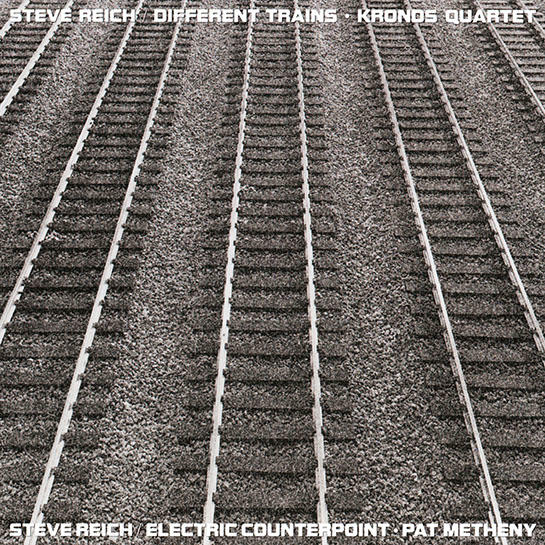
Viewing the endless reports of trains leaving Ukraine, filled with pieces of divided families maybe never to be made whole, music of Different Trains by Steve Reich came to mind.
Reich was inspired to compose this groundbreaking piece as he remembered the train trips he took as a young child, moving every six months between the homes of his divorced parents in New York and Los Angeles. Other trains then came to his imagination, especially the trains that carried Eastern Europeans Jews by the millions to their death. Different trains.
Art like Reich’s cannot change history, personal or global. Art can change us, or let us realize who we are and might be. And maybe change history after all.
For a long time, America has been involved in wars of shades of gray. Not that right and wrong weren’t involved, but that the equities weren’t always so clear. Vietnam was a glaring example: an unachievable outcome, corruption and inhumanity on both sides, lies and lies, and so much death for what? A glaring example, but just one.
Ukraine is not that. A powerful and sinister leader, driven by demons, whatever they are, is determined to roll over an innocent nation and its people. “Justified” by lies so obvious that they match the Master of Lies who once led America. Not the first and only example of brutality in recent years (China has forced citizens into ethnic concentration camps, right now), but one that shakes us differently.
What weighs on us, at least on me, is the absolute impotence of genuinely concerned nations. Sanctions and isolation do indeed inflict pain on Russia, pain which won’t be soon (or ever) relieved, but pain that will not stop the onslaught and slaughter. The tools exist to stop Russia in its tracks, but the realities of military back-and-forth, and the formalities of international law, prevent using them. Plainly, just one direct confrontation between Russia and the West will lead to escalation, and no one—not the smartest statesmen or generals—can know where that leads. In a crude calculation of better the devil you know, better to allow Russia to have Ukraine and work it out later than to take actions that have the potential for another European-wide war, knowing that the last two European-wide wars are grotesquely infamous, and those without nuclear.
And that is the weight we feel.
Q: Will sanctions work?
A: Sanctions won’t work to deter Putin from continuing his taking Ukraine, which will take another day or two. Sanctions won’t work to force Putin to withdraw, which would be a massive embarrassment for him.
Q: Will sanctions backfire?
A. Very possibly. Removing Russia from the global banking system, for example, means that European nations who buy gas from Russia can’t pay their bills. Russia would then be in a legitimate position to cut off that gas.
Q: What is Putin’s plan?
A: Putin will occupy Ukraine, put a puppet government in place, and then claim it is once again a part of Russia. He will then continue his request that bordering European NATO nations stand down their military readiness, which is a security threat to Russian Ukraine. NATO will again refuse, setting the scene for possible—though not anytime soon—Russian action to demilitarize those nations.
Q: What did Putin mean by his threat against any nation that intervenes?
A: Not a nuclear threat. Instead, he can initiate massive crippling cyberattacks.
Q: Does it matter that this war may not be popular in Russia?
A: Not at all. Russia is a dictatorship. Putin’s hold on power is virtually absolute. Even those in his leadership who have long been close to him are frightened by him and, in some cases, want to be his successor in 2024 (not wholly unlike the American case of Trump).
Q: What about American cyber warfare against Russia?
A: Russia will regard this as an attack, no different than a military attack. For Putin, this will justify whatever he subsequently chooses to do.
Q: Putin is now regularly called an irrational actor or, sometimes, a madman. Is he?
A: This matters and it doesn’t. Yes, if his calculations are recognizably rational, it might be a better situation. But if he is following some personal agenda, this is just name-calling. The best surmise, from his talks, is that he is driven by fierce retro-nationalism, willing to do anything to reconstitute the “glory days” of the Soviet Union. Given that a number of Americans, at the highest levels, are driven by fierce retro-nationalism, we have to determine if this is madness.
Q: What about Trump (former Republican President) and Pompeo (his former Secretary of State) now praising Putin as a strategic genius?
A: Giving aid and comfort to the enemy is the definition of treason.

By 1955, publisher William M. (Bill) Gaines was already revolutionizing the comic book industry. His line of EC (Entertaining Comics) books took on all sorts of mature themes and genres. So much so that he had been called before the U.S. Senate, which was on a high-profile crusade to control a medium that it believed was corrupting American youth, in fact, Americans of any age.
(Speaking of corruption, Gaines went on to publish Mad Magazine for forty years, which influenced a generation to believe that American culture was basically absurd, stupid and funny. What me worry?)
Among the talents that Gaines featured was an artist named Bernard Krigstein. In 1955, as the cover story for the first issue of EC’s new publication Impact, Krigstein illustrated the eight-page story Master Race. It is a stark tale of a former concentration camp prisoner who sees a former Nazi camp commandant on a New York subway—and who pushes that tormentor to his death.
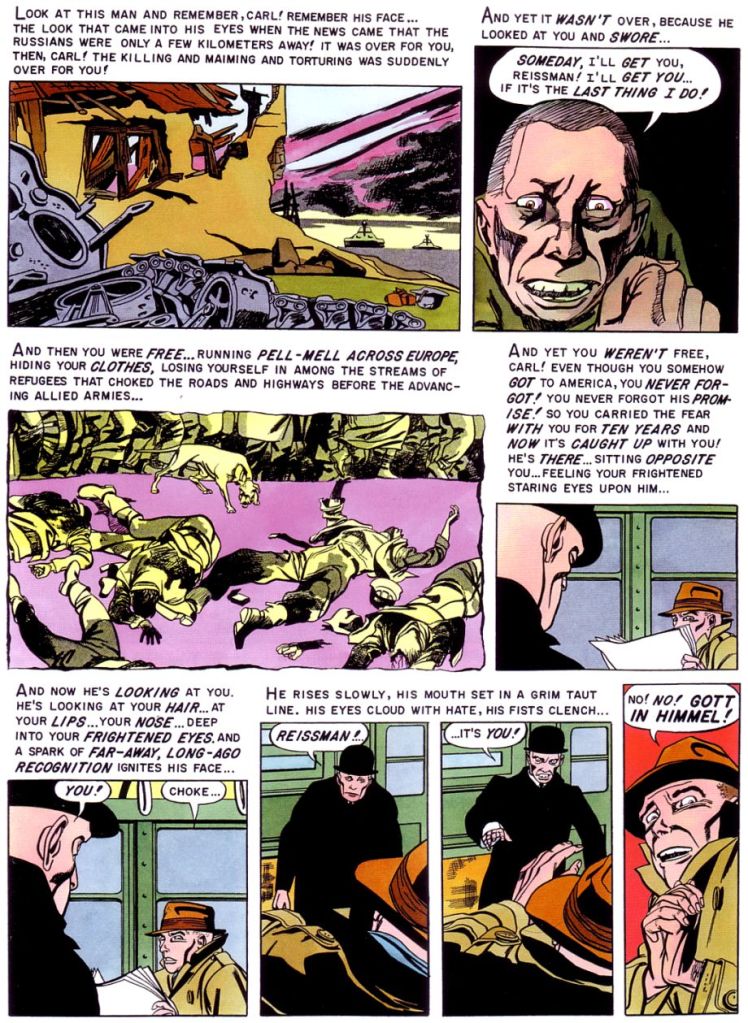
There is deserved attention recently to Art Spiegelman’s celebrated Holocaust graphic novel Maus. After the benighted school board of McMinn County Tennessee banned the book, it once again became a bestseller. Though it was not noted in any of the news, more than twenty years before Maus, Master Race had taken on the Holocaust in comic form.
Spiegelman is no stranger to Krigstein or Master Race. In a 2002 New Yorker article, he writes about Krigstein’s being one of his teachers and about the artist’s complex life and career:
Anyone interested in crossing the ever-narrowing divide between High and Low culture ought to contemplate the work and troubled career of Bernard Krigstein (1919-90), a postwar comic-book illustrator who had the privilege and the misfortune of being an Artist with a capital “A” working in an Art Form that considered itself only a Business. Krigstein was never associated with a specific character (the most sure ticket to comics success), and he never wrote his own stories (a handicap in a narrative medium). He wasn’t beloved by publishers, editors, or readers. What reputation he has rests on a handful of short stories he illustrated in 1954 and 1955 for EC comics (the folks who brought you Tales from the Crypt and Mad), but one of those stories, “Master Race,” was an accomplishment of the highest order—a masterpiece.
Art Spiegelman
Read Master Race online or find one of the many books featuring this and other EC comics.
 Bob Schwartz