Thinking and acting according to any of the classifications—gender, nationality, religion, ethnicity, generation, etc.—may have utility and value for limited purposes. Abolishing the slavery of black people focused on two distinct identities that mattered profoundly. The same can be said for other situations.
But even those applications of identity, as essentially humane as they may be, risk not seeing each person as a person, not as an identity. To lump people together for some analytical or active purpose—marketing is one example, war and conflict a less benign one—is to ignore or avoid the individual joys and sufferings, abilities and shortcomings. Personhood and personality.
Every time we think or say, “all _____ do _____ or believe _____ or say _____ or are _____ is dehumanizing. Dehumanizing doesn’t just mean treating people as less than human. It means treating any individual person as less than individual.
Watching the PBS series Disco: Soundtrack of a Revolution, I was inspired. Not just by the music, which is inspiring, but with the idea that you could have a social and cultural revolution that you could—you had to—dance to.
I thought about hip-hop, another revolution, which also emerged from American society’s marginalization/oppression of some Americans. Emerged triumphant, like disco, since hip-hop and dance music are the two dominant genres not only in America but in the world.
I have also been thinking about the limitations of mockery in the face of political evil. It can make the resisters and insurgents feel better, but those who hold unassailable power are rarely moved to reform or surrender by it. Sometimes all it does is embarrass them to the point of payback.
Making fun is still worthwhile, but expectations should be low. Having fun while rebelling is a different story. Having fun, it turns out, is essential. It is the thing that keeps the spirit of resistance alive, that reminds us of one of the things we are fighting for.
The most recent attempt to fight the power, both during the campaign and now, were and are low on fun. There is a lot of well-founded earnestness, accompanied by outrage and depression.
Every thing should be done on all available fronts to restore governing integrity and political sanity. One of those things must be to have more fun.
Watching people who were social and legal pariahs (same-sex dancing, for example, was illegal in New York in the time before disco) have the kind of fun that ultimately gifted us all was exhilarating. A benighted segment of American society tried clumsily to destroy disco, with its threat of freedom, but the next fifty years demonstrated how hatefully wrongheaded that was. The same happened with hip-hop, as it had years before with rock and roll.
You can’t keep fun down, even if it’s outlawed. Let’s use it.
This post is from 2017, seven years ago, the first year of a strange American administration. Like the woman in the shoe who couldn’t keep track of her children, older posts may be worthy, but I don’t remember them all. Thanks to astute readers who stumbled upon this and reminded me that it is always current.
Celebrated Italian author and scholar Umberto Eco (1932-2016) published an article in 1995 entitled Ur-Fascism .
Eco grew up during the time of Mussolini. In the article, he jumps from memories of that experience to describe some varieties of fascism and other types of totalitarianism. Not all are well-defined fascism, he says, but he does identify the core characteristics of what he calls Ur-Fascism.
I think it is possible to outline a list of features that are typical of what I would like to call Ur-Fascism, or Eternal Fascism. These features cannot be organized into a system; many of them contradict each other, and are also typical of other kinds of despotism or fanaticism. But it is enough that one of them be present to allow fascism to coagulate around it.
Eco goes on to list 14 features of Ur-Fascism. This is the excerpted list; please read the article for an expanded explanation. And as you read it, please consider which of those features you might be seeing now.
1. The first feature of Ur-Fascism is the cult of tradition….As a consequence, there can be no advancement of learning.
2. Traditionalism implies the rejection of modernism….In this sense Ur-Fascism can be defined as irrationalism.
3. Irrationalism also depends on the cult of action for action’s sake. Action being beautiful in itself, it must be taken before, or without, any previous reflection.
4. No syncretistic faith can withstand analytical criticism. The critical spirit makes distinctions, and to distinguish is a sign of modernism.
5. Besides, disagreement is a sign of diversity. Ur-Fascism grows up and seeks for consensus by exploiting and exacerbating the natural fear of difference.
6. Ur-Fascism derives from individual or social frustration. That is why one of the most typical features of the historical fascism was the appeal to a frustrated middle class, a class suffering from an economic crisis or feelings of political humiliation, and frightened by the pressure of lower social groups.
7. To people who feel deprived of a clear social identity, Ur-Fascism says that their only privilege is the most common one, to be born in the same country. This is the origin of nationalism.
8. The followers must feel humiliated by the ostentatious wealth and force of their enemies….Thus, by a continuous shifting of rhetorical focus, the enemies are at the same time too strong and too weak.
9. For Ur-Fascism there is no struggle for life but, rather, life is lived for struggle.
10. Elitism is a typical aspect of any reactionary ideology, insofar as it is fundamentally aristocratic, and aristocratic and militaristic elitism cruelly implies contempt for the weak. Ur-Fascism can only advocate a popular elitism.
11. In such a perspective everybody is educated to become a hero. In every mythology the hero is an exceptional being, but in Ur-Fascist ideology, heroism is the norm.
12. Since both permanent war and heroism are difficult games to play, the Ur-Fascist transfers his will to power to sexual matters. This is the origin of machismo (which implies both disdain for women and intolerance and condemnation of nonstandard sexual habits, from chastity to homosexuality). Since even sex is a difficult game to play, the Ur-Fascist hero tends to play with weapons—doing so becomes an ersatz phallic exercise.
13. Ur-Fascism is based upon a selective populism, a qualitative populism, one might say. In a democracy, the citizens have individual rights, but the citizens in their entirety have a political impact only from a quantitative point of view—one follows the decisions of the majority. For Ur-Fascism, however, individuals as individuals have no rights, and the People is conceived as a quality, a monolithic entity expressing the Common Will. Since no large quantity of human beings can have a common will, the Leader pretends to be their interpreter….Because of its qualitative populism Ur-Fascism must be against “rotten” parliamentary governments.
14. Ur-Fascism speaks Newspeak.
Eco closes with this:
Ur-Fascism is still around us, sometimes in plainclothes. It would be so much easier, for us, if there appeared on the world scene somebody saying, “I want to reopen Auschwitz, I want the Black Shirts to parade again in the Italian squares.” Life is not that simple. Ur-Fascism can come back under the most innocent of disguises. Our duty is to uncover it and to point our finger at any of its new instances—every day, in every part of the world.
“What happened to the American Dream? It came true. You’re looking at it.” The Comedian, Watchmen
Watchmen (1986) , written by Alan Moore, illustrated by Dave Gibbons, takes place in 1980s America.
The Keene Act of 1977 outlawed costumed superheroes. But instead of making America and the world better and safer, everything was going to hell, and the end literally was imminent. Chaos and fear reigned.
When asked by one of his former crime-fighting partners what happened to the American Dream, the ever-cynical Comedian says, “What happened to the American Dream? It came true. You’re looking at it.”
By the time of Watchmen, graphic novels were already earning cultural respect. Watchmen established that graphic novels were literature—and that Alan Moore was a literary great. Time magazine named Watchmen one of the 100 best novels of the twentieth century.
Technology, government, geopolitics, power, money, authoritarianism, violence, love, hate, human aspiration and frailty, cosmos, apocalyptic, and of course, America and the American Dream. All wrapped up in a “comic book” as relevant today as it was almost twenty years ago.
You may have seen one of the versions of Watchmen in the last few years. There was a not-so-successful movie, a more successful HBO series that was an extension rather than a retelling, and just now a very literal translation of the graphic novel to animation.
Whether or not you’ve seen or plan to see any of those, start with the novel itself.
The Chinese restaurant dinner for two arrived with four individual sealed fortune cookie packs. Three had a fortune cookie inside. One, pictured above, did not have a fortune cookie. It contained just a few scraps of a cookie and no fortune.
Obviously something went wrong at the fortune cookie factory. Not very interesting. Much more interesting is the meaning of it.
While I worked on my own interpretation, I asked my AI sidekick Claude to weigh in.
Bob: Here is what I am looking at. It is a sealed fortune cookie pack from a Chinese restaurant, a pack that normally contains a fortune cookie. This sealed pack contains only a few small scraps of fortune cookie, but no whole fortune cookie and no fortune. What do you make of this?
Claude:
This sounds quite disappointing! You’ve essentially received a sealed package containing just broken pieces of the cookie without the main attraction – both the intact cookie and the fortune itself. This seems like a manufacturing or packaging error where either:
The cookie was broken during the packaging/shipping process
The fortune was accidentally omitted during manufacturing
The cookie might have been crushed during handling/transport
This is a quality control issue that the restaurant and/or fortune cookie manufacturer would probably want to know about. While it might seem minor, it affects both the experience and the fundamental purpose of a fortune cookie – you can’t even read your fortune!
If this happened at a restaurant, you might want to politely let them know so they can:
Provide you with a proper fortune cookie
Check their other fortune cookie packages for similar issues
Report it to their supplier if it’s a widespread problem
Did you let the restaurant know about this?
Bob: No, I did not let the restaurant know. I am more interested in knowing what this means for my fortune. What do you think?
Claude:
Ah, I see where you’re going with this! If we’re looking at this from a superstitious or symbolic perspective, receiving a broken fortune cookie with no fortune is quite intriguing. Let me play with this idea:
One poetic interpretation might be that your future isn’t predetermined or written – it’s literally an “empty fortune,” suggesting you’re truly free to write your own destiny. There’s something rather empowering about that! Instead of being handed a pre-written path, you’ve received a blank canvas.
Another interpretation could be more zen-like: perhaps it’s a reminder that seeking to know the future is less important than being present in the moment. The broken cookie without a fortune could be saying “stop looking for external guidance and trust your own intuition.”
Of course, if you’re feeling more playful about it, you could say this is the universe’s version of a “404 Error: Fortune Not Found” – maybe the cosmic printer was running low on ink that day!
What’s your take on it? Do you feel there’s any particular meaning in receiving a fortune-less cookie?
Bob: Your perspectives are knowledgeable, insightful and witty. I am still working on possible meanings of this Chinese restaurant anomaly. I will get back to you when I have more thoughts and questions. Thank you.
Claude:
Thank you for the kind words! Your openness to contemplating the deeper meaning of what might seem like a simple manufacturing defect is quite refreshing. It’s these small, unexpected moments that can sometimes offer the most interesting opportunities for reflection. I look forward to hearing your thoughts when you’ve had more time to consider the possibilities. Feel free to return to this discussion whenever you’d like!
Despite this lighthearted use of Claude, be aware that among many of those who know, this powerful platform is regarded as the best in the exploding AI-sphere. If you are not already using Claude, visit Anthropic and experience it now.
Please make no mistake. I do not want to discourage any legitimate and lawful strategies to oppose the impending federal hegemony and the movement that brought it to power.
But I have some thoughts.
In the days since the election, we have heard from various worthy and respected people that things are already looking terrible and that we must stand together—including donating to the Democratic Party—to keep up the fight.
During the campaign, we heard in detail how bad things would get if he and they prevailed. We didn’t have to be told, most of us, because we already knew. Now that they have won, some of the horribles are already in the pipeline, with more to come after inauguration and the seating of the new Congress.
If the plan on resisting and fighting is to remind us every day how terrible each of the decisions and initiatives is, just to make sure we are still committed to opposition, we have eyes and ears and minds, so we already know. Beating us over the head with it is already maddening.
Instead, inside and outside the Democratic Party (which for better or worse in a two-party system is the chief opposition by default), we need to hear and see exactly, in detail, what form the effective resistance is going to take so we can take it together. Saying that you want more money so you can “keep up the fight”, repeating how terrible things are getting, is beyond pointless without detailed strategies. Given a president and a congressional majority completely compliant to his whims, that isn’t going to be easy. But it is essential, because in a version of a famous saying, hope and a list of horribles is not a strategy.
I have been practicing and studying Buddhism, primarily but not exclusively Zen, for a long time. Which means I acknowledge knowing one particle of dust about it.
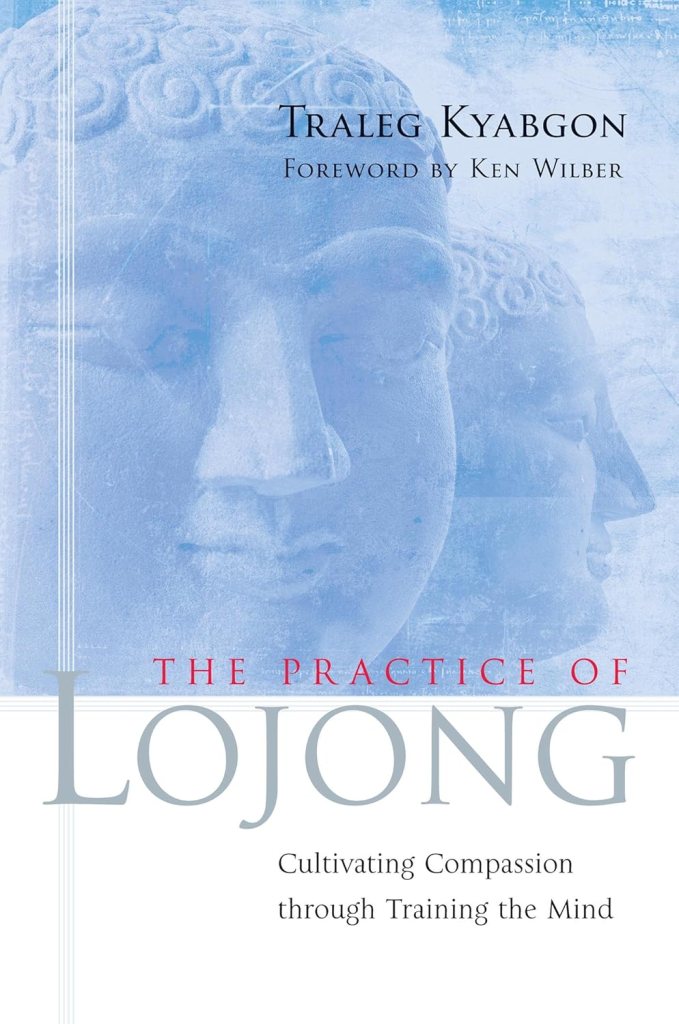
In that time, my learning about and engagement with Tibetan Buddhism is less than that particle. But in recent weeks, I came across a Tibetan mind training practice known as lojong, within which is a practice known as tonglen.
A few very brief masterful explanations:
SENDING AND TAKING MEDITATION (Tibetan tong len). A meditative practice for adopting a radically new attitude or new way of looking at things. Sometimes called “exchanging self for others,” it involves visualizing giving away everything that is good in our lives and taking on everything that is bad in the lives of others as a way of training ourselves in courage. All forms of self-obsession lead to negative emotions, and tonglen is the antidote to that.
The Tibetan word tong means “giving”; len means “taking.” In its most well-known form, tonglen is a meditation technique that involves coordination with the breath. Breathing in, we visualize ourselves taking on the suffering of others; breathing out, we visualize ourselves giving others happiness. This powerful method for transforming our minds vividly illustrates the exchange of self and other that is the essence and spirit of tonglen. But the wider meaning and application of tonglen, both in spiritual practice and ordinary life, goes far beyond this specific technique. In general, tonglen refers to any form of exchanging self and other. We can even apply the term to the mundane exchange between an employer who pays wages and an employee who does work. Since, as we will see, the entire aim of the Buddhist path is to lessen the importance of the self and to increase the importance of others, tonglen is at the very heart of all practices. Without having an orientation toward tonglen, it is unlikely that our spiritual path will have a profound effect on our mind and heart.
TONGLEN MEDITATION Extracted from Practice Instructions Given by Jamyang Khyentse Wangpo
Meditate that you completely take on all of the suffering and the causes of suffering—negative actions and disturbing emotions—of all sentient beings, the objects of compassion.
Then, meditate on giving all of your happiness in its entirety, including the positive actions that are the causes of that happiness, to each and every being.
This is done using the breath as follows: Visualize that the negativity, obscurations, and suffering of all living beings are gathered together in the form of black light. With each inhalation, breathe in through the nose imagining that light dissolves into your heart. Think, “Through this they are now free of all negativity and suffering forever.”
Meditate on all of your happiness and its causes—whatever positive actions you have accumulated—appearing as white light that shimmers like the moon’s rays. With the exhalation of the breath, imagine that this light flows out and dissolves into all beings. Think, “Through this they now have temporary and ultimate happiness.”
This practice is done in gradual stages.
Start by bringing to mind one person who has been very kind to you, such as your mother or father, and imagine that he or she is in front of you. Use this person as the object of tonglen, giving and receiving.
Start by bringing to mind one person who has been very kind to you, such as your mother or father, and imagine that he or she is in front of you. Use this person as the object of tonglen, giving and receiving.Focus on other loved ones, friends and family, as the objects of tonglen.
Start by bringing to mind one person who has been very kind to you, such as your mother or father, and imagine that he or she is in front of you. Use this person as the object of tonglen, giving and receiving.Focus on those whose suffering is unbearable, such as beings in the three lower and less fortunate realms of existence, and use them as the object of tonglen.
Start by bringing to mind one person who has been very kind to you, such as your mother or father, and imagine that he or she is in front of you. Use this person as the object of tonglen, giving and receiving.Focus on those humans who are destitute and suffer more than most, and those who we know engage in harmful and negative actions, as the object of tonglen.
Start by bringing to mind one person who has been very kind to you, such as your mother or father, and imagine that he or she is in front of you. Use this person as the object of tonglen, giving and receiving.Focus on your adversaries—people, ghosts, and spirits who harm you and your loved ones—as the object of tonglen.
Start by bringing to mind one person who has been very kind to you, such as your mother or father, and imagine that he or she is in front of you. Use this person as the object of tonglen, giving and receiving. Finally, embrace all sentient beings as the focus of your tonglen practice.
After practicing this mind training as much as you can, recite the following advice:
When the entire universe and all living beings are filled with negativity, bring all adverse circumstances onto the path of enlightenment. Drive all blame into one and meditate on the kindness of all.
I avoid offering testimony on the effectiveness and value of religious practices and traditions. I follow the Buddha’s principle of upaya—skillful or expedient means, suited to an individual. About the practice of tonglen, and about lojong of which it is a part (more on this at some later time), this is something so simple and powerful that I thought I would share.
Note: This photo of Cody Coyote at the White House does not mean that he is my choice for alternative president. It does mean that Cody, smart as he is, might be better than some others.
The presidential election is over. Some citizens are very happy, some are very sad.
In one reality, DT is going to be president, with all that portends. That can’t be helped.
However, in our minds, we can imagine an alternative for the next four years. That imagining will not of course change the above reality. But it will give us an opportunity to think more clearly, focusing on who and what we would like a president to be, unencumbered by our emotional burden and politics as usual.
This alternative should not be DT or KH—even if KH was your favorite. Instead, there is no limit to who you might “elect”. Use your best thinking, about someone inside or outside the political box. Someone expert, someone celebrated, even someone in your community or family circle if they qualify (but, sorry, not yourself).
“We think that the benefits of being on X are now outweighed by the negatives and that resources could be better used promoting our content elsewhere.” The Guardian
The Guardian newspaper announced that they are no longer posting on X. In part:
We wanted to let readers know that we are no longer posting from any official Guardian editorial accounts on the social media site X (formerly Twitter). We think that the benefits of being on X are now outweighed by the negatives and that resources could be better used promoting our content elsewhere.
This is something we have been considering for a while given the often disturbing content promoted or found on the platform, including far-right conspiracy theories and racism. The US presidential election campaign served only to underline what we have considered for a long time: that X is a toxic media platform and that its owner, Elon Musk, has been able to use its influence to shape political discourse.
The Guardian isn’t alone. Other media organizations and X users are also leaving.
You should too. It won’t seem easy. Twitter (its brand before Musk killed the bluebird of happiness) developed into a social media platform that was simple to use and had global reach. The current alternatives have not yet reached its utility. But, and this is the watchword of the moment, we have choices and we can choose. No one said it would be easy to stand up and be counted.
Elections make us think that voting at the ballot box is the only way we can have our voices heard. Every movement that isn’t about elections would beg to differ.
Make a difference. Join the bluebird of happiness and leave X today.
Why am I writing about it here now? It is apparent that political leaders of all parties and ideologies, and by extension some of their followers, are being driven by unbalanced or unhinged self-interest and self-importance. This is blinding and deafening them to any reality that isn’t about themselves and what they think and believe. There may be good intentions involved, but as the proverb goes, good intentions are the road to hell.
We might ask that these politicos turn to their respective religious traditions for a selfless and clear vision of the way things are and how they and their followers can help. Many are religious people. But respectfully, as much as some help does come from these traditions—and it does—there is also a measure of exclusivity/superiority and an enforced parochial vision of reality that does more harm than good.
Am I suggesting that perhaps on Inauguration Day, all gathered political leaders and politicians, all members of old and new administrations, all members of Congress and the Supreme Court, should partake in a psychedelic experience? No.
But imagine it. Recall that in the view of some, the January 6 “gathering” at the Capitol was a “day of love”. It wasn’t. Psychedelic Inauguration Day would be a real day of love—a perhaps wild but nonviolent one—that might lead to some real breakthroughs and humane improvement in how American government operates in 2025 and beyond.





 Bob Schwartz