Bob Schwartz

Moon + Clouds @ Sunset


Are these photos “real”?

Sometimes our discussions these days sound less like analysis by scientists and philosophers and more like a bunch of people sitting around stoned and asking “What is reality, man?”

In this case, that is the moon and those are clouds and the sun was setting (though the moon was not rising and the sun was not setting; the earth was turning). The light fell on a camera sensor and the data was recorded on a memory card. I know all this because I was there and experienced it.

And yet if you or I asked an AI image generator to create this exact picture, or something close, it could. In fact, if you thought the cloud formations were not quite right or if you wanted more and different colors than the sunset created, you could get that.

So what is reality, man?

A great question. And an amazing sky.

© 2025 by Bob Schwartz

Meditation is floating but not swimming

Floating can be joyful and necessary.

Swimming is more.

Learning how to swim you first learn how to float.

Floating peacefully in a pool, lake or ocean, floating can be enough. Drifting down a river, floating can be enough. Dropped in deep and distressed water, floating can be enough, more than enough, as it keeps you from sinking.

But floating is not swimming. Swimming can take you places that floating won’t.

Learn to float. Train to swim.

We are passersby (says Jesus) and tourists (says the Dalai Lama)

Whenever we can connect the Dalai Lama and Jesus, we know we are in the right place.

The Gospel of Thomas, sometimes called the Fifth Gospel, is a collection of sayings of Jesus that parallel and supplement the canonical gospels.

It contains this short and simple direction:

  1. Be passersby

This enigmatic saying for me has the depth of any words in scripture.

Today I came across related wisdom from the Dalai Lama, who makes the same point. Just as Jesus is not offering a limited Christian perspective, the Dalai Lama is not offering a limited Buddhist perspective. It is a fact of human life.

Here the Dalai Lama comments on verses from Shantideva’s The Way of the Bodhisattva.


We are all here on this planet, as it were, as tourists. None of us can live here forever. The longest we might live is a hundred years. So while we are here we should try to have a good heart and to make something positive and useful of our lives. Whether we live just a few years or a whole century, it would be truly regrettable and sad if we were to spend that time aggravating the problems that afflict other people, animals, and the environment. The most important thing is to be a good human being.

Dalai Lama, For the Benefit of All Beings: A Commentary on The Way of the Bodhisattva


Passersby. Tourists. Together.

Note: By coincidence—or is it?—this was created spontaneously today on the 90th birthday of the Dalai Lama.

Knowing it

Knowing it

Some will know it in silence
Some with a word
Some with ten thousand words
Some with a color
Some with a rainbow
Some with a note
Some with a symphony
Some with a picture
Some with a scene
Some here
Some there
Some now
Some later
No word
Or color
Or note
Or picture
Or here
Or there
Or now
Or later
Not know

Cushion

Cushion

I look at the cushion
The cushion looks back
It has no clock
But I do
Come it says
Early I say
Come it says
And I do

Mr. Jesus Goes to Washington

Republicans in Congress seem to have lost their way. They could use a more altruistic, less self-serving vision of Americans and their lives.

Many of those members identify as religiously faithful, the majority faithful Christians.

What if some famous religious figures visit Congress and talk about its role in helping to make American lives better?

Mr. Smith Goes to Washington was made by legendary director Frank Capra, himself a faithful Christian. His movies, including It’s A Wonderful Life, reflect open-hearted idealism.

In the movie, small-town good guy Jefferson Smith, who leads a group of local boys, ends up in the U.S. Senate. There he finds himself among a group of much less innocent men. They reject his ideals, sure he will change or be distracted. He is advised to be pragmatic. When he won’t play along, forces try to stop him. In the end, it is the same group of boys who help good triumph.

What if Jesus visited Congress right now? Would Christian members believe him? Would they question whether he is the real Jesus? Would they argue that his interpretation of the Christian mission is wrong, even though it is his own words at issue?

Not for the first time, Jesus will still preach to these naysayers. Maybe he will filibuster, as Mr. Smith did until he collapsed in exhaustion. Jesus is no stranger to extreme public sacrifice in service of the greater good.

Will Mr. Jesus go to Washington? Many Republicans think he is already there. But is he really?

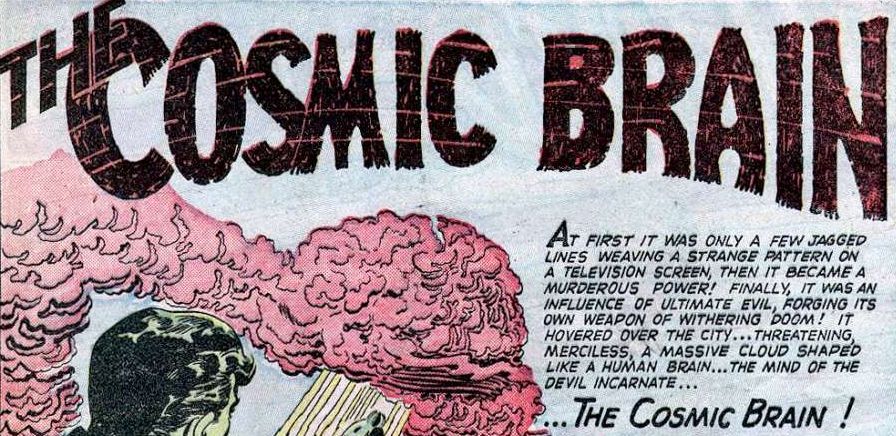
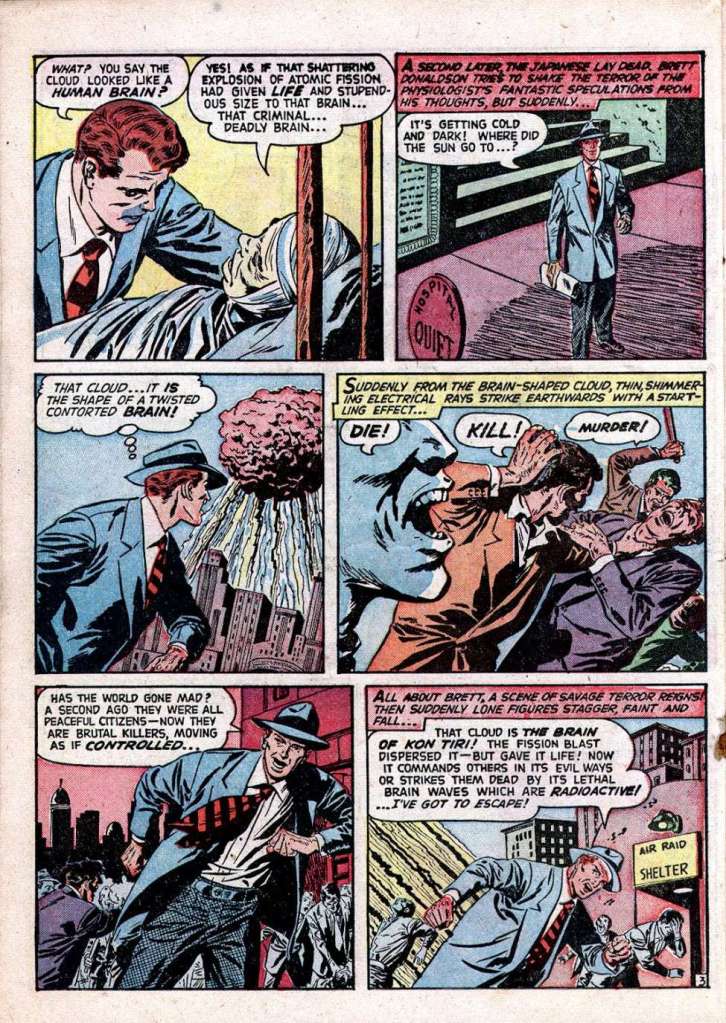
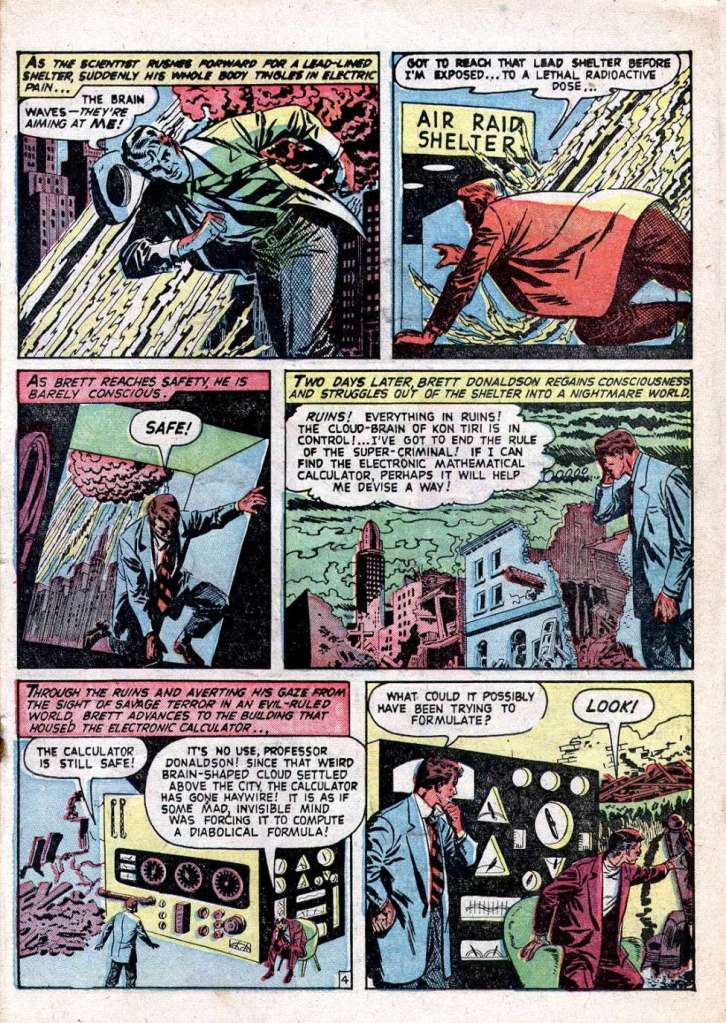
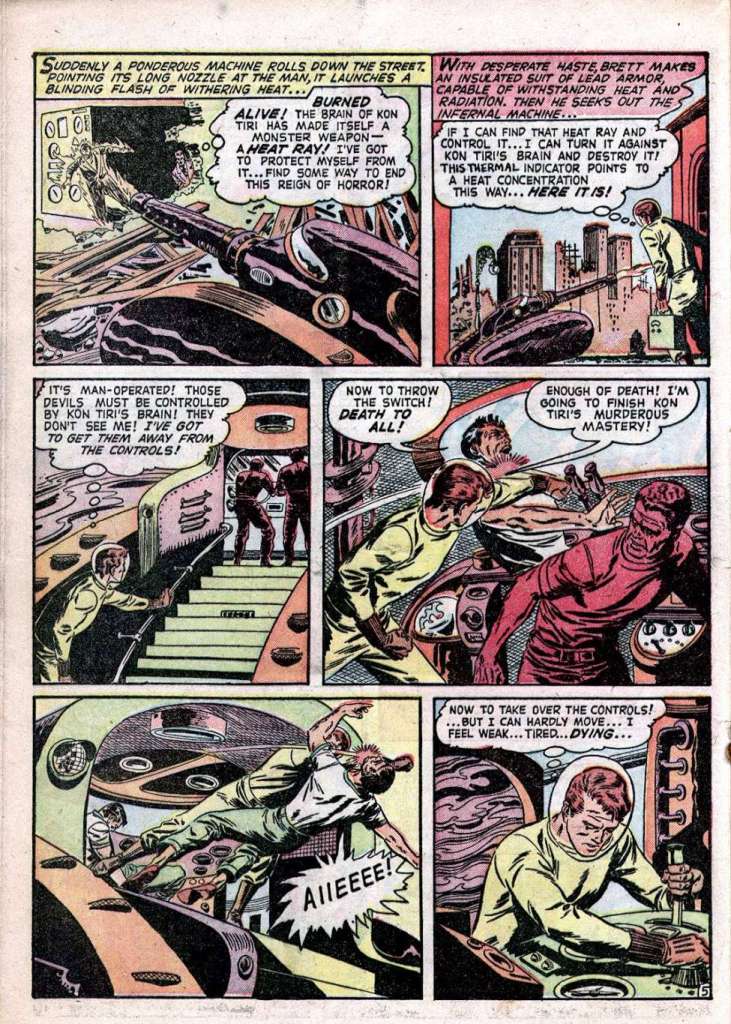
“The Cosmic Brain…The mind of the devil incarnate”

“At first it was only a few jagged lines weaving a strange pattern on a television screen. Then it became a murderous power! Finally, it was an influence of ultimate evil, forging its own weapon of withering doom…The mind of the devil incarnate…The Cosmic Brain.”
Amazing Adventures, May 1951

If you wonder how The Cosmic Brain was defeated, see the final page below.

Why compassion?

There is a notable lack of compassion in some of the public initiatives in America and in other nations. These are nations that officially or unofficially identify as Judaeo-Christian.

For some time I’ve focused on that lack of compassion and considered how it might be improved.

But here I move to a predicate question. Why do those traditions or society value and promote compassion at all?

The question particularly arises for students of Buddhism. It may be an overbroad characterization, but it is not imprecise to say that compassion is at the center of Buddhism.

Which leads to the question of whether and how much compassion is at the center of other traditions.

So why compassion at all?

Here a few of the possible answers.

It is the right thing to do.

God wants it and expects it.

The Golden Rule advises it, because we will be treated as we treat others.

It will get us into heaven or keep us out of hell.

It makes us feel good.

Unlike those and other explanations, Buddhism reaches compassion not as an assigned transactional value but as an unavoidable conclusion. To simplify in my own substandard understanding, if there is absolute equality among us, there can be nothing but compassion. If we don’t recognize that absolute equality—and we so often don’t, instead putting ourselves in an unequal position—how can we be genuinely compassionate?

With that, back to the events of the day, and the open question of how, once we have advanced our own compassion, we can find ways to advance it in our traditions and in our nations.

Lying x Power = Danger

The danger of a lie is directly proportional to the power of the liar.

For example: If someone stands in front of you pointing a gun and says, “The gun isn’t loaded” or “I won’t shoot you”, these might both be lies. A loaded gun is powerful. If those assertions are lies, it is possible you will in fact be shot, injured or killed.

If someone is a chronic or pathological liar and is in a powerful position, it would be prudent not to believe anything he says. Not just skeptical, but believing nothing. Some of those lies may be less consequential, but many of those lies are dangerous.

As for those who choose to believe the lies, sometimes all the lies, history is filled with that. And filled with the dangers that ensued.

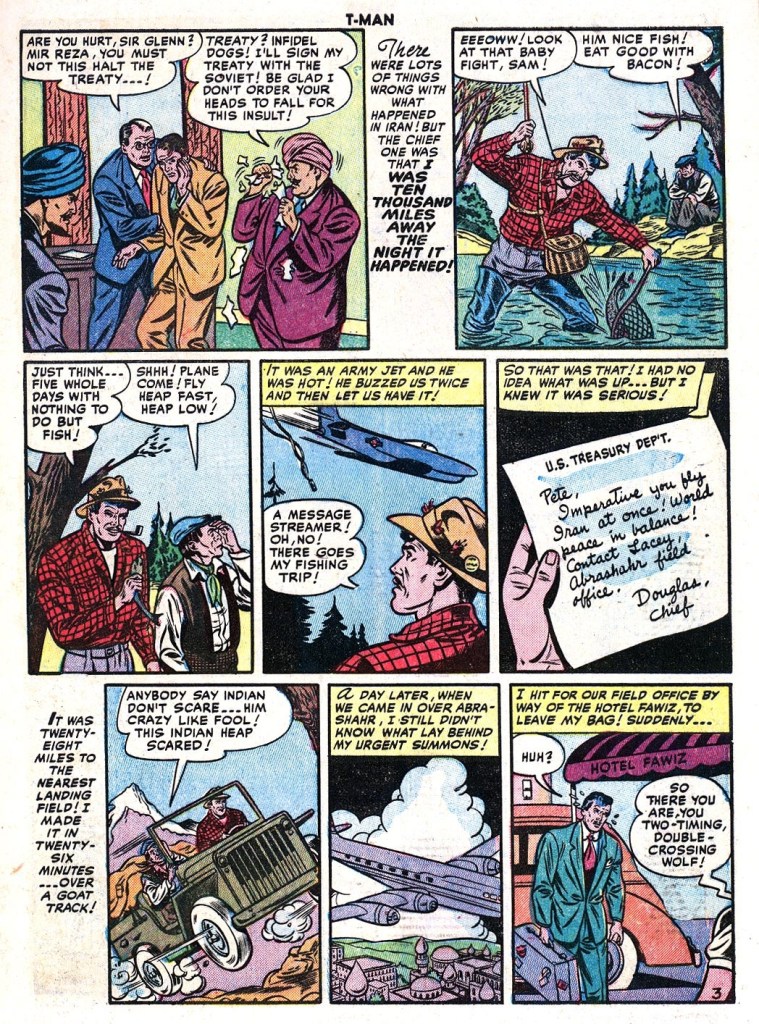
T-Man: Death Trap in Iran (1952)

T-Man (Treasury agent) Pete Trask traveled the world to fight bad guys (anti-Americans and Communists) from 1951 to 1956. The comic books chronicle “authentic cases based on the files of the U.S. Treasury Department”.

Below are the pages of an exciting story, Death Trap in Iran, from the January1952 issue of T-Man. T-Man is in Iran to protect the oil fields from Iranian bad guys:

“With Britain and Russia scrambling for control of Iran’s oil fields…anything could happen, and I thought I was ready! But even with my crazy experiences, I’d never figured on finding myself…Trouble’s Double!”

This is part of my ongoing mission to understand and explain world events in terms of comic books from the 1930s to the 1960s.