Bob Schwartz

Cleveland Indians Win and Win and Win

It appears that I haven’t published a baseball post this season. It also appears that while I wrote about the 2016 World Series before it began, what I didn’t write about was the Cleveland Indians missing winning the World Series last season in the last inning of the last game.

There’s always next year, which is this year. It is nearly the end of the regular season, before the playoffs and World Series, and yesterday the Indians won their 22nd game in a row.

If you’re interested (and some of you probably aren’t, not being sports fans, and if you are, not being baseball fans), you can read and watch lots about it elsewhere, because it is a very big deal (22 Fun Facts About the Cleveland Indians’ Historic 22-Game Winning Streak, Inside Indians’ 22-game win streak).

Consider any high-level competitive setting in any field. Consider that you are up against some worthy competition, many of the best. Consider the ups and downs of the typical journey, even if you are very, very good at what you do. Then consider having to bring 25 people together, each with their own individual ups and downs, to make sure that over the course of about three weeks, nobody beats you at that thing you do so well.

If it ends today, it ends today, and the awesome achievement stands. And if it doesn’t end today? A lot of people, me included, have been saying, “Well, you gotta lose sometime.” But what if you don’t?

Fake Candle, Real Light

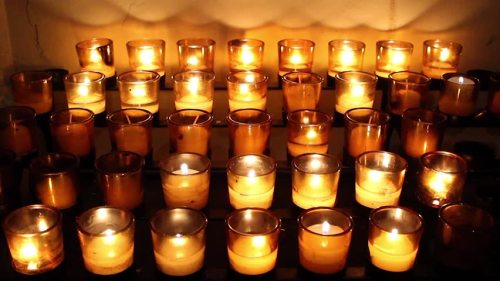
I keep a flameless LED candle on a table. I frequently light the candle, by a switch on the bottom (it also has a timer). It is not the kind that is meant to look like a wax candle, or one that hides the obviously fake plastic cutout of a flame. It is what it is: a battery-powered white plastic cylinder that lights up and “flickers.”

Someone came by and suggested I might better have a real candle with a real flame burning. She called the candle “ersatz.” My first answer is that keeping real candles burning unattended is unsafe and possibly messy. But that’s not my real answer.

The light from this candle is real. When I walk into the dark room, it lights the way. When I light it, it brightens. When I turn it off, it darkens. True, if I were expecting the candle to warm me, it won’t do that, although a single candle isn’t much good for that anyway. I don’t know what more I could ask of this candle (remember, it has a timer, and so can even turn itself on and off).

That light is quite real enough for me.

Table-Clearing Religion

A splendidly set and provisioned table can be lovely and satisfying, especially when you’re hungry and there is a great cook at work.

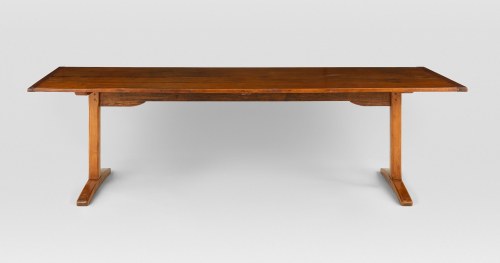
But there is also a simple table, before anything has been laid on it, before the bowls and platters have been brought from the kitchen. Or the same table after it has been cleared.

Which why we might appreciate those religious movements that set a simple table, or try to clear one that has been cluttered, even if the clutter seems beneficial.

Table clearing is a phenomenon among many traditions. Jesus proposed something like it, as did the Baal Shem Tov. Some Christian sects are grounded in it, such as the Shakers. That sort of table clearing is also an essence of Zen. The value of various complex Buddhist movements may not be denied, but in the beginning the Buddha himself tried all that was being offered, and ended up just sitting.

Sit at whichever table suits you, and eat whatever you like from it. But maybe consider the elegant simplicity of the table before it is set, or after it is cleared.

Candle for the Least

Candle for the Least

The first will be last.

Too many candles
Too many in need
To choose.
The last one
In the last row.
Outside
Barge through
A cloud of butterflies.

© Bob Schwartz

What College Rankings Miss: The Teachers Who Hand You a Key

The 2018 U.S. News and World Report Best Colleges rankings are out, just one of many annual higher education lists that have flourished like flowers—or weeds.

Knowing where a college program ranks can be merely interesting or practically important, depending on why you’re looking.

If you’re a student you want to know where to get the best education. And if you’re looking to get a job or improve the one you have, where you got your degree can be important to prospective employers who may read these rankings too.

Regarding professional programs, I admit to a superficial interest in these rankings when I choose a professional, particularly in medicine, and particularly in specialties. But I also admit that the best general practitioner I’ve ever known came from a reputable but not top-tier medical school. Which is maybe what made him so great, because his education and years of practice never made him full of himself. It just made him full of good medicine and full of his patients, one by one, one to one.

As for law, every lawyer will admit, even if he or she went to one of “those” law schools, that there is far from a consistent correlation between attending one of “those” schools and being a good or great lawyer (or a good or great person). Which is not to say that every law school can do the job well, or at all. But the best lawyers, like the best doctors, don’t have to come from the top of these rankings.

Business may be the best case of this. Check out the educational background of the most successful CEOs and entrepreneurs. Sure there are your Harvard MBAs and the like among them. But there are also all kinds of undergraduate degrees from all kinds of colleges, not all of those even in business. (Some college dropouts too.)

More than ever, where resumes and CVs are first vetted by overburdened reviewers and even by machine “intelligence”, the right school apparently equals the right stuff—hiring-wise if not life-wise.

Experience says otherwise. Looking back on education, not just college or law school, but even back to high school and further, it was the teachers. And not just all of them, but the singular ones (the rare ones) who generously gave me a key. The possibilities are so many, as are the obstructions—educational, professional, personal—that the teachers who really and deeply help are the ones who make the difference. No matter what the school.

If you’re looking for that in the rankings, you may be looking in the wrong place.

Selichot, Angels and Heschel

I lit a candle
For the care of those
In the storm’s way
The light answered:
It is up to you.

The Jewish High Holy Days—the Days of Awe—begin with Rosh Hashanah, the New Year, on Wednesday evening, September 20. In preparation for that, on Saturday night, September 16, are the prayers and contemplation of Selichot.

I’ve written before about a controversial Selichot prayer, Machnisei Rachamim (Conveyers of Compassion):

Conveyers of compassions, obtain our mercy before the Master of compassion,
Makers of prayer, make our prayer heard before the Hearer of prayer.
Makers of wailing, make our wail heard, before the Hearer of wailing.
Conveyers of tears, convey our tears before the King who yields to tears.
Strive to raise up supplication, raise up supplication and plea,
Before the King, high and exalted. The King, high and exalted.

The controversy is theological and has gone on for centuries, with the prayer being redacted and even deleted among some Jewish communities and traditions. Machnisei Rachamim asks angels to serve as intermediaries for prayer, and some claim that this is wholly inconsistent with the Jewish theology of an unintermediated and direct line between Jews and God. One contemporary rabbi who opposes it claims that its continued recitation is a symptom of Judaism becoming “too spiritual.”

Rather than weighing in on this dispute, and being a Jew who is probably “too spiritual” for some (that is, whether it is angels, saints or bodhisattvas, humankind needs all the spiritual help it can get), I turned to the greatest of modern Jewish theologians, Abraham Joshua Heschel, for some thoughts on angels. I found this story he told, which is not only about angels, but about the Torah portion read on the second day of Rosh Hashanah—the akeda, the binding of Isaac.

At a Vietnam War protest in 1967, Heschel talked about being a child in Poland, learning about the akeda from his rabbi. Heschel said:

“Isaac was on the way to Mt. Moriah with his father. There he lay on the altar, bound, waiting to be sacrificed. My heart began to beat very fast. I actually sobbed with pity for Isaac. Behold, Abraham now lifted the knife and how my heart froze within me with fright. Suddenly the voice of the angel was heard, ‘Abraham, lay not thine hand upon the lad for now I know that thou fearest God.’ And here I broke into tears and wept aloud. ‘Why are you crying?’ asked my rabbi. ‘You know that Isaac was not killed.’ I said to him, still weeping, ‘But rabbi, suppose the angel had come a second too late!’ The rabbi comforted me and calmed me by telling me that an angel cannot ever come too late.”

And then Heschel said: “An angel cannot come too late, my friends, but we, made of flesh and blood, we may come too late”

Other Brothers and Sisters

I reconnected with a old and neglected friend this past weekend. When we lived nearby more than twenty years ago, we immediately knew each other as soul siblings. I thought of him as a brother then and, after a one hour conversation and learning that circumstance has place us only about an hour apart, I think of him as a brother still—despite the extended absence and silence.

Brothers and sisters are a special category of friends. I’ve never much liked the “best friends” category, because if someone is first—and they may well be—someone is second or third. And when you look at some of those who are not the best friend, but still beloved, do they really belong in a lower tier?

So even though I have only one sister—who is my “best sibling”—I have other brothers and sisters. Not many, but always enough. I am thankful for that.

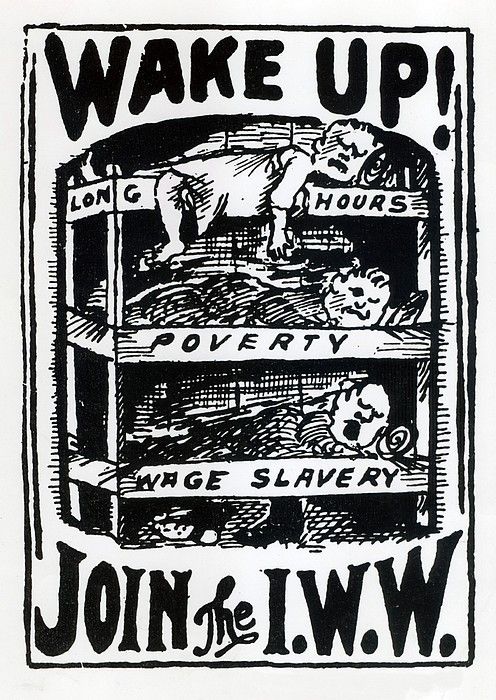
Labor Day: The Wobblies – Industrial Workers of the World

From the IWW History Project at the University of Washington:

Founded in 1905, the Industrial Workers of the World captured the attention of a generation with its fiery rhetoric, daring tactics, and program of revolutionary industrial unionism. Pledging to replace the narrow craft unionism of the American Federal of Labor with massive industrial unions, the organization grew in numbers and reputation in the years before World War I, demonstrating an ability to organize workers neglected by the AFL, notably immigrant steel and textile workers in the Northeast, miners, timber, and harvest workers in the West.

But the IWW’s revolutionary program and class-war rhetoric yielded more enemies than allies. Frequently jailed or beaten when they tried to organize, Wobblies faced something more serious after the United States mobilized for war in 1917. Federal and state governments moved to suppress the organization, imprisoning hundreds of Wobblies, passing criminal syndicalism laws that made membership a crime. The IWW survived and is active today, but never regained the momentum of its early years.

Civilization

Inscribed on the winding sidewalk of the park:

The true test of civilization is not the census, nor the size of cities, nor the crops, but the kind of man that the country turns out.
—Ralph Waldo Emerson, Society and Solitude, 1870

The Furniture of Religion

When I look at the religions I practice or have a studied interest in—Judaism, Buddhism, and Christianity among them—I see empty houses and furniture.

Some religions seem to begin with emptying the previously stuffed house, or at least minimizing the furniture. Buddhism and Christianity look like this, at least in the beginning. But the nature of religious evolution is to buy, borrow or build furnishings to fill the rooms, because it seems an improvement and because it is what people seem to like in their homes. And so, thousands of years later, you find plenty of variety in the Buddhist and Christian neighborhoods—some very grand constructions spiritually, intellectually, and physically, that seem a long way from the original simple houses.

Judaism, which like Hinduism harks back to a more ancient world where more is more, begins overstuffed (or in the Yiddish expression, ongeshtopt, meaning overstuffed). There have been continuing movements to strip down the Jewish furniture to basics and barer floors and walls, the most powerful of which has been the Hasidic stream, flowing from the Baal Shem Tov in the 18th century. (But in the spirit of exponential furnishing, the Hasidic movement became more and more overstuffed over the next few hundred years, leaving the Besht’s house barely recognizable.)

Regular readers know my appreciation for religion and my practice of Zen, which for me remains the best (but not only) way to clear out the furniture, or at least see through it to the basic house, or even to see through the house itself to where it sits in the universe. Once there, you can bring in the furniture you really need, whatever the period or the style.