Bob Schwartz

Category: Zen

The Weird Randomness of Life

The Catcher in the Rye

I went to the gym this morning for my regular morning workout. The TV was on, but nobody was there. I saw that the remote control was gone. I climbed on a chair, pushed the power button and turned the TV off.

On further search for the remote, I discovered a handbag on the seat of stationery bike. I didn’t want to pry, but I peeked in to see if the remote had ended up there. Instead, I saw a copy of The Catcher in the Rye by J.D. Salinger.

Are people still reading The Catcher in the Rye? They should and apparently they are. It is a great and famous novel. Once upon a time controversial, when it was published in 1951, because Salinger included the word “fuck” multiple times.

After this novel, another novel, and a book of stories, Salinger disappeared, like the remote control. He is considered the most reclusive and mysterious of contemporary fiction writers. W.P. Kinsella included a character based on Salinger in his novel Shoeless Joe, which became a character in the movie version Field of Dreams. The character in the movie is played by James Earl Jones, a big black man with a booming voice. Salinger was a white Jewish man, as far as we can tell regular size and regular voice.

In high school, I wrote a book report on The Catcher in the Rye, one that was supposed to be read aloud. The English teacher was one of those young, hip women, so I thought it would be alright. I was a little concerned about some of the quotes, specifically the ones that included the word “fuck.” In that class was a girl who was a friend, not a girlfriend, who read it before class and urged me to read it just as it was. She was a popular and cool girl, but mostly I wanted to seem cool to her because she was pretty and had really big breasts.

So I read the report out loud. This is one of the passages I read. The confused and questioning adolescent Holden Caulfield says:

I went down by a different staircase, and I saw another “Fuck you” on the wall. I tried to rub it off with my hand again, but this one was scratched on, with a knife or something. It wouldn’t come off. It’s hopeless, anyway. If you had a million years to do it in, you couldn’t rub out even half the “Fuck you” signs in the world. It’s impossible.

I wasn’t particularly confused, but I was punished. Someone in the class took offense and told the principal. I was called down to his office, and despite his liking me a lot and despite my record as a star student, he believed some sort of sanction for my indiscretion was necessary. The sentence was that my entry into the National Honor Society was to be delayed one year.

If I had it to do all over again, I would know that none of this mattered. I read the book, still love it, and maybe my book report led someone else to read it. If I was somebody else, then or now, I might have said something to the principal that was clever and super-meta, such as “Go fuck yourself.” I didn’t and wouldn’t.

On the other hand, if I go down to the gym tomorrow, and still can’t find it, I might say to myself—only to myself and not out loud—“Where’s the fucking remote?”

Dragon Poems (About a Plant)

Madagascar Dragon

The Dragon at the Wall

The dragon guards the wall
I sit before.
A fine pair we are.
I breathe in the oxygen
He breathes out.
He asks for water and light
I ask to learn to sit
As naturally as he does.

The Dragon Awakes

The dragon wakes up
When I open the blinds
Long green scales
Gracefully still
In the morning light.

These poems are about a plant. A dracaena marginata, which means “Madagascar dragon.” Whether or not it is a real dragon is a question.

In his Treasury of the True Dharma Eye (Shobo Genzo), Dogen Zenji also writes about a dragon and a plant. Actually, a tree. Fascicle 65, Dragon Song, includes the question “Is there a dragon singing in a withered tree?” Is there?

Touzi, Great Master Ciji of Shu Region, was once asked by a monk, “Is there a dragon singing in a withered tree?”

Touzi replied, “I say there is a lion roaring in a skull.”

Discussions about a withered tree and dead ash [composure in stillness] are originally teachings outside the way. But the withered tree spoken of by those outside the way and that spoken of by buddha ancestors are far apart. Those outside the way talk about a withered tree, but they don’t authentically know it; how can they hear the dragon singing? They think that a withered tree is a dead tree which does not grow leaves in spring.

The withered tree spoken of by buddha ancestors is the understanding of the ocean drying up. The ocean drying up is the tree withering. The tree withering encounters spring. The immovability of the tree is its witheredness. The mountain trees, ocean trees, and sky trees right now are all withered trees. That which sprouts buds is a dragon singing in a withered tree. Those who embrace it one hundredfold, one thousand-fold, and one myriadfold are descendants of the withered tree.

Zen and Intellectualism: Sit Down and Dance

By inclination and training, I can do some pretty fancy intellectual dancing. There’s a lot of stuff I can understand and learn to understand, a lot of stuff I can talk about and write about in complex and sometimes coherent ways.

Yet I’ve cultivated a view that doesn’t exactly see all that as real, a view that puts every bit of that in perspective.

I was just reading a summary of the development of literary theory, from ancient times to modern. Structuralism. Formalism. Deconstruction. Poststructuralism. On and on. Like all of the sophisticated intellectual arts, this requires real work to understand what analysts and proponents are up to, and even more to get into the conversation and make a contribution. In the end, the aim of practitioners is not only to fill journals and books with these thoughts, but to affect and improve the way we live. Sometimes, they succeed.

Yet there is a part of me that is certain that no matter how cogent and valuable this is, by its nature it misses the target. I am so certain because I am certain of what the nature of that target is, and it doesn’t look, sound or feel like that.

If you think I am suggesting an end to all that as futile and pointless, I am not. There is no point in dancing, but many people love it, and engage in it spontaneously, as soon as they hear the beat. The only suggestion is to consider gaining the perspective that poststrucuralism is poststructuralism, dancing is dancing, and not those are not those.

My intellect loves to dance. Especially when I’m sitting down.

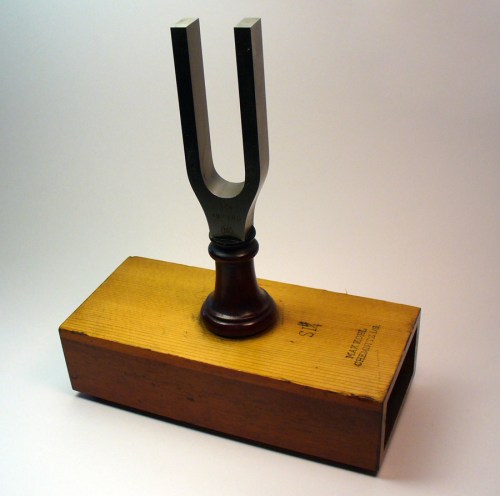
Tuning Fork

Tuning Fork

Tuning Fork

Strike and resound
A single perfect note
Against which
Our poor play is practiced.
The texts are ancient
Thoughts in a case
Replaced by the
Younger and fresher.
This tuning fork
Centuries old.
Bring me a gadget
A gizmo
To give me my pitch.
Ah but
The warm simple beauty
Of the vibrating metal
Is the practice
Before the practice.

It’s Not for Me to Say

“It’s not for me to say.”

One of the keynotes of Buddhism and Zen is nondiscrimination, that is, not getting trapped by thinking this is better and that’s worse, this is right and that’s wrong. This doesn’t mean that things aren’t by their nature or manufacture different or preferable, or that you can’t or shouldn’t recognize that. It’s just that clinging to that difference is unhelpful and can be the source of unnecessary conflict.

In the wake of some typically silly arguments, I have an idea for a way to remind myself of this, since it can be so easily forgotten in the heat of the moment.

Confronted by the endless opportunities to offer an opinion, to counter another’s opinion, or just to show off how smart and discerning one thinks one is, consider just reciting this, silently or out loud:

“It’s not for me to say.”

This isn’t a magical mantra, but it is meaningful. Of course, if someone asks for the quickest directions, or how to best cook something, or where to live, you will be welcome to offer your practical knowledge and expertise, if you have those. But often, when the difference of opinion is of no consequence, or of less consequence than the conflict is worth, having no opinion can be the best way.

It may be for someone else to say. But not me.

Practices

Practices

Our practices grow ragged
From disuse
Or irregularity.
Don’t fret.
There they are
Patient for our return.
Once a day
Once a year
Once in a lifetime.
Always ready and waiting.

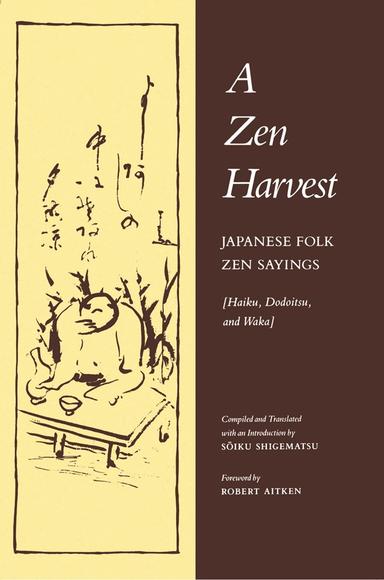
A Zen Harvest: An Essential Zen No Zen Book for No Zen People

A Zen Harvest

While I often write about Zen and Buddhism in this blog, I have never suggested a “where to begin” book. There are a lot of reasons for this, but that’s for another time.

(For those who might be interested, a leading Buddhist publication did a survey of where its readers did get started, and the overwhelming first book was Shunryu Suzuki’s Zen Mind, Beginner’s Mind, pretty clearly the most popular book on Zen in English. It is also where I got started.)

A Zen Harvest: Japanese Folk Zen Sayings (1988), compiled and translated by Soiku Shigematsu, is something different and special. (His first book, A Zen Forest: Sayings of the Masters (1981), is sadly out of print, but you can find a PDF if you go fishing in the Web sea.)

Shigematsu does a lovely job of explaining the text in his excellent Introduction. I actually suggest you not read the Introduction, at least not at first. Robert Aitken Roshi (author of another popular introduction to Zen) offers an appreciative Foreword. You can initially skip that too.

Instead, just browse anywhere in this collection of nearly 800 poem-like sayings. Anywhere. Don’t think of these as Zen. Don’t even think of these as poems. Don’t care about who said it or wrote it.

I am not even going to offer a sample saying, because it would not do the collection justice. Just get it and read in it, a few seconds at a time. You may or may not learn or find out anything about yourself, your life, other people’s lives, the world, the universe, or Zen. Does that really matter?

Be Stupid!

Bankei

You may think of yourself as clever. Or half-clever. Other people may think so too.

Be stupid!

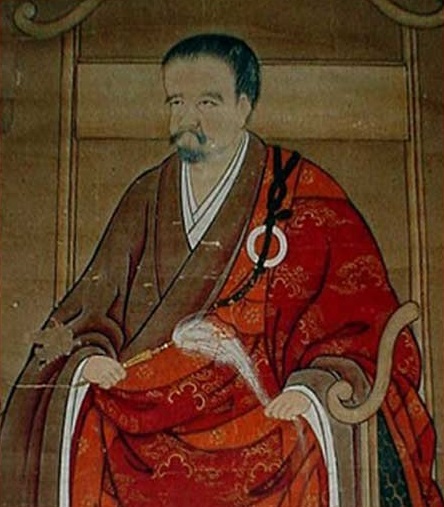
That’s the advice from Bankei (1622-1693), a Zen master I’ve written about before.

Thousands of people came from all over Japan to hear Bankei speak. Ordinary people who came to hear really extraordinary messages from a very wise man. Such as: Be stupid!

“I tell my students and those of you coming regularly here to the temple: ‘Be stupid!’ Because you’ve got the dynamic function of the marvelously illuminating Buddha Mind, even if you get rid of discriminative understanding, you won’t be foolish. So, all of you, from here on, be stupid! Even if you’re stupid, when you’re hungry, you’ll ask for something to eat, when you’re thirsty, you’ll ask for some tea; when it gets warm, you’ll put on thin, light clothes, and when it’s cold, you’ll put on more clothes. As far as your activities of today are concerned, you’re not lacking a thing!

“With people who are clever, there are sure to be a great many shortcomings. To have transcended those clever people whom all the world holds in great esteem is what’s meant by ‘stupidity.’ There’s really nothing wrong with being a blockhead!

“When people say that someone is a clever fellow, I ask to meet him, and when I do and we have a chance to talk, it looks to me as if people in the world are praising an awful lot of foolishness. The fact is that those clever people acclaimed by the world are, from the start, deluded by their own cleverness. . .The true man’s ideal is to show kindness to those who are foolish and help those who are evil. To be recognized as a good man by the people of the world is precisely what makes being born a human being worthwhile. How can it be any good to earn yourself the reputation of a wicked person?

“So when you go back to your homes and meet your old acquaintances, you should have them wondering about you all: ‘How did Bankei teach them Buddhism, anyway? Why, they’ve come back even more stupid than before they left!’

“What I’m talking about isn’t the stupidity of stupidity and understanding. That which transcends stupidity and understanding is what I mean by stupidity!

From Bankei Zen: Translations from the Record of Bankei, Peter Haskel

Also:

Unborn: The Life and Teachings of Zen Master Bankei, Norman Waddell

Outsmarting a Coffee Machine

Zen Tea

When I arrive at my hotel room, I find a very modern coffee machine. Very smart. It tells me to place the coffee pod in its holder. Close the lid. Another lid opens to accept water. Pour in water and close that lid. Place the cup on the pedestal, which it then knows is in place. Press the brew button. And in a matter of seconds, hot coffee.

But what if I just want hot water? Then I have to outsmart it. When it directs me to place the coffee pod in its holder, I don’t. I just pretend. I put the water in the tank, put the cup in place, and proceed as if what I want, what I am expecting, is a cup of coffee. What it gives me instead, what I want instead, is simply a cup of hot water. Which I can then use for any of the things you can do with hot water. Such as making a cup of tea with a teabag.

The machine is smart. Or I am smart. The machine is stupid. Or I am stupid.

Have a cup of tea.


Zhaozhou’s Cup of Tea
(Koan 233 of Zen Master Dogen’s Three Hundred Koans)

MAIN CASE

Zhaozhou asked a newly arrived monk, “Have you been here before?”

The monk said, “Yes, I have been here.”

Zhaozhou said, “Have a cup of tea.”

Later he asked another monk, “Have you been here before?”

The monk said, “No, I haven’t been here.”

Zhaozhou said, “Have a cup of tea.”

The monastery director then asked Zhaozhou, “Aside from the one who has been here, why did you say ‘Have a cup of tea’ to the one who had not been here?”

Zhaozhou said, “Director.”

The director responded, “Yes?”

Zhaozhou said, “Have a cup of tea.”

COMMENTARY

In the real truth, there is no other thing that is present. In worldly truth, the ten thousand things are always present. We should clearly understand that real truth and worldly truth are nondual and that this, in and of itself, is the highest meaning of the holy truths.

The monastery director was lost in the differences between the two monks, so Zhaozhou moved in all directions at once to help him see it. If you go to the words to understand this, you will miss it. If, however, you see into it directly, it will be like the bottom falling out of a bucket. Nothing remains. How do you see into it directly? Have a cup of tea.

Hermitage

Thomas Merton hermitage

Four Walls

Four walls
Three doors
One window
One ceiling
One floor.
How simple
How deep.
Walls layered
And filled.
Behind two doors
Filled too.
One door
Is different.
Goes out
Comes in.
Out there
The same.
In here
The same.
But not.

Hermitage has been in and on my mind. While not exactly a hermitage, the poem above describes the room in which I write.

When I first started reading Thomas Merton, I learned about his building a hermitage on the grounds of the Kentucky abbey where he lived. Merton was a sublime conundrum, who committed himself to relative silence and disciplined orthodoxy as a monk, yet whose spirit (the Spirit) would not allow him to be quiet and stop exploring. So he wrote and discovered. Thank goodness for us.

Sandokai is a famous poem by the Chinese Ch’an (Zen) Master Shitou Xiqian (700-790), who is known in Japanese as Sekito Kisen. I have long been reading and studying this, as have many Zen students. Of all the essential texts available, there are few more concisely powerful than Sandokai.

There is another poem by Sekito that is a little less known, but equally compelling. It is a description of his hermitage, a grass hut. There, he tells us, is nothing and everything.

Song of the Grass Roof Hermitage
by Shitou Xiqian

I’ve built a grass hut where there’s nothing of value.
After eating, I relax and enjoy a nap.
When it was completed, fresh weeds appeared.
Now it’s been lived in – covered by weeds.

The person in the hut lives here calmly,
Not stuck to inside, outside, or in between.
Places worldly people live, he doesn’t live.
Realms worldly people love, he doesn’t love.

Though the hut is small, it includes the entire world.
In ten square feet, an old man illumines forms and their nature.
A Great Vehicle bodhisattva trusts without doubt.
The middling or lowly can’t help wondering;
Will this hut perish or not?

Perishable or not, the original master is present,
not dwelling south or north, east or west.
Firmly based on steadiness, it can’t be surpassed.
A shining window below the green pines –
Jade palaces or vermilion towers can’t compare with it.

Just sitting with head covered, all things are at rest.
Thus, this mountain monk doesn’t understand at all.
Living here he no longer works to get free.
Who would proudly arrange seats, trying to entice guests?

Turn around the light to shine within, then just return.
The vast inconceivable source can’t be faced or turned away from.
Meet the ancestral teachers, be familiar with their instruction,
Bind grasses to build a hut, and don’t give up.

Let go of hundreds of years and relax completely.
Open your hands and walk, innocent.
Thousands of words, myriad interpretations,
Are only to free you from obstructions.
If you want to know the undying person in the hut,
Don’t separate from this skin bag here and now.

(from Taigen Daniel Leighton, Cultivating the Empty Field)