Bob Schwartz

Category: War

John Kerry: A Teeny, Tiny, Unbelievably Small Strike

Cruise Missile
Secretary of State John Kerry says the strike against Syria would be “unbelievably small” (“teeny, tiny” is inferred).

The job of Secretary of State is unbelievably big. More than just the nation’s chief diplomat, the secretary is in the line of presidential succession, following the Vice President, Speaker of the House and President Pro Tem of the Senate. Six American Presidents have served in the office, along with two of the most famous Chief Justices—John Jay and John Marshall—and an army of legendary figures, including Daniel Webster twice.

Throughout the Syria crisis so far, John Kerry has had some trouble when he speaks. His appearance before Congressional committees has been widely viewed as underwhelming. His comparing Assad to Hitler, talking about a “Munich moment,” was mostly ignored. And now he is trying to minimize attacking targets in Syria as “unbelievably small.” It isn’t clear that this is a diplomatic term of art. Hopefully, it is not a military term of art. If it is artful anywhere, it might find its place in a casual conversation between friends.

John Kerry has already been getting a pass from the media on past statements, no doubt out of respect for his no longer being a politician. So what he might have said as a Senator and presidential candidate may be out of bounds. Such as

“If you don’t believe…Saddam Hussein is a threat with nuclear weapons, then you shouldn’t vote for me.” February 11, 2003

The real dilemma is how to downplay the nature of the strike while maximizing its claimed ability to achieve either the stated aim to deter further chemical warfare or, as some would like it, to change the balance of power in the civil war. This is less like squaring the circle and more like rounding the tesseract (a four-dimensional cube).

Whatever the rhetorical trick that is being tried, it is not working. Or at least talking about a teeny, tiny, unbelievably small strike isn’t.

Syria Videos and the ASPCA

ASPCA Ad
Almost everyone knows the Sarah McLachlan television ad for the ASPCA, her haunting song Angel playing as background for heart-tugging scenes of cats and dogs. It is widely reviled and sometimes mocked: some viewers can’t lunge quickly enough for the remote. It is also one of the most successful fundraising ads ever, considered by some a game changer.

This weekend, supporters of a military strike against Syria are using a similar approach. Horrific videos of victims, especially children, in the throes of chemical warfare in Syria are now circulating.

Emotional rather than rational appeals have to be carefully calibrated. There may be a sense that the emotional appeal is a last resort, because your rational argument is weak or failing. Viewers may also feel unduly manipulated, even insulted, by the premise that they are too stupid or uncaring to get the point otherwise. Finally, disgust may take over, nearly making further appreciation of whatever good arguments there are impossible to hear.

The ASPCA ad worked not because people were entirely guiltily coerced into giving. Those who did manage to stay and were not turned off had an aha moment: you know, I thought about it some more, and I get the point. Animals are mistreated and homeless, something I care about, and I can help.

This is where the Syria horror show falls down. Even when those who aren’t disgusted to the point of numbness think about it, they have trouble getting the point because, even if there is or once was a focused point in Syria, it keeps shifting, as do the rationales, as do the discussions of outcomes.

If you give to the ASPCA, there is reasonable certainty that your donation will go to programs reasonably designed to help mistreated and homeless animals. If you give your approval and support to an attack on Syria, what exactly are you getting for that donation?

Extreme emotional appeals are not necessarily illegitimate; in some cases, as with the Holocaust, they are necessary. But care is the keynote, knowing exactly what you are saying in support of what you are showing. Right now, the Syria videos are being shown in the context of a bunch of different explanations. The audience is left not only with uncertainty about where it all leads or should lead, but with a diminished regard for the presenter. These are serious times, and when the presenter is the President of the United States, none of us can afford that.

“Pentagon Is Ordered to Expand Potential Targets in Syria With a Focus on Forces”

Syria

This headline— Pentagon Is Ordered to Expand Potential Targets in Syria With a Focus on Forces—is from a New York Times story yesterday. It has not been as widely reported as it should. And it should, because it might make some people more uneasy than they already are.

The story begins:

President Obama has directed the Pentagon to develop an expanded list of potential targets in Syria in response to intelligence suggesting that the government of President Bashar al-Assad has been moving troops and equipment used to employ chemical weapons while Congress debates whether to authorize military action.

Mr. Obama, officials said, is now determined to put more emphasis on the “degrade” part of what the administration has said is the goal of a military strike against Syria — to “deter and degrade” Mr. Assad’s ability to use chemical weapons. That means expanding beyond the 50 or so major sites that were part of the original target list developed with French forces before Mr. Obama delayed action on Saturday to seek Congressional approval of his plan.

For the first time, the administration is talking about using American and French aircraft to conduct strikes on specific targets, in addition to ship-launched Tomahawk cruise missiles. There is a renewed push to get other NATO forces involved.

The strikes would be aimed not at the chemical stockpiles themselves — risking a potential catastrophe — but rather the military units that have stored and prepared the chemical weapons and carried the attacks against Syrian rebels, as well as the headquarters overseeing the effort, and the rockets and artillery that have launched the attacks, military officials said Thursday….

Obviously we are not going to blow up stockpiles of chemical weapons, even assuming we know where they are. But this news puts the question in starker relief. If our goal is to both punish Assad and to reduce the possibility of his using chemical weapons again, we are not going to do that by taking them out of his hands. But if not that way, then how? And the answer from this report is that we intend to weaken his ability to make war more generally—because the people and equipment that make chemical warfare possible are the same ones that make the overall bloody war on his people possible. And at that point, intentionally or incidentally, we have generally intervened in the conflict, no matter how limited the basis.

And that, as this news report helps clarify, is what is bothering members of Congress, members of the military and a lot of Americans.

Yellowcake and Red Line: The Colors of Casus Belli

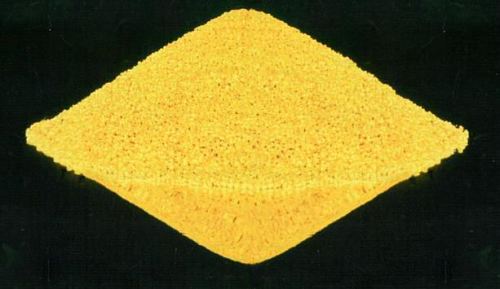
Yellowcake
You may not remember yellowcake. Not the kind you eat. The kind that is uranium, the stuff of nuclear fission, the stuff of weapons of mass destruction, the stuff that was supposed to be in Iraq but was never found there.

Colors seem to be troublesome in talking about reasons for going to war. So maybe President Obama should have picked a different metaphor than red line. Line in the sand comes to mind. Of course, lines in the sand have a different quality. They are harder to see, and are subject to being erased by wind or water, or by a quick brush of the foot.

Maybe better to stay away from colors and lines altogether, and instead do the much harder, painful and less appealing work, leaders and citizens, of talking honestly about our strengths and limitations, the world we have and the one we want to have, and how to practically and ideally get from here to there. That would be a nice grownup change from childish colors and macho ultimata.

What Would Truman Do?

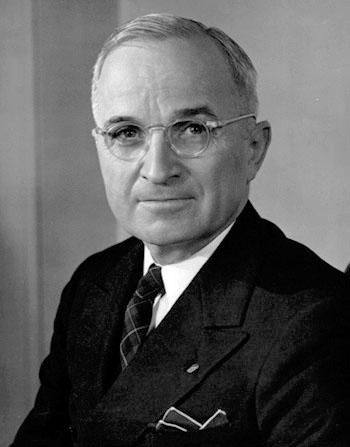
Harry Truman
Harry Truman is maybe the most interesting American President of the twentieth century, and maybe the most significant.

He held a power that no one had held in human history and he took the decision to use it. He had no precedent to guide him—except maybe God in the Bible. He dropped atomic bombs on Hiroshima and Nagasaki. From that point forward, everyone who uses nuclear weapons will be the second or third to do it.

He is also the only President in the twentieth century without a college degree, and one of the relatively few in American history. Grover Cleveland was the last before him. But there are some before that who did manage to stand out without college, such as George Washington and Abraham Lincoln.

Obama shares some things with Truman, and on other scores couldn’t be more unlike. Truman was an unabashed though pragmatic reformer: he used executive power to desegregate the military, but his Fair Deal liberal agenda failed in the face of a recalcitrant Republican Congress. Truman’s second term was the model for all other second term disasters, marked by a war that was both unpopular and unsuccessful and by a President whose effectiveness was a constant question.

Unlike Obama, Truman was not a spell-binding orator or a scholar. He had come up through politics and to the Senate the old back room way, and his ascension to the 1944 presidential ticket was a matter of political manipulation and happenstance. The legendary 1948 election pitted him against the dapper, smooth talking, hard-nosed, well-educated federal prosecutor and New York Governor. It was considered no contest for Thomas E. Dewey. Truman won.

The reasons that Truman has risen to the top ten on nearly all lists of great American Presidents (he is number 5 on a few) are many. This puts him in the range of both Roosevelts, TR and FDR, both of whom went to Harvard, both of them charismatic patricians with colorful histories and silver tongues. Among Truman’s gifts, the one most associated with him was a plain-spoken decisiveness in word and deed, even if the decision turned out troublesome or wrong.

There were reasons to like Truman at the time of his presidency, and a number of reasons not to. But there was a sense—even those who were his enemies at the time acknowledge it and historians have come to treasure it—that underneath it all was a man who had fought in a world war (only a few Presidents have), a man who had lived a modest life, a man who knew how to practice politics, a man who could surprise by analyzing deeply, a man who faced with the prospect of killing hundreds of thousands of people in a moment gave the order to do it.

Plain speaking. Decisive action. Truman was not the ideal President because there is no such thing. But at every critical juncture, it can’t hurt to ask: what would Truman do?

Syria Indecision: Give Them A (Small) Break

Decision Tree
Hard cases make bad law.

This is a maxim of the legal process. Roughly, it means that cases with lots of moving parts, with lots of collateral considerations, with no clear and straight path to resolution, produce rulings that are unsettling and unsatisfactory and, worse, have limited or counterproductive effect down the road.

Maybe the corollary is that hard foreign cases make bad foreign policy.

The indecision of Congressfolk is usually vexing, as so many of them claim to be weighing the factors, all the while putting their finger in the air to feel which way the wind blows.

This decision on attacking Syria seems to be different. There are certainly plenty of politicians who are trying to look thoughtful as they assess potential electoral damage. But this situation is so complex that for the moment, despite the usual frustration as a voter and citizen, a number of the Senators and Representatives deserve a little bit of a break. A lot of them are understandably having real trouble figuring out what to do—as are many of us.

The complexity isn’t just the result of a force of nature, and isn’t even due entirely to Assad. President Obama may have handled Syria with some degree of insight, intelligence and integrity, but he has made a difficult situation much harder. It is now widely agreed that announcing a chemical weapon “red line” long ago without a clear plan—public or at least private—to respond if and when it was crossed was a mistake. This contingency plan did not have to be tactically certain: how much evidence to need, which particular sites would be targeted. But the much bigger strategic issues—objectives and the dizzying range of possible consequences, good and bad—should have been vetted in all sorts of venues, including Congress.

That didn’t happen. So in short order, we are discussing the international conventions on chemical warfare, the forensics of discovering the use of chemical weapons, our ability to execute a limited strike, all the more or less likely impacts of a limited strike, the interpretation of the history of all our recent wars, comparison of our current situation to all those wars, and even the question of what exactly war is. So we have the Chairman of the Joint Chiefs of Staff telling a House committee this week that an air strike such as the one contemplated would be an act of war, while Secretary of State John Kerry, sitting right beside him, begged to differ: “We don’t believe we are going to war, in the classic sense of taking American troops and America to war.”

Americans are also being asked to learn more about a country and civil conflict that was often regarded as a video clip, sound bite or talking point—including discovering the shocking news that two million people are currently refugees from Syria (including one million children), leaving their country at a rate of one million people every six months.

Among those more or less likely impacts, there is a possibility that even this small action could precipitate wider and deeper crises, ones that might make our previous (mis)adventures look relatively small. We can’t be sure, of course, of this or just about anything else right now.

That’s a lot to discuss and digest. But we only have a few weeks, or so we are told. So, while Congress may be the most disliked institution in the country, seemingly stuffed with people who are uncertain about the proper ratio of self-interest to national interest, on this they are going to get a brief pass while they really do contemplate a genuinely serious and complicated situation. But after that break, when confusion is no longer an option, because deciding is the reason they get the honor and the big bucks, we expect them to vote conscientiously and to explain their vote clearly and unequivocally.

One more small matter: If any of them do vote “Present” in the final roll call on this, they should be expected to fall on their sword and offer their resignation forthwith. With only an 11% approval rate (and dropping), Congress doesn’t have room for any more of that sort of mushy politics.

Rosh Hashanah and Syria

UNHRC

Politics and prayer. There will be plenty of both during these Jewish High Holy Days.

Rosh Hashanah, the New Year, begins this evening. Please consider a donation to the UN Refugee Agency (UNHCR) to help the more than two million refugees who have so far fled Syria.

Ktivah v’chatima tova. May you be inscribed and sealed for a good year.


Chemical Weapons 101

OPCW
We are in one of those moments that we often reach in modern public discussion: unequal measures of facts, opinions, emotions and agendas, stirred up so that we are no longer sure of what we know, what we feel and what we think. That’s where logic and learning come in, helping us to sort things out.

Unfortunately, developing and exercising logic is going to take more than visiting a website (and if you do want to sharpen your logical skills, please don’t be looking to some of our politicians for that). But if you want to learn more about chemical weapons, and particularly about why we have agreed to abhor them, you can learn the basics in one stop. Visit the site of the Organisation for the Prohibition of Chemical Weapons (OPCW)  and you will be way ahead of many know-it-all pontificators:

The Organisation for the Prohibition of Chemical Weapons is the implementing body of the Chemical Weapons Convention (CWC), which entered into force in 1997. As of today the OPCW has 189 Member States, who are working together to achieve a world free from chemical weapons. They share the collective goal of preventing chemistry from ever again being used for warfare, thereby strengthening international security.

Among the pages of information, along with descriptions of the work currently being done by OPCW in the Syria situation, you will find a Brief History of Chemical Weapons Use:

Although chemicals had been used as tools of war for thousands of years—e.g. poisoned arrows, boiling tar, arsenic smoke and noxious fumes, etc.—modern chemical warfare has its genesis on the battlefields of World War I.

During World War I, chlorine and phosgene gases were released from canisters on the battlefield and dispersed by the wind. These chemicals were manufactured in large quantities by the turn of the century and were deployed as weapons during the protracted period of trench warfare. The first large-scale attack with chlorine gas occurred 22 April 1915 at Ieper in Belgium. The use of several different types of chemical weapons, including mustard gas (yperite), resulted in 90,000 deaths and over one million casualties during the war. Those injured in chemical warfare suffered from the effects for the rest of their lives; thus the events at Ieper during World War I scarred a generation. By the end of World War I, 124,000 tonnes of chemical agent had been expended. The means of delivery for chemical agent evolved over the first half of the twentieth century, increasing these weapons’ already frightening capacity to kill and maim through the development of chemical munitions in the form of artillery shells, mortar projectiles, aerial bombs, spray tanks and landmines.

After witnessing the effects of such weapons in World War I, it appeared that few countries wanted to be the first to introduce even deadlier chemical weapons onto the World War II battlefields. However, preparations were made by many countries to retaliate in kind should chemical weapons be used in warfare. Chemical weapons were deployed on a large scale in almost all theatres in the First and Second World Wars, leaving behind a legacy of old and abandoned chemical weapons, which still presents a problem for many countries.

During the Cold War, the United States and the Soviet Union both maintained enormous stockpiles of chemical weapons, amounting to tens of thousands of tonnes. The amount of chemical weapons held by these two countries was enough to destroy much of the human and animal life on Earth….

And a Brief Description of Chemical Weapons:

The general and traditional definition of a chemical weapon is a toxic chemical contained in a delivery system, such as a bomb or shell.

The Convention defines chemical weapons much more generally. The term chemical weapon is applied to any toxic chemical or its precursor that can cause death, injury, temporary incapacitation or sensory irritation through its chemical action. Munitions or other delivery devices designed to deliver chemical weapons, whether filled or unfilled, are also considered weapons themselves.

The toxic chemicals that have been used as chemical weapons, or have been developed for use as chemical weapons, can be categorised as choking, blister, blood, or nerve agents. The most well known agents are as follows: choking agents—chlorine and phosgene, blister agents (or vesicants)—mustard and lewisite, blood agents—hydrogen cyanide, nerve agents—sarin, soman, VX….

Above all you will find an overview and details of the Chemical Weapons Convention. Parties to the the OPCW “represent about 98% of the global population and landmass, as well as 98% of the worldwide chemical industry.”

You may have better things to do than learn about chemical weapons and their elimination; our political representatives and leaders don’t. Whether we unilaterally respond to the use of chemical weapons in Syria, whether that response stops Assad from their further use, whether stopping this particular weapon changes the sociopathic path he is on with respect to his citizens (it likely won’t), whether the response has collateral consequences in the region and world (it likely will), at least we can think and act knowledgeably.

John Kerry’s Munich Moment: Is Political Reporting Too Polite?

Fear and Loathing on the Campaign Trail
When the going gets weird, the weird turn pro.
Hunter S. Thompson

About a week ago, President Obama said that if Syria’s Bashar Assad was not stopped from using chemical weapons, we might find those same weapons used against America. When asked about this days later, a presidential spokesman ignored the question. This weekend Secretary of State John Kerry said that the decision to stop Assad’s use of the weapons was a “Munich moment.” Meaning: Just as the Munich Agreement of 1938 condoned Hitler’s occupation of Czech territory, emboldening and enabling his vision of global conquest, so would our failure to respond to Assad’s use of chemical weapons further his insidious master plan.

Experts who have bothered to talk about the prospect of these chemical weapons being used against America have dismissed it out of hand. As for the “Munich moment,” that requires a bit more nuance. Nobody claims, at least not yet, that Assad has any extra-territorial plans or delusions of regional grandeur. His plan seems to be simply to punish any Syrians who stand in the way of him and his family fiercely holding on to power. Garden variety despotry; Assad is no Hitler. If “Munich” means appeasing his inhumanity, that is also silly. The bulk of Assad’s inhumanity is also garden variety: guns, bombs, etc. Nothing that Obama has proposed is intended to take care of that.

The region really did have a Munich moment in 1990. Saddam Hussein invaded and annexed Kuwait. A thirty-four nation coalition, led by the U.S., pushed him back to his own borders. Both the history of the Gulf War and its aftermath—including the decision by Bush 1 to go no further and the decision by Bush 2 to finish the job—are beyond the scope of this note. This is just to say that if you want to know what a Munich moment looks like, that was it.

The authenticity and civility of our political life are always in question. We ask whether politicians and their supporters are speaking truth, saying what they mean, meaning what they say, and saying it all in a way that is reasonably respectful and polite. That’s a lot to ask of them, and our expectations are right now pretty low. It’s also a lot to ask of political pundits and commentators. Unconstrained by the limitations of office or election, some of them, left to right, go wherever their opinions take them. Fish gotta swim, birds gotta fly.

Then there are political journalists. This is where things get tricky. Calling a political statement a lie or stupid, or calling a politician a liar or stupid, is supposed to fail the professional standard on a few scores. It supposedly puts a journalist’s objectivity in question; that sort of discourse is best left to political minions and commentators. And if not carefully couched or softened, it can come off as inappropriately impolite and uncivil, another professional faux pas.

We should all miss Hunter S. Thompson right about now. His suicide in 2005 left a gap in political journalism that hasn’t been filled and probably never will be. He didn’t begin as a political reporter. He came up as a writer during the time of the so-called “new journalism” in the 1960s (Tom Wolfe, Gay Talese, et al), when the lines between the factual, the personal and the expressive broke down. By his own admission, Thompson was crazy, formally or informally; he was also a stunningly talented observer and writer. When he hit the political beat, it was right place, right time, right writer. If politics was an exercise in duplicity, venality and near-insanity, it needed a professional journalist just as insane. The collection of his Rolling Stone coverage of the 1972 presidential election, Fear and Loathing on the Campaign Trail, is not just on another planet from the classic campaign coverage up to then; it is in another solar system.

Thompson had a special relationship with Richard Nixon. He ended up respecting and applauding Nixon’s brilliant mind as an expert football strategist, but otherwise Thompson despised him. He wrote a 1994 obituary of Nixon.  In it he continues the case for that untempered loathing, but in this excerpt also explains why it is an appropriate attitude for a journalist:

Kissinger was only one of the many historians who suddenly came to see Nixon as more than the sum of his many squalid parts. He seemed to be saying that History will not have to absolve Nixon, because he has already done it himself in a massive act of will and crazed arrogance that already ranks him supreme, along with other Nietzschean supermen like Hitler, Jesus, Bismarck and the Emperor Hirohito. These revisionists have catapulted Nixon to the status of an American Caesar, claiming that when the definitive history of the 20th century is written, no other president will come close to Nixon in stature. “He will dwarf FDR and Truman,” according to one scholar from Duke University.

It was all gibberish, of course. Nixon was no more a Saint than he was a Great President. He was more like Sammy Glick than Winston Churchill. He was a cheap crook and a merciless war criminal who bombed more people to death in Laos and Cambodia than the U.S. Army lost in all of World War II, and he denied it to the day of his death. When students at Kent State University, in Ohio, protested the bombing, he connived to have them attacked and slain by troops from the National Guard.

Some people will say that words like scum and rotten are wrong for Objective Journalism — which is true, but they miss the point. It was the built-in blind spots of the Objective rules and dogma that allowed Nixon to slither into the White House in the first place. He looked so good on paper that you could almost vote for him sight unseen. He seemed so all-American, so much like Horatio Alger, that he was able to slip through the cracks of Objective Journalism. You had to get Subjective to see Nixon clearly, and the shock of recognition was often painful.

It’s not that we don’t have good and great political journalists working today; we may have more than ever. And it’s not that there aren’t plenty of partisans pointing out gaps in someone else’s facts and reasoning.

It’s just that an amazing amount of stuff gets said and seems to get by far too unchallenged or challenged too narrowly or politely. It wasn’t so long ago that the Republican party produced a nominating spectacle that is widely characterized as a circus or a clown car. But at the time, journalists were unwilling to even hint at how ridiculous some of it was, as the party of Lincoln earnestly considered nominating Herman Cain or Donald Trump as their standard bearer.

Sure we need objectivity, maybe now more than ever in a social media enriched/poisoned environment. What we shouldn’t do is confuse objectivity with comity and politeness. If Hunter Thompson was shockingly blunt—and so much fun to read—it was to wake people up from the soporific effect of treating truth and lies, intelligence and stupidity, as rhetorical equivalents, in the name of objectivity, politeness and respect. In the name of keeping the peace. That would be the media Munich moment.

Update: Rereading this post, I have to add that the closest we come to Hunter S. Thompson’s “gonzo” political journalism is The Daily Show on Comedy Central. This revelation came watching the first few days of Jon Stewart’s return after his summer away, coming back to a grim and arguably ridiculous political crisis. The Daily Show’s trick is to protest (too much) that it is a “fake” news show, which gives it total license to completely get its facts straight while speaking truth to absurdity. And when, as this week, vicious jokes aren’t quite enough, Stewart vents his frustration directly and straight, no humor. Oh, to see what The Daily Show would have made of the Nixon Years.

Masters of War

Freewheelin' Bob Dylan
There may be a few too many Bob Dylan albums, depending on whether you are a completist/fanatic. The number of albums, somewhere north of infinity, is supplemented this week by the release of The Bootleg Series, Vol. 10 – Another Self Portrait (1969-1971). On the other hand, this is what you would expect, and some would hope for, from a continuingly productive artist with a long and storied career.

Bob Dylan may be old school—maybe ancient school—but there are at least two things to note. For a time, he was one of the two most significant pop music artists in the world, matched only by The Beatles. And while his free form musical poetry combining the personal and the social may have owed something to folk music and beatnik coffee houses, it was something new, and is strangely part of the soil in which rap grew.

Masters of War is a track from The Freewheelin’ Bob Dylan in 1963. As a recording, it couldn’t be farther from current slick production values. It is a young guy strumming a guitar, singing in a way that then and now is pretty idiosyncratic. But like a lot of the great Dylan works, it grabs you and won’t let you go.

It is a song about war, but it isn’t an anti-war song; listening to it reveals that, and Dylan later confirmed it. It is about the people behind the curtain, the people on the battlefield, the people caught in the crossfire. War is a serious business, but it appears we are chronically not taking it seriously enough. Maybe we have to fight sometimes, maybe we don’t, but for God’s sake, let’s put our motives on the table for everyone to see, and let’s act, if we have to, from the deepest reaches of heart and mind. Elsewise, Dylan says, even Jesus would never forgive what you do.

Come you masters of war
You that build all the guns
You that build the death planes
You that build the big bombs
You that hide behind walls
You that hide behind desks
I just want you to know
I can see through your masks

You that never done nothin’
But build to destroy
You play with my world
Like it’s your little toy
You put a gun in my hand
And you hide from my eyes
And you turn and run farther
When the fast bullets fly

Like Judas of old
You lie and deceive
A world war can be won
You want me to believe
But I see through your eyes
And I see through your brain
Like I see through the water
That runs down my drain

You fasten the triggers
For the others to fire
Then you set back and watch
When the death count gets higher
You hide in your mansion
As young people’s blood
Flows out of their bodies
And is buried in the mud

You’ve thrown the worst fear
That can ever be hurled
Fear to bring children
Into the world
For threatening my baby
Unborn and unnamed
You ain’t worth the blood
That runs in your veins

How much do I know
To talk out of turn
You might say that I’m young
You might say I’m unlearned
But there’s one thing I know
Though I’m younger than you
Even Jesus would never
Forgive what you do

Let me ask you one question
Is your money that good
Will it buy you forgiveness
Do you think that it could
I think you will find
When your death takes its toll
All the money you made
Will never buy back your soul

And I hope that you die
And your death’ll come soon
I will follow your casket
In the pale afternoon
And I’ll watch while you’re lowered
Down to your deathbed
And I’ll stand o’er your grave
’Til I’m sure that you’re dead