Bob Schwartz

Category: Uncategorized

The practice of tonglen
I have been practicing and studying Buddhism, primarily but not exclusively Zen, for a long time. Which means I acknowledge knowing one particle of dust about it.

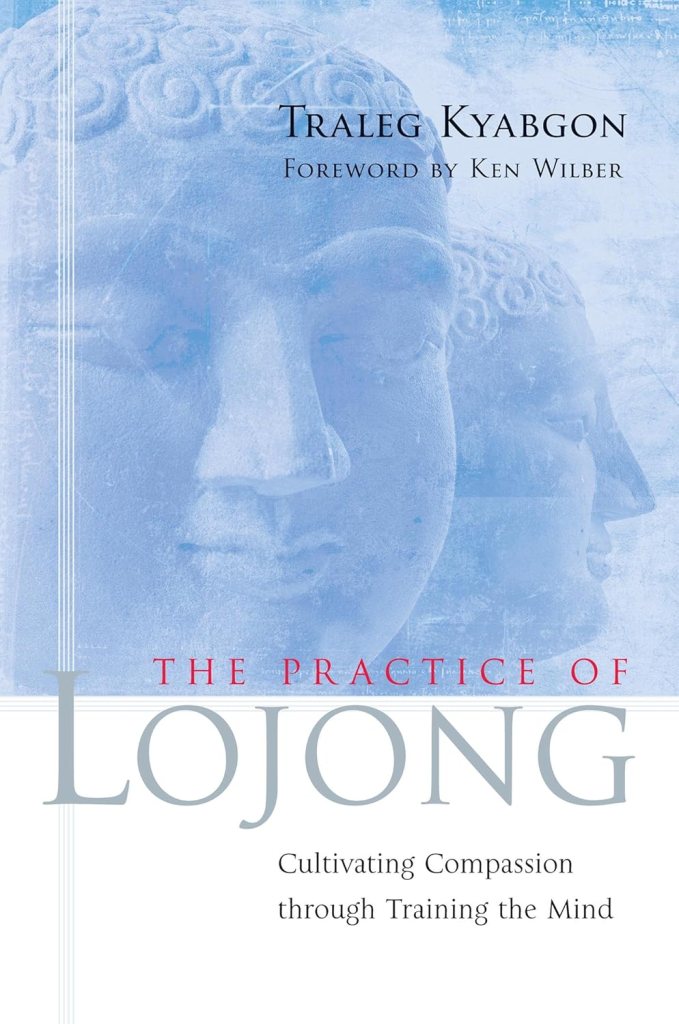
In that time, my learning about and engagement with Tibetan Buddhism is less than that particle. But in recent weeks, I came across a Tibetan mind training practice known as lojong, within which is a practice known as tonglen.

A few very brief masterful explanations:


SENDING AND TAKING MEDITATION (Tibetan tong len). A meditative practice for adopting a radically new attitude or new way of looking at things. Sometimes called “exchanging self for others,” it involves visualizing giving away everything that is good in our lives and taking on everything that is bad in the lives of others as a way of training ourselves in courage. All forms of self-obsession lead to negative emotions, and tonglen is the antidote to that.

Traleg Kyabgon, The Practice of Lojong: Cultivating Compassion through Training the Mind


Introduction: It All Started with Tonglen

The Tibetan word tong means “giving”; len means “taking.” In its most well-known form, tonglen is a meditation technique that involves coordination with the breath. Breathing in, we visualize ourselves taking on the suffering of others; breathing out, we visualize ourselves giving others happiness. This powerful method for transforming our minds vividly illustrates the exchange of self and other that is the essence and spirit of tonglen. But the wider meaning and application of tonglen, both in spiritual practice and ordinary life, goes far beyond this specific technique. In general, tonglen refers to any form of exchanging self and other. We can even apply the term to the mundane exchange between an employer who pays wages and an employee who does work. Since, as we will see, the entire aim of the Buddhist path is to lessen the importance of the self and to increase the importance of others, tonglen is at the very heart of all practices. Without having an orientation toward tonglen, it is unlikely that our spiritual path will have a profound effect on our mind and heart.

Dzigar Kongtrul, The Intelligent Heart: A Guide to the Compassionate Life


TONGLEN MEDITATION
Extracted from Practice Instructions Given by Jamyang Khyentse Wangpo

Meditate that you completely take on all of the suffering and the causes of suffering—negative actions and disturbing emotions—of all sentient beings, the objects of compassion.

Then, meditate on giving all of your happiness in its entirety, including the positive actions that are the causes of that happiness, to each and every being.

This is done using the breath as follows: Visualize that the negativity, obscurations, and suffering of all living beings are gathered together in the form of black light. With each inhalation, breathe in through the nose imagining that light dissolves into your heart. Think, “Through this they are now free of all negativity and suffering forever.”

Meditate on all of your happiness and its causes—whatever positive actions you have accumulated—appearing as white light that shimmers like the moon’s rays. With the exhalation of the breath, imagine that this light flows out and dissolves into all beings. Think, “Through this they now have temporary and ultimate happiness.”

This practice is done in gradual stages.

Start by bringing to mind one person who has been very kind to you, such as your mother or father, and imagine that he or she is in front of you. Use this person as the object of tonglen, giving and receiving.

Start by bringing to mind one person who has been very kind to you, such as your mother or father, and imagine that he or she is in front of you. Use this person as the object of tonglen, giving and receiving.Focus on other loved ones, friends and family, as the objects of tonglen.

Start by bringing to mind one person who has been very kind to you, such as your mother or father, and imagine that he or she is in front of you. Use this person as the object of tonglen, giving and receiving.Focus on those whose suffering is unbearable, such as beings in the three lower and less fortunate realms of existence, and use them as the object of tonglen.

Start by bringing to mind one person who has been very kind to you, such as your mother or father, and imagine that he or she is in front of you. Use this person as the object of tonglen, giving and receiving.Focus on those humans who are destitute and suffer more than most, and those who we know engage in harmful and negative actions, as the object of tonglen.

Start by bringing to mind one person who has been very kind to you, such as your mother or father, and imagine that he or she is in front of you. Use this person as the object of tonglen, giving and receiving.Focus on your adversaries—people, ghosts, and spirits who harm you and your loved ones—as the object of tonglen.

Start by bringing to mind one person who has been very kind to you, such as your mother or father, and imagine that he or she is in front of you. Use this person as the object of tonglen, giving and receiving. Finally, embrace all sentient beings as the focus of your tonglen practice.

After practicing this mind training as much as you can, recite the following advice:

When the entire universe and all living beings are filled with negativity, bring all adverse circumstances onto the path of enlightenment. Drive all blame into one and meditate on the kindness of all.

Khentrul Lodrö Thayé, The Power of Mind: A Tibetan Monk’s Guide to Finding Freedom in Every Challenge


I avoid offering testimony on the effectiveness and value of religious practices and traditions. I follow the Buddha’s principle of upaya—skillful or expedient means, suited to an individual. About the practice of tonglen, and about lojong of which it is a part (more on this at some later time), this is something so simple and powerful that I thought I would share.

DT won’t be our next president. KH won’t be our next president. Now you can imagine who occupies the White House for the next four years.

Cody Coyote at the White House

Note: This photo of Cody Coyote at the White House does not mean that he is my choice for alternative president. It does mean that Cody, smart as he is, might be better than some others.

The presidential election is over. Some citizens are very happy, some are very sad.

In one reality, DT is going to be president, with all that portends. That can’t be helped.

However, in our minds, we can imagine an alternative for the next four years. That imagining will not of course change the above reality. But it will give us an opportunity to think more clearly, focusing on who and what we would like a president to be, unencumbered by our emotional burden and politics as usual.

This alternative should not be DT or KH—even if KH was your favorite. Instead, there is no limit to who you might “elect”. Use your best thinking, about someone inside or outside the political box. Someone expert, someone celebrated, even someone in your community or family circle if they qualify (but, sorry, not yourself).

© 2024 by Bob Schwartz

The bluebird of happiness left X. Now The Guardian, other media, and many people have. You should too.

The Bluebird of Happiness

“We think that the benefits of being on X are now outweighed by the negatives and that resources could be better used promoting our content elsewhere.”
The Guardian

The Guardian newspaper announced that they are no longer posting on X. In part:


We wanted to let readers know that we are no longer posting from any official Guardian editorial accounts on the social media site X (formerly Twitter). We think that the benefits of being on X are now outweighed by the negatives and that resources could be better used promoting our content elsewhere.

This is something we have been considering for a while given the often disturbing content promoted or found on the platform, including far-right conspiracy theories and racism. The US presidential election campaign served only to underline what we have considered for a long time: that X is a toxic media platform and that its owner, Elon Musk, has been able to use its influence to shape political discourse.


The Guardian isn’t alone. Other media organizations and X users are also leaving.

You should too. It won’t seem easy. Twitter (its brand before Musk killed the bluebird of happiness) developed into a social media platform that was simple to use and had global reach. The current alternatives have not yet reached its utility. But, and this is the watchword of the moment, we have choices and we can choose. No one said it would be easy to stand up and be counted.

Elections make us think that voting at the ballot box is the only way we can have our voices heard. Every movement that isn’t about elections would beg to differ.

Make a difference. Join the bluebird of happiness and leave X today.

Our political leaders and politicians—all parties and ideologies—should take a trip. Inauguration Day could be a real “day of love”.

Albert Hofmann © Dean Chamberlain

I rarely write about psychedelics. See, for example, Psychedelics as icon smashers.

Why am I writing about it here now? It is apparent that political leaders of all parties and ideologies, and by extension some of their followers, are being driven by unbalanced or unhinged self-interest and self-importance. This is blinding and deafening them to any reality that isn’t about themselves and what they think and believe. There may be good intentions involved, but as the proverb goes, good intentions are the road to hell.

We might ask that these politicos turn to their respective religious traditions for a selfless and clear vision of the way things are and how they and their followers can help. Many are religious people. But respectfully, as much as some help does come from these traditions—and it does—there is also a measure of exclusivity/superiority and an enforced parochial vision of reality that does more harm than good.

Am I suggesting that perhaps on Inauguration Day, all gathered political leaders and politicians, all members of old and new administrations, all members of Congress and the Supreme Court, should partake in a psychedelic experience? No.

But imagine it. Recall that in the view of some, the January 6 “gathering” at the Capitol was a “day of love”. It wasn’t. Psychedelic Inauguration Day would be a real day of love—a perhaps wild but nonviolent one—that might lead to some real breakthroughs and humane improvement in how American government operates in 2025 and beyond.

© 2024 by Bob Schwartz

Once again philosophers are needed to guide our public discussions. Once again they are absent.

I’ve been reading Hannah Arendt today, as I have again and again in recent times. She is, as I’ve pointed out before, possibly the preeminent political philosopher of the twentieth century.

I’ve called for philosophers to force themselves into the difficult public discussions we have been having. They are rarely to be found, for example, on news media. That may be because their thinking is not conducive to digestible and understandable sound bites.

Their absence is too bad. We haven’t ended up in an admittedly difficult moment just because of some strategic political errors or because of some simple emotional dimension of the electorate, though those may be the case. It’s a lot deeper and broader than that. To use a worn cliché, many—not all—of the talking heads you hear opining, smart as they may be, are playing high level checkers, while a political philosopher like Arendt is playing, sorry again for the cliché, three-dimensional chess. It may be true that some of that sophisticated analysis may have little to actual tell us. Some of it, though, may tell us some things essential to understanding what happened, what is happening and what will happen.

People love monsters. Just ask Godzilla.

There have been 38 Godzilla movies since 1954. This monster is going so strong that the 2023 movie Godzilla Minus One is the best reviewed Godzilla movie yet.

Godzilla movies have a total box office of about $2.5 billion. Maybe there has been criticism of Godzilla as a psycho monster. If there has been criticism, it has not affected Godzilla’s popularity.

People love Godzilla. People love monsters. Don’t tell them they don’t.

© 2024 by Bob Schwartz

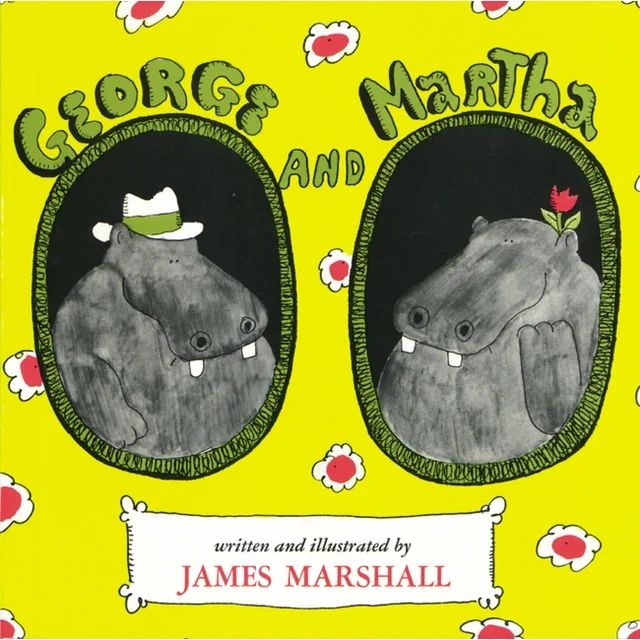
George and Martha: The Stories of Two Best Friends. What we need.

I could go on and on about the genius of the late James Marshall and his most beloved creation, the hippos George and Martha, two best friends.

You may think that these illustrated stories are for children, and you would be right, but far from completely right.

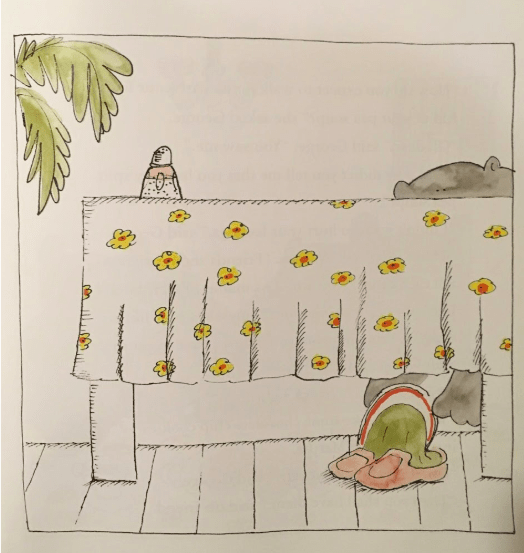
As an example, the very first of these 35 stories is Split Pea Soup.

Martha has cooked split pea soup for the two of them. George doesn’t like the soup, but doesn’t want to hurt Martha’s feelings, so he pours it into his shoes. Martha catches him in the act:


Martha said, “That’s silly. Friends should always tell each other the truth. I don’t like split pea soup very much myself. I only like to make it. From now on, you’ll never have to eat that awful soup again.”

“What a relief!” George sighed.

“Would you like some chocolate chip cookies instead?” asked Martha.

“Oh, that would be lovely,” said George.

“Then you shall have them,” said his friend.


If you think that the message is so saccharine and cliched that even a child, let alone a sophisticated grownup like you, would find it over sweet and oversimple, you have not met George and Martha.

When you do meet them—and you should by buying George and Martha: The Complete Stories of Two Best Friends—you, your own George or Martha, or any children in your life, will wonder how you got along without them.

When I searched today for appreciations of George and Martha, I found one from the New York Times in March 2018. The writer, Amy Bloom, explains how important George and Martha could be in those challenging times (you recognize why those times and these are similarly challenging):


“The Collected Stories of George and Martha: Two Best Friends” is all 35 George and Martha stories. I would recommend buying the book, with its glorious bright yellow-with-pink-flowers cover, and enjoying Sendak’s foreword. I would display it right where guests would see it even before they take off their coats. And I would hope that their exposure to George and Martha would act as lemon juice on scurvy, derailing some of the more predictable and dispiriting dinner party conversations of 2018.


More post-election music: Us and Them by Pink Floyd

Black and blue
And who knows which is which, and who is who?
Up and down
And in the end, it’s only round and round, and round

Pink Floyd, and especially Roger Waters, are at or near the top of iconoclastic (“icon smashing”) pop music. (Waters continues to swim outside the mainstream, getting him into trouble with certain constituencies, but from my perspective, his artistic contribution grants him a license.)

Take the issue of education. We know the schools are not working, if the mission is to cultivate citizens with solid basic skills and knowledge. Instead of, for example, schools that deliver many students to college who are deficient in elementary math and who can’t conscientiously research and coherently write without the assistance of AI. What some parents clamor for is education that inculcates their children with the “right” ideology.

More than forty years ago, this is what Waters wrote in Another Brick in the Wall:

We don’t need no education
We don’t need no thought control
No dark sarcasm in the classroom
Teacher, leave them kids alone

All in all, it’s just another brick in the wall
All in all, you’re just another brick in the wall

Back to post-election music. Two years after John Lennon—another iconoclast—released his anti-war track, Happy Xmas (War Is Over) (1971), Pink Floyd featured Waters’ view about war on Dark Side of the Moon (1973). Us and Them is about war, but more broadly about the pointless and thoughtless identities that lead inevitably to pointless and thoughtless conflict.

Us and them
And after all, we’re only ordinary men
Me and you
God only knows it’s not what we would choose to do

“Forward!” he cried from the rear
And the front rank died
The general sat, and the lines on the map
Moved from side to side

Black and blue
And who knows which is which, and who is who?
Up and down
And in the end, it’s only round and round, and round

“Haven’t you heard it’s a battle of words?”
The poster bearer cried
“Listen, son,” said the man with the gun
“There’s room for you inside”

Down and out
It can’t be helped, but there’s a lot of it about
With, without
And who’ll deny it’s what the fighting’s all about?

Out of the way, it’s a busy day
I’ve got things on my mind
For want of the price of tea and a slice
The old man died

198 Methods of Nonviolent Action

This is now the sixth time I have posted this list of 198 Methods of Nonviolent Action by the late Gene Sharp (1928-2018) of the Albert Einstein Institution. The first time in April 2013, most recently in September 2020.

These methods were developed over decades as successful tools of change in resistance to authoritarian regimes. Which is to say: they have worked.

When I posted these in September 2020, I wrote at the time:

“As optimistic as I want to be about emerging sometime soon from dark governmental and political times, that day may not be tomorrow, or November, or January, or 2021.”

So it goes.

Please read this last thoroughly. Please consider which may be appropriate for you and for the current circumstances. Then please pass the list on and act.

These actions have worked before. And they can work again.


198 Methods of Nonviolent Action

Formal Statements

  1. Public Speeches
  2. Letters of opposition or support
  3. Declarations by organizations and institutions
  4. Signed public statements
  5. Declarations of indictment and intention
  6. Group or mass petitions

Communications with a Wider Audience

  1. Slogans, caricatures, and symbols
  2. Banners, posters, displayed communications
  3. Leaflets, pamphlets, and books
  4. Newspapers and journals
  5. Records, radio, and television
  6. Skywriting and earthwriting
    Group Representations
  7. Deputations
  8. Mock awards
  9. Group lobbying
  10. Picketing
  11. Mock elections

Symbolic Public Acts

  1. Displays of flags and symbolic colors
  2. Wearing of symbols
  3. Prayer and worship
  4. Delivering symbolic objects
  5. Protest disrobings
  6. Destruction of own property
  7. Symbolic lights
  8. Displays of portraits
  9. Paint as protest
  10. New signs and names
  11. Symbolic sounds
  12. Symbolic reclamations
  13. Rude gestures

Pressures on Individuals

  1. “Haunting” officials
  2. Taunting officials
  3. Fraternization
  4. Vigils

Drama and Music

  1. Humorous skits and pranks
  2. Performances of plays and music
  3. Singing

Processions

  1. Marches
  2. Parades
  3. Religious processions
  4. Pilgrimages
  5. Motorcades

Honoring the Dead

  1. Political mourning
  2. Mock funerals
  3. Demonstrative funerals
  4. Homage at burial places

Public Assemblies

  1. Assemblies of protest or support
  2. Protest meetings
  3. Camouflaged meetings of protest
  4. Teach-ins

Withdrawal and Renunciation

  1. Walk-outs
  2. Silence
  3. Renouncing honors
  4. Turning one’s back

The Methods Of Social Noncooperation

Ostracism of Persons

  1. Social boycott
  2. Selective social boycott
  3. Lysistratic nonaction
  4. Excommunication
  5. Interdict

Noncooperation with Social Events, Customs, and Institutions

  1. Suspension of social and sports activities
  2. Boycott of social affairs
  3. Student strike
  4. Social disobedience
  5. Withdrawal from social institutions
    Withdrawal from the Social System
  6. Stay-at-home
  7. Total personal noncooperation
  8. “Flight” of workers
  9. Sanctuary
  10. Collective disappearance
  11. Protest emigration (hijrat)

The Methods of Economic Noncooperation: Economic Boycotts

Actions by Consumers

  1. Consumers’ boycott
  2. Nonconsumption of boycotted goods
  3. Policy of austerity
  4. Rent withholding
  5. Refusal to rent
  6. National consumers’ boycott
  7. International consumers’ boycott

Action by Workers and Producers

  1. Workmen’s boycott
  2. Producers’ boycott

Action by Middlemen

  1. Suppliers’ and handlers’ boycott

Action by Owners and Management

  1. Traders’ boycott
  2. Refusal to let or sell property
  3. Lockout
  4. Refusal of industrial assistance
  5. Merchants’ “general strike”

Action by Holders of Financial Resources

  1. Withdrawal of bank deposits
  2. Refusal to pay fees, dues, and assessments
  3. Refusal to pay debts or interest
  4. Severance of funds and credit
  5. Revenue refusal
  6. Refusal of a government’s money

Action by Governments

  1. Domestic embargo
  2. Blacklisting of traders
  3. International sellers’ embargo
  4. International buyers’ embargo
  5. International trade embargo

The Methods Of Economic Noncooperation: The Strike

Symbolic Strikes

  1. Protest strike
  2. Quickie walkout (lightning strike)

Agricultural Strikes

  1. Peasant strike
  2. Farm Workers’ strike

Strikes by Special Groups

  1. Refusal of impressed labor
  2. Prisoners’ strike
  3. Craft strike
  4. Professional strike

Ordinary Industrial Strikes

  1. Establishment strike
  2. Industry strike
  3. Sympathetic strike

Restricted Strikes

  1. Detailed strike
  2. Bumper strike
  3. Slowdown strike
  4. Working-to-rule strike
  5. Reporting “sick” (sick-in)
  6. Strike by resignation
  7. Limited strike
  8. Selective strike

Multi-Industry Strikes

  1. Generalized strike
  2. General strike

Combination of Strikes and Economic Closures

  1. Hartal
  2. Economic shutdown

The Methods Of Political Noncooperation

Rejection of Authority

  1. Withholding or withdrawal of allegiance
  2. Refusal of public support
  3. Literature and speeches advocating resistance

Citizens’ Noncooperation with Government

  1. Boycott of legislative bodies
  2. Boycott of elections
  3. Boycott of government employment and positions
  4. Boycott of government depts., agencies, and other bodies
  5. Withdrawal from government educational institutions
  6. Boycott of government-supported organizations
  7. Refusal of assistance to enforcement agents
  8. Removal of own signs and placemarks
  9. Refusal to accept appointed officials
  10. Refusal to dissolve existing institutions

Citizens’ Alternatives to Obedience

  1. Reluctant and slow compliance
  2. Nonobedience in absence of direct supervision
  3. Popular nonobedience
  4. Disguised disobedience
  5. Refusal of an assemblage or meeting to disperse
  6. Sitdown
  7. Noncooperation with conscription and deportation
  8. Hiding, escape, and false identities
  9. Civil disobedience of “illegitimate” laws

Action by Government Personnel

  1. Selective refusal of assistance by government aides
  2. Blocking of lines of command and information
  3. Stalling and obstruction
  4. General administrative noncooperation
  5. Judicial noncooperation
  6. Deliberate inefficiency and selective noncooperation by enforcement agents
  7. Mutiny

Domestic Governmental Action

  1. Quasi-legal evasions and delays
  2. Noncooperation by constituent governmental units

International Governmental Action

  1. Changes in diplomatic and other representations
  2. Delay and cancellation of diplomatic events
  3. Withholding of diplomatic recognition
  4. Severance of diplomatic relations
  5. Withdrawal from international organizations
  6. Refusal of membership in international bodies
  7. Expulsion from international organizations

The Methods Of Nonviolent Intervention

Psychological Intervention

  1. Self-exposure to the elements
  2. The fast
    a) Fast of moral pressure
    b) Hunger strike
    c) Satyagrahic fast
  3. Reverse trial
  4. Nonviolent harassment

Physical Intervention

  1. Sit-in
  2. Stand-in
  3. Ride-in
  4. Wade-in
  5. Mill-in
  6. Pray-in
  7. Nonviolent raids
  8. Nonviolent air raids
  9. Nonviolent invasion
  10. Nonviolent interjection
  11. Nonviolent obstruction
  12. Nonviolent occupation

Social Intervention

  1. Establishing new social patterns
  2. Overloading of facilities
  3. Stall-in
  4. Speak-in
  5. Guerrilla theater
  6. Alternative social institutions
  7. Alternative communication system

Economic Intervention

  1. Reverse strike
  2. Stay-in strike
  3. Nonviolent land seizure
  4. Defiance of blockades
  5. Politically motivated counterfeiting
  6. Preclusive purchasing
  7. Seizure of assets
  8. Dumping
  9. Selective patronage
  10. Alternative markets
  11. Alternative transportation systems
  12. Alternative economic institutions

Political Intervention

  1. Overloading of administrative systems
  2. Disclosing identities of secret agents
  3. Seeking imprisonment
  4. Civil disobedience of “neutral” laws
  5. Work-on without collaboration
  6. Dual sovereignty and parallel government

Counterbalancing election results: We have to double down on being better people

Puerta del Este (1935), Xul Solar

Depending on your voting this election, you may not feel good about the results. You may think that those who have gained, regained or retained power will cause people to suffer and for things to get worse, not just in America but around the world. You may be right.

There are practical strategies available to counter some of that, strategies that will be discussed and executed in the days and months ahead.

This is something different. When people come to power who don’t have the best interests of other people in their hearts and minds, we can make up the difference and counterbalance the worst.

We can do that by doubling down on being better people. In the words of Michelle Obama, who knows something about what our fellow Americans are capable of, “When they go low, we go high.”

When they go lower, let us go higher. And better.

© 2024 by Bob Schwartz