Bob Schwartz

Category: Society

198 Ways to Make Change

Gene Sharp
The Albert Einstein Institution may be the most important organization you’ve never heard of, and Gene Sharp may be the most important person. Since 1983, he has dedicated himself to advancing the study and use of strategic nonviolent action in conflicts throughout the world.

These are just a few of the headlines he has garnered in the past year or so:

The New Statesman – Gene Sharp: The Machiavelli of non-violence.
The Progressive – Nonviolence Strategist Gets Deserved Recognition.
Deutsche Welle – Alternative Nobel Winner says non-violence works.
The New York Times – The Quiet American.
CNN – Gene Sharp: A dictator’s worst nightmare.
The Nation – Gene Sharp, Nonviolent Warrior.
The Boston Globe – Sharp: The man who changed the world.

His book From Dictatorship to Democracy is an introduction to the use of nonviolent action to change regimes. It has been translated into seventeen languages and has served as a pro-democracy guide for movements around the world. This and other books are available free for download on the website.

Even if you are not living in a dictatorship and are not planning to topple a government, you will find a very small and very valuable item at AEI. Think of it as a jewel of social action. It is a two-page list of 198 Methods of Nonviolent Action. You will find the list below.

For those who want to make change, big or small, the keys are commitment and creativity. We’ve seen some inspired actions take hold. We’ve also seen some well-meaning initiatives pop-up and die almost as quickly. There is no blame in this. Sometimes all that’s needed is a fresh spring wind to revive the spirit of change.

This list is that spring wind. Look it over. This may go without saying, but be well aware that a number of these actions are obviously aimed at a serious lack of or breach of democracy, and are appropriately serious for those situations. All of them necessarily involve social, economic, legal, moral and ethical issues that must be considered. Maybe you will find something to do. Maybe you won’t do anything, but will be uplifted by knowing that such things can be done, have been done, and have moved communities and whole nations—today, in this very world—a little way along a path to freedom and justice.

198 Methods of Nonviolent Action
Albert Einstein Institution

The Methods of Nonviolent Protest and Persuasion

Formal Statements
1. Public Speeches
2. Letters of opposition or support
3. Declarations by organizations and institutions
4. Signed public statements
5. Declarations of indictment and intention
6. Group or mass petitions

Communications with a Wider Audience
7. Slogans, caricatures, and symbols
8. Banners, posters, displayed communications
9. Leaflets, pamphlets, and books
10. Newspapers and journals
11. Records, radio, and television
12. Skywriting and earthwriting

Group Representations
13. Deputations
14. Mock awards
15. Group lobbying
16. Picketing
17. Mock elections

Symbolic Public Acts
18. Displays of flags and symbolic colors
19. Wearing of symbols
20. Prayer and worship
21. Delivering symbolic objects
22. Protest disrobings
23. Destruction of own property
24. Symbolic lights
25. Displays of portraits
26. Paint as protest
27. New signs and names
28. Symbolic sounds
29. Symbolic reclamations
30. Rude gestures

Pressures on Individuals
31. “Haunting” officials
32. Taunting officials
33. Fraternization
34. Vigils

Drama and Music
35. Humorous skits and pranks
36. Performances of plays and music
37. Singing

Processions
38. Marches
39. Parades
40. Religious processions
41. Pilgrimages
42. Motorcades

Honoring the Dead
43. Political mourning
44. Mock funerals
45. Demonstrative funerals
46. Homage at burial places

Public Assemblies
47. Assemblies of protest or support
48. Protest meetings
49. Camouflaged meetings of protest
50. Teach-ins

Withdrawal and Renunciation
51. Walk-outs
52. Silence
53. Renouncing honors
54. Turning one’s back

The Methods Of Social Noncooperation

Ostracism of Persons
55. Social boycott
56. Selective social boycott
57. Lysistratic nonaction
58. Excommunication
59. Interdict

Noncooperation with Social Events, Customs, and Institutions
60. Suspension of social and sports activities
61. Boycott of social affairs
62. Student strike
63. Social disobedience
64. Withdrawal from social institutions

Withdrawal from the Social System
65. Stay-at-home
66. Total personal noncooperation
67. “Flight” of workers
68. Sanctuary
69. Collective disappearance
70. Protest emigration (hijrat)

The Methods of Economic Noncooperation: Economic Boycotts

Actions by Consumers
71. Consumers’ boycott
72. Nonconsumption of boycotted goods
73. Policy of austerity
74. Rent withholding
75. Refusal to rent
76. National consumers’ boycott
77. International consumers’ boycott

Action by Workers and Producers
78. Workmen’s boycott
79. Producers’ boycott

Action by Middlemen
80. Suppliers’ and handlers’ boycott

Action by Owners and Management
81. Traders’ boycott
82. Refusal to let or sell property
83. Lockout
84. Refusal of industrial assistance
85. Merchants’ “general strike”

Action by Holders of Financial Resources
86. Withdrawal of bank deposits
87. Refusal to pay fees, dues, and assessments
88. Refusal to pay debts or interest
89. Severance of funds and credit
90. Revenue refusal
91. Refusal of a government’s money

Action by Governments
92. Domestic embargo
93. Blacklisting of traders
94. International sellers’ embargo
95. International buyers’ embargo
96. International trade embargo

The Methods Of Economic Noncooperation: The Strike

Symbolic Strikes
97. Protest strike
98. Quickie walkout (lightning strike)

Agricultural Strikes
99. Peasant strike
100. Farm Workers’ strike

Strikes by Special Groups
101. Refusal of impressed labor
102. Prisoners’ strike
103. Craft strike
104. Professional strike

Ordinary Industrial Strikes
105. Establishment strike
106. Industry strike
107. Sympathetic strike

Restricted Strikes
108. Detailed strike
109. Bumper strike
110. Slowdown strike
111. Working-to-rule strike
112. Reporting “sick” (sick-in)
113. Strike by resignation
114. Limited strike
115. Selective strike

Multi-Industry Strikes
116. Generalized strike
117. General strike

Combination of Strikes and Economic Closures
118. Hartal
119. Economic shutdown

The Methods Of Political Noncooperation

Rejection of Authority
120. Withholding or withdrawal of allegiance
121. Refusal of public support
122. Literature and speeches advocating resistance

Citizens’ Noncooperation with Government
123. Boycott of legislative bodies
124. Boycott of elections
125. Boycott of government employment and positions
126. Boycott of government depts., agencies, and other bodies
127. Withdrawal from government educational institutions
128. Boycott of government-supported organizations
129. Refusal of assistance to enforcement agents
130. Removal of own signs and placemarks
131. Refusal to accept appointed officials
132. Refusal to dissolve existing institutions

Citizens’ Alternatives to Obedience
133. Reluctant and slow compliance
134. Nonobedience in absence of direct supervision
135. Popular nonobedience
136. Disguised disobedience
137. Refusal of an assemblage or meeting to disperse
138. Sitdown
139. Noncooperation with conscription and deportation
140. Hiding, escape, and false identities
141. Civil disobedience of “illegitimate” laws

Action by Government Personnel
142. Selective refusal of assistance by government aides
143. Blocking of lines of command and information
144. Stalling and obstruction
145. General administrative noncooperation
146. Judicial noncooperation
147. Deliberate inefficiency and selective noncooperation by enforcement agents
148. Mutiny

Domestic Governmental Action
149. Quasi-legal evasions and delays
150. Noncooperation by constituent governmental units

International Governmental Action
151. Changes in diplomatic and other representations
152. Delay and cancellation of diplomatic events
153. Withholding of diplomatic recognition
154. Severance of diplomatic relations
155. Withdrawal from international organizations
156. Refusal of membership in international bodies
157. Expulsion from international organizations

The Methods Of Nonviolent Intervention

Psychological Intervention
158. Self-exposure to the elements
159. The fast
a) Fast of moral pressure
b) Hunger strike
c) Satyagrahic fast
160. Reverse trial
161. Nonviolent harassment

Physical Intervention
162. Sit-in
163. Stand-in
164. Ride-in
165. Wade-in
166. Mill-in
167. Pray-in
168. Nonviolent raids
169. Nonviolent air raids
170. Nonviolent invasion
171. Nonviolent interjection
172. Nonviolent obstruction
173. Nonviolent occupation

Social Intervention
174. Establishing new social patterns
175. Overloading of facilities
176. Stall-in
177. Speak-in
178. Guerrilla theater
179. Alternative social institutions
180. Alternative communication system

Economic Intervention
181. Reverse strike
182. Stay-in strike
183. Nonviolent land seizure
184. Defiance of blockades
185. Politically motivated counterfeiting
186. Preclusive purchasing
187. Seizure of assets
188. Dumping
189. Selective patronage
190. Alternative markets
191. Alternative transportation systems
192. Alternative economic institutions

Political Intervention
193. Overloading of administrative systems
194. Disclosing identities of secret agents
195. Seeking imprisonment
196. Civil disobedience of “neutral” laws
197. Work-on without collaboration
198. Dual sovereignty and parallel government

Arm Postal Workers

United States Postal Service
It seems that the National Rifle Association and an incongruously growing number of fearful politicians are currently lining up behind a proposal to train and arm teachers to fight the threat of gun violence. In the view of some, this makes more sense than requiring universal background checks and limiting assault weapons and oversized ammunition magazines.

The scenario is that when psychopaths like Adam Lanza try to force their way into Sandy Hook School in Newtown, Connecticut, they will be shocked and awed to find themselves facing a militia of teachers, a special forces unit capable of both taking out terrorists and teaching reading to six-year-olds.

Good plan. But it doesn’t go far enough.

It is time to arm postal workers.

We know, to begin, that postal workers have faced their own sort of psychopathic terror over the years. Not often, and certainly not often enough to have earned the undeserved meme “going postal.” But on the principle that you can never have too many guns in the hands of good guys and gals, it would be a welcome preventative.

On top of that, postal workers walking their delivery routes regularly navigate the mean streets of America, just as our police do. Why not, then, train, arm and deputize these postal workers as sworn peace officers? This has many benefits: the streets will be safer, and the Postal Service will be playing a vital role—a role that should fend off any questions about their budgetary problems, especially with changes in the use of mail.

Part of being a good American is coming up with good ideas to keep our country safe—especially ideas that increase the number of guns and gun owners. Saving the Postal Service is just a bonus. You’re welcome, NRA.

Arguments on Marriage Equality, Part 1

Supreme Court
The audio and transcript of the Supreme Court arguments in Hollingsworth v. Perry, the Proposition 8 marriage equality case, are now available.

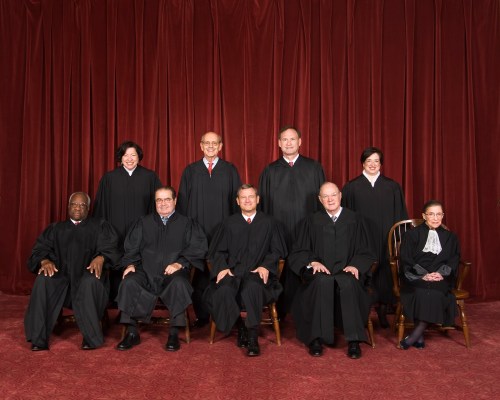
Without video, the best way to review these is to read and listen to them at the same time. Otherwise, you may not know which Justice is talking—though some of them have such distinctive voices, styles or insights that they are instantly recognizable. Hint: Justice Clarence Thomas is the one who is not talking; he never does.

The news channels deal with the lack of video (not permitted) by playing the audio, identifying the speaker on screen, and showing an artist’s sketch. You can do this yourself, creatively if you want. You might use a photo instead of a sketch, or you can just select a random picture of another distinguished Justice or lawyer, present or past.

The odds of correctly predicting outcomes in difficult Supreme Court cases like this are better than winning the Powerball lottery or picking all the NCAA brackets right, but not much. So here are some first impressions.

Standing

The path of this case is complicated. The California Supreme Court enabled same-sex marriage and for a few months couples did marry. Almost immediately, a group sponsored an initiative to reverse that decision by banning same-sex marriage in the state. The initiative passed, but the U.S. Ninth Circuit Court of Appeals declared the ban on same-sex marriage unconstitutional, thus allowing same-sex marriage to proceed. The sponsor of the initiative appealed and the Supreme Court agreed to hear the case.

That is where the standing issue comes in. The State of California refused to appeal the overturning of the initiative. This left the initiative sponsor as the closest thing to an interested party for purposes of appeal.

But maybe not legally close enough. The Supreme Court did agree to hear the case, but now appears to wonder whether the proponents of the initiative have legal standing to have brought the appeal in the first place. The Court is free at this point to reconsider the question and rule that their initial agreement to hear the case was “improvidently granted.”

The Justices spent a substantial amount of time during arguments on this standing question. If standing is denied, the Court won’t be deciding any of the other issues. The appeal is over, the decision of the Ninth Circuit will stand, and same-sex marriage will once again be the law of California. There is some discussion that for the moment, the Court would like to narrow whatever they have to say about same-sex marriage to California, and let the legal questions mature. If they don’t have to say anything, that narrowing takes place automatically.

How likely is that? If this was the only same-sex marriage case before the Court this term, it would be an easier route for them to take. It would allow more cases to move up the appeal chain, more Courts of Appeal to be heard from.

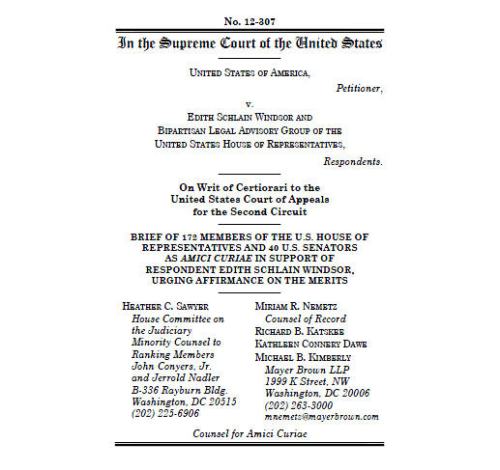
But it isn’t the only case like it this term, or even this week. Today the Court will consider the constitutionality of the Defense of Marriage Act (DOMA), passed by Congress and signed by Bill Clinton in 1996. DOMA prohibits the federal government from recognizing same-sex marriage, which among other things means that same-sex spouses enjoy no federal benefits. (This has proved to be an embarrassment for Democrats. Scores of Senators and Representatives submitted a brief in which they apologized for being wrong, and Bill Clinton has done the same thing in a recent op-ed piece.)

Procreation

Charles Cooper is the attorney representing the proponents of Proposition 8. Good lawyers get stuck with bad positions in tough cases, and this is that.

The primary argument for the constitutionality of a ban on same-sex marriage—aside from moral arguments, which are not legal ones—is that the tradition and essence and supreme societal value of marriage is procreation. You get married, above all, to have babies; if you can’t have babies, your right to marry is questionable or non-existent. Same-sex couples have no possibility of having children, at least the old-fashioned way (adoption being one of those modern, new-fangled techniques, like in vitro fertilization). Ergo, they have no right to marry.

The above is not hyperbole or sarcasm. For endless minutes, punctuated by occasional laughter, this is the argument that Cooper made, and that various Justices endorsed or, more frequently, questioned.

This part of the arguments has been widely covered, so there are no excerpts here. Listen and read for yourself. The discussion about the fertility of 55-year-old couples and of Strom Thurmond are worth the price of admission.

“The Experiment”

There was discussion of same-sex marriage being some sort of “experiment.” We supposedly have to wait for “scientific evidence” and “data” to determine how well it works.

The discussion of procreation was sad but silly, leavened by laughter. On this point, it is hard to laugh.

For the record, if marriage of any kind is an experiment, the results are in. Sometimes it goes blissfully right, sometimes it goes horribly wrong. Sometimes the children—who arrive in all sorts of ways and are raised in all sorts of permutations—turn out well, and once in a while they don’t. Some people like to go wild with the experiment, trying serial marriage and divorce (and marriage and divorce and marriage and divorce). It’s not an experiment for any of these couples. It’s just marriage. It’s life. It’s love. It’s being human connected.

Justice Antonin Scalia

[This space intentionally left blank.]

The Briefs on Marriage Equality

Amicus Brief
Today begins two days (March 26 and 27) of arguments before the Supreme Court on two related cases about marriage equality. One concerns Proposition 8, California’s voter-passed initiative to ban same-sex marriage.

The question presented on appeal in that case is this:

Whether the Equal Protection Clause of the Fourteenth Amendment prohibits the State of California from defining marriage as the union of a man and a woman.

The other case concerns the Defense of Marriage Act (DOMA), which prevents extension of various federal benefits to same-sex couples.

The question presented on appeal in that case is this:

Section 3 of the Defense of Marriage Act (DOMA) defines the term “marriage” for all purposes under federal law, including the provision of federal benefits, as “only a legal union between one man and one woman as husband and wife.” It similarly defines the term “spouse” as “a person of the opposite sex who is a husband or a wife.”

Whether Section 3 of DOMA violates the Fifth Amendment’s guarantee of equal protection of the laws as applied to persons of the same sex who are legally married under the laws of their State

It is usual in important cases to have non-parties submit position papers to the Court, known as amicus curiae (friend of the court) briefs. The more significant or contested the controversy, the greater the number of individuals and organizations who want to offer their views—legal, social and otherwise—to help the Court decide. These briefs may be of various value to the Court, but they are all offered in friendship. These friends are often giving a bit of unsolicited advice, as friends do.

Whatever their value, these briefs are fascinating reading. Not unexpectedly, the number of amicus briefs in these cases is extraordinary: 96 in the Proposition 8 case, 80 in the DOMA case.

We will not be able to watch these historic arguments live, or even listen to them live. For reasons surpassing all understanding (something about tradition or about dignity or about lawyers—or even Justices—showboating for the media), cameras are not permitted in the U.S. Supreme Court. With all due respect—lawyers are bound to say that, since the First Amendment will not protect us from punishment for bringing disrepute on our judicial biggers and betters—there are probably plenty of calendars in and around the Supreme Court to indicate the year and century (2013, 21st).

Even if we are stuck only getting reports from the front line, there is something to do in the meantime. In fact, even after we do get the transcripts and audio of the arguments (remember, no cameras, ever), we can read all of the briefs in the case. There are the briefs from the parties to the cases and there are the 176 briefs from helpful friends. These friends include, among many of the prominent, famous and infamous, 50 U.S. Senators and 172 U.S. House members.

You can find the Proposition 8 briefs online

Dennis Hollingsworth, et al., Petitioners v. Kristin M. Perry, et al.

You can find the DOMA briefs online

United States v. Edith Schlain Windsor, in Her Capacity as Executor of the Estate of Thea Clara Spyer, et al.

In case you have decided not to dip a toe into the amicus waters, following is a list of all the briefs. But please do give it a try. Some of it will be a tough legal slog for non-lawyers, so you might skip those parts. But some will be essential historical, political, social and cultural analysis and commentary. Whether or not you agree with all these “friends”, you will come away with an informed view of all the positions, from the most solid to the wildest.

Browse the list of briefs below. It might be educational and fun. And if you do read a few of them, you might have even more fun. Maybe even legal fun. Yes, there is such a thing. Just ask the Justices.

Dennis Hollingsworth, et al., Petitioners v. Kristin M. Perry, et al. (Proposition 8)

Merit Briefs

  • Brief for Petitioners, Dennis Hollingsworth, et al
  • Brief for Respondents, Kristin M. Perry
  • Brief for Respondent, City and County of San Francisco
  • Reply Brief for the Petitioner, Dennis Hollingsworth, et al

Amicus Briefs

  • Brief for the American Civil Rights Union in Support of Hollingsworth and Bipartisan Legal Advisory Group Addressing the Merits and Supporting Reversal
  • Brief for the American Psychological Association, the American Medical Association, the American Academy of Pediatrics, the California Medical Association, the American Psychiatric Association, the American Psychoanalytic Association, the American Association for Marriage And Family Therapy, the National Association of Social Workers and its California Chapter, and the California Psychological Association in Support of Affirmance (Addressing the Merits)
  • Brief for the Becket Fund for Religious Liberty in Support of Hollingsworth and the Bipartisan Legal Advisory Group (Addressing The Merits) (Also Filed in 12-307)
  • Brief for Catholics for the Common Good and the Marriage Law Project in Support of Petitioners
  • Brief for Center for Constitutional Jurisprudence in Support of Petitioner
  • Brief for the Citizens United’s National Committee for Family, Faith and Prayer, Citizens United Foundation, U.S. Justice Foundation, Gun Owners Foundation, The Lincoln Institute for Research and Education, Public Advocate of the United States, Declaration Alliance, Western Center for Journalism, Institute on the Constitution, Abraham Lincoln Foundation for Public Policy Research, Inc., Conservative Legal Defense and Education Fund, English First, and Protect Marriage Maryland PAC in Support of Petitioners
  • Brief for the Coalition of African American Pastors USA, the Center for Urban Renewal and Education, the Frederick Doublass Foundation, Inc., and Numerous Law Professors in Support of Petitioners and Supporting Reversal
  • Brief for David Boyle in Support of Petitioners, on the Non-Jurisdictional Issues
  • Brief for Eagle Forum Education & Legal Defense Fund, Inc., in Support of Petitioners in Support of Reversal
  • Brief for the Ethics and Public Policy Center in Support of Petitioners and Supporting Reversal or Vacatur
  • Brief for Equality California in Support of Respondents
  • Brief for the Family Research Council in Support of Petitioners Addressing the Merits and
  • Supporting Reversal
  • Brief for Foundation for Moral Law in Support of Petitioner
  • Brief for GLMA: Health Professionals Advancing LGBT Equality (Gay And Lesbian Medical Association) Concerning the Immutability of Sexual Orientation in Support of Affirmance (Addressing the Merits)
  • Brief for David Benkof, Robert Oscar Lopez, and Doug Mainwaring in Support of Petitioners and Supporting Reversal
  • Brief for Helen M. Alvaré in Support of Hollingsworth and Bipartisan Legal Advisory Group Supporting Reversal (Addressing the Merits) (Also Filed in 12-307
  • Brief for the High Impact Leadership Coalition in Support of Petitioners
  • Brief for International Jurists and Academics in Support of Petitioner Hollingsworth and Respondent Bipartisan Legal Advisory Group Addressing The Merits And Supporting Reversal (also filed in 12-307)
  • Brief for Judicial Watch, Inc. and Allied Educational Foundation in Support of Petitioners
  • Brief for Leon R. Kass, Harvey C. Mansfield and the Institute for Marriage and Public Policy in Support of Petitioners
  • Brief of Liberty Counsel, Inc. and Campaign for Children and Families in Support of Petitioners
  • Brief for the Lighted Candle Society in Support of Petitioners
  • Brief for Marriage Anti-Defamation Alliance in Support of Petitioners
  • Brief for Matthew B. O’Brien in Support of Hollingsworth and Bipartisan Legal Advisory Group of the U.S. House of Representatives Addressing The Merits and Supporting Reversal (Also Filed in 12-307)
  • Brief for Minnesota For Marriage in Support of Petitioners
  • Brief for National Association of Evangelicals; The Ethics & Religious Liberty Commission of the Southern Baptist Convention; the Church of Jesus Christ of Latter-Day Saints; the Lutheran Church-Missouri Synod; the Union of Orthodox Jewish Congregations of America; the Romanian-American Evangelical Alliance of North America; and Truth In Action Ministries in Support of Petitioners
  • Brief for Patrick Henry College in Support of Petitioners
  • Brief for Professor Daniel N. Robinson, Ph.D. in Support of Petitioners and Supporting Reversal
  • Brief for Scholars of History and Related Disciplines in Support of Petitioners
  • Brief for the States of Indiana, Virginia, Alabama, Alaska, Arizona, Colorado, Georgia, Idaho, Kansas, Montana, Nebraska, North Dakota, Oklahoma, South Carolina, South Dakota, Texas, Utah, West Virginia and Wisconsin in Support of the Petitioners (Addressing the Merits)
  • Brief for Social Science Professors in Support of Hollingsworth and Bipartisan Legal Advisory Group Addressing the Merits and Supporting Reversal (also filed in 12-307)
  • Brief for the State Of Michigan in Support of Petitioners
  • Brief for Thirty-Seven Scholars of Federalism and Judicial Restraint in Support of Petitioners
  • Brief for the Thomas More Law Center and Chuck Storey, Imperial County Clerk, in Support of Petitioners (Addressing the Merits)
  • Brief for United States Conference of Catholic Bishops in Support of Petitioners and Supporting Reversal
  • Brief for Utah Pride Center, Campaign for Southern Equality, Equality Federation and Twenty-Five State-Wide Equality Organizations (also filed in 12-307)
  • Brief for Catholic Answers, Christian Legal Society, and Catholic Vote Education Fund in Support of Petitioner Hollingsworth and Respondent Bipartisan Legal Advisory Group and Supporting Reversal (Addressing the Merits) (also filed in 12-307)
  • Brief for Coalition for the Protection of Marriage in Support of Hollingsworth and Bipartisan Legal Advisory Group Addressing the Merits and Supporting Reversal (also filed in 12-307)
  • Brief for Dr. Paul Mchugh in Support of Hollingsworth and Bipartisan Legal Advocacy Group Addressing the Merits and Supporting Reversal (Also Filed in 12-307)
  • Brief for Liberty, Life and Law Foundation and North Carolina Values Coalition in Support of Hollingsworth and Bipartisan Legal Advisory Group Addressing the Merits and Supporting Reversal (also filed in 12-307)
  • Brief for Pacific Legal Foundation, Ward Connerly, Ron Unz, Glynn Custred, and the Howard Jarvis Taxpayers Association in Support of Neither Party
  • Brief for Parents and Friends of Ex-Gays & Gays in Support of Hollingsworth and Bipartisan Legal Advisory Group of the U.S. House of Representatives Addressing the Merits and Supporting Reversal (also filed in 12-307)
  • Brief for Concerned Women for America in Support of Reversal (Addressing the Merits)
  • Brief for Robert P. George, Sherif Girgis, and Ryan T. Anderson in Support of Hollingsworth and Bipartisan Legal Advisory Group Addressing the Merits and Supporting Reversal (also filed in 12-307)
  • Brief for American Anthropological Association, American Academy of Pediatrics, California, and Robert M. Galatzer-Levy, M.D., in Support of Respondents and Affirmance, Addressing California Proposition 8’s Stigmatizing Effects
  • Brief for Adoption and Child Welfare Advocates in Support of Respondents
  • Brief for the American Academy of Matrimonial Lawyers, the Northern California Chapter of the American Academy of Matrimonial Lawyers, and the Association of Certified Family Law Specialists in Support of Respondents
  • Brief for California Assembly Speaker John A. Pérez and Law Professors Concerned with Representative Democracy in Support of Respondents
  • Brief for American Companies in Support of Respondents
  • Brief for American Federation of Labor and Congress of Industrial Oranizations and Change To Win in Support of Respondents and Suggesting Affirmance
  • Brief for the American Humanist Association and American Atheists, Inc., American Ethical Union, the Center for Inquiry, Military Association of Atheists and Freethinkers, Secular Coalition for America, Secular Student Alliance, and Society for Humanistic Judaism, in Support of Respondents (Addressing the Merits)
  • Brief for the American Jewish Committee in Support of the Individual Respondents on the Merits (also filed in 12-307)
  • Brief for American Sociological Association in Support of Respondent Kristin M. Perry and Respondent Edith Schlain Windsor (Also Filed in 12-307)
  • Brief for Anti-Defamation League Et Al. in Support of Respondents
  • Brief for Bay Area Lawyers for Individual Freedom, Et Al., in Support of Respondent
  • Brief for Beverly Hills Bar Association, et al., in Support of Respondents
  • Brief for Bishops of the Episcopal Church in the State of California, et al in Support of Respondents and Affirmance
  • Brief for California Assembly Speaker John A. Pérez and Law Professors Concerned With Representative Democracy in Support of Respondents
  • Brief for California Council of Churches, et-al in Support of Respondents and Urging Affirmance
  • Brief for the California Teachers Association and the National Education Association in Support of Respondents
  • Brief for California Professors of Family Law in Support of Respondents
  • Brief for the Cato Institute and Constitutional Accountability Center in Support of Respondents
  • Brief for Chris Kluwe and Brendon Ayanbadejo in Support of Respondents
  • Brief for Columbia Law School Sexuality & Gender Law Clinic and the Society of American Law Teachers in Support of Respondents
  • Brief for Constitutional Law and Civil Procedure Professors Erwin Chemerinsky and Arthur Miller in Support Of Plaintiffs-Respondents Urging Affirmance
  • Brief for Dr. Maria Nieto in Support of Respondents
  • Brief for Edward D. Stein, Joanna L. Grossman, Kerry Abrams, Holning Lau, Katharine B. Silbaugh and 32 Other Professors of Family Law and Constitutional Law in Support of Respondents
  • Brief for Family Equality Council; Colage; Our Family Coalition; Gay, Lesbian, and Straight Education Network; the Center on Children and Families; the Child Rights Project; and Sarah Gogin in Support of Respondents Perry, Stier, Katami, Zarrillo, City and County of San Francisco, and Edith Schlain Windsor, in her Capacity as Executor of the Estate of Thea Clara Spyer, Addressing The Merits And Supporting Affirmance (also filed in 12-307)
  • Brief for Garden State Equality in Support of Respondents
  • Brief for Gary J. Gates in Support of Respondents (On the Merits)
  • Brief for Foreign and Comparative Law Experts Harold Hongju Koh, Sarah H. Cleveland, Laurence R. Helfer, and Ryan Goodman in Support of Respondents
  • Brief for Hon. Judith S. Kaye (Ret.), Profs. Stephen Gillers, Charles G. Geyh, and James J. Alfini, and Mark I. Harrison in Support of Respondents
  • Brief for Howard University School of Law Civil Rights Clinic in Support of Respondents (On The Merits)
  • Brief for International Human Rights Advocates in Support of Respondents
  • Brief for Jonathan Wallace, Meri Wallace and Duncan Pflaster in Support of Respondents
  • Brief for Kenneth B. Mehlman in Support of Respondents
  • Brief for Lambda Legal Defense and Education Fund, Inc. and Gay & Lesbian Advocates & Defenders in Support of Respondents
  • Brief for Leadership Conference on Civil and Human Rights, Bar Associations and Public Interest and Legal Service Organizations in Support of Respondents
  • Brief for Marriage Equality USA in Support of Respondents
  • Brief for Massachusetts, Connecticut, Delaware, District Of Columbia, Illinois, Iowa, Maine, Maryland, New Hampshire, New Mexico, New York, Oregon, Vermont and Washington in Support of Respondents
  • Brief for National Center for Lesbian Rights in Support of Respondents
  • Brief for the National Organization for Women Foundation and the Feminist Majority Foundation in Support of Respondents
  • Brief for National Women’s Law Center, Williams Institute Scholars of Sexual Orientation and Gender Law, and Women’s Legal Groups in Support of Respondents (On The Merits)
  • Brief for the Organization of American Historians and the American Studies Association in Support of Respondents
  • Brief for Parents, Families and Friends of Lesbians and Gays, Inc. in Support of Respondents
  • Brief for Political Science Professors in Support of Respondents and Affirmance Addressing Political Power of Gay Men and Lesbians
  • Brief for Rev. Rick Yramategui, Rev. Herb Schmidt, and Rev. Darrell W. Yeaney in Support of Respondents’ Position on the Merits
  • Brief for the Southern Poverty Law Center in Support of Respondents
  • Brief for the State of California in Support of Respondents
  • Brief for Survivors of Sexual Orientation Change Therapies in Support of Respondents Kristin M. Perry, Et Al., and City and County of San Francisco, Urging Affirmance
  • Brief for the United States in Support of the Respondents
  • Brief for Walter Dellinger in Support of Respondents on the Issue of Standing
  • Brief for William N. Eskridge Jr., Rebecca L. Brown, Daniel A. Farber, and Andrew Koppelman in Support of Respondents
  • Brief for the Women’s Equal Rights Legal Defense and Education Fund on the Issue of the Special Interest of Women as a Gender in Support of Respondents
  • Brief for Constitutional Law Scholars Bruce Ackerman, Ash Bhagwat, Lee Bollinger, Erwin Chemerinsky, Michael C. Dorf, Lee Epstein, Barry Friedman, John C. Jeffries, Jr., Lawrence Lessig, William Marshall, Frank Michelman, Jane S. Schacter, Suzanna Sherry, Geoffrey R. Stone, David Strauss, Laurence Tribe, And William Van Alstyne Addressing The Merits And Supporting Affirmance (also filed in 12-307)
  • Brief for Matthew B. O’Brien in Support of Hollingsworth and Bipartisan Legal Advisory Group of the U.S. House of Representatives Addressing the Merits and Supporting Reversal (also filed in 12-307)
  • Brief for Westboro Baptist Church in Support of Neither Party Suggesting Reversal

United States v. Edith Schlain Windsor, in Her Capacity as Executor of the Estate of Thea Clara Spyer, et al. (DOMA)

Merit Briefs

  • Brief for Petitioner United States (On the Jurisdictional Question)
  • Brief for Petitioner United States (On the Merits)
  • Brief for Respondent the Bipartisan Legal Advisory Group of the U.S. House of Representatives (On the Jurisdictional Question)
  • Brief for Respondent the Bipartisan Legal Advisory Group of the U.S. House of Representatives (On the Merits)
  • Brief for Court-Appointed Amica Curiae (On the Jurisdictional Question)
  • Brief for Respondent Edith Schlain Windsor (On the Jurisdictional Question)
  • Brief for Respondent Edith Schlain Windsor (On the Merits)
  • Reply Brief for Court-Appointed Amica Curiae (On the Jurisdictional Question)
  • Reply Brief On Jurisdiction for Respondent The Bipartisan Legal Advisory Group Of The U.S. House of Representatives
  • Reply Brief on the Merits for Respondent the Bipartisan Legal Advisory Group of the United States House of Representatives
  • Reply Brief for Respondent Edith Schlain Windsor (On the Jurisdictional Question)
  • Reply Brief for the United States (on the Jurisdictional Questions)

Amicus Briefs

  • In Support of Petitioner United States and Respondent Edith Schlain Windsor
  • Brief for 172 Members of the U.S. House of Representatives and 40 U.S. Senators in Support of Respondent Edith Schlain Windsor (On the Merits)
  • Brief for 278 Employers and Organizations Representing Employers in Support of Respondent Edith Schlain Windsor (On the Merits)
  • Brief for the American Bar Association in Support of Respondent Edith Schlain Windsor (On the Merits)
  • Brief for the American Federation of Labor and Congress of Industrial Organizations, Change to Win, and the National Education Association in Support of Respondent Edith Schlain Windsor
  • Brief for the American Humanist Association and American Atheists, Inc., American Ethical Union, the Center for Inquiry, Military Association of Atheists and Freethinkers, Secular Coalition for America, Secular Student Alliance, and Society for Humanistic Judaism in Support of Respondents (On the Merits)
  • Brief for the American Jewish Committee in Support of Edith Schlain Windsor (On the Merits) (Also filed in 12-144)
  • Brief for the American Psychological Association, the American Academy of Pediatrics, the American Medical Association, the American Psychiatric Association, the American Psychoanalytic Association, the California Medical Association, the National Association of Social Workers And its New York City and State Chapters, And the New York State Psychological Association in Support of Respondent Edith Schlain Windsor (On the Merits)
  • Brief for American Sociological Association in Support of Respondent Kristin M. Perry and Respondent Edith Schlain Windsor (Also Filed in 12-144)
  • Brief for the Anti-Defamation League in Support of Respondent Edith Schlain Windsor (On the Merits)
  • Brief for Bishops of the Episcopal Church in California, Connecticut, Iowa, Maine, Maryland, Massachusetts, New Hampshire, New York, Vermont, and Washington and the District Of Columbia; the Jewish Theological Seminary of America; Manhattan Conference of the Metropolitan New York Synod of the Evangelical Lutheran Church in America; the Rabbinical Assembly; the Reconstructionist Rabbinical Association; Reconstructionist Rabbinical College; Rabbi Akiva Herzfeld of Shaarey Tphiloh; the Union for Reform Judaism; Unitarian Universalist Association; United Church of Christ; the United Synagogue of Conservative Judaism; Affirmation; Covenant Network of Presbyterians; Friends for Lesbian, Gay, Bisexual, Transgender, and Queer Concerns; Methodist Federation for Social Action; More Light Presbyterians; Presbyterian Welcome; Reconciling Ministries Network; Reconciling Works: Lutherans for Full Participation; and Religious Institute, Inc. in Support of Respondent Edith Schlain Windsor (On the Merits)
  • Brief for the Cato Institute and Constitutional Accountability Center in Support of Respondent Edith Schlain Windsor
  • Brief for the Center for Fair Administration of Taxes (CFAT) in Support of Respondents
  • Brief for Citizens for Responsibility and Ethics in Washington in Support of Respondent Edith Schlain Windsor (On the Merits)
  • Brief for Constitutional Law Scholars in Support of Petitioner United States (On the Jurisdictional Questions)
  • Brief for Constitutional Law Scholars Bruce Ackerman, Ash Bhagwat, Lee Bollinger, Erwin Chemerinsky, Michael C. Dorf, Lee Epstein, Barry Friedman, John C. Jeffries, Jr., Lawrence Lessig, William Marshall, Frank Michelman, Jane S. Schacter, Suzanna Sherry, Geoffrey R. Stone, David Strauss, Laurence Tribe, and William Van Alstyne in Support of Respondent Edith Schlain Windsor (On the Merits) (Also filed in 12-144)
  • Brief for Dr. Donna E. Shalala, Dr. Louis W. Sullivan, Togo D. West Jr., Kenneth S. Apfel, Sheldon S. Cohen, Rudy F. Deleon, Jamie S. Gorelick, Michael J. Graetz, Dr. John J. Hamre, Benjamin W. Heineman Jr., Kathryn O. Higgins, Constance Berry Newman, and Harriet S. Rabb in Support of Respondent Edith Schlain Windsor
  • Brief for the Empire State Pride Agenda, Equality California, Equal Rights Washington, One Iowa, Equality Maryland, Vermont Freedom to Marry, Massequality, New Hampshire Freedom to Marry Coalition and Equality Maine in Support of Respondent Edith Schlain Windsor (On the Jurisdictional Question)
  • Brief for Family Equality Council; Colage; Our Family Coalition; Gay, Lesbian, and Straight Education Network; the Center on Children and Families; the Child Rights Project; and Sarah Gogin in Support of Respondent Edith Schlain Windsor (On the Merits)(Also filed in 12-144)
  • Brief for Family Law Professors and the American Academy Of Matrimonial Lawyers in Support of Respondent Edith Schlain Windsor (On the Merits)
  • Brief for Federalism Scholars in Support of Respondent Edith Schlain Windsor
  • Brief for Former Federal Election Commission Officials in Support of Respondent Edith Schlain Windsor (On the Merits)
  • Brief for Former Federal Intelligence Officer in Support of Petitioner United States and Respondent Edith Schlain Windsor (On the Merits)
  • Brief for Former Senators Bill Bradley, Tom Daschle, Christopher J. Dodd, and Alan K. Simpson on the Merits in Support of Respondent Edith Schlain Windsor (On the Merits)
  • Brief for Former Senior Justice Department Officials and Former Counsels to the President in Support of Petitioner United States (On the Jurisdictional Question)
  • Brief for GLMA: Health Professionals Advancing LGBT Equality Concerning the Immutability of Sexual Orientation in Support of Affirmance (On the Merits)
  • Brief for Gary J. Gates in Support of Respondent Edith Schlain Windsor (On the Merits)
  • Brief for Gay & Lesbian Advocates & Defenders and Lambda Legal Defense & Education Fund, Inc. in Support of Petitioner Unite States and Respondent Edith Schlain Windsor (On the Merits)
  • Brief for Historians, American Historical Society, et al. in Support of Respondent Edith Schlain Windsor (On the Merits)
  • Brief for the Honorable John K. Olson in Support of Respondent Edith Schlain Windsor (On the Jurisdictional Question)
  • Brief for the Honorable John K. Olson in Support of Respondent Edith Schlain Windsor (On the Merits)
  • Brief for Honorable Lawrence J. Korb, Radm. Thomas F. Atkin, Bg. Roosevelt Barfield, Dr. Coit D. Blacker, Gen. Wesley K. Clark, Richard Clarke, Hon. William Cohen, Cdr. Beth Coye, Hon. Russell D. Feingold, Bg. Evelyn Foote, Ltg. Robert G. Gard, Jr., et al. in Support of Respondent Edith Schlain Windsor (On the Merits)
  • Brief for Institute for Justice in Support of Respondent Edith Schlain Windsor (On the Merits)
  • Brief for Los Angeles County Bar Association and Armed Forces Committee of the Los Angeles County Bar Association in Support of Respondent Edith Schlain Windsor
  • Brief for Family and Child Welfare Law Professors in Support of Respondent Edith Schlain Windsor (On the Merits)
  • Brief for Leadership Conference on Civil and Human Rights, Bar Associations and Public Interest and Legal Service Organizations in Support of Respondent Edith Schlain Windsor
  • Brief for NAACP Legal Defense & Educational Fund, Inc. in Support of Respondent Edith Schlain Windsor (On the Merits)
  • Brief for National Women’s Law Center, Williams Institute Scholars of Sexual Orientation and Gender Law, and Women’s Legal Groups in Support of Respondent Edith Schlain Windsor (On the Merits)
  • Brief for New York, Massachusetts, California, Connecticut, Delaware, Illinois, Iowa, Maine, Maryland, New Hampshire, New Mexico, Oregon, Rhode Island, Vermont, and Washington, and the District of Columbia, in Support of Respondent Edith Schlain Windsor (On the Merits)
  • Brief for the Organization of American Historians and the American Studies Association in Support of Respondent Edith Schlain Windsor
  • Brief for OutServe-SLDN Inc. in Support of Respondent Edith Schlain Windsor (On the Merits)
  • Brief for the Partnership for New York City in Support of Respondent Windsor and Affirmance of the Second Circuit (on the Merits)
  • Brief for Political Science Professors in Support of Respondent Edith Schlain Windsor (On the Merits)
  • Brief for Professors Nan D. Hunter, Suzanne B. Goldberg, Kathryn Abrams, Katherine M. Franke, Burt Neuborne, and Angela P. Harris Addressing The Merits in Support of Respondent Edith Schlain Windsor
  • Brief for Scholars of the Constitutional Rights of Children in Support of Respondent Edith Schlain Windsor (On the Merits)
  • Brief for Services and Advocacy for Gay, Lesbian, Bisexual and Transgender Elders (Sage), the National Senior Citizens Law Center, the American Society on Aging, the National Hispanic Council on Aging, the Southeast Asia Resource Action Center, and the National Organization of Social Security Claimants’ Representatives in Support of Respondent Edith Schlain Windsor (On the Merits)
  • Brief for Survivors of Sexual Orientation Change Therapies in Support of Petitioner United States of America and Respondent Edith Schlain Windsor


  • In Support of Respondent Bipartisan Legal Advisory Group of the U.S. House of Representatives
  • Brief for the American Civil Rights Union in Support of Respondent Bipartisan Legal Advisory Group (On the Merits)
  • Brief for the Becket Fund for Religious Liberty in Support of Respondent Bipartisan Legal Advisory Group (On the Merits) (Also filed in 12-144)
  • Brief for the Beverly Lahaye Institute and the National Legal Foundation In Support of Respondent Bipartisan Legal Advisory Group (On the Merits)
  • Brief for Catholic Answers, Christian Legal Society, and Catholic Vote Education Fund in Support of Respondent Bipartisan Legal Advisory Group (On the Merits) (Also Filed in 12-144)
  • Brief for Center for Constitutional Jurisprudence in Support of Respondent Bipartisan Legal Advisory Group (On the Jurisdictional Question)
  • Brief for Chaplain Alliance for Religious Liberty, et al., in Support of Respondent the Bipartisan Legal Advisory Group (On the Merits)
  • Brief for Citizens United’s National Committee for Family, Faith and Prayer, Citizens United Fdn., U.S. Justice Fdn., Gun Owners of America, Inc., Gun Owners Fdn., The Lincoln Institute, Public Advocate of the U.S., Declaration Alliance, Western Center for Journalism, Institute on the Constitution, Abraham Lincoln Foundation, English First, English First Fdn., CLDEF, Protect Marriage MD PAC, Delegate Bob Marshall, and Senator Dick Black in Support of Respondent Bipartisan Legal Advisory Group (On the Jurisdictional Question)
  • Brief for Citizens United’s National Committee for Family, Faith and Prayer, Citizens United Foundation, U.S. Justice Foundation, Gun Owners Foundation, The Lincoln Institute, Public Advocate of the U.S., Declaration Alliance, Western Center for Journalism, Institute on the Constitution, Abraham Lincoln Foundation, Conservative Legal Defense and Education Fund, English First, Protect Marriage Maryland PAC, Delegate Bob Marshall, and Senator Dick Black in Support of Respondent Bipartisan Legal Advisory Group (On the Merits)
  • Brief for Coalition for the Protection of Marriage in Support of Respondent Bipartisan Legal Advisory Group (On the Merits) (Also filed in 12-144)
  • Brief for Concerned Women for America in Support of Respondent Bipartisan Legal Advisory Group (On the Merits)
  • Brief for David Boyle in Support of Respondent Bipartisan Legal Advisory Group (On the Merits)
  • Brief for Dovid Z. Schwartz in Support of Respondent Bipartisan Legal Advisory Group
  • Brief for Dr. Paul McHugh in Support of Respondent Bipartisan Legal Advocacy Group (On the Merits) (Also filed in 12-144)
  • Brief for Eagle Forum Education & Legal Defense Fund, Inc., in Support of Respondent Bipartisan Legal Advisory Group (On the Merits)
  • Brief for the Family Research Council in Support of Respondent Bipartisan Legal Advisory Group (On the Merits)
  • Brief for Foundation for Moral Law in Support of Respondent Bipartisan Legal Advisory Group
  • Brief for Helen M. Alvaré in Support of Hollingsworth and Bipartisan Legal Advisory Group (On the Merits) (Also Filed in 12-144)
  • Brief for Indiana and 16 Other States in Support of Respondent the Bipartisan Legal Advisory Group (On the Merits)
  • Brief for International Jurists and Academics in Support of Respondent Bipartisan Legal Advisory Group (On the Merits) (Also filed in 12-144)
  • Brief for Law Professors in Support of Respondent Bipartisan Legal Advisory Group (On the Merits)
  • Brief for Liberty Counsel in Support of Respondent Bipartisan Legal Advisory Group (On the Merits)
  • Brief for Liberty, Life and Law Foundation and North Carolina Values Coalition in Support of Respondent Bipartisan Legal Advisory Group (On the Merits) (also filed in 12-144)
  • Brief for Manhattan Declaration in Support of Respondent Bipartisan Legal Advisory Group (On the Merits)
  • Brief for Matthew B. O’Brien in Support of Hollingsworth and Bipartisan Legal Advisory Group (On the Merits)(Also filed in 12-144)
  • Brief for National Association of Evangelicals; the Ethics & Religious Liberty Commission of the Southern Baptist Convention; the Church of Jesus Christ of Latter-Day Saints; the Lutheran Church-Missouri Synod; the Romanian-American Evangelical Alliance of North America; and Truth in Action Ministries in Support of Respondent Bipartisan Legal Advisory Group (On the Merits)
  • Brief for National Organization for Marriage in Support of Respondent Bipartisan Legal Advisory Group (On the Merits)
  • Brief for Parents and Friends of Ex-Gays & Gays in Support of Respondent Bipartisan Legal Advisory Group (On the Merits) (Also filed in 12-144)
  • Brief for Robert P. George, Sherif Girgis, and Ryan T. Anderson in Support of Respondent Bipartisan Legal Advisory Group (On the Merits) (Also filed in 12-144)
  • Brief for Social Science Professors in Support of Respondent Bipartisan Legal Advisory Group (On the Merits) (Also filed in 12-144)
  • Brief for the United States Conference of Catholic Bishops in Support of Respondent Bipartisan Legal Advisory Group (On the Merits)
  • Brief for United States Senators Orrin G. Hatch, Saxby Chambliss, Dan Coats, Thad Cochran, Mike Crapo, Charles Grassley, Lindsey Graham, Mitch McConnell, Richard Shelbe and Roger Wicker in Support of Respondent Bipartisan Legal Advisory Group (On the Merits)
  • Brief for Utah Pride Center, Campaign for Southern Equality, Equality Federation and Twenty-Five State-Wide Equality Organizations (Also filed in 12-144)
  • Brief for Westboro Baptist Church in Support of Neither Party Suggesting Reversal (On the Merits)

Who Killed the Assault Weapons Ban?

Hoover Tactical Firearms
A ban on assault weapons is dead, at least for this session of Congress. Senate Majority Leader Harry Reid announced that the Democratic gun bill moving forward will not include it.

The political math is that 60 votes are needed to pass a bill in this new and not improved super-majority Senate voting, and there weren’t enough Democrats, let alone Republicans, to make passage possible. The political reality is fear. There are Democratic Senators who believe that a vote for anything that looks like a gun ban, however reasonable and popular, would cause them grief or worse back home and in the voting booth.

We had a ban on assault weapons for ten years, signed by Bill Clinton, allowed to expire under George W. Bush in 2004, and never revived. It was far from perfect or comprehensive, but at least it represented recognition that as a modern civilization, there are things we try not to do or allow to be done. This isn’t heaven, but we can make it a little less hell.

An earlier post mentioned that we have not seen, and as a matter of decency (we are civilized people, aren’t we?) will not see, the photos of the dead children at Sandy Hook School in Newtown. Since then, though, the Senate Judiciary Committee held a hearing at which a vivid word image was painted by a first responder. Maybe not a thousand words, but we got the picture.

Harry Reid could tell us, name by name, which Democratic Senators did not want to have a vote on this so they wouldn’t have to be accountable. They wanted to avoid the double-edged sword, cut once politically by supporters and voters who believe that any banned weapon is one too many, then cut again by those who can’t understand why military weapons are needed by the hunter or the psychopath next door. By Adam Lanza’s mother and, in the end, by Adam Lanza.

Maybe we are asking the wrong questions of our politicians. Maybe we shouldn’t be asking whether they believe in a ban on assault weapons, or in the possibility that such a ban might reduce the number of gun deaths by even a little, and might reduce the brutality of an already brutal world.

Maybe we should be asking our politicians whether they believe in ghosts. The kind of ghosts who visit all of us, in the moments before sleep, in sleep itself. Ghosts of things done or not done. For Senators, ghosts of bills passed, unpassed, and too many times, never voted on at all. Ghosts that aren’t abstract, but that take stark, all too real form. Ghosts that look like mangled, barely recognizable angels, just wanting somebody to speak—and vote—for them.

Another Reason We Need Assault Weapons

Attack of the 50 Foot Woman
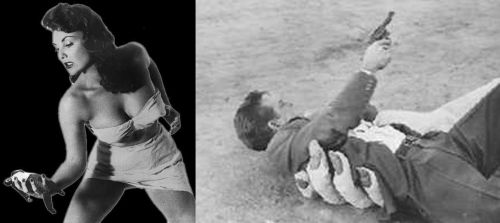
The 1950s were the reel golden age of science fiction movies. Consider the shots above from Attack of the 50 Foot Woman (1958). It is the story of a rich socialite turned into a giant woman by a giant alien. She seeks revenge on her cheating husband, something made easier by the fact that she is…50 feet tall. (She is also pretty sexy, wrapped in what looks like a few very big sheets, needed because her designer socialite clothes did not grow.)

The sheriff discovers that a pistol is no match for the giant alien, and as you can see, her husband learns that his pistol is useless against her. (She is ultimately stopped when the sheriff shoots an electric transmission tower she is standing next to.) This is an old story and a lesson we should have learned by now: pistols are not effective against aliens, monsters, people turned into monsters, etc.

Assault rifles may do no better, but at least they might give you a fighting chance and a little extra time to escape. The NRA, for some reason, has failed to make this argument. But it is both appealing and rational. The chances of the government turning against all its citizens may be small, but it could happen, and the NRA believes it and promotes the possibility. The chances of alien invasion, experiments gone rogue, the sudden appearance of strange new enemies may be small, but it could happen too.

In that case, would you rather be carrying a pistol, rifle, or shotgun, or do you want some serious firepower? You know the answer.

NASCAR Follows NRA Off the Roof

NRA 300
The National Rifle Association jumped off the public relations roof in the wake of Newtown and the legislative attempts to curb gun violence.

Which is fine. The First Amendment guarantees the right of individuals or groups to jump off any rhetorical roof, so long as no one is harmed (except maybe for the jumper). There is money to be made and power to be gained by taking extreme or contrarian positions, sometimes the louder and more insistent the better.

But as your parents advised you—though you may have willfully ignored the advice—just because Johnny jumps off the roof doesn’t mean you should do the same.

As recently as last September, the NRA sponsored a NASCAR race, the NRA American Warrior 300 in Atlanta.

Today it was announced that the NRA will be sponsoring a NASCAR Sprint Cup race at Texas Motor Speedway this April, to be called the NRA 500.

Something happened between September and April: Newtown, Sandy Hook, twenty children slaughtered.

The NRA believes that if anything happened, it only makes it more important than ever to pretend that nothing happened, or to pretend that whatever happened can’t be prevented by any proposed measures, or to pretend that what happened is being unfairly used to threaten their existence and the Second Amendment. The NRA believes it has the support of millions, and that its obstruction is massively appreciated, all national polls to the contrary. It believes that even if it is jumping off some roof, there is a safety net to catch it.

NASCAR may believe that it will be caught by that same safety net, since many NASCAR fans are also gun owners, if not NRA members. NASCAR may feel it is caught between a rock and a hard place: damned if they continue to work with the NRA, damned if they don’t. Of course, even many NRA members are skeptical, some embarrassed, by the NRA’s current extremism and obstruction. On top of that, the NRA PR safety net, even if it does still exist, is probably big enough for just one.

Maybe an NRA race this April won’t be such a big deal for NASCAR. But maybe it will be. If it is, NASCAR shouldn’t expect that there will be a net to catch it. We will know in the days to come whether this is a brilliant move, just business as usual, or a thud.

Plows. Guns.

Plow - Dorothea Lange
Above is one of the photos taken by Dorothea Lange for the Farm Services Administration during the Depression. Shot in 1937, it is captioned “The cotton sharecropper’s unit is one mule and the land he can cultivate with a one-horse plow. Greene County, Georgia.”

The plow is a thing that made America what it is. Whether pushed by hand, or pulled by an animal or an engine, it embodies the hard work that helps bring food from the earth to feed a family or a nation, especially during hard times.

The gun is also a thing that made America what it is. Unlike the plow, about which there is little controversy, guns have played an equivocal role, sometimes for good, sometimes not.

There is no constitutional amendment about plows.

There is no biblical passage about guns.

There is, as is often pointed out, a very famous biblical verse about plows. And about pruning hooks. And about their value relative to swords and spears.

Isaiah seems certain that plows and pruning hooks are good. He seems less enthusiastic about the downside of swords, spears and, presumably, guns.

Nothing absolute or definitive, no unconditional endorsement of pacifism or non-violence, unless maybe you are someone who takes the Bible seriously or even literally. Just a little something to think about.

They will beat their swords into plowshares
and their spears into pruning hooks.
Nation will not take up sword against nation,
nor will they train for war anymore.
Isaiah 2:4

If We Could See the Children of Sandy Hook

Sandy Hook School
Early in the Iraq War, President Bush tried to block taking pictures of the arrival of the coffins of fallen soldiers at Dover Air Force Base. The proposal was couched as a gesture of respect to the families, but the real point was to shield citizens from the ultimate cost of war.

There are different opinions on the impact of viewing carnage, fictional and real. Does constant exposure immunize us from taking violence seriously? Would we pursue wars so readily, or at least try to better distinguish the necessary from the chosen, if we were bombarded by those images? If we saw footage of the early days of the camps in real time, would we have allowed the Holocaust to proceed?

The images of the children killed at Sandy Hook School in Newtown are blocked from us. This choice is almost beyond argument. We have heard the reaction of those who did witness the aftermath, and even those who have participated in war said that scene was worse. We are protecting the dignity of those lives unlived and respecting the immeasurable grief of the families. Our imaginations are already enough to rend our hearts.

And so instead we have pictures of those children as they are remembered, beautiful angels, joy and potential, and we have the testimony and imploring of their parents. But somehow, this doesn’t seem to be quite enough to stop abstract arguments about the essential value of the Second Amendment, how it must continue unconditioned even by sensible restrictions that meet moral, practical and constitutional muster. First they come for my AR-15, this line goes, and next the deer and the police will be hunting me.

There is a way to end this argument, though for good reasons we will not do it. If we ever get to see the killing field at Sandy Hook, there will be little more talk of a free trade in assault weapons and big ammunition clips. There may be talk, but it will be silenced by a new and more powerful outrage. The NRA might try to keep repeating a mantra that is already falling on more deaf ears, and some of their political operatives will follow. But the vast majority of Americans will move from just saying the right thing to a pollster to demanding that the right thing be done. Now.

If we could, as we won’t, see the children.

Assault Weapons: The Art of the Art of the Possible

Bushmaster ACR
Watching Joe Biden back off the primacy of an assault weapons ban in the curbing of gun violence—following Senator Diane Feinstein’s introduction of exactly that legislation—is discouraging. And it brings to mind Picasso and Pollock, among others.

Politics is said to be the art of the possible. The motto is roughly “we fight the fights we can win.” Very pragmatic, and there is something to commend pragmatism. That won’t be much comfort, though, when well-meaning politicians have to show up at the next inevitable massacre and solemnly announce that they aimed at the possible, and even then settled for half.

Exactly what kind of art is politics?

Here’s a style of art, the kind everybody finds acceptable and can endorse. Who is going to argue about Rembrandt?

Rembrandt - Self Portrait
Then again, over time there were a number who wanted to argue about and with Rembrandt. By the time the twentieth century rolled around, artists wondered why they had to pay slavish homage to ideas that no longer suited the times. They determined that new ways were not only possible, but that they must be possible.

And so Picasso

Picasso - Les Demoiselles D'Avignon

and Jackson Pollock

Pollock - No. 5
Maybe every progressive politician who is wavering on support for an assault weapons ban needs to visit some museums with modern art; there are plenty in Washington. Then maybe they will discover what real courageous progress is. The possible is limited only by our imagination, spirit and will. That’s the real art.