Bob Schwartz

Category: Society

In Advance of the Marriage Equality Decisions

MLK

It appears it may be only a few minutes before the Supreme Court releases its opinions in the marriage equality cases, California Proposition 8 and DOMA. As always, when it does happen, please read the opinions yourselves, and don’t just take anybody’s word for what they say or mean.

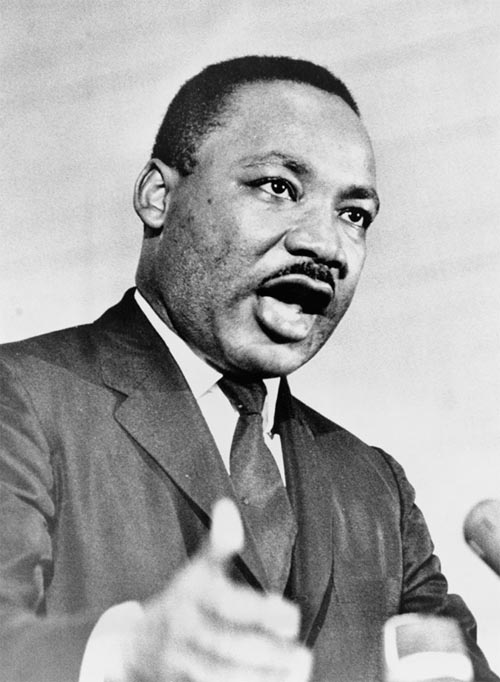
Meanwhile, some are bound to be disappointed because the decisions don’t go far enough, if they seem to go anywhere at all. So here is a quote from Martin Luther King, Jr. so familiar that we may have stopped actually hearing it. Listen and believe.

I have not lost faith. I’m not in despair, because I know that there is a moral order. I haven’t lost faith, because the arc of the moral universe is long, but it bends toward justice.

Moral Mondays

Moral Mondays

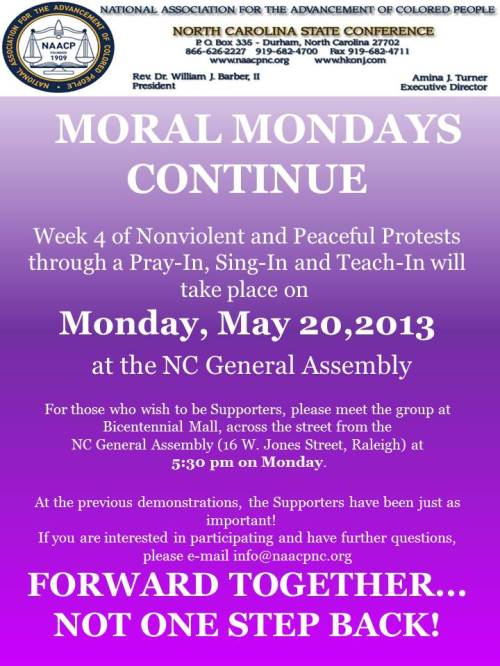
Today, Monday, June 3, is another Moral Monday in North Carolina. A Mega Moral Monday. Small and local right now, Moral Mondays have the potential to be the kind of broad movement that in recent years progressives have wanted but so far been unable to achieve.

In May, the North Carolina NAACP began peaceful protests each Monday at the General Assembly. The civil disobedience is meant to bring attention to legislative curbs on Medicaid expansion, workers’ rights and voting rights, and to the lack of legislative progress on gun control and public education funding. There have been an increasing number of arrests of activists, 153 so far. This week, the protests are expanding across the state.

All movements are more likely to fall flat than catch fire. The Occupy movement reflected real dissatisfaction and outrage, but never sufficiently articulated the underlying principles that would galvanize people to commit and to connect with each other in big numbers.

Moral Monday is built on a foundation that is at the heart of what bothers so many Americans. As is apparent from many of our political controversies, some of those who claim the moral high ground sometimes seem to ignore possible moral shortcomings in their policies, e.g., a Christian imperative to lift the poor and heal the damaged may be at odds with extreme cuts in government support and programs. (In this regard, see questions about Ayn Rand that arose in the most recent election.)

Moral Monday simplifies what is admittedly a set of very complex issues to a very basic baseline: If you claim, by the light of faith or by a sense of enlightened humanity, to believe in moral action, then your idea of morality must be your primary guide. You are free to choose that morality; no constitution, no set of laws, nothing can or should move it. But once you have chosen, and especially after you say it loudly every Friday, Saturday, or Sunday, or on whatever days you proclaim your core beliefs, your duty is to act on it. If you don’t act morally, or if you try to rationalize around that morality for some supposed greater cause, you are only human, but should investigate and consider your action, and even your possible hypocrisy.

Moral Mondays may not make it beyond North Carolina. But it is possible that in a little while, all around the country, more and more people will start the week by taking a stand and, if necessary, getting arrested for it. There is a global and historic tradition for this sort of action, and great change has been made.

Thank you North Carolina NAACP. Mondays will never be the same.

Barna: You Don’t Have to Be Christian

Spiritually Homeless
If you have any interest in the state of American religion—or of American society—you must pay attention to the Barna Group. Founded by George Barna in 1984, for decades jit has been analyzing American attitudes towards and participation in religion, from the perspective of informing Christian churches. By its nature, though, this is not necessarily a denominational narrow view. Consider, by analogy, market research by General Motors. That research is not entirely, or even primarily, about consumers and GM cars. It is about consumers and all car companies and cars and transportation in general. Just so, state-of-the-art quality research on religion is valuable to anyone in the field.

Beyond this, it is valuable for anyone interested in America. For example, our public discussion includes the terms Christian, evangelical, born again, etc., being thrown around casually as if everyone knows and agrees on what they mean—except that everyone doesn’t. That lack of rigor isn’t a luxury that Barna has. It has defined these and other terms with surgical precision, so that the research itself can be precise and informative.

The just-released report on Three Spiritual Journeys of Millennials is only the latest example of how fascinating and useful the Barna research can be. When numbers of people flee from organized religion, only the most shortsighted think that this is a just a problem for Christianity or for any other religious institution. A social sea change is a sea change, and not trying to seriously assess its meaning and implications is simply foolish. Those who applaud the phenomenon as a sign of long overdue enlightenment—of people finally coming to their senses—are not thinking it through. Jew, Muslim, Buddhist, atheist, areligionist, anti-religionist, this report—and all that Barna does—can help you with that thinking.

The Most Important Document In History

CERN W3
The Magna Carta. The Declaration of Independence. The Constitution. The Emancipation Proclamation. The number of essential documentary moments goes on and on, both here and globally, each one of them a significant next step in progress.

Twenty years ago, what may turn out to be the most important document in history (above) was issued. The website of the European Laboratory for Particle Physics (CERN) explains the event:

On 30 April 1993 CERN published a statement that made World Wide Web (“W3”, or simply “the web”) technology available on a royalty-free basis. By making the software required to run a web server freely available, along with a basic browser and a library of code, the web was allowed to flourish.

British physicist Tim Berners-Lee invented the web at CERN in 1989. The project, which Berners-Lee named “World Wide Web”, was originally conceived and developed to meet the demand for information sharing between physicists in universities and institutes around the world.

Consider what the web would be like if it was a toll road and not a freeway. That was a possibility, had Berners-Lee and CERN decided to leverage and exploit the technology. But the web was born free and continues to resist chronic attempts to control and monopolize it.

One of the strangest ironies about the freedom of the web is that it was born on a NEXT computer. If you know digital history, you will recognize that NEXT was the company that Steve Jobs founded, in between his first stint at Apple, from which he was bizarrely let go, and his second stint, when he turned Apple into the richest technology company in the world.

Sir Tim Berners-Lee did not get as rich as Jobs. But he did get a knighthood, and recognition as an unsurpassed visionary, and the thanks of billions for shaping the world as few before or after did or ever will.

Tsarnaev and Miranda

Miranda Warning
Dzhokhar Tsarnaev, suspect in the Boston Marathon bombings, is now in custody and in hospital recovering from gunshot wounds. The Justice Department has announced that it will not be giving him a Miranda warning before initially questioning him, under the public safety exception to the need for such warning.

In Miranda v. Arizona (1966), the Supreme Court established guidelines for the taking and use of statements by suspects in custody. In very brief summary, if a suspect is in custody and being interrogated, statements made will be admitted into evidence only if he has been properly warned about his right not to talk, about the potential use of his statements for self-incrimination, and about his right to have an attorney. The various versions of the Miranda warning reflect this decision, and embody the protections of the Fifth and Sixth Amendments.

A narrow exception to Miranda was established in New York v. Quarles (1984)  . In an age of terrorism and the prosecution of terrorists, this so-called “public safety exception” has become the focus of intensive analysis and application—along with a push for its expansion.

In Quarles, a victim of rape pointed police officers toward her armed assailant. The police pursued him into a supermarket:

Respondent ran toward the rear of the store, and Officer Kraft pursued him with a drawn gun but lost sight of him for several seconds. Upon regaining sight of respondent, Officer Kraft ordered him to stop and put his hands over his head; frisked him and discovered that he was wearing an empty shoulder holster; and, after handcuffing him, asked him where the gun was. Respondent nodded toward some empty cartons and responded that “the gun is over there.” Officer Kraft then retrieved the gun from one of the cartons, formally arrested respondent, and read him his rights under Miranda v. Arizona. Respondent indicated that he would answer questions without an attorney being present and admitted that he owned the gun and had purchased it in Florida. The trial court excluded respondent’s initial statement and the gun because the respondent had not yet been given the Miranda warnings, and also excluded respondent’s other statements as evidence tainted by the Miranda violation. Both the Appellate Division of the New York Supreme Court and the New York Court of Appeals affirmed.

The Supreme Court reversed the New York courts and created an exception to Miranda, when the interrogation was aimed at preventing further harm and enhancing public safety:

Procedural safeguards that deter a suspect from responding, and increase the possibility of fewer convictions, were deemed acceptable in Miranda in order to protect the Fifth Amendment privilege against compulsory self-incrimination. However, if Miranda warnings had deterred responses to Officer Kraft’s question about the whereabouts of the gun, the cost would have been something more than merely the failure to obtain evidence useful in convicting respondent. An answer was needed to insure that future danger to the public did not result from the concealment of the gun in a public area.

The narrow exception to the Miranda rule recognized here will to some degree lessen the desirable clarity of that rule. However, the exception will not be difficult for police officers to apply because in each case it will be circumscribed by the exigency which justifies it. Police officers can and will distinguish almost instinctively between questions necessary to secure their own safety or the safety of the public and questions designed solely to elicit testimonial evidence from a suspect.

It is useful and enlightening to read the dissent by Justice Thurgood Marshall, joined by Justices William Brennan and John Paul Stevens. Justice Marshall, whose practical understanding of constitutional rights was second to none (see Brown v. Board of Education), had difficulty with the trading away of such a fundamental right, even for something as paramount as public safety. He had an elegant solution: Please do interrogate without a Miranda warning—just don’t expect to introduce the answers at trial:

The irony of the majority’s decision is that the public’s safety can be perfectly well protected without abridging the Fifth Amendment. If a bomb is about to explode or the public is otherwise imminently imperiled, the police are free to interrogate suspects without advising them of their constitutional rights. Such unconsented questioning may take place not only when police officers act on instinct but also when higher faculties lead them to believe that advising a suspect of his constitutional rights might decrease the likelihood that the suspect would reveal life-saving information. If trickery is necessary to protect the public, then the police may trick a suspect into confessing. While the Fourteenth Amendment sets limits on such behavior, nothing in the Fifth Amendment or our decision in Miranda v. Arizona proscribes this sort of emergency questioning. All the Fifth Amendment forbids is the introduction of coerced statements at trial.

There is one thing that in the early aftermath of this dynamic story can be missed: Whatever he did, whatever we believe about what he did, however vital his knowledge is, Tsarnaev is under no legal obligation to say anything and has the constitutional right not to say anything that could be used against him.

The Justice Department has invoked the public safety exception: it will not yet Mirandize Tsarnaev. In part, they may be trying to reserve the right to use at trial any of the statements he makes in response to questions such as “Are there more IEDs? Who else is currently involved and dangerous?”. Maybe more significantly, they simply don’t want him—as they don’t want any other suspect—to prematurely stop talking. They won’t be telling him yet that he has the right to remain silent or to have an attorney.

But…not telling him he has these rights doesn’t mean that he doesn’t already have them. He does. A Miranda warning does not magically grant a suspect those rights. The much more magical Constitution and Bill of Rights do.

It is not clear that Tsarnaev needs a reminder of those rights. He is by all accounts a smart and educated young man, even if by recent actions a horribly misguided and tragic one. Almost all television viewers are expert on Miranda warnings anyway; even the most law-abiding American has heard them hundreds of times. But if he should decide to say nothing, other than his desire for a lawyer, in America there is nothing police or prosecutors can do. What we may justifiably feel and believe about him and what he and his brother perpetrated won’t change that, and shouldn’t. We didn’t write these self-imposed limitations for easy cases. We put them in place as a test, to see just how deliberate and fair we could be, when all we want is swift and hot-blooded justice. We wrote them to remind ourselves that we are better than that—even when we for a moment and for good reason don’t want to be.
Forget the Senators, Love the Mayors

Mayor Annise Parker

If you are one of those angered and ashamed of members of the U.S. Senate today, you are not alone.

Forty-six U.S. Senators voted against the Manchin Amendment to the Safe Communities, Safe Schools Act of 2013. This amendment to the gun violence bill was crafted by Senator Joe Manchin (D-West Virginia) and Senator Pat Toomey (R-Pennsylvania) to be the mildest, least objectionable expansion of background checks conceivable. They tried.

The amendment was rejected. The vote was 54 Yeas to 46 Nays, less than the 60 votes needed under the Senate rules. All the other amendments attempting to enhance regulation also failed.

Three Republicans voted for the amendment, including Toomey, Susan Collins of Maine and John McCain of Arizona. McCain deserves special mention. From the year 2000 on, including the 2008 Presidential election, his “maverick” and “straight talk” credentials have been an on-again, off-again affair. At least for this amendment (though he did not support any other regulation), he took a stand.

Here are the Senators who voted against any expansion of background checks, no matter how small:

Alexander (R-TN)
Ayotte (R-NH)
Barrasso (R-WY)
Baucus (D-MT)
Begich (D-AK)
Blunt (R-MO)
Boozman (R-AR)
Burr (R-NC)
Chambliss (R-GA)
Coats (R-IN)
Coburn (R-OK)
Cochran (R-MS)
Corker (R-TN)
Cornyn (R-TX)
Crapo (R-ID)
Cruz (R-TX)
Enzi (R-WY)
Fischer (R-NE)
Flake (R-AZ)
Graham (R-SC)
Grassley (R-IA)
Hatch (R-UT)
Heitkamp (D-ND)
Heller (R-NV)
Hoeven (R-ND)
Inhofe (R-OK)
Isakson (R-GA)
Johanns (R-NE)
Johnson (R-WI)
Lee (R-UT)
McConnell (R-KY)
Moran (R-KS)
Murkowski (R-AK)
Paul (R-KY)
Portman (R-OH)
Pryor (D-AR)
Reid (D-NV)
Risch (R-ID)
Roberts (R-KS)
Rubio (R-FL)
Scott (R-SC)
Sessions (R-AL)
Shelby (R-AL)
Thune (R-SD)
Vitter (R-LA)
Wicker (R-MS)

For a change, we have a post-partisan moment, where some Democrats and Republicans can agree on something: the status quo of guns in America is just fine.

Forget the Senators. Whether they believe it or not, a political steamroller is on its way that, no matter how they calculate home state interests or expect the NRA to protect them, will flatten them like Wile E. Coyote in a Roadrunner cartoon. Too wily by half.

Let’s talk about mayors, the politicians who can’t distance themselves from the harsh realities of American life, politicians who, unlike others, have to actually work for a living and try, as best they can, to do a little something to make things better.

Mayors Against Illegal Guns is a coalition of over 900 mayors from big cities and small towns across the country:

As mayors, our highest responsibility is to enforce the law and to protect the people we serve. One of the most difficult challenges we face in meeting this responsibility is preventing criminals from illegally obtaining guns and using them. The issue of illegal guns is not conservative or liberal; it is an issue of law and order — and life or death.…

[W]hat binds us together is a determination to fight crime, and a belief that we can do more to stop criminals from getting guns while also protecting the rights of citizens to freely own them.  We have seen how the polarizing rhetoric of gun politics on all sides only obscures the tragic reality we see every day on our streets: violent criminals with easy access to illegal guns.

Above is a photo of Mayor Annise Parker of Houston. She is shown as a representative mayor against illegal guns because Houston is also the home of Senator Ted Cruz, one of the most vocal opponents of any gun legislation.

Maybe what we need to do is replace these Senators at the next available opportunity with almost any of these mayors. These mayors aren’t all angels, but they don’t have time to be blowhards or ideological purists. They know how to get the job done, know what it is to tackle difficult issues, and know what it’s like to do the dirty work of cleaning up messes—and most of all figuring out how to avoid some of those messes in the first place. They could do better, in part because nobody could do worse.

Accidental Racist or Ebony and Ivory

Accidental Racist
You know that the controversy about Accidental Racist, the track and video from Brad Paisley’s new Wheelhouse album, is way out of hand when he is criticized for not being a “real” Southerner anyway because he was born in West Virginia and only now lives in Tennessee.

Seriously.

If you haven’t heard, Accidental Racist is a collaboration between Paisley and LL Cool J. You can find, listen to and purchase the audio. But the official video was pulled almost immediately, in the wake of an unprecedented avalanche of criticism and derision of the song—musically, culturally, politically, sociologically, morally—which adds up to this: It is the worst, most misguided, most laughable, most unlistenable record ever.

What did Brad Paisley, not quite authentic Southerner, and certainly a musical lightweight (20 number one singles, but those were country number ones), do to deserve this?

He wrote and recorded a song that, stripped to its essentials, says that it’s hard to be a Southerner because people come at you with all kinds of presuppositions, not the least of which is that everything you do or say has to be measured against a history which you were not involved in, which doesn’t reflect who you are, and which puts you in the position of not being quite sure of what you can embrace and what you have to reject. LL Cool J comes in to briefly add exactly the same perspective for urban black men.

Simplistic and clumsy, musically and poetically? Maybe. Sincere? Absolutely. Reflects a real problem for Southerners, who just like post-War Germans, have a culture they are proud of, but have to still perform a delicate balancing act to make sure they aren’t the wrong kind of proud so that they can distance themselves from aspects of their own history and from that very culture? If you think that’s easy, try it yourself.

Is Accidental Racist really that bad? Submitted for your consideration, Sir Paul McCartney and Sir Stevie Wonder (he deserves a knighthood too). These two are musical geniuses and real humanitarians. Brad Paisley and LL Cool J would be the first to admit that they are not in their league.

The success of McCartney and Wonder includes their collaboration Ebony and Ivory, which spent seven weeks as a number one single in 1982. The song did not propose anything  challenging or deep about racism, nothing about history, or blame, or stereotypes. Instead, it all comes down to something obvious, something uncontroversial that nobody could complain about. Maybe covering this would have been a better choice in 2013. Or maybe not.

Ebony and Ivory

Ebony and ivory live together in perfect harmony
Side by side on my piano keyboard, oh Lord, why don’t we?

We all know that people are the same where ever we go
There is good and bad in everyone
We learn to live, we learn to give
Each other what we need to survive together alive

Ebony and ivory live together in perfect harmony
Side by side on my piano keyboard, oh Lord, why don’t we?
Ebony, ivory living in perfect harmony
Ebony, ivory, ooh

We all know that people are the same where ever we go
There is good and bad in everyone
We learn to live, we learn to give
Each other what we need to survive together alive

Ebony and ivory live together in perfect harmony
Side by side on my piano keyboard, oh Lord why don’t we?

Gun Violence Legislation

HenQ: Why is there a picture of a chicken on this post about gun violence legislation?
A: Because a small number of U.S. Senators have decided that the best way to approach the very important issue of legislation to curb gun violence in America is to block a vote on any legislation.

Q: Why is this text so big?

A: Because there have been previous posts about gun violence and about political courage, and after saying the same thing multiple times, it can be therapeutic, if not any more effective, to say the same thing louder. Also, if any of those Senators are not wearing their glasses, they will still be able to see the chicken and read this message about the historic lack of political courage. (Idea borrowed from John Hancock.)

Q: Isn’t this childish and unbecoming adult and reasoned debate?

A: Which? The use of a chicken post? Or the failure of well-paid and trusted public servants to stand up and do their job?

Days of Holocaust Remembrance: Different Trains

Holocaust Train Car
Monday was Yom HaShoah, the Day of Remembrance for victims and heroes of the Holocaust. In the United States, the entire week marks the National Days of Remembrance.

The phenomenon of the Holocaust has demanded the work of historians and others to record and chronicle. That mission moves ahead, and every year—more than seventy years later—adds new dimensions to the story. It has also demanded the work of activists, whose mission is transform the basest experiences into a brighter and more humane future.

But the artists are different kinds of workers and alchemists. They know that when we read or hear the details, or see the photos, we are apt put up a psychic wall, because we can take only so much. Enough: we are human, as were the victims and the masters of madness. Artists approach us, and the Holocaust, differently. Even if our psyches want to put up a wall, to give us some rest from the onslaught, we don’t know where to build it. So we are tricked into watching, listening, and learning in a different way with different senses.

Steve Reich is one of the masters of modern music. He composed a suite, Different Trains, inspired by the Holocaust. Each of the three movements represents the experience before, during and after the War.

Here is a YouTube video of a performance of the second movement, Different Trains – Europe-During the War. The composition features the recorded voices of Holocaust survivors.

If you are a Spotify user, you can listen to Different Trains.

At the U.S. Holocaust Memorial Museum in Washington, D.C., there is an actual train car used to transport Jews (above). This extraordinary museum contains artifacts and educational displays, the cumulative effect of which can be overwhelming. You might feel your spirit broken, tears in your eyes, and then, miraculously, your spirit begins to be healed, a little.

That’s why we have the historians, the activists and the artists. They are the doctors dedicated to healing the soul of a badly wounded world and trying to make sure it doesn’t get so sick, ever again.

Clinton, DOMA and GLAAD

Bill Clinton
People—including some politicians—hate politics, for a thousand reasons. Every one of those reasons is valid.

The answer to these reasons is the often cited quote from Otto von Bismarck: “Politics is the art of the possible, the attainable – the art of the next best.”

Oh principles, oh pragmatism. We honor and admire the idealists, but in the end we support those who get things done—especially the things that we want done.

This is a timeline. The common thread is one of America’s current political dynasties.

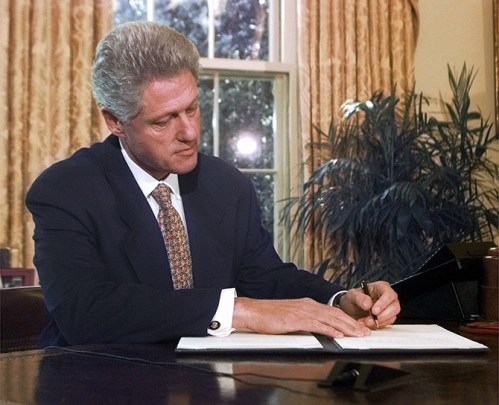
  • 1996 – President Bill Clinton signs the Defense of Marriage Act.
  • 2003 – Hillary Clinton votes for the Iraq War Resolution.
  • 2008 – Hillary Clinton runs for President.
  • 2011 – Bill Clinton comes out in favor of marriage equality.
  • 2013 – The Iraq War ends.
  • 2013 – Bill Clinton calls DOMA unconstitutional.
  • 2013 – DOMA is argued before the United States Supreme Court.
  • 2013 – Hillary Clinton comes out in favor of marriage equality.
  • 2013 – Bill Clinton to receive the Advocate for Change Award from the Gay & Lesbian Alliance Against Defamation (GLAAD)
  • 2016 – Hillary Clinton runs for President?

People who do things for political reasons, or support those who do, should never be ashamed of that. Otto von Bismarck, unifier of the German Empire in the nineteenth century, certainly wasn’t.

But the “art of the possible” does create some tight and twisted places that Houdini might have trouble escaping from. Unless, of course, he had help.

Bill Clinton’s statement before signing DOMA includes this: “I also want to make clear to all that the enactment of this legislation should not, despite the fierce and at times divisive rhetoric surrounding it, be understood to provide an excuse for discrimination.”

Here is DOMA, which has been the law of the United States for the last seventeen years, and may or may not still be the law after the Supreme Court decision.

The statute reads:

No State, territory, or possession of the United States, or Indian tribe, shall be required to give effect to any public act, record, or judicial proceeding of any other State, territory, possession, or tribe respecting a relationship between persons of the same sex that is treated as a marriage under the laws of such other State, territory, possession, or tribe, or a right or claim arising from such relationship.

It also changed the definition of marriage in U.S. law:

In determining the meaning of any Act of Congress, or of any ruling, regulation, or interpretation of the various administrative bureaus and agencies of the United States, the word `marriage’ means only a legal union between one man and one woman as husband and wife, and the word `spouse’ refers only to a person of the opposite sex who is a husband or a wife.

Evolution—political, philosophical, or most other kinds—can be a wonderful thing, particularly if it leads to freedom and fairness. But evolution presupposes a prior state, which might be called “less evolved” or “unevolved.”

Some people approach this by pretending that the pre-evolutionary state didn’t exist. They may also be unwilling to acknowledge that the pre-evolutionary state was politically motivated, or that the evolution itself may be. Remember, the art of the possible is only possible by paying no attention to the man, or woman, behind the curtain. Once in a while, they even apologize for it, or contort themselves as John Kerry did, well-meaningly, about his prior support for the Iraq War: “I was for it before I was against it.”

Still, this is America. We love second chances and second acts. Consider the late Senator Robert Byrd, who emerged from the depths of racism to become a champion of Constitutional rights. But while it may not be fitting to punish people for having once upon a time acted in a powerfully less enlightened way, this doesn’t always mean they have to be rewarded. Or awarded.