Bob Schwartz

Category: Religion

More New York Hate Attacks—On a Muslim Cop and a Subway Worker

aml-elsokary

Just as you probably didn’t see any national coverage of the assault on a Muslim college student riding the New York subway, you also probably didn’t see stories about more attacks in the last few days—including one on a New York City cop.

Sunday

‘I will cut your throat!’: Man attacks Muslim cop and her son

A suspect was arrested Sunday in the Brooklyn attack on an off-duty Muslim cop wearing a hijab.

“Go back to your country,” the man yelled at NYPD Officer Aml Elsokary during the incident Saturday.

He also targeted the cop’s 16-year-old son — shoving him and shouting a slur that referenced ISIS — before telling them both, “I will cut your throat! Go back to your country!” sources said.

The incident is being probed as a hate crime.

The suspect, whose name was not released, lives near the scene of the attack, on Ridge Boulevard and 67th Street in Bay Ridge.

Elsokary made headlines in 2014 when she helped rescue an old man and a baby from a burning building.

Monday

Muslim MTA worker in hijab pushed down stairs, called ‘terrorist’

A Muslim New York City Transit employee who was wearing a hijab with her uniform was injured when she was pushed down the stairs at Grand Central Terminal Monday morning by a man who called her a “terrorist,” officials said.

The 45-year-old woman was on her way to work at 6:20 a.m. when the man confronted her on the 7 Train.

“You’re a terrorist and you shouldn’t be working for the city,” the hate-monger spewed at her while the two were on the train, as he jabbed at her MTA patch.

He followed her off the train and pushed her down the stairs. Her ankle and knee were injured and she was taken to NYU Langone Hospital.

We have to start facing a few realities, though strategies to deal with them are still to be determined. One is not just the presence of hate and intolerance—an age-old problem—but the growing aggressive expression of that hate, possibly in light of the current political climate. Another is a certain willingness to stand by while that happens—also long-standing—because we will always have such people and that’s just the way things are. A final reality is much of the news media, which, with all due respect, spent the presidential campaign focused on all kinds of nonsense and missing all kinds of truth, sometimes in the name of being “objective” and not judging or having opinions.

These latest examples of necessary truths are not matters of opinion. What’s wrong is wrong, and if the media is uncomfortable reporting or analyzing it, maybe they have outlived their usefulness and relevance.

Right Trees (Bodhi Day)

buddha-comic-enlightenment

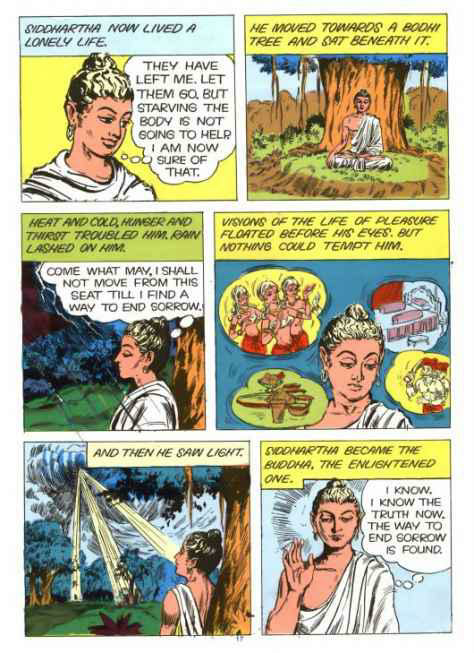
December 8 is Bodhi Day, known in Japan as Rohatsu, the day of the Buddha’s enlightenment.  

Right Trees (Bodhi Day)

Which tree
To sit under?
Study each one
Counting branches
Inspecting leaves.
Is the ground
Too soft or wet
The shade
Too dark?
Who can deny
The forest
Yet it shrinks
To dust
On a distant shore.
The moon and
The morning star
Are just enough light
To brighten the night
Waking to find
This tree
All trees
Are right.

I wondered how the Buddha knew which tree to sit under for that consequential meditation. An easy answer is that it didn’t matter, that any tree or all trees would do. Another answer is that it didn’t have to be a tree at all. Another of the infinite answers is that there was no tree, no moon or morning star, no sitting. Just waking up.

“Drunk men screaming Trump’s name try to rip off Muslim student’s hijab as straphangers stand idly by on East Side subway, cops say”

Yasmin Seweid

This is from today’s New York Daily News.

I have mixed feelings about repeating such a negative story. But I am repeating it because Google News shows that at this point it has been covered by only 26 news outlets in America and the world.

Only twenty-six news outlets. Practically any story gets more coverage than that—let alone a story with major social implications, involving the next President of the United States, or at least his name as a rallying cry.

One more thing: Take the hateful actions of these attackers, and imagine their shouting the name of some other President. Imagine these men shouting “You look like a f—ing terrorist! Get the hell out of the country! You don’t belong here!” followed by “George Bush! George Bush!” or “Ronald Reagan! Ronald Reagan!”

Are we ready for this New World?


STRAPHANGERS STOOD BY AND WATCHED as three drunk white men repeatedly screamed “Donald Trump!” and hurled anti-Islam slurs Thursday at a Muslim Baruch College student before trying to rip her hijab off of her head on an East Side subway, the woman told the Daily News.

Yasmin Seweid said she was stunned by the assault — and the fact that no one in the subway car came to her aid.

“It made me really sad after when I thought about it,” she said. “People were looking at me and looking at what was happening and no one said a thing. They just looked away.”

The terrified 18-year-old recounted her harrowing encounter with the hate-spewing trio.

“I heard them say something very loudly, something about Donald Trump … I also heard them say the word terrorist and I sort of got a little scared,” Seweid told The News.

Seweid had left an event at Baruch and was on her way home on an uptown No. 6 platform at the 23rd St. and Park Ave. stop at about 10 p.m. Thursday when the men started taunting her, she said.

They hollered at the business major as she boarded a train.

They kept screaming Trump’s name at her, and then said, “Oh look, a (expletive) terrorist,” she said.

“Get the hell out of the country!” they yelled during the train ride. “You don’t belong here!”

Seweid, who was born in Williamsburg, Brooklyn, to Egyptian parents, was shocked.

“I born and raised in this country,” she told The News. “I’m an American, you know?”

When Seweid ignored them, they pulled on her bag to get her attention and the strap broke.

“That’s when I turned around and said ‘can you please leave me alone,’ and they started laughing,” she said.

She walked to the other end of the train, and they followed her and tried to pull off her hijab, a head covering worn by Muslim women.

“Take that thing off!” they hollered.

“I put my hand on top of my head to hold it,” Seweid said. “Then I turned around and screamed ‘what the (expletive).’ ”

Seweid got off the train at Grand Central Terminal on E. 42nd St. and reported the terrifying incident to police.

Her father, Sayeed Seweid, 55, of New Hyde Park, L.I., said he was also angry that no one else stepped in to defend his daughter.

“Nobody even offered to help an 18-year-old girl,” he said. “That means something. Her phone was dying. You offer help — it doesn’t matter the race, religion, or the country.”

After filing a police report, shaking and crying, Seweid made her way to Penn Station where she called her father after finding an electrical outlet to charge her phone, her father said. She was not injured.

He came and picked her up and they chatted with police into the early morning hours before driving home.

On Friday, Seweid sat with police officers and tried to help spot the men on surveillance video, her father said. No one has been arrested.

The incident is another in a growing list of bias crimes across the city since Trump’s election. Cops said that from Nov. 8 through Nov. 27, there were 34 reported incidents compared to 13 in the same period in 2015.

“American Muslims, and particularly men and women who wear religious attire, are being increasingly targeted by hate nationwide in the wake of the Nov. 8 election,” said Afaf Nasher, executive director of the New York chapter of the Council on American-Islamic Relations.

“I was very shaken up … I’m definitely traumatized,” Seweid said. “I’m really scared.”

Of the 34 incidents between Election Day and Nov. 27, 18 have been anti-Semitic in nature, compared to five in the same period last year. Five of the incidents have been anti-gay, and five others, anti-white. Two targeted Muslims and one was anti-black.

Healing and Magic: We Are Not Alone

White Tara

All of our religious traditions—Judaism, Buddhism, Christianity, and all others—include an element of healing. Healing of body, heart and mind. The Gospels, for example, contain many important stories about healing, from curing chronic illness to reversing death itself.

We invoke the power to heal in various ways. In Judaism, the Mi Shebeirach is recited:

May the one who blessed our ancestors, Abraham, Isaac and Jacob, Sarah, Rebecca, Rachel and Leah, bless and heal those who are ill. May the Blessed Holy One be filled with compassion for their health to be restored and their strength to be revived. May God swiftly send them a complete renewal of body and spirit, and let us say, Amen.

In Buddhism, White Tara, an important embodiment of compassion, is invoked:

The liberator of suffering shines light upon me to create an abundance of merit and wisdom for long life and happiness.

Is this magic we are engaged in? If you take magic to be a call to illegitimate and evil powers, as some traditions do, then this might have to be classified as something else. If you take magic to be the recognition of a seeming powerlessness in the face of things as they are and an attempt to borrow and employ the power we believe in, then magic it is.

This invocation of the power to heal—by ourselves, in a family, in a community—is a way of practicing that we are not alone. When healing is needed, that is something we want to know.

For JRK.

More About Jim Wallis: The Truth Will Set You Free

americas-original-sin

Yesterday I posted about Jim Wallis of Sojourners and his post-election essay Time For Healing. And Resistance. Hopefully you had a chance to look at the essay and learn about Jim Wallis and Sojourners.

I just started reading the most recent of his many books about the religious imperative of social justice. The following is from the Introduction to America’s Original Sin: Racism, White Privilege, and the Bridge to a New America.


In the following pages we will take a positive, hopeful, and forward-looking approach. We will talk about what it means to “repent” of our original sin—and repentance means more than just saying you’re sorry. It means turning in a new and better direction, which I believe we can do. We look backward in order to look forward. And this book makes a spiritual statement: our racial diversity and social pluralism are a great strength and a gift for our future, because our primary identity is as the children of God—all of us are created in God’s image. Thinking about ourselves in that deeper way helps us to sort out a lot of things.

So what can the truth do for us?

You will know the truth, and the truth will make you defensive? I think we can do better than that.

You will know the truth, and the truth will make you dishonest? I don’t think we want to keep doing that.

You will know the truth, and the truth will make you deceptive? We’ve seen way too much of that from public officials, and many people are now calling for accountability.

You will know the truth, and the truth will make you bitter? That just makes us miserable, and miserable to live with.

You will know the truth, and the truth will make you angry? Anger can be a positive thing, but only if it is channeled toward constructive change and gives us energy instead of hatred. We can eventually move beyond that too.

You will know the truth, and the truth will make you free. I truly believe that would be the best thing for all of us.

To become more free because of the truth.

To become more honest because of the truth.

To become more responsible because of the truth.

To become better neighbors because of the truth.

To become more productive and contributing citizens because of the truth.

To become better Christians, Jews, Muslims, Buddhists, people of other faiths, or people of conscience with no religion—all better because of the truth.

To become a better and freer country for all of us because of the truth.

And a big issue for me, as the father of two teenage boys, is how we can all become better parents who are more supportive of other parents because of the truth.

Finally, to become better and freer human beings because of the truth. I think that’s what Jesus was getting at in the Gospel passage.

We can no longer be afraid of the truth about race in this country—past, present, and future—because our fears will keep us captive to all kinds of untruths.

This book is about how to find the truth together in these difficult, challenging, and complicated matters of race in America.

We will try to answer the question Dr. Martin Luther King Jr. named in the title of his last book, released just months before we lost him: Where Do We Go from Here: Chaos or Community? A new generation will answer that question for a new time.

I crossed the famous Edmund Pettus Bridge in Selma, Alabama, on the fiftieth anniversary of the historic march that helped bring voting rights to all our fellow citizens. It was then I realized that the answers to these questions will be found in crossing another bridge—the bridge to a new America that will soon be a majority of minorities. This book seeks to describe that new bridge and how we and our children can cross it together.

We need to better understand the past so we can cross the bridge to a new, freer American future where our growing diversity is experienced as a great benefit and not as a great threat. I hope you will take this book as an invitation—to explore the truth of America’s racial past, present, and hopeful future so that, yes, together, we might all become more free, our congregations more faithful, and the state of our union “more perfect.”

You will know the truth, and the truth will set you free.

Sojourners: Time for Healing. And Resistance.

time-for-healing-and-resistance

Jim Wallis, founder of Sojourners, has long been the loudest, most articulate, and most respected voice on behalf of social justice from a genuinely Evangelical Christian perspective. Not “Evangelical Christian” in the sense of those who have made that identical with a right-wing political agenda. “Evangelical Christian” in the sense of what Jesus would have those who claim to follow him do.

His post-election essay, Time for Healing. And Resistance. is so coherent and inspirational that it doesn’t bear quoting from in pieces. Please read it, whatever your religious or spiritual leanings, if any.

Jim Wallis writes, “I just want you to know that I AM IN for whatever this will require of us.” He is speaking to and about Christians, but he is really challenging those of all faiths or of no faith at all to speak out and stand up.

Readings for the Day of National Healing

Medicine Buddha Mandala

Here are readings for the Day of National Healing from Ocean of Dharma: The Everyday Wisdom of Chogyam Trungpa, a recommended collection of very brief excerpts from his talks and texts. The image above is of the Medicine Buddha.

THE FUTURE IS IN OUR HANDS

We hold the threshold of the future of the world in our hands, on our path. When we say this, we are not dreaming. We are not exaggerating. We hold a tremendous hope, maybe the only hope for the future dark age.

We have a lot of responsibilities, and those responsibilities are not easy to fulfill. They won’t come along easily, like an ordinary success story. They have to be stitched, painted, carved, step by step, inch by inch, minute by minute. It will be manual work. There will be no automatic big sweep, or solution.

When something good is done in the world, it is usually difficult. It is manual, rather than automatic. When something bad is done, usually that is automatic. Evil things are easy to catch, but good ones are difficult to catch. They go against the grain of ordinary habitual tendencies.

PLANNING FOR THE FUTURE

Humans are the only animals that try to dwell in the future. You don’t have to purely live in the present situation without a plan, but the future plans you make can only be based on the aspects of the future that manifest within the present situation. You can’t plan a future if you don’t know what the present situation is. You have to start from now to know how to plan.

CONVERSING WITH OUR NEGATIVITY

You can always count on the fact that our aspect of viciousness or apelike quality will reflect back to us. Then we can either project it onto somebody else or we can reflect and realize the situation within ourselves. Quite precisely, when you are in that particular state of mind, there is a kind of conversation going on. You may try to tell yourself to calm down and not worry. But then the undercurrent of the force of the projection tries to pierce through again and again. There is always this conversation going on with one’s own negativity. The neurotic aspect of mind is always willing to fall into either the extreme of left or right. The right extreme is anger, the masculine extreme. The left is passion, the feminine extreme. This symbolism is true and universal—a cosmic symbol, which happens with all of life. These symbols are not based on Indian, Buddhist, or Tibetan stories at all. These are utterly cosmic principles, as far as the symbolism is concerned.

WORK WITH THE PRESENT SITUATION

The buddhist tradition teaches the truth of impermanence, or the transitory nature of things. The past is gone and the future has not yet happened, so we work with what is here—the present situation. This actually helps us not to categorize or theorize. A fresh, living situation is taking place all the time, on the spot. This noncategorical approach comes from being fully here, rather than trying to reconnect with past events. We don’t have to look back to the past in order to see what people are made out of. Human beings speak for themselves, on the spot.

Movies: Doctor Strange – Comic Books Are Cosmic Books

doctor-strange

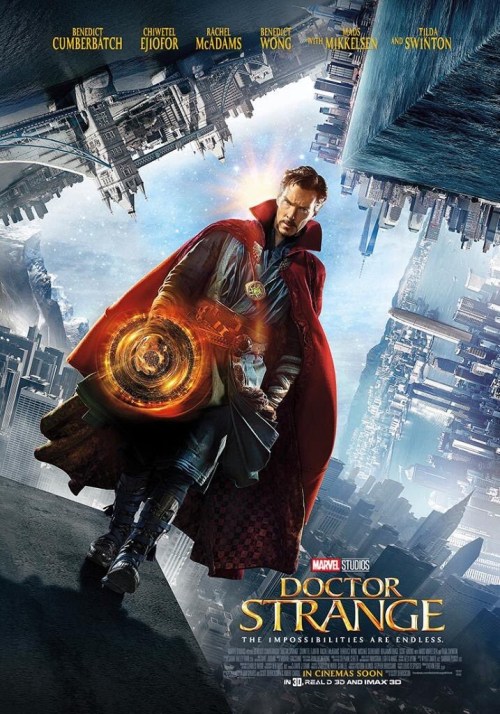
Go see the new movie Doctor Strange. See it if you can in one of those fancy theaters, in 3D if you like. But don’t think that it is just an excellent visual and aural and mental treat, which it is. See it because it represents why comic books and movies were invented. To offer us unique experiences, seasoned with interesting and even mind-altering emotions and ideas, that aren’t like the experiences of our everyday life.

What’s it all about? The answer is: Yes.

The comic book character Doctor Strange first appeared in 1963, as an unusual but not unprecedented special addition to the standard superhero approach. This one incorporated mysticism and spirituality, more so than average (it was after all the 1960s). Comic books are cosmic books, having evolved as the perfect place to tell stories laced with cosmic issues. At first glance, the stories and heroes appear to follow somewhat conventional logic and chronologic. Then, without excuse or explanation, they don’t (if this sounds like many of our religious traditions, well…). They are utterly effective but stop making sense, which as all students of comic books and cosmic arts know, and as Doctor Strange learns, is what it is all about.

If you want more details before you decide, you will find dozens of reviews, almost all of them very positive. Or you can not look for those. Instead, just pull yourself away from your phone or laptop or video game or big home screen to take a digital holiday into the breathtaking mystic—comic book and movie style.

Note: Not too long ago I wrote about mountains moving and walking, a common theme in spiritual traditions. See, for example, Jesus and Dogen and Donovan (♪ First there is a mountain/then there is no mountain/then there is). No mountains are moved in this movie, but they could have been.

Bar Mitzvah: The Spiritual Edge of Thirteen and Clueless

Mitzvah Magazine

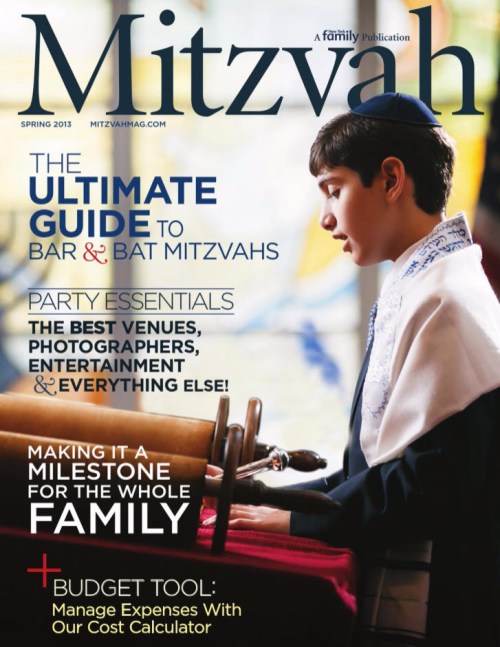
Like many Jewish young people, I marked my thirteenth birthday by participating in a bar mitzvah (bat mitzvah for girls). This is a traditional rite of passage, marking the time when you take on the privileges and responsibilities of being a full adult member of the community. There are services and celebrations, but as a religious matter, you don’t actually have to do anything or say anything to achieve this status. It just happens with time.

I attended religious school classes, before and after my bar mitzvah. I took part in the bar mitzvah services and celebration. I performed well at the services and enjoyed the celebration. Here’s the thing, speaking only for myself, and not for any others who went before or after me, including the most recent bar mitzvah of a family member I lovingly attended: I see now that I was pretty much religiously and spiritually clueless. This isn’t surprising, given that thirteen year olds are a bit—or a lot—clueless in general, no matter what they think at the moment.

This doesn’t mean that not understanding or thinking very deeply, if at all, about the spiritual particulars you are taught and that are recommended to you by earnest teachers and rabbis, or about the bigger picture of Judaism or other traditions, is a bad thing. You might well go from thirteen to 20 or 30 and not think often or ever about these. Some do, some don’t. You might actually go all the way to the very end without giving this much consideration. No blame.

But seeds are planted, and you never know what grows. Water, light, and fertilizer. I sent my beloved family member a bunch of books about Judaism, which may be read, now or eventually, sooner or later. They are a much more complete and interesting collection than the few I received when I was a bar mitzvah, but that doesn’t guarantee anything. I wasn’t interested when I was thirteen. That changed, a lot. My rabbi, my cantor, my congregation expected good things of me religiously. It took a few years to grow, and grow it did, although I’m not sure the fruit is exactly what they expected or thought would be good for Judaism or the community.

Me, I had no thoughts about stuff like that at the time. Being bar mitzvah, thirteen and clueless.

Beresheet: The Beginning

bereshit

Today the annual Torah reading cycle begins again with the portion Beresheet (also transliterated as Bereshit, Genesis 1:1-6:8).

It is a big Torah, a bigger Jewish Bible (Tanakh), and an even bigger Christian Bible. In all that expanse, nothing compares to the way it begins.

Bereshit: “When God Created …” This first word of the first book of the Bible serves both as the Hebrew name for the book Genesis and as an idiom for “Creation.” Because of its pride of position at the “start” of creation, as well as its uniqueness (the word never appears again in Scriptures), the word is subjected to intensive and varied exegetical analysis. Many, many meanings are derived from this one six-letter word….Jewish tradition has also held the six letters contain secrets that the wise will understand. (The Encyclopedia of Jewish Myth, Magic and Mysticism, Geoffrey W. Dennis)

In English, it goes like this:

When God began to create heaven and earth—the earth being unformed and void, with darkness over the surface of the deep and a wind from God sweeping over the water—God said, “Let there be light”; and there was light. God saw that the light was good, and God separated the light from the darkness. God. (New Jewish Publication Society translation)

Or this:

In the beginning when God created the heavens and the earth, the earth was a formless void and darkness covered the face of the deep, while a wind from God swept over the face of the waters. Then God said, “Let there be light”; and there was light. And God saw that the light was good; and God separated the light from the darkness. (New Revised Standard Version translation)

Or this:

When God began to create heaven and earth, and the earth then was welter and waste and darkness over the deep and God’s breath hovering over the waters, God said, “Let there be light.” And there was light. And God saw the light, that it was good, and God divided the light from the darkness. (Robert Alter translation)

Unformed. Void. Darkness. Wind. Welter. Waste. Light. When God began to create.

Maybe you once read or studied the Bible, in any of its versions. Maybe you still do. Maybe you don’t anymore or maybe you never did. Maybe you had deep discussions about God, about creation, and about whether there was something out of which creation was made or whether there was nothing and then there was something (ex nihilo). Then again, maybe not.

No matter your beliefs, consider this first portion, the first words, and the very first of the first words consisting of six Hebrew letters. Are there “secrets the wise will understand”? Are you that wise one?