Bob Schwartz

Category: Psychology

Passover and Freud

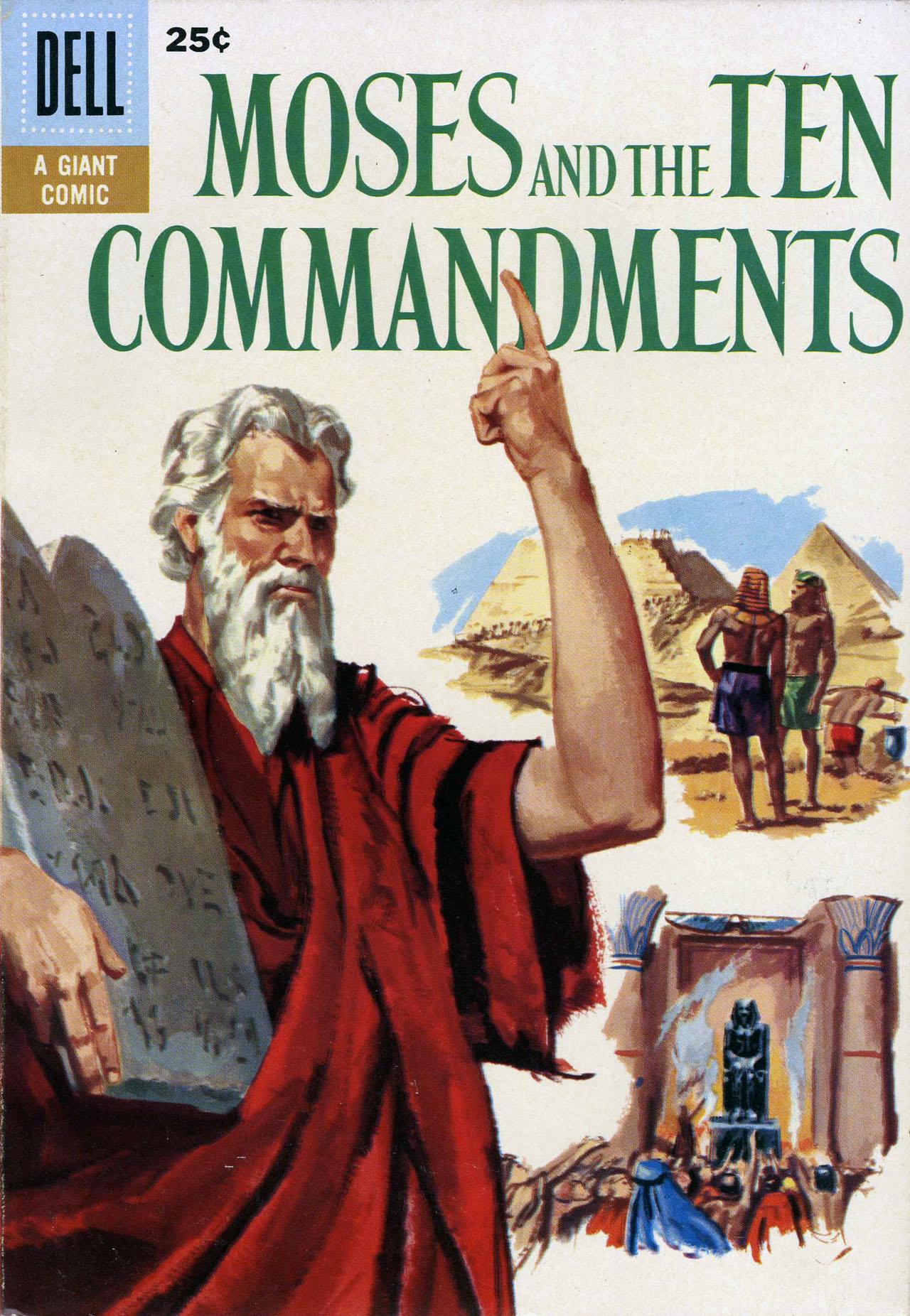
Moses and the Ten Commandments

What does Freud want? He might not want people attending a Passover seder, offering prayers to a God who isn’t there. But things are not that simple.

Sigmund Freud was a Jew by birth, an atheist by belief. He abstracted and analyzed religion as a powerful manifestation of powerful forces at work. But near the end of his career, he considered whether there was something in God that was more than a mere reflection of psychic need and dynamics.

In his final book, Moses and Monotheism, he suggests that while there is no God, the positing of one had forced the Jews—and all who followed on that spiritual path—to think and act differently. The gift of the idea of God was the imperative to transcend instinct and old ways, to make new and positive sense of the insensible, and to act accordingly.

Those in the Jewish communities will retell some version of the Moses story this Passover. But only some of those will have completely read the biblical account in the Book of Exodus. Even fewer will have looked beyond the popular stories to see what generations of historians and commentators have to offer.

One of those who does have something to offer is Freud. In Moses and Monotheism, he made a jump, if not a giant leap. Here is part of what Freud wrote (emphasis added):


How we who have little belief envy those who are convinced of the existence of a Supreme Power, for whom the world holds no problems because He Himself has created all its institutions!…We can only regret it if certain experiences of life and observations of nature have made it impossible to accept the hypothesis of such a Supreme Being. As if the world had not enough problems, we are confronted with the task of finding out how those who have faith in a Divine Being could have acquired it, and whence this belief derives the enormous power that enables it to overwhelm Reason and Science.

. . .

Let us return to the more modest problem that has occupied us so far. We set out to explain whence comes the peculiar character of the Jewish people which in all probability is what has enabled that people to survive until today. We found that the man Moses created their character by giving to them a religion which heightened their self-confidence to such a degree that they believed themselves to be superior to all other peoples. They survived by keeping aloof from the others. Admixture of blood made little difference, since what kept them together was something ideal the possession they had in common of certain intellectual and emotional values. The Mosaic religion had this effect because (1) it allowed the people to share in the grandeur of its new conception of God, (2) because it maintained that the people had been “chosen” by this great God and was destined to enjoy the proofs of his special favor, and (3) because it forced upon the people a progress in spirituality which, significant enough in itself, further opened the way to respect for intellectual work and to further instinctual renunciations.

. . .

In a new transport of moral asceticism the Jews imposed on themselves constantly increasing instinctual renunciation, and thereby reached at least in doctrine and precepts ethical heights that had remained inaccessible to the other peoples of antiquity. Many Jews regard these aspirations as the second main characteristic, and the second great achievement, of their religion….

Sigmund Freud, Moses and Monotheism


It was this “respect for intellectual work” that Freud so appreciated. Freud may have seen himself as a sort of Moses, leading civilization from benighted antiquity to a new light and new heights. Just as religious innovation led Jews from the old ways to a new land, so he and psychoanalysis would lead to even further self-awareness and progress—without God, of course.

Whether or not you believe in God, Moses, or Freud, whether or not you will be sitting at a seder table this Passover, it can be a good time to consider old ways in a new light. According to Freud, the gifts of Moses are the tools to renounce instincts and move beyond mere legacy. If we are trapped as man or mankind, psychoanalysis and, yes, even a certain religious perspective might be able to liberate us.

Of course there is. Any retelling of our received stories can be subversive, if we are willing to investigate and recreate. In the passage above, Freud could not be clearer that for him the conventional belief in God stands in the way of reason and science. But he then begrudgingly admits that in the right circumstances, some good may and has come from it.

© 2025 Bob Schwartz
Dean Chamberlain: Light Paintings of Elder Psychedelic Pioneers

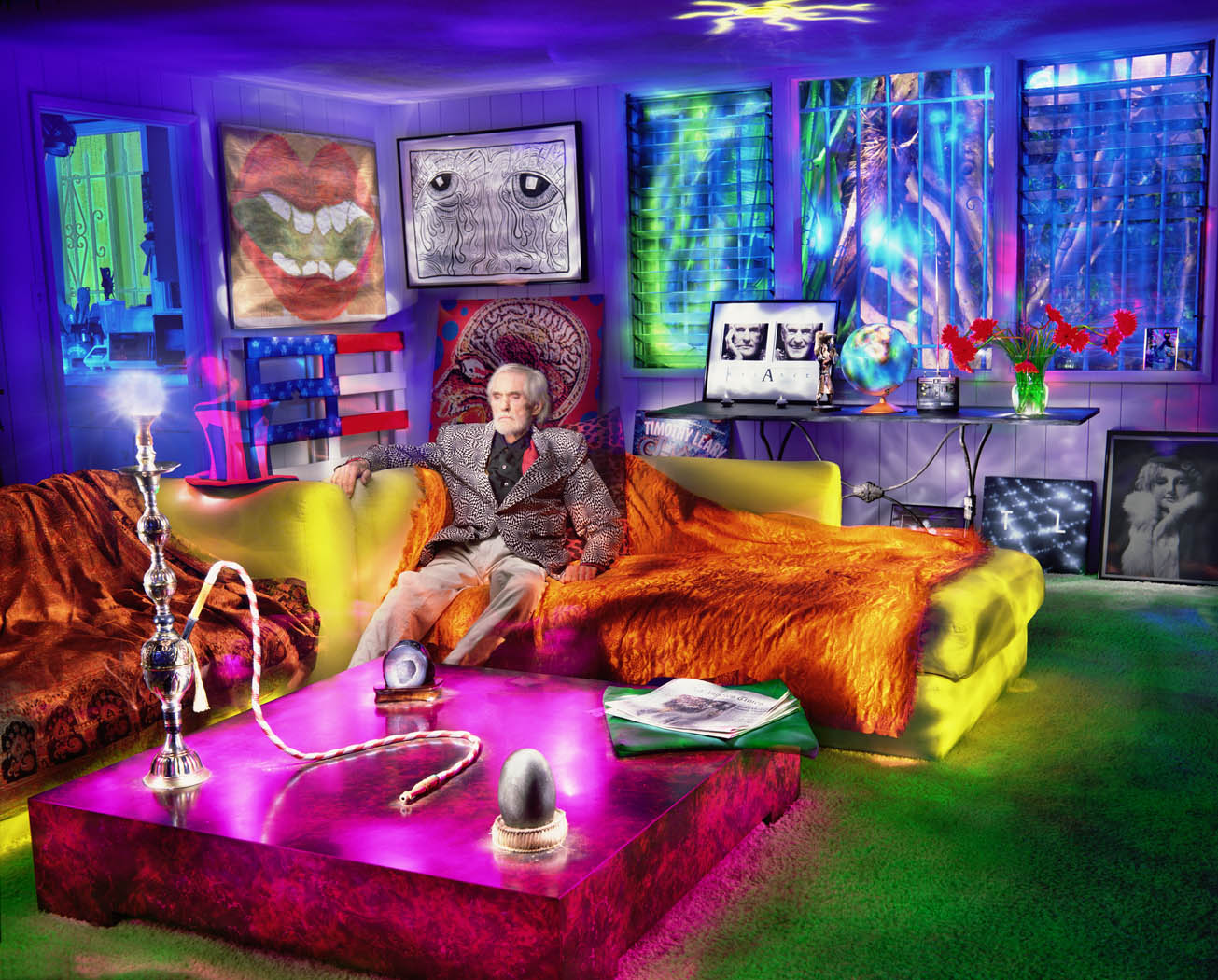
Timothy Leary © Dean Chamberlain

Dean Chamberlain is an extraordinary photographic artist. He works in a technique known as light painting, using hand-held lights to illuminate and color a scene photographed in long exposure. While versions of the technique have been known and used since the early days of photography, Dean was the first artist to work exclusively in the medium.

From Light Painting Photography:

Dean Chamberlain is the father of light painting photography and has been capturing photographs since 1967. It was his passion for photography that led him to the Rochester Institute of Technology in 1974 to pursue a fine art degree. During Dean’s time at Rochester in 1977 he discovered light painting photography. Dean was the first person to coin the term “Light Painting” for his open shutter long exposure photographic technique. He has worked with his unique art form ever since in his various works. Dean has created stunning portraits of well-known individuals such as David Bowie and Paul McCartney. He has also directed numerous music videos. Chamberlain’s work has appeared in publications such as Esquire, Vanity Fair and the Washington Post. He has received an MTV breakthrough award for directing music videos for Arcadia (Missing), Paul McCartney (This One) and Duran Duran (All She Wants Is).

Along with light painting rock stars, landscapes and other subjects, Dean created a unique series called Elder Psychedelic Pioneers. This includes Timothy Leary, Albert Hofmann, Alexander Shulgin, and others—many of whom have now passed on.

Albert Hofmann © Dean Chamberlain


Alexander and Ann Shulgin © Dean Chamberlain


Laura Huxley © Dean Chamberlain

“Trump blames White House air conditioning on Obama.”

Associated Press, July 26, 2019:

WASHINGTON (AP) — In President Donald Trump’s view, even the inadequate air conditioning at the White House is Barack Obama’s fault.

Trump offered the new gripe about his predecessor as he explained in the Oval Office Friday why he’ll be spending some time at his New Jersey resort in August.

The president says “it’s never a vacation” when he goes to Bedminster, New Jersey, and that he would rather be at the White House.

He says that some of his time away from the White House gives crews time to do maintenance work.

He says, for example, “The Obama administration worked out a brand new air conditioning system for the West Wing. It was so good before they did the system. Now that they did this system, it’s freezing or hot.”

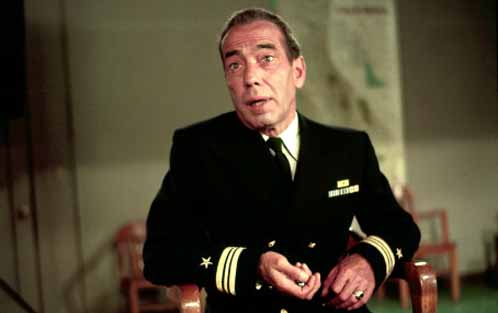
In the movie The Caine Mutiny, officers of the USS Caine determined that the conduct of their captain is so erratic that they must attempt to take over command of the ship. In one incident, Captain Queeg becomes obsessed with a missing container of strawberries. At the court martial of an officer charged with mutiny, Queeg testifies—and famously reveals just how psychologically disturbed he is:

Decent Americans Are Suffering from Learned Helplessness

American Psychological Association:

Learned helplessness is a phenomenon in which repeated exposure to uncontrollable stressors results in individuals failing to use any control options that may later become available. Essentially, individuals are said to learn that they lack behavioral control over environmental events, which, in turn, undermines the motivation to make changes or attempt to alter situations….In the 1970s, Martin E. P. Seligman extended the concept from nonhuman animal research to clinical depression in humans and proposed a learned helplessness theory to explain the development of or vulnerability to depression. According to this theory, people repeatedly exposed to stressful situations beyond their control develop an inability to make decisions or engage effectively in purposeful behavior. Subsequent researchers have noted a robust fit between the concept and posttraumatic stress disorder.

Every day, I see those in the news and those in personal life expressing serial frustration at the latest outrage from national leadership. After repeating the sordid details of cruelty and immorality, they then ask, increasingly rhetorically, why those who could do something don’t stop it. Yes some try to fight, yes some succeed or at least delay the worst, but mostly the answer seems to be to wait until the possible, though not certain, election of a new president.

Learned helplessness is, for example, at the heart of abusive situations, such as being married to a narcissistic monster. We didn’t need research psychologists to clinically identify the phenomenon of people being beaten down to the point of powerlessness and just giving up. We know it happens.

And yet…

Do not go gentle into that good night.
Rage, rage against the dying of the light.
Dylan Thomas

DSM-5: Antagonism and Narcissistic Personality Disorder


DSM-5

This post was first published more than two years ago. It refers to no individual by name, but since it is regularly viewed by dozens of people each week, I am confident the message got through. Now that the issue of this personality disorder is finally at the top of the news, here it is again for those who may have missed it. Still no name mentioned, but there is no doubt what it suggests.

Mental health is a serious matter and mental health practitioners are serious professionals. These are not to be treated lightly and off-handedly.

The Diagnostic and Statistical Manual of Mental Disorders, Fifth Edition (DSM-5) is the “bible” of the mental health profession: “a classification of mental disorders with associated criteria designed to facilitate more reliable diagnoses of these disorders.” It is not a reference to be thrown around and used casually by non-professionals.

The DSM can nonetheless be fascinating, especially when certain strong behavioral traits observed in others seem to closely match the traits and possible related disorders referenced in the DSM.

With the above caution and caveat, here are selections from DSM-5 about the Personality Trait Domain of Antagonism. More from the DSM about the way this may or may not relate to Narcissistic Personality Disorder will follow in a subsequent post.

Personality trait: A tendency to behave, feel, perceive, and think in relatively consistent ways across time and across situations in which the trait may be manifest.

Personality trait facets: Specific personality components that make up the five broad personality trait domains in the dimensional taxonomy of Section III “Alternative DSM-5 Model for Personality Disorders.” For example, the broad domain Antagonism has the following component facets: Manipulativeness, Deceitfulness, Grandiosity, Attention Seeking, Callousness, and Hostility.

Antagonism: Behaviors that put an individual at odds with other people, such as an exaggerated sense of self-importance with a concomitant expectation of special treatment, as well as a callous antipathy toward others, encompassing both unawareness of others’ needs and feelings, and a readiness to use others in the service of self-enhancement. Antagonism is one of the five broad personality trait domains defined in Section III “Alternative DSM-5 Model for Personality Disorders.”

Manipulativeness: Use of subterfuge to influence or control others; use of seduction, charm, glibness, or ingratiation to achieve one’s ends. Manipulativeness is a facet of the broad personality trait domain Antagonism.

Grandiosity: Believing that one is superior to others and deserves special treatment; self-centeredness; feelings of entitlement; condescension toward others. Grandiosity is a facet of the broad personality trait domain Antagonism.

Deceitfulness: Dishonesty and fraudulence; misrepresentation of self; embellishment or fabrication when relating events. Deceitfulness is a facet of the broad personality trait domain Antagonism.

Attention seeking: Engaging in behavior designed to attract notice and to make oneself the focus of others’ attention and admiration. Attention seeking is a facet of the broad personality trait domain Antagonism.

Callousness: Lack of concern for the feelings or problems of others; lack of guilt or remorse about the negative or harmful effects of one’s actions on others. Callousness is a facet of the broad personality trait domain Antagonism.

Hostility: Persistent or frequent angry feelings; anger or irritability in response to minor slights and insults; mean, nasty, or vengeful behavior. Hostility is a facet of the broad personality trait domain Antagonism.

Wrestling with Yourself, Part 2

The previous post about the biblical episode of Jacob wrestling with a man or an angel or God is entitled Wrestling with Yourself. Why so?

In the family saga, Jacob comes from a long line of people on an important mission, which mission they use as a rationalization for some sharp practices and lying. Abraham lies about his wife, saying she is his sister. Isaac lies about his wife, saying she is his sister. Jacob lies to his father Isaac, with a plan devised by his mother, saying he is his brother and stealing his brother’s blessing. After the wrestling episode, Jacob’s sons will lie to him, saying their brother is dead, while in fact they have left him to be taken into slavery.

We wonder just what sort of entity Jacob is wrestling with. The Hebrew word ish makes it sound as if it is a man, but the details of the story say otherwise. One enlightening view says that Jacob was actually wrestling with himself. Given his history and the history of the family, such psychological conflict is understandable.

The wrestling match ends in a tie, that is, Jacob refuses to give up, even though he is injured. This is exactly what happens if you wrestle with yourself. You can’t win, but if you don’t give up, you can’t lose either. At best, you come out of the match transformed. Hurt and pained, perhaps, but different enough to merit a new name.

Veterans Month and Mental Health

It is appropriate to talk about this Veterans Day 2018—Sunday, November 11—when talking about veterans and mental health.

Veterans Day was originally celebrated as Armistice Day, the day that World War I ended. This Veterans Day marks the one hundredth anniversary of the end of “the war to end all wars.”

Modern awareness of the widespread psychological effects of warfare began early in World War I, with the phenomenon of “shell shock.” In looking back at the war, there is still a question of how many cases were, in terms then used, “commotional” (due to explosions at close range) and how many cases were “emotional” (due to the psychological experience of war). In either case, numbers of warriors came home different and troubled—troubles which might last for the rest of their lives, and even serve to shorten those lives.

In the wars since, different theories and treatments have been developed, different labels have been attached. Today, those of us on the outside of this experience know it as PTSD. Those on the inside know it as the hell of war and its aftermath.

This will be another month—since a day is absolutely not enough—of honoring veterans. Judging by the still inadequate attention and support, they are more honored in the breach than in the observance. Among the failures too long to list is insufficiently acknowledging and taking responsibility for the mental health of those who we send to serve.

If you don’t want war—blessed are the peacemakers—then work for that. If you want war, or reluctantly think that war is necessary, treat those you send to fight for you as your own family, your own siblings, your own children. Because they are somebody’s.

Key

Key

When you leave take the key
even for a few steps out the front door
out the back.
What if the door locks behind you?
Even if there’s someone inside
to hear you knocking pounding
ringing calling.
What if she locks it
not knowing where you are?
What if she needs help
and you are locked out helpless?
What if she knows and decides
that this trip to the trash
should be your last?
Only a few possibilities
there are more
prevented by that key in pocket.
One man’s prudence
built on irrefutable logic
is an observer’s key to personality.
What of it?
Analysis is theory
being locked out an inconvenient fact.
Take the key.

Dean Chamberlain: Light Paintings of Elder Psychedelic Pioneers

Timothy Leary © Dean Chamberlain

Dean Chamberlain is an extraordinary photographic artist. He works in a technique known as light painting, using hand-held lights to illuminate and color a scene photographed in long exposure. While versions of the technique have been known and used since the early days of photography, Dean was the first artist to work exclusively in the medium.

From Light Painting Photography:

Dean Chamberlain is the father of light painting photography and has been capturing photographs since 1967. It was his passion for photography that led him to the Rochester Institute of Technology in 1974 to pursue a fine art degree. During Dean’s time at Rochester in 1977 he discovered light painting photography. Dean was the first person to coin the term “Light Painting” for his open shutter long exposure photographic technique. He has worked with his unique art form ever since in his various works. Dean has created stunning portraits of well-known individuals such as David Bowie and Paul McCartney. He has also directed numerous music videos. Chamberlain’s work has appeared in publications such as Esquire, Vanity Fair and the Washington Post. He has received an MTV breakthrough award for directing music videos for Arcadia (Missing), Paul McCartney (This One) and Duran Duran (All She Wants Is).

Along with light painting rock stars, landscapes and other subjects, Dean created a unique series called Elder Psychedelic Pioneers. This includes Timothy Leary, Albert Hofmann, Alexander Shulgin, and others—many of whom have now passed on.

Albert Hofmann © Dean Chamberlain


Alexander and Ann Shulgin © Dean Chamberlain


Laura Huxley © Dean Chamberlain

DSM-5: Antisocial Personality Disorder (Sociopathy)

Deceitfulness, as indicated by repeated lying, use of aliases, or conning others for personal profit or pleasure.
Impulsivity or failure to plan ahead.
Lack of remorse, as indicated by being indifferent to or rationalizing having hurt, mistreated, or stolen from another.

Individuals with antisocial personality disorder frequently lack empathy and tend to be callous, cynical, and contemptuous of the feelings, rights, and sufferings of others.

These individuals may also be irresponsible and exploitative in their sexual relationships. They may have a history of many sexual partners and may never have sustained a monogamous relationship.

This post about Antisocial Personality Disorder (Sociopathy) is a sequel to one of my most popular posts, published more than a year ago: DSM-5: Antagonism and Narcissistic Personality Disorder.

The Diagnostic and Statistical Manual of Mental Disorders, Fifth Edition (DSM-5) is the “bible” of the mental health profession—“a classification of mental disorders with associated criteria designed to facilitate more reliable diagnoses of these disorders.” It is worth repeating here that mental health diagnosis should ultimately be left to trained clinicians. Nevertheless, intelligent non-professionals may gain important insights by reviewing the literature about significant personality disorders.


Antisocial Personality Disorder

Diagnostic Criteria

A pervasive pattern of disregard for and violation of the rights of others, occurring since age 15 years, as indicated by three (or more) of the following:

  1. Failure to conform to social norms with respect to lawful behaviors, as indicated by repeatedly performing acts that are grounds for arrest.
  2. Deceitfulness, as indicated by repeated lying, use of aliases, or conning others for personal profit or pleasure.
  3. Impulsivity or failure to plan ahead.
  4. Irritability and aggressiveness, as indicated by repeated physical fights or assaults.
  5. Reckless disregard for safety of self or others.
  6. Consistent irresponsibility, as indicated by repeated failure to sustain consistent work behavior or honor financial obligations.
  7. Lack of remorse, as indicated by being indifferent to or rationalizing having hurt, mistreated, or stolen from another.

Diagnostic Features

The essential feature of antisocial personality disorder is a pervasive pattern of disregard for, and violation of, the rights of others that begins in childhood or early adolescence and continues into adulthood. This pattern has also been referred to as psychopathy, sociopathy, or dyssocial personality disorder. Because deceit and manipulation are central features of antisocial personality disorder, it may be especially helpful to integrate information acquired from systematic clinical assessment with information collected from collateral sources.

Individuals with antisocial personality disorder fail to conform to social norms with respect to lawful behavior. They may repeatedly perform acts that are grounds for arrest (whether they are arrested or not), such as destroying property, harassing others, stealing, or pursuing illegal occupations. Persons with this disorder disregard the wishes, rights, or feelings of others. They are frequently deceitful and manipulative in order to gain personal profit or pleasure (e.g., to obtain money, sex, or power). They may repeatedly lie, use an alias, con others, or malinger. A pattern of impulsivity may be manifested by a failure to plan ahead. Decisions are made on the spur of the moment, without forethought and without consideration for the consequences to self or others; this may lead to sudden changes of jobs, residences, or relationships.

Financial irresponsibility is indicated by acts such as defaulting on debts, failing to provide child support, or failing to support other dependents on a regular basis. Individuals with antisocial personality disorder show little remorse for the consequences of their acts. They may be indifferent to, or provide a superficial rationalization for, having hurt, mistreated, or stolen from someone (e.g., ‘Tife’s unfair,” “losers deserve to lose”). These individuals may blame the victims for being foolish, helpless, or deserving their fate (e.g., “he had it coming anyway”); they may minimize the harmful consequences of their actions; or they may simply indicate complete indifference. They generally fail to compensate or make amends for their behavior. They may believe that everyone is out to “help number one” and that one should stop at nothing to avoid being pushed around.

Associated Features Supporting Diagnosis

Individuals with antisocial personality disorder frequently lack empathy and tend to be callous, cynical, and contemptuous of the feelings, rights, and sufferings of others. They may have an inflated and arrogant self-appraisal (e.g., feel that ordinary work is beneath them or lack a realistic concern about their current problems or their future) and may be excessively opinionated, self-assured, or cocky. They may display a glib, superficial charm and can be quite voluble and verbally facile (e.g., using technical terms or jargon that might impress someone who is unfamiliar with the topic).

These individuals may also be irresponsible and exploitative in their sexual relationships. They may have a history of many sexual partners and may never have sustained a monogamous relationship.