Bob Schwartz

Category: Politics

Assault Weapons: The Art of the Art of the Possible

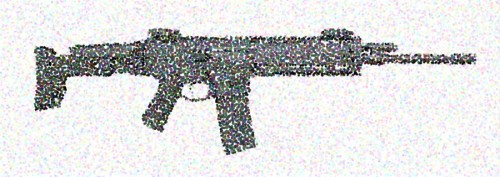
Bushmaster ACR
Watching Joe Biden back off the primacy of an assault weapons ban in the curbing of gun violence—following Senator Diane Feinstein’s introduction of exactly that legislation—is discouraging. And it brings to mind Picasso and Pollock, among others.

Politics is said to be the art of the possible. The motto is roughly “we fight the fights we can win.” Very pragmatic, and there is something to commend pragmatism. That won’t be much comfort, though, when well-meaning politicians have to show up at the next inevitable massacre and solemnly announce that they aimed at the possible, and even then settled for half.

Exactly what kind of art is politics?

Here’s a style of art, the kind everybody finds acceptable and can endorse. Who is going to argue about Rembrandt?

Rembrandt - Self Portrait
Then again, over time there were a number who wanted to argue about and with Rembrandt. By the time the twentieth century rolled around, artists wondered why they had to pay slavish homage to ideas that no longer suited the times. They determined that new ways were not only possible, but that they must be possible.

And so Picasso

Picasso - Les Demoiselles D'Avignon

and Jackson Pollock

Pollock - No. 5
Maybe every progressive politician who is wavering on support for an assault weapons ban needs to visit some museums with modern art; there are plenty in Washington. Then maybe they will discover what real courageous progress is. The possible is limited only by our imagination, spirit and will. That’s the real art.

The Untouchables: No Justice On Wall Street

The Untouchables
This week, PBS Frontline aired a follow-up to its powerful documentary Money, Power & Wall Street, which covered the origins and aftermath of the 2008 financial meltdown. The Untouchables is an equally scathing and disturbing story about the failure of the Justice Department to prosecute any Wall Street executives for fraud, in the wake of their apparently knowing securitization and sale of worthless mortgages.

For those who wonder whether investigative journalism still matters, this happened yesterday:

Lanny Breuer, the head of the DOJ Criminal Division featured in the documentary, resigned. Questions about why criminal prosecutions have taken so long—and whether there will ever be any—linger like a bad odor.

Mary Jo White, a former federal prosecutor, was nominated to be the next chairwoman of the Securities and Exchange Commission. Richard Cordray, another former prosecutor, was renominated to be director of the Consumer Financial Protection Bureau. The president said these nominations would help prevent a financial crash like the one he inherited four years ago.

People say that the new movie Zero Dark Thirty serves as a thought-provoking wake-up call about the role of torture and, ultimately, the effectiveness and judgment of President Obama. It has been said that those who support the president might find the film unnerving.

The Untouchables is much more unnerving, not just in looking at the president, but in looking at Attorney General Holder, at overseers,  and at all the others who seem to be strangely—or not so strangely—beholden to Wall Street.

Watch The Untouchables, then go back and watch Money, Power & Wall Street. Like all great investigative journalism, it is darkly entertaining, and like all unvarnished views of how government works, it is profoundly discouraging. But necessary.

The Real Basics of the Speech

Inaugural Address 2013
Self-congratulation can be unbecoming, even when it is deserved. It can also be unhelpful and even counterproductive.

The immediate aftermath of the election was a storm of emotions for Democrats. It combined exhilaration at winning with relief from avoiding an unthinkable alternative. The first weeks seemed to be filled with a Republican state of denial, to which “elections have consequences and we won” seemed a pretty succinct response.

Then the ice started to break a bit. A few concessions were made, with Republicans implicitly acknowledging that things were different, if not subject to a sea change. Then President Obama delivered his Inaugural address.

Judging by the reaction, for some liberals/progressives, this was the missing second beat of election night. Obama won, and now he was openly announcing where he stood on the supposed left/right divide. Verbal high-fiving, fist-bumping and chest-thumping could be widely heard. The address was pronounced a liberal/progressive triumph.

And looked at one way, it was. But that is a self-limiting analysis, and actually robs the speech of its power, and robs Obama of his vision and careful eloquence.

The speech had three basic points:

These are our shared American principles.
Government works from the bottom up, not the top down.
We have to live in the present not the past.

Labeling that liberal, progressive or otherwise, no matter who is doing the labeling, short-circuits a potentially valuable conversation and possibilities of common ground. The victory lap, even if it is meant to be dispiriting to the presumed opposition, doesn’t help.

Obama supporters say that he was too conciliatory in his first term, that he unwisely—even naively—believed that compromise was possible. Now they see and hear the less yielding partisan they always believed he was.

They are only partly right. Obama will stand more firmly, but if you listen to the speech beyond the specifics you may be happy to have heard, it was all about those three simple points. Set aside the labels and even the initiatives, and just talk about the basics. The challenge Obama set is for those who claim true Americanism to disagree.

Fish and Assault Weapons

Fish Head Bullet Weights
Tomorrow, Barack Obama unveils a series of proposals to curb gun violence. Among them is likely to be a reintroduction of a federal ban on the sale of assault weapons, a ten-year prohibition that expired in 2004. Many are pessimistic, believing that such a measure might pass the Senate, but will certainly not make it through the House.

There is a fair amount of discussion about whether people hunt with assault weapons, and if they do, whether they should. It’s a good question, but not nearly as fascinating as the eccentric question of whether people fish with assault weapons.

The short answer is that up until a few years ago, two states did allow fishing with guns. New York State has since repealed its law, leaving Vermont as the only state where you can legally shoot fish (in a lake, but presumably still not in a barrel—except in the privacy of your own home).

Spring hunting for pike is in fact a Vermont tradition. Here is the law:

Vermont Statutes
Title 10: Conservation and Development
Chapter 111: FISH

§ 4606. Taking fish by unlawful means

(e) In Lake Champlain pickerel, northern pike, carp, garfish, bowfin, mullet, shad, suckers, bullhead, and other cull fish may be taken from March 25 to May 25 by shooting and spearing in other than spawning areas designated under section 4140 of this title. For the purposes of this subsection, Lake Champlain includes all connected waters at the same level.

Gun experts do not generally advise shooting in water at all, for the safety of bystanders. But if you do plan to set your sites on Lake Champlain fish, it is likely that assault weapons will still be legal this spring, so nothing other than a sense of fairness, or good sense in general, should be stopping you.

Adorable Animals Instead of Politicians

John Boehner - Golden Retriever Puppies
It’s a hard life for a political junkie. Not because politics is difficult to find these days. To the contrary, it is everywhere, all the time. If politics is the drug, there are dealers literally giving it away—begging you to take it—at millions of media storefronts. It’s like Amsterdam, where women are on display behind glass and drugs flow like water—except that it’s all free.

The problem isn’t supply. The problem is that once you’re hooked, after a while you no longer get the thrill you once did. In fact, you often feel pretty bad. But by that time, it’s too late.

Last year was the best and the worst of times for political junkies. Not only was it an election year; it was an election year like none other. Talking heads couldn’t stop talking and we couldn’t stop listening and retorting. But it didn’t make us feel good. Whether we liked the outcome of the elections or not, we felt icky, cynical, pessimistic. Maybe, we hoped, we could get a break, enjoy some spiritual renewal as we celebrated somebody’s—anybody’s—savior being born, and could start a new year clean.

No such luck. Politically, the year ended at a low point, and with the new year, the chances of climbing out of the gutter seem slim. If political junkies could only distance themselves from these shenanigans (a great word Joe Biden used last week), maybe we could clear our heads a little.

Unfortunately, with so many serious issues at stake, staying away seems unlikely. Instead, here is a radical solution that might just help.

Every time a politician is mentioned or shown, imagine an adorable animal. Nothing fierce, nothing threatening, nothing ugly. Something unbearably cute and irresistible, guaranteed to bring a smile, however fleeting, to your face. (Note: If you think that the politician mentioned is adorable, cute and irresistible, no substitution is necessary.)

This is loosely based on various cognitive therapies, but the truth is that there is no real science behind it. On the other hand, there is nothing to lose either. If you’re addicted to politics, very little is going to lift you up right now. Any way you look at it, there are too many politicians and not enough adorable animals. This is just a small step to redress the balance in your unbalanced life.

Walt Whitman Helps Launch Consumer Electronics Show in Las Vegas

Walt Whitman
First it was Abraham Lincoln in the new television campaign for the Lincoln Motor Company (the founder of that firm was a fan of the president, back when the company was started in 1917).

Lincoln Motor Company

Now Walt Whitman, the father of modern American poetry and, coincidentally, a big fan of Lincoln himself, is helping to launch this year’s Consumer Electronics Show in Las Vegas (January 8-11).

Whitman will probably not be seen emerging from a mysterious fog as Lincoln does in the commercial, although that would be unspeakably cool.

Instead, Whitman’s most famous line of poetry is quoted (without attribution) in the official description of the very first CES SuperSession

The Digital Health Revolution: Body, Mind and Soul
January 8, 2013, 9:30-10:30 a.m.

“I sing the body electric” takes on new meaning in our brave new digital world, where devices let us monitor everything from our stress levels to our genetic sequences, and devices with 100 real-time biosensors loom on the horizon. Join moderator Arianna Huffington as she leads four digital health leaders in conversation — on the latest innovations in the field, how those innovations have the potential to change lives, and what the digital revolution means for the body, mind, and soul.

The literarily perspicacious will notice that the first line of copy includes allusions to two groundbreaking writers—not just Whitman, but also Aldous Huxley. Huxley’s Brave New World vision is actually much closer to what is going on at CES than Whitman’s. Unfortunately, Huxley will not be coming out of the mist either, though the thought of his joining up with Whitman in Las Vegas to look at the latest gadgets is mind-blowing—even without Huxley’s Soma or LSD. Add Lincoln, and it is the stuff that dream movies are made of (Steven Spielberg, are you listening?).

Back to Whitman, I Sing The Body Electric is included in his Leaves of Grass (1855). Whitman’s work was a sensation, in part because of his unabashed celebration of the splendor and wonder of the human body and sexuality. The poem is just such a celebration, a spiritual anatomy lesson that is like a painting, whose message is: be not ashamed.

It isn’t clear that is what the CES copywriter had in mind, though writers generally deserve much more credit than they get. If the point is that digital pioneers plan to touch every part of our bodies, that works too.

Meanwhile, Whitman—whose use of the term “electric” was itself quite pioneering—would probably be happy to see his poem alive and well in the context of keeping and making people healthy, head to toe, organ to organ. See you in Vegas, Walt.

For the digiterati and literati, here is the closing section of the poem:

O my body! I dare not desert the likes of you in other men and women, nor the likes of the parts of you,
I believe the likes of you are to stand or fall with the likes of the soul, (and that they are the soul,)
I believe the likes of you shall stand or fall with my poems, and that they are my poems,
Man’s, woman’s, child’s, youth’s, wife’s, husband’s, mother’s, father’s, young man’s, young woman’s poems,
Head, neck, hair, ears, drop and tympan of the ears,
Eyes, eye-fringes, iris of the eye, eyebrows, and the waking or sleeping of the lids,
Mouth, tongue, lips, teeth, roof of the mouth, jaws, and the jaw-hinges,
Nose, nostrils of the nose, and the partition,
Cheeks, temples, forehead, chin, throat, back of the neck, neck-slue,
Strong shoulders, manly beard, scapula, hind-shoulders, and the ample side-round of the chest,
Upper-arm, armpit, elbow-socket, lower-arm, arm-sinews, arm-bones,
Wrist and wrist-joints, hand, palm, knuckles, thumb, forefinger, finger-joints, finger-nails,
Broad breast-front, curling hair of the breast, breast-bone, breast-side,
Ribs, belly, backbone, joints of the backbone,
Hips, hip-sockets, hip-strength, inward and outward round, man-balls, man-root,
Strong set of thighs, well carrying the trunk above,
Leg fibres, knee, knee-pan, upper-leg, under-leg,
Ankles, instep, foot-ball, toes, toe-joints, the heel;
All attitudes, all the shapeliness, all the belongings of my or your body or of any one’s body, male or female,
The lung-sponges, the stomach-sac, the bowels sweet and clean,
The brain in its folds inside the skull-frame,
Sympathies, heart-valves, palate-valves, sexuality, maternity,
Womanhood, and all that is a woman, and the man that comes from woman,
The womb, the teats, nipples, breast-milk, tears, laughter, weeping, love-looks, love-perturbations and risings,
The voice, articulation, language, whispering, shouting aloud,
Food, drink, pulse, digestion, sweat, sleep, walking, swimming,
Poise on the hips, leaping, reclining, embracing, arm-curving and tightening,
The continual changes of the flex of the mouth, and around the eyes,
The skin, the sunburnt shade, freckles, hair,
The curious sympathy one feels when feeling with the hand the naked meat of the body,
The circling rivers the breath, and breathing it in and out,
The beauty of the waist, and thence of the hips, and thence downward toward the knees,
The thin red jellies within you or within me, the bones and the marrow in the bones,
The exquisite realization of health;
O I say these are not the parts and poems of the body only, but of the soul,
O I say now these are the soul!
God Does Not Like Guns

William Strutt - Peace
God does not like guns. God is also not crazy about nuclear weapons, and about all the easy to use and widely available tools of destruction in between.

This isn’t obvious. As scholars of religion and violence point out, the Old Testament is a compendium of both divine and divine-inspired and endorsed human mayhem. In the continuing battle against moral evil, which often has a religious component or context, the imperative to take up arms goes unquestioned among some, but not all. Finally, an entire eschatological theology is based on a battle that ends and transcends history as we know it, leading once and for all to the heaven on earth we have all been awaiting.

Let us pull back to the now and here, particularly last night in Newtown, Connecticut, where clergy of all faiths talked about God, if not for God.

The events in Newtown opened up a door to a new world. It was not Armageddon in an epic sense, but it was the end of the world for some, and everyone felt that. The door is a passage to the place where we leave the theology of the Second Amendment behind, where we stop listening to the priests of the National Rifle Association and their interpretations of what the founding gods meant.

This is the time to extend last night in Newtown to every congregation in America. There, leaders will explain to congregants whether God loves guns, and particularly whether God loves guns in such massive quantities and destructiveness.

The leaders can then cite Isaiah 11, and explain how “a child will lead them” is not merely some hermeneutic puzzle pointing to a messiah. Instead, it is reflected in the instruction by Jesus: “Let the little children come to me, and do not stop them; for it is to such as these that the kingdom of heaven belongs.”

The leaders will close by acknowledging that the faithful congregants will hear and themselves espouse practical arguments that stand in the way. Leaders will then patiently explain that all faith is ultimately impractical and heedless of impossibility. God does not like guns, but as his instruments, we are bound to do the worldly work of reducing their number and universal availability. If we claim to be faithful, that is more than just a good deed. It is a divine mission. God, it appears, will be more disappointed than ever if we fail.

If Not Now When: Today Is the Day to Talk About Guns

National Rifle Association - Newtown
In the immediate hours after the Newtown, Connecticut shootings, Presidential spokesman Jay Carney was asked whether this would move the President on the issue of gun control. “Today is not the day to talk about guns,” he replied. The focus, he said, should be on the victims and their families.

A few massacres ago, around the time of the Colorado movie theatre shootings, that sounded better. The boldness of those activists wanting to instantly seize the moment and make a point about gun control seemed insensitive. There would be time enough, soon, to talk about public policy.

“Today is not the day,” doesn’t sound so good or so responsible any more. Whether or not we go for years without another incident like this, or whether, as is more likely, it is a matter of a few weeks or months, the day to talk is today.

The National Rifle Association and the related Second Amendment groups are the most powerful and successful lobby in modern America. Grover Norquist is a pretender, thinking that his threats of losing elections have changed America. As much as Americans hate taxes, many love having their guns, and the NRA has helped those Americans get them, keep them and be allowed to use them.

The NRA’s biggest, though not only, problem is that they have constitutional paranoia. They perceive even the slightest hint of regulation as the first step on a slippery slope. That paranoia has mutated and spread to politicians of almost all types. Except that those politicians aren’t pathologically afraid of guns being taken away; they are pathologically afraid of losing their jobs.

Fortunately for him, the President just got his contract renewed for four years. Even if he has something to propose that won’t get the support of his own party, let alone Republicans, even if what he proposes will have trouble passing constitutional muster, that should not stop him, if he is the man of principle we believe him to be.

The dead can’t vote, and in the case of the children killed today at Sandy Hook Elementary School, they weren’t old enough anyway. So we have to speak for them and vote for them. Today is the day. President Obama, lead us and show us what to do.

John Boehner and the Judgment of History

John Boehner
John Boehner says he isn’t worried that compromising on taxes will result in his losing his job as House Speaker. It is a matter of principle.

He may be telling the truth, but it doesn’t matter.

When asked whether Americans will blame the Republicans for the stalemate, his answer isn’t that he doesn’t care, but that it would be wrong. President Obama and the Democrats are to blame, even if polls say that many people believe otherwise.

That doesn’t matter either.

The question isn’t whether Boehner cares about keeping his job (which he does) or whether he cares that many Americans blame him and the Republicans (which he does).

The question is about history.

Republicans have for quite a while seemed to be unconcerned about the judgment of history. There’s a practical reason for this: people vote, not history. And most people aren’t that interested in history. Anyway, history is often equivocal, so in those moments when people do care, history can be spun to say almost anything.

But, for example, history continues to be a problem for the Republicans and their most historic President. The principles of and lessons from Lincoln are not always congruent with current GOP practice and rhetoric. This is how Southern Republicans during the Civil Rights era didn’t just come to distance themselves from the Great Emancipator; they fled the party.

History is turning on the Republicans. An entire two-term Presidency—eight years of George W. Bush—has had to be nearly buried so that the party could move on. The most recent financial misstep, the 2011 debt ceiling debacle, looked at first like it could be blamed on an ineffectual President. But history has stepped in. Obama’s leadership has been established and electorally endorsed, And now that event looks like a dark mirror of this moment—a mirror featuring John Boehner’s face.

When the movie of this moment is made, the question for Boehner is who he wants to be. He’s not going to be Lincoln, he’s not going to be Thaddeus Stevens. The way it looks now, he may be one of those supporting characters, a middling Congressional leader serving as an antagonist, helping to move the action along by opposing it. He is a decent man, he may yet keep his Speakership, and the country may yet, hopefully, avoid another crisis. But history won’t care about any of that. It is ruthless in its judgment, and John Boehner still has time to sway it.

In Praise of Congressional Mediocrity

Roman Hruska
Roman Hruska was United States Senator from Nebraska from 1954 to 1976. He was a leading conservative, and was anything but a mediocre legislator. But when Richard Nixon appointed G. Harold Carswell to the Supreme Court in 1970, Hruska had this to say about claims that Carswell was less than qualified:

“Even if he were mediocre, there are a lot of mediocre judges and people and lawyers. They are entitled to a little representation, aren’t they, and a little chance? We can’t have all Brandeises, Frankfurters and Cardozos.”

Carswell was not confirmed. And despite Hruska’s accomplishments, he is best known today for his defense of public mediocrity.

As we watch many in Congress talk and talk and talk about why they are not doing anything—except talking—we might remember what Lincoln said: “Better to remain silent and be thought a fool than to speak out and remove all doubt.” Or we might go back to Hruska.

Both the Senate and the House have had their share of greatness. The Senate has been a particularly notable body, even if we can’t have all Henry Clays, Daniel Websters and Robert Tafts. The House is a more mixed bag and, as “the people’s house,” maybe it should be.

But at the heart of Hruska’s statement is the question that faces us every day when we look at our national legislators. Do we want to be represented by people at least as good and capable as us—as honest, as hard-working, as smart, as trustworthy, as caring as us? Do we lower that down to a standard of people merely capable of getting elected? Or do we, contra Hruska, raise our standard and look for people better than we are in all the ways that matter? Even if we can’t have all the best, should we ever settle for mediocre?